🧤 Beekeeping Equipment: Hive, Smoker, and Extractor
Bee box components, bee space, smoker mechanism, and honey extractor -- essential equipment for scientific beekeeping
In the previous lesson, we covered the pests and diseases that threaten bee colonies. Now we look at the equipment a beekeeper needs to house, manage, and harvest from those colonies successfully.
Before a farmer in Punjab can start commercial beekeeping, he needs the right equipment. A well-designed bee box provides an ideal home for the colony, a smoker keeps bees calm during inspections, and a honey extractor allows clean harvesting without destroying the comb. Understanding the design and function of each component is essential for both practical beekeeping and competitive exams.
This lesson covers:
- The bee box -- components from stand to outer cover
- Bee space -- Langstroth's discovery and species-specific measurements
- The smoker -- how it calms bees
- The honey extractor -- centrifugal harvesting without comb damage
The Bee Box (Bee Hive)
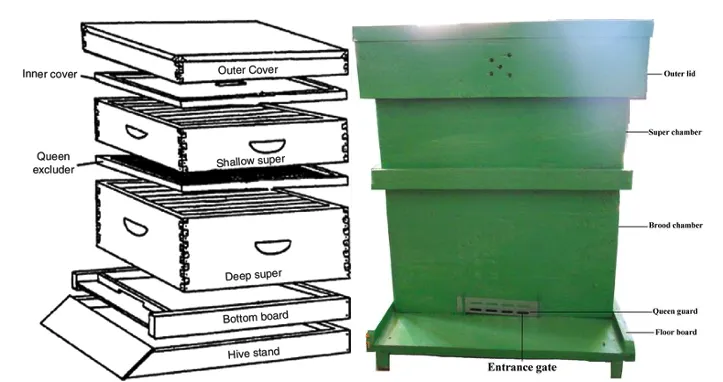
A standard bee box is made of locally available seasoned, lightweight wood (preferably teak wood for its durability and weather resistance). It consists of five main components stacked vertically:
Pro Content Locked
Upgrade to Pro to access this lesson and all other premium content.
₹99 charged monthly · Cancel anytime
- All Agriculture & Banking Courses
- AI Lesson Questions (100/day)
- AI Doubt Solver (50/day)
- Glows & Grows Feedback (30/day)
- AI Section Quiz (20/day)
- 22-Language Translation (100/day)
- Recall Questions (20/day)
- AI Quiz (15/day)
- AI Quiz Paper Analysis (100/day)
- AI Step-by-Step Explanations (100/day)
- Spaced Repetition Recall (FSRS)
- AI Tutor
- Immersive Text Questions
- Audio Lessons — Hindi & English
- Mock Tests & Previous Year Papers
- Summary & Mind Maps
- XP, Levels, Leaderboard & Badges
- Generate New Classrooms
- Voice AI Teacher (AgriDots Live)
- AI Revision Assistant
- Knowledge Gap Analysis
- Interactive Revision (LangGraph)
🔒 Secure via Razorpay · Cancel anytime · No hidden fees
In the previous lesson, we covered the pests and diseases that threaten bee colonies. Now we look at the equipment a beekeeper needs to house, manage, and harvest from those colonies successfully.
Before a farmer in Punjab can start commercial beekeeping, he needs the right equipment. A well-designed bee box provides an ideal home for the colony, a smoker keeps bees calm during inspections, and a honey extractor allows clean harvesting without destroying the comb. Understanding the design and function of each component is essential for both practical beekeeping and competitive exams.
This lesson covers:
- The bee box -- components from stand to outer cover
- Bee space -- Langstroth's discovery and species-specific measurements
- The smoker -- how it calms bees
- The honey extractor -- centrifugal harvesting without comb damage
The Bee Box (Bee Hive)
A standard bee box is made of locally available seasoned, lightweight wood (preferably teak wood for its durability and weather resistance). It consists of five main components stacked vertically:
Components from Bottom to Top
| Component | Function |
|---|---|
| Hive stand | Wooden pole or iron stand fixed to the ground; elevates hive from moisture, ants, and ground-level pests |
| Floor board | Separable wooden plank sitting on the stand; includes a landing board at the entrance |
| Brood chamber | Larger box with 8 full-depth frames + foundation sheets; where the queen lives and lays eggs; heart of the colony |
| Queen excluder | Metal grid between brood and super chambers; workers pass through but the larger queen cannot |
| Super chamber | Similar to brood chamber but 3/4 the height; for surplus honey storage only (not for egg-laying) |
| Outer cover | Protective lid on top |
Brood Chamber vs. Super Chamber
| Feature | Brood Chamber | Super Chamber |
|---|---|---|
| Purpose | Egg laying, brood rearing | Surplus honey storage |
| Queen present? | Yes | No (excluded by queen excluder) |
| Frames | 8 full-depth | 8 (3/4 height -- lighter for handling) |
| Honey harvested? | Never (colony's food reserve) | Yes (commercial honey extraction) |
IMPORTANT
Exam Fact: Commercial honey is extracted from the super chamber only. The brood chamber honey is the colony's food reserve and must never be disturbed.
Queen Excluder vs. Queen Guard
| Device | Location | Purpose |
|---|---|---|
| Queen excluder | Between brood and super chambers (internal) | Prevents queen from entering super to lay eggs |
| Queen guard | At hive entrance (external) | Metal plate with small holes; allows workers and drones to exit but prevents the queen from flying out |
Bee Space
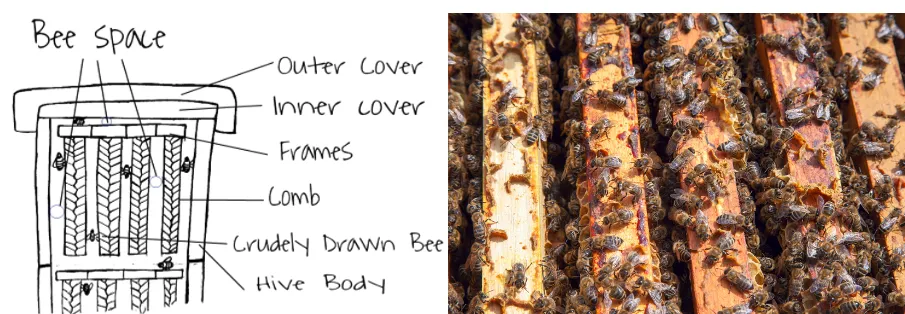
- Discovered by Rev. L.L. Langstroth -- the foundation of modern beekeeping.
- Bee space is the precise gap within a hive that bees will neither fill with wax nor seal with propolis, allowing them to move freely.
- If the gap is too small -- bees seal it with propolis.
- If the gap is too large -- bees fill it with comb.
- If within the correct range -- bees leave it as a passageway.
| Species | Bee Space |
|---|---|
| Apis cerana indica | 7-9 mm (1/4 inch) |
| Apis mellifera | 10 mm (5/16 inch) |
TIP
Exam Tip: Bee space differs by species because of body size differences. A. mellifera (larger bee) needs 10 mm; A. cerana (smaller bee) needs 7-9 mm.
The Smoker
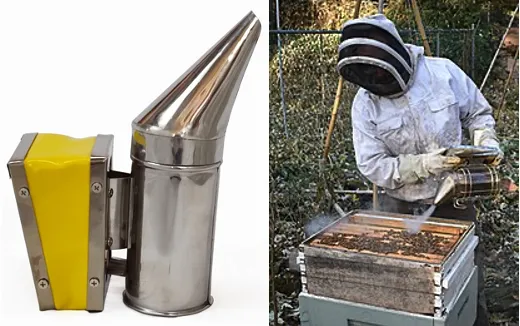
- A metal tube with a bellow (bellows to control airflow) -- the beekeeper's most essential tool for safe hive inspection.
- Controlled smoke directed into the hive calms the bees through two mechanisms:
- Triggers the bees' instinct to gorge on honey (preparing for possible evacuation), making them docile
- Masks the alarm pheromone that guard bees release when they sense a threat
The Honey Extractor
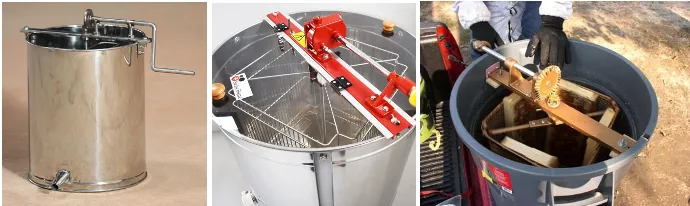
- A metal drum with a centrifugal rotating device for extracting honey from frames.
- 4 frames can be processed simultaneously by rotating with a handle.
- Centrifugal force pushes honey out of comb cells onto the drum walls, flowing down to a collection tap.
- Key advantage: Combs remain undamaged and can be placed back in the super chamber. This saves bees enormous energy -- they consume about 20 kg of honey to produce just 1 kg of wax, so reusable combs are a major efficiency gain.
Equipment at a Glance
| Equipment | Purpose | Key Detail |
|---|---|---|
| Bee box | Colony housing | 5 components: stand, floor, brood, excluder, super |
| Queen excluder | Separate brood from honey | Grid with openings: workers pass, queen cannot |
| Queen guard | Prevent queen from exiting | Metal plate at hive entrance |
| Smoker | Calm bees during inspection | Triggers honey gorging + masks alarm pheromone |
| Honey extractor | Extract honey without destroying comb | Centrifugal rotation; 4 frames at a time |
| Foundation sheet | Guide comb building | Waxy sheet fixed on frames |
Summary Table
| Key Fact | Answer |
|---|---|
| Commercial honey from | Super chamber only |
| Brood chamber frames | 8 full-depth |
| Super chamber height | 3/4 of brood chamber |
| Bee space discoverer | Rev. L.L. Langstroth |
| Bee space (A. cerana) | 7-9 mm |
| Bee space (A. mellifera) | 10 mm |
| Too-small gap | Sealed with propolis |
| Too-large gap | Filled with comb |
| Smoker mechanism | Calms bees, masks alarm pheromone |
| Honey extractor capacity | 4 frames at a time |
| Wax conversion cost | 20 kg honey = 1 kg wax |
TIP
Quick Exam Recall: Super = honey (commercial). Brood = eggs (colony food). Queen excluder = internal separation. Queen guard = entrance control. Bee space: 7-9 mm (cerana) vs. 10 mm (mellifera).
References
1 source
References
Summary Cheat Sheet
| Concept / Topic | Key Details |
|---|---|
| Bee box material | Seasoned, lightweight wood; preferably teak wood |
| Bee box components (bottom to top) | Hive stand → Floor board → Brood chamber → Queen excluder → Super chamber → Outer cover |
| Brood chamber | 8 full-depth frames; queen lives here; colony food reserve |
| Super chamber | 3/4 height of brood chamber; surplus honey storage only |
| Commercial honey from | Super chamber only — never brood chamber |
| Queen excluder | Metal grid between brood and super; workers pass, queen cannot |
| Queen guard | Metal plate at hive entrance; prevents queen from flying out |
| Bee space discoverer | Rev. L.L. Langstroth — foundation of modern beekeeping |
| Bee space (A. cerana indica) | 7-9 mm (1/4 inch) |
| Bee space (A. mellifera) | 10 mm (5/16 inch) |
| Gap too small | Bees seal it with propolis |
| Gap too large | Bees fill it with comb |
| Smoker | Metal tube + bellows; calms bees by triggering honey gorging + masking alarm pheromone |
| Honey extractor | Metal drum with centrifugal rotation; processes 4 frames at a time |
| Extractor advantage | Combs remain undamaged and reusable |
| Wax conversion cost | 20 kg honey consumed to produce 1 kg wax |
| Foundation sheet | Waxy sheet fixed on frames to guide comb building |
TIP
Next: Lesson 08 covers apiary management -- site selection, colony placement, dearth period management, honey extraction, and bee pasturage for crop pollination.