💇🏻♂️ Apiary Management and Good Beekeeping Practices
Site selection, colony placement, dearth period feeding, honey extraction, bee pasturage, pollination management, and pollination benefits for crops
In the previous lesson, we examined the equipment needed for scientific beekeeping -- bee box, smoker, and extractor. Now we put that equipment to use with the management practices that determine whether an apiary succeeds or fails.
A farmer in Uttarakhand who placed his bee boxes near a litchi orchard and facing east saw a 40% jump in both honey yield and litchi fruit set compared to his neighbour who kept hives in a shaded, west-facing corner far from floral sources. The difference comes down to apiary management -- the science of selecting the right site, maintaining colonies properly, and using bees strategically for pollination. Successful beekeeping depends not just on having bees, but on managing them scientifically.
This lesson covers:
- Site selection and colony placement
- Bee quality and freshwater supply
- Dearth period management and honey extraction timing
- Bee pasturage and crop pollination (Melittophily)
Three Pillars of Success
| Pillar | What It Means |
|---|---|
| Good apiary site | Location with drainage, sun exposure, floral resources, and safety |
| Good quality bees | Right species for local conditions (A. cerana or A. mellifera) |
| Proper management | Scientific practices for feeding, extraction, and colony health |
1. Selecting a Good Apiary Site
| Requirement | Why It Matters |
|---|---|
| Well-drained open area near orchards | Prevents waterlogging; provides nectar, pollen, and water |
| Protection from harsh sunlight | Maintains optimum hive temperature; bees waste less energy cooling |
| Ant wells around hive stands | Water/oil-filled containers block crawling pests |
| Hive entrance facing east | Early morning sun stimulates earlier foraging |
| Early morning + afternoon sunshine | Morning sun warms the hive; afternoon shade prevents overheating |
| Away from cattle, roads, streetlights | Streetlights confuse bees at night; roads increase disturbance |
| Rich in bee flora | Abundant flowers within 2-3 km are essential |
| Open and dry with some shade | Ideal microclimate for bee activity |
| No other commercial apiary within 2-3 km | Avoids resource competition and reduced yields |
| No stagnant water, chemical industry, or sugar mills nearby | Prevents contamination and disease |
TIP
Pro Content Locked
Upgrade to Pro to access this lesson and all other premium content.
₹99 charged monthly · Cancel anytime
- All Agriculture & Banking Courses
- AI Lesson Questions (100/day)
- AI Doubt Solver (50/day)
- Glows & Grows Feedback (30/day)
- AI Section Quiz (20/day)
- 22-Language Translation (100/day)
- Recall Questions (20/day)
- AI Quiz (15/day)
- AI Quiz Paper Analysis (100/day)
- AI Step-by-Step Explanations (100/day)
- Spaced Repetition Recall (FSRS)
- AI Tutor
- Immersive Text Questions
- Audio Lessons — Hindi & English
- Mock Tests & Previous Year Papers
- Summary & Mind Maps
- XP, Levels, Leaderboard & Badges
- Generate New Classrooms
- Voice AI Teacher (AgriDots Live)
- AI Revision Assistant
- Knowledge Gap Analysis
- Interactive Revision (LangGraph)
🔒 Secure via Razorpay · Cancel anytime · No hidden fees
In the previous lesson, we examined the equipment needed for scientific beekeeping -- bee box, smoker, and extractor. Now we put that equipment to use with the management practices that determine whether an apiary succeeds or fails.
A farmer in Uttarakhand who placed his bee boxes near a litchi orchard and facing east saw a 40% jump in both honey yield and litchi fruit set compared to his neighbour who kept hives in a shaded, west-facing corner far from floral sources. The difference comes down to apiary management -- the science of selecting the right site, maintaining colonies properly, and using bees strategically for pollination. Successful beekeeping depends not just on having bees, but on managing them scientifically.
This lesson covers:
- Site selection and colony placement
- Bee quality and freshwater supply
- Dearth period management and honey extraction timing
- Bee pasturage and crop pollination (Melittophily)
Three Pillars of Success
| Pillar | What It Means |
|---|---|
| Good apiary site | Location with drainage, sun exposure, floral resources, and safety |
| Good quality bees | Right species for local conditions (A. cerana or A. mellifera) |
| Proper management | Scientific practices for feeding, extraction, and colony health |
1. Selecting a Good Apiary Site
| Requirement | Why It Matters |
|---|---|
| Well-drained open area near orchards | Prevents waterlogging; provides nectar, pollen, and water |
| Protection from harsh sunlight | Maintains optimum hive temperature; bees waste less energy cooling |
| Ant wells around hive stands | Water/oil-filled containers block crawling pests |
| Hive entrance facing east | Early morning sun stimulates earlier foraging |
| Early morning + afternoon sunshine | Morning sun warms the hive; afternoon shade prevents overheating |
| Away from cattle, roads, streetlights | Streetlights confuse bees at night; roads increase disturbance |
| Rich in bee flora | Abundant flowers within 2-3 km are essential |
| Open and dry with some shade | Ideal microclimate for bee activity |
| No other commercial apiary within 2-3 km | Avoids resource competition and reduced yields |
| No stagnant water, chemical industry, or sugar mills nearby | Prevents contamination and disease |
TIP
Exam Trap: Colonies must face EAST (not west). East-facing = early morning sunlight = earlier foraging. This is a commonly tested question.
2. Placement of Colonies
| Practice | Reason |
|---|---|
| Use BIS/ISI specification hives of seasoned, lightweight wood | Prevents warping and cracking |
| Avoid nailing bottom board to brood chamber | Separable bottom board makes cleaning and inspection easier |
| Restrict colonies to 50-100 per apiary | Prevents overcrowding and resource depletion |
| Row-to-row distance: 10 feet | Adequate spacing prevents drifting (bees entering wrong hives) |
| Box-to-box distance: 3 feet | Convenient for beekeeper access |
| Avoid over-stocking | Match colony numbers to available bee flora |
3. Selecting Good Quality Bees
| Condition | Recommended Species |
|---|---|
| Abundant and diverse flora | Apis mellifera (Italian Bee) -- higher honey yield |
| Limited or scattered flora | Apis cerana indica (Indian Bee) -- smaller colonies, forages on sparse sources |
4. Fresh Water in the Apiary
Bees need water for three critical purposes:
| Purpose | Explanation |
|---|---|
| Humidity maintenance | Proper humidity ensures successful brood incubation |
| Bee bread preparation | Nurse bees need water to mix honey and pollen to correct consistency |
| Cooling (above 37 C) | Bees spread water films inside the hive and fan wings for evaporative cooling |
- Provide water in shallow containers with floating sticks or pebbles to prevent drowning.
5. Dearth Period Management
- During dearth periods (seasons with no flowering), provide 50% sugar syrup when honey stores are inadequate.
- Preparation: Boil clean water, add sugar with slow stirring, cover, and cool before feeding.
- Use shallow vessels with straw to prevent bees from drowning while feeding.
6. Honey Extraction
| Step | Best Practice |
|---|---|
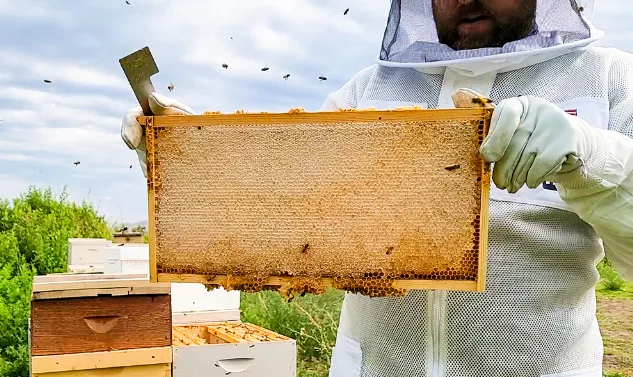
| Calm the bees | Use smoking to make bees retreat |
| Harvest timing | October-November and February-June (main flowering seasons) |
| Frame readiness | Extract when 75% of honey cells on both sides are sealed with wax |
| Ripe comb identification | Light-coloured sealed cappings = properly ripened (moisture below 20%) |
| Hygiene | Wash all equipment with warm water before extraction |
| Source | Extract from super chambers only -- never from brood chamber |
7. Bee Pasturage and Pollination
Bee Pasturage
- Plants that yield pollen and nectar are collectively called bee pasturage (bee forage).
- Floral fidelity (floral constancy): Bees visit the same plant species until exhausted before switching. They travel 2-3 km to collect resources.
Scope for Beekeeping in India
| Parameter | Value |
|---|---|
| Total area under bee-dependent crops | 50 million ha |
| Colonies needed (at 3/ha) | 150 million |
| Existing colonies in India | 1.2 million |
| Gap | Enormous scope for expansion |
Pollination by Bees (Melittophily)
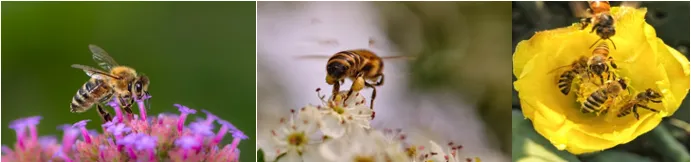
- Pollination by bees is called Melittophily (also spelled Mylettophylly).
- 80% of total insect pollination is by honey bees.
- A bee can carry pollen loads of 26-35% of its body weight.
Managing Bees for Crop Pollination
| Practice | Recommendation |
|---|---|
| Hive placement | Very near the field to save bee energy |
| Migration timing | Move colonies at 10% flowering (peak pollination window) |
| Italian Bee (A. mellifera) | 3 colonies/ha |
| Indian Bee (A. cerana) | 5 colonies/ha (smaller colonies, fewer foragers) |
| Colony strength | 5-6 frame strength, sealed brood, young mated queen |
| Provide | Sufficient space for pollen and honey storage |
Crops Benefited by Bee Pollination
| Benefit | Explanation |
|---|---|
| Seed and fruit yield | 20-100% increase in many crops |
| Fruit quality | Larger, more uniform, better shape and taste |
| Oil content | Increased oil content in sunflower seeds |
| Self-incompatible crops | Bees are essential for seed set in these crops |
| Fruits and nuts | Vegetable and vegetable seed crops | Oil seed crops | Forage seed crops |
|---|---|---|---|
| Almond | Cabbage | Sunflower | Lucerne |
| Apple | Cauliflower | Niger | Clover |
| Apricot | Carrot | Rape seed | |
| Peach | Coriander | Mustard | |
| Strawberry | Cucumber, Melon | Safflower | |
| Citrus | Onion, Pumpkin | Gingelly | |
| Litchi | Radish, Turnip |
| Crop | Botanical Name | Per cent yield Increase |
|---|---|---|
| Mustard | Brasica sp. | 43 |
| Sunflower | Helianthus annus | 32-48 |
| Cotton | Gossypium sp. | 17-19 |
| Lucerne | Medicago sativa | 112 |
| Onion | Allium cepa | 93 |
| Apple | Purus malus | 44 |
| Cardamom | Elettaria cardamom | 21-37 |
Summary Table
| Topic | Key Fact |
|---|---|
| Hive entrance direction | East (not west) |
| Colonies per apiary | 50-100 |
| Row distance | 10 feet |
| Box distance | 3 feet |
| Critical hive temperature | Below 37 C (bees cool with water) |
| Dearth period feed | 50% sugar syrup |
| Harvest timing | Oct-Nov and Feb-June |
| Frame readiness for extraction | 75% cells sealed |
| Extract honey from | Super chamber only |
| Foraging range | 2-3 km |
| 80% insect pollination by | Honey bees |
| Italian Bee for pollination | 3 colonies/ha |
| Indian Bee for pollination | 5 colonies/ha |
| Bee-dependent crop area (India) | 50 million ha |
| Colonies needed vs. existing | 150 million vs. 1.2 million |
TIP
Exam Quick Recall: East-facing hives. 50-100 colonies/apiary. 10 ft rows, 3 ft boxes. 37 C = cooling threshold. Italian bee = 3/ha, Indian bee = 5/ha. 80% insect pollination = honey bees. Melittophily = pollination by bees.
References
1 source
References
Apiary Management Calendar (North India)
Month-by-month action plan for beekeepers:
| Season | Months | Key Activities | Honey Flow? |
|---|---|---|---|
| Build-up | Oct-Nov | Inspect colonies; unite weak ones; move near mustard fields | Starting |
| Peak flow | Dec-Feb | Add supers; harvest honey every 15-20 days; manage swarming | YES — main season |
| Spring flow | Mar-Apr | Litchi/citrus honey; continue harvest; split strong colonies | Yes (secondary) |
| Dearth | May-Jun | Remove supers; feed sugar syrup (1:1); shade hives | No — feed bees |
| Monsoon | Jul-Aug | Ventilate hives; watch for diseases (foulbrood); protect from rain | No — survival mode |
| Recovery | Sep-Oct | Autumn build-up; requeen if needed; prepare for mustard season | Starting again |
Economics of migratory beekeeping: Beekeepers who move hives 2-3 times/year (mustard → litchi → sunflower) can harvest 3x more honey than stationary apiaries. Transport cost is offset by higher yield.
Summary Cheat Sheet
| Concept / Topic | Key Details |
|---|---|
| Apiary site – drainage | Well-drained open area near orchards; prevents waterlogging |
| Hive entrance direction | Must face East for early morning sunlight and foraging |
| Ant wells | Water/oil-filled containers around hive stands block crawling pests |
| No competing apiary | Within 2-3 km to avoid resource depletion |
| Colony density | Restrict to 50-100 colonies per apiary |
| Row-to-row distance | 10 feet (prevents drifting) |
| Box-to-box distance | 3 feet (beekeeper access) |
| Hive material | BIS/ISI specification, seasoned lightweight wood |
| Species selection – abundant flora | Apis mellifera (Italian Bee) — higher yield |
| Species selection – sparse flora | Apis cerana indica (Indian Bee) — smaller colonies |
| Water for bees | Humidity, bee bread preparation, evaporative cooling above 37 °C |
| Dearth period feed | 50% sugar syrup in shallow vessels with straw |
| Honey extraction timing | Oct-Nov and Feb-June (main flowering) |
| Frame readiness | Extract when 75% cells sealed on both sides |
| Extract honey from | Super chamber only — never brood chamber |
| Bee pasturage | Plants yielding pollen + nectar; foraging range 2-3 km |
| Floral fidelity | Bees visit same species until exhausted before switching |
| Melittophily | Pollination by bees; 80% of insect pollination |
| Italian Bee for pollination | 3 colonies/ha |
| Indian Bee for pollination | 5 colonies/ha; move hives at 10% flowering |
| Bee-dependent crop area (India) | 50 million ha; need 150 million colonies vs existing 1.2 million |
| Pollination benefits | 20-100% yield increase; better fruit quality and oil content |
TIP
Next: Lesson 09 covers the key beekeeping institutions in India -- NBB, CBRTI, KVIC, and their roles in promoting apiculture.