🐐 Goat Farming — NABARD Model Bankable Project
NABARD model for a 10-doe + 1-buck Black Bengal goat unit with total cost of ₹63,000, 10% margin money, 6-year repayment (1-year moratorium), BCR 1.55 and IRR 44.54%. A high-scoring topic covering breed knowledge, herd dynamics, and financial viability.
Goat is often called the "poor man's cow" in India — it provides meat, milk, hide, hair, and manure. NABARD's model uses the Black Bengal goat, the world-famous breed from eastern India known for superior prolificacy, chevon quality, and skin. Goat farming MCQs most commonly test breed names, kidding rates, and inter-kidding periods.
- Goat is the only animal bred for multiple objectives: meat, hide, milk, manure, hair
- Goat meat (chevon) is preferred over mutton in India — no religious/caste restrictions
- Training contact: CIRG, ICAR Makhdoom, Mathura (UP)
Project Overview
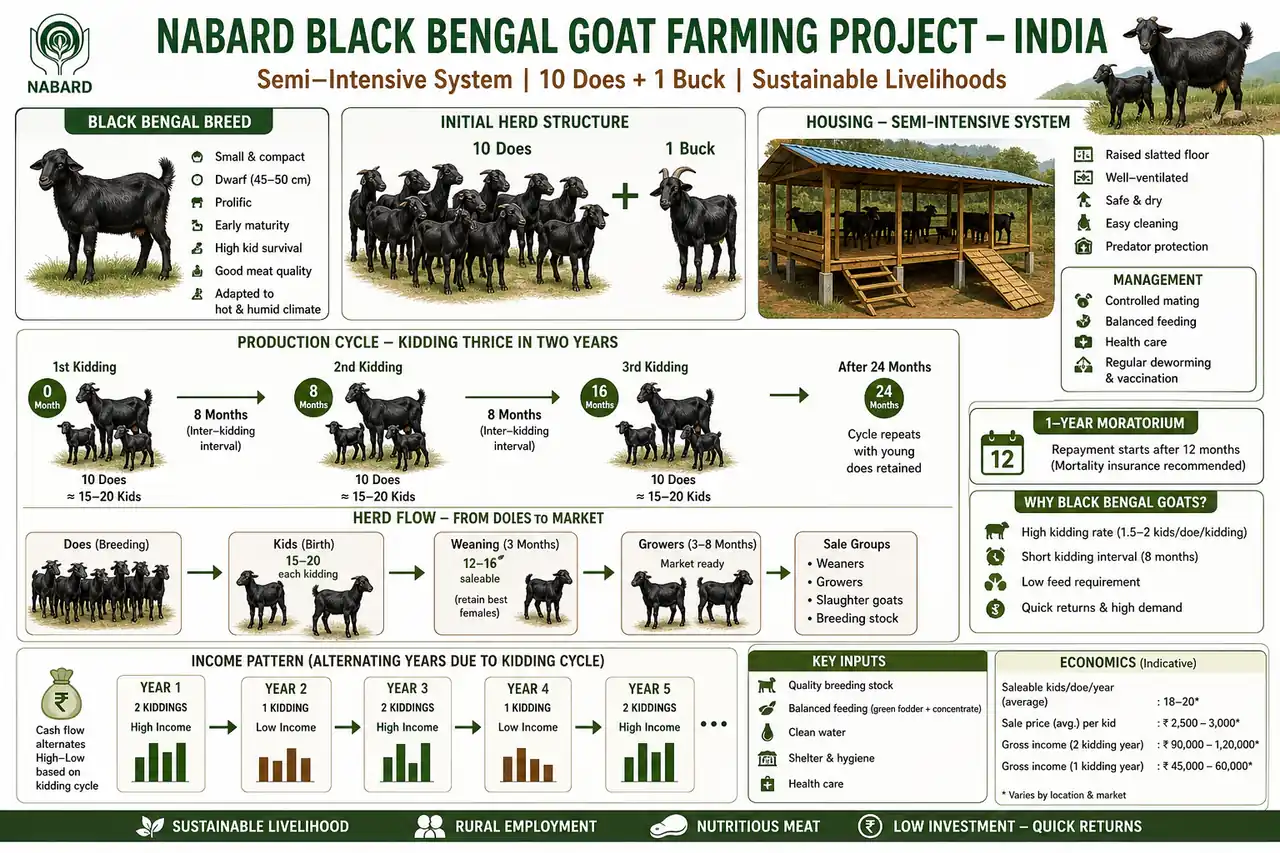
The model unit: 10 does + 1 buck of Black Bengal breed under semi-intensive system. Bucks weigh 14–15.3 kg and does 8.4–13.5 kg. Does kid thrice in two years (inter-kidding period: 8 months) with average litter size 1.6.
Pro Content Locked
Upgrade to Pro to access this lesson and all other premium content.
₹99 charged monthly · Cancel anytime
- All Agriculture & Banking Courses
- AI Lesson Questions (100/day)
- AI Doubt Solver (50/day)
- Glows & Grows Feedback (30/day)
- AI Section Quiz (20/day)
- 22-Language Translation (100/day)
- Recall Questions (20/day)
- AI Quiz (15/day)
- AI Quiz Paper Analysis (100/day)
- AI Step-by-Step Explanations (100/day)
- Spaced Repetition Recall (FSRS)
- AI Tutor
- Immersive Text Questions
- Audio Lessons — Hindi & English
- Mock Tests & Previous Year Papers
- Summary & Mind Maps
- XP, Levels, Leaderboard & Badges
- Generate New Classrooms
- Voice AI Teacher (AgriDots Live)
- AI Revision Assistant
- Knowledge Gap Analysis
- Interactive Revision (LangGraph)
🔒 Secure via Razorpay · Cancel anytime · No hidden fees
Goat is often called the "poor man's cow" in India — it provides meat, milk, hide, hair, and manure. NABARD's model uses the Black Bengal goat, the world-famous breed from eastern India known for superior prolificacy, chevon quality, and skin. Goat farming MCQs most commonly test breed names, kidding rates, and inter-kidding periods.
- Goat is the only animal bred for multiple objectives: meat, hide, milk, manure, hair
- Goat meat (chevon) is preferred over mutton in India — no religious/caste restrictions
- Training contact: CIRG, ICAR Makhdoom, Mathura (UP)
Project Overview
The model unit: 10 does + 1 buck of Black Bengal breed under semi-intensive system. Bucks weigh 14–15.3 kg and does 8.4–13.5 kg. Does kid thrice in two years (inter-kidding period: 8 months) with average litter size 1.6.
The 1-year moratorium on principal is granted because Year 1 has virtually no income — kids born in Year 1 are sold only from Year 2 onwards.
Financial Structure
| Component | Amount (Rs.) |
|---|---|
| Cost of 10 does (@ ₹2,000 each) | 20,000 |
| Cost of buck | 3,500 |
| Night shelter (slatted floor) | 9,600 |
| Transportation | 1,100 |
| Equipment + fodder + concentrate feed | 25,484 |
| Vet aid + insurance | 2,275 |
| Misc | 1,000 |
| Total Financial Outlay | 63,000 |
| Margin Money (10%) | 6,300 |
| Bank Loan (90%) | 56,700 |
Technical Parameters
| Parameter | Value |
|---|---|
| Breed | Black Bengal |
| Does | 10 |
| Buck | 1 |
| Cost of doe | ₹2,000 |
| Cost of buck | ₹3,500 |
| Conception rate | 90% |
| Kidding rate (Year 1) | 140% |
| Kidding rate (Year 2+) | 160% |
| Inter-kidding period | 8 months |
| Kid mortality | 15% |
| Culling rate (does) | 20% per year |
| Sale price — male kid | ₹3,500 |
| Sale price — female kid | ₹3,000 |
| Sale price — culled doe | ₹2,500 |
| Interest rate | 13% per annum |
| Repayment period | 1 year moratorium + 5 years = 6 years |
NOTE
Goat farming uses 13% interest rate — higher than dairy (12%) and same as lamb fattening and AMCU. The moratorium period is 1 year because Year 1 generates almost no income (only ₹275 from manure).
Herd Chart Summary
| Year | Kids Born (M+F) | Kids Sold | Does Culled | Net Income (Rs.) |
|---|---|---|---|---|
| 1 | 12 | 0 | 0 | 275 |
| 2 | 12 | 8 | 2 | 31,775 |
| 3 | 26 | 18 | 2 | 64,275 |
| 4 | 12 | 10 | 2 | 38,275 |
Income & Repayment
- Peak annual income (odd years): ₹64,275 (two kidding cycles)
- Peak annual income (even years): ~₹38,275 (one kidding cycle)
- BCR: 1.55:1 at 15% discount factor
- IRR: 44.54%
- NPV: ₹45,915
The alternating income pattern (high/low years) is because Black Bengal kids twice in 8 months — some years have 2 kidding cycles and others have 1. Examiners test this non-linear income pattern. The 20% culling rate ensures herd quality is maintained while providing additional sale income.
Sources & References
Primary source for this lesson is NABARD's official Model Bankable Projects portal.[1] Lesson-specific report copy used for this topic.[2]
References
2 sources • [1] [2]
References
Used for: Official NABARD portal for model bankable project documents and updates.
Used for: Reference copy used in this lesson for project parameters and worked figures.
The figures in this lesson reflect the cost norms and technical parameters as published in the NABARD document. Actual costs may vary by state, season, and year of implementation. Always refer to the latest NABARD circular for current norms.
Summary Cheat Sheet
| Concept / Topic | Key Details / Explanation |
|---|---|
| Unit size | 10 does + 1 buck, Black Bengal breed, semi-intensive system |
| Total Financial Outlay | ₹63,000 |
| Margin Money | 10% = ₹6,300 |
| Bank Loan | 90% = ₹56,700 |
| Cost of doe / buck | Doe: ₹2,000; Buck: ₹3,500 |
| Breed | Black Bengal — world-famous for prolificacy, chevon quality, and skin |
| Goat as multi-purpose animal | Meat, hide, milk, manure, hair — no religious restrictions on chevon |
| Conception rate | 90% |
| Kidding rate | Year 1: 140%; Year 2+: 160% |
| Inter-kidding period | 8 months (kids thrice in two years) |
| Kid mortality | 15% |
| Culling rate (does) | 20% per year |
| Sale price — male kid | ₹3,500 |
| Sale price — female kid | ₹3,000 |
| Sale price — culled doe | ₹2,500 |
| Interest rate | 13% per annum |
| Repayment period | 6 years (1-year moratorium + 5 years repayment) |
| Moratorium rationale | Year 1 income is virtually zero (only ₹275 manure); kids born Year 1 sold from Year 2 |
| BCR | 1.55:1 at 15% discount factor |
| IRR | 44.54% |
| NPV | ₹45,915 |
| Alternating income pattern | High income odd years (2 kidding cycles), lower even years (1 cycle) — due to 8-month inter-kidding |
| Training contact | CIRG, ICAR Makhdoom, Mathura (UP) |
Lesson Doubts
Ask questions, get expert answers