🐑 Sheep Farming — NABARD Model Bankable Project
NABARD model for a 100-ewe + 4-ram sheep unit with total outlay of ₹10.30 lakh, 25% margin money, 7-year repayment, BCR 1.33, and IRR 31.51%. Covers breed parameters, wool and meat income, lambing rates, and DSCR analysis for exams.
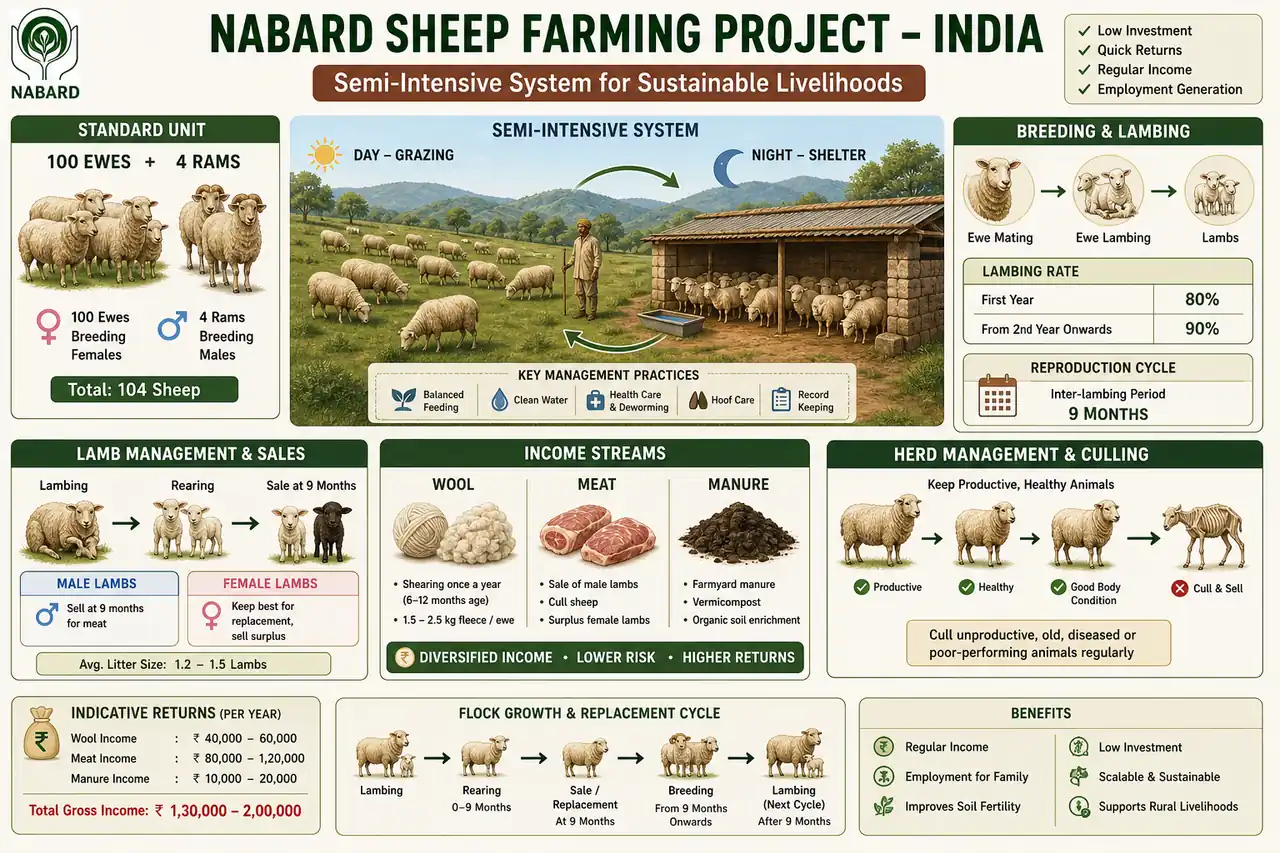
India has 65.069 million sheep (6th in the world, 2012 census). Sheep provide wool, meat, milk, skin, and manure — three distinct income streams. Unlike goats, sheep do not damage trees, making them suitable in ecologically sensitive areas. Mutton has no religious restrictions, giving it universal market appeal.
- Sheep export earns 8% of total agricultural and processed food export value
- Repayment period: 6–8 years (longer than goat/dairy due to slower herd build-up)
- Training: CSWRI, Avikanagar, Tonk, Rajasthan
Project Overview
The model unit: 100 ewes + 4 rams under semi-intensive system. Ewes are purchased at 9–12 months age, rams at 12–15 months. Inter-lambing period is 9 months, with lambing rate 80% in Year 1 rising to 90% from Year 2.
The project requires significant land: one acre of irrigated land supports approximately 25 goats under intensive system — sheep need more grazing area.
Pro Content Locked
Upgrade to Pro to access this lesson and all other premium content.
₹99 charged monthly · Cancel anytime
- All Agriculture & Banking Courses
- AI Lesson Questions (100/day)
- AI Doubt Solver (50/day)
- Glows & Grows Feedback (30/day)
- AI Section Quiz (20/day)
- 22-Language Translation (100/day)
- Recall Questions (20/day)
- AI Quiz (15/day)
- AI Quiz Paper Analysis (100/day)
- AI Step-by-Step Explanations (100/day)
- Spaced Repetition Recall (FSRS)
- AI Tutor
- Immersive Text Questions
- Audio Lessons — Hindi & English
- Mock Tests & Previous Year Papers
- Summary & Mind Maps
- XP, Levels, Leaderboard & Badges
- Generate New Classrooms
- Voice AI Teacher (AgriDots Live)
- AI Revision Assistant
- Knowledge Gap Analysis
- Interactive Revision (LangGraph)
🔒 Secure via Razorpay · Cancel anytime · No hidden fees
India has 65.069 million sheep (6th in the world, 2012 census). Sheep provide wool, meat, milk, skin, and manure — three distinct income streams. Unlike goats, sheep do not damage trees, making them suitable in ecologically sensitive areas. Mutton has no religious restrictions, giving it universal market appeal.
- Sheep export earns 8% of total agricultural and processed food export value
- Repayment period: 6–8 years (longer than goat/dairy due to slower herd build-up)
- Training: CSWRI, Avikanagar, Tonk, Rajasthan
Project Overview
The model unit: 100 ewes + 4 rams under semi-intensive system. Ewes are purchased at 9–12 months age, rams at 12–15 months. Inter-lambing period is 9 months, with lambing rate 80% in Year 1 rising to 90% from Year 2.
The project requires significant land: one acre of irrigated land supports approximately 25 goats under intensive system — sheep need more grazing area.
Financial Structure
| Component | Amount (Rs.) |
|---|---|
| Land fencing and gates | 25,000 |
| Civil structures (1,560 sq ft shed) | 1,56,000 |
| Equipment (first aid + feeders) | 25,000 |
| Ewes (100 @ ₹6,500) | 6,50,000 |
| Rams (4 @ ₹8,000) | 32,000 |
| Working capital (feed, medicines, insurance) | 1,41,936 |
| Total Financial Outlay | 10,29,936 |
| Margin Money (25%) | 2,57,484 |
| Bank Loan (75%) | 7,72,452 |
Technical Parameters
| Parameter | Value |
|---|---|
| Ewes | 100 @ ₹6,500 each |
| Rams | 4 @ ₹8,000 each |
| Lambing rate | 80% Year 1, 90% Year 2+ |
| Inter-lambing period | 9 months |
| Adult mortality | 5% |
| Lamb mortality | 15% |
| Culling rate (ewes) | 20% per year |
| Sale price — male lamb (9 months) | ₹6,500 |
| Sale price — female lamb (9 months) | ₹5,500 |
| Sale price — culled ewe | ₹6,000 |
| Concentrate feed cost | ₹18/kg |
| Insurance | 4.5% of animal cost |
| Interest rate | 12% per annum |
NOTE
Exam trap: Sale age for lambs is 9 months at ₹6,500 (male) and ₹5,500 (female). For goat kids (Black Bengal), sale is at 7–8 months at ₹3,500 (male) and ₹3,000 (female). The price differential reflects larger body size of lambs.
Income & Repayment
| Year | Total Income (Rs.) | Gross Surplus (Rs.) | DSCR |
|---|---|---|---|
| 2 | 3,28,288 | 1,90,965 | 1.28 |
| 3 | 8,17,094 | 5,38,230 | 1.58 |
| 4 | 5,31,825 | 3,57,031 | 1.51 |
| 7 | 5,04,767 | 3,50,696 | — |
- Repayment period: 7 years
- BCR: 1.33:1 at 15% discount factor
- IRR: 31.51%
- Average DSCR: 1.60
Income varies significantly year to year because lambing cycles and ewe culling don't align uniformly. The relatively high DSCR of 1.60 provides a comfortable cushion, explaining why banks find this project bankable despite the variable income pattern. Shed specifications: 10 sq ft for ewes, 20 sq ft for rams, 4 sq ft for kids.
Sources & References
Primary source for this lesson is NABARD's official Model Bankable Projects portal.[1] Lesson-specific report copy used for this topic.[2]
References
2 sources • [1] [2]
References
Used for: Official NABARD portal for model bankable project documents and updates.
Used for: Reference copy used in this lesson for project parameters and worked figures.
The figures in this lesson reflect the cost norms and technical parameters as published in the NABARD document. Actual costs may vary by state, season, and year of implementation. Always refer to the latest NABARD circular for current norms.
Summary Cheat Sheet
| Concept / Topic | Key Details / Explanation |
|---|---|
| Unit size | 100 ewes + 4 rams, semi-intensive system |
| Total Financial Outlay | ₹10,29,936 |
| Margin Money | 25% = ₹2,57,484 |
| Bank Loan | 75% = ₹7,72,452 |
| Cost per ewe / ram | Ewe: ₹6,500; Ram: ₹8,000 |
| Purchase age | Ewes: 9–12 months; Rams: 12–15 months |
| Lambing rate | Year 1: 80%; Year 2+: 90% |
| Inter-lambing period | 9 months |
| Adult mortality | 5% |
| Lamb mortality | 15% |
| Culling rate (ewes) | 20% per year |
| Sale price — male lamb (9 months) | ₹6,500 |
| Sale price — female lamb (9 months) | ₹5,500 |
| Sale price — culled ewe | ₹6,000 |
| Concentrate feed cost | ₹18/kg |
| Insurance | 4.5% of animal cost |
| Interest rate | 12% per annum |
| Repayment period | 7 years |
| BCR | 1.33:1 at 15% discount factor |
| IRR | 31.51% |
| Average DSCR | 1.60 |
| Shed area per animal | Ewes: 10 sq ft; Rams: 20 sq ft; Kids: 4 sq ft |
| India sheep population | 65.069 million (6th in world, 2012 census) |
| Sheep export share | 8% of total agricultural and processed food exports |
| Ecological advantage | Sheep do not damage trees — suitable for ecologically sensitive areas |
| Training contact | CSWRI, Avikanagar, Tonk, Rajasthan |
Lesson Doubts
Ask questions, get expert answers