🌳 Forest -- Definition, Functions, and Status in India
Forest definitions (general, technical, ecological, legal), productive and protective roles, India's forest statistics, and global forest status
Why Every Farmer Should Care About Forests
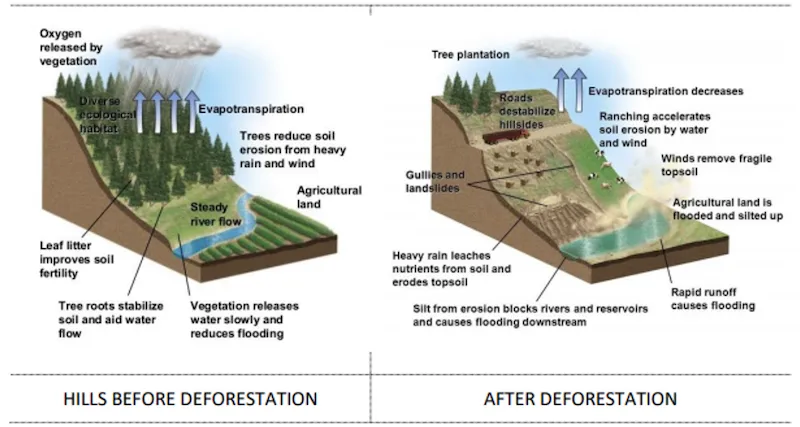
A rice farmer in Odisha may not think about forests daily, but the monsoon rain that fills his paddy comes from moisture recycled by forests. The soil on his farm stays fertile because forests upstream prevent erosion and regulate water flow. Over 300 million Indians depend directly on forests for fuel, fodder, and livelihood -- and every farmer benefits indirectly from the ecological services forests provide.
This lesson covers:
- What is a Forest? -- definitions from four perspectives (general, technical, ecological, legal)
- Functions of Forests -- productive roles (tangible goods) and protective roles (ecological services)
- Status of Forests -- global statistics and India's current forest cover
These foundational concepts appear repeatedly in IBPS AFO, NABARD Grade A, and FCI exams.
What is a Forest?
The word forest comes from the Latin word 'foris', meaning outside the village boundary. In ancient Europe, the area beyond settlements was reserved for wood production. The word entered English in the 14th century.
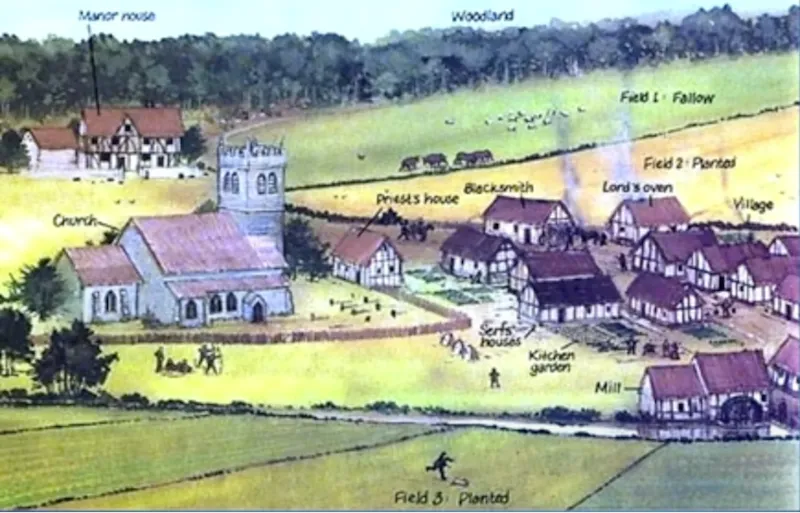
Forests are defined differently depending on the perspective:
| Perspective | Definition | Focus |
|---|---|---|
| General | Uncultivated land with natural vegetation and closed/partially closed canopy, providing shelter to wildlife | Common understanding |
| Technical | Area set aside for production of timber and forest produce, or maintained for indirect benefits (climate, protection) | Economic + ecological purpose |
| Ecological | Plant community predominantly of trees and woody vegetation, usually with a closed canopy | Biological community and structure |
| Legal | Area of land proclaimed to be a forest under a forest law | Government protection and regulation |
TIP
Exam tip: Questions may ask for the "ecological" or "legal" definition specifically. The legal definition is the simplest -- any land declared as forest under law is a forest, regardless of whether trees actually grow there.
- A closely related exam distinction is between Recorded Forest Area (RFA), forest cover, and tree cover. Recorded Forest Area means all lands statutorily notified as forests, even if actual tree cover may be sparse. Forest cover is based on canopy seen on the ground or via remote sensing, while tree cover refers to smaller tree patches outside recorded forest areas, commonly those in patches of less than 1 hectare.
- In older forestry objective books, TOF (Trees Outside Forests) is defined as trees growing outside recorded forest areas, and tree cover is treated as a component of TOF.
Legal Classes of Forests
In Indian forestry law, forests are also grouped by the degree of legal protection and control provided under the forest administration system.
| Legal class | Core idea |
|---|---|
| Reserved forest | Receives the highest degree of protection; rights of use are tightly restricted unless specifically permitted |
| Protected forest | Receives a limited degree of protection; some local rights and uses may continue subject to regulation |
| Village forest | Forest land assigned to a village community for local management and use under government oversight |
IMPORTANT
For direct exam recall: reserved forest = strongest legal protection, protected forest = more limited protection, and village forest = community-use category under state control.
Functions of Forests
Forests serve humanity in two broad ways: they produce tangible goods (timber, fuel, food) and provide intangible ecological services (climate regulation, soil protection, biodiversity conservation). Both categories are essential for sustainable development and frequently tested in exams.
| Productive role (Tangible, Direct) | Protective role (Intangible, Indirect) |
|---|---|
| 1. Food | 1. Climate amelioration |
| 2. Fuel | 2. Soil and water Conservation |
| 3. Shelter | 3. Wildlife habitats |
| 4. Clothing | 4. Store house of genetic diversity |
| 5. Timber | |
| 6. Industrial wood | |
| 7. NTFP (Non-timber forest products) |
Forests perform two broad categories of functions:
A. Productive Roles (Tangible Goods)
Global Perspective
| Fact | Value |
|---|---|
| Forest products' contribution to world GDP | ~1% |
| Annual timber trade value | >US $247 billion |
| Formal forestry employment | ~13 million |
| Informal forestry employment | 45-50 million |
| Demand projection by 2050 | Double or triple current levels |
India's Forest Economy
| Fact | Value |
|---|---|
| Forestry contribution to Indian GDP | 1.7% |
| People dependent on forests for livelihood | ~300 million |
| Rural population dependent on fuelwood | ~70% |
| Tribal people residing in forests | >100 million (8.6% of population) |
| Forest fringe villages | ~170,000 (27% of India's villages) |
| GDP contribution vs livelihood contribution | 7% GDP but 57% of rural livelihoods |
| Forest-based employment | 350 million man-days |
IMPORTANT
While forests contribute only 7% to national GDP, they support 57% of rural Indian livelihoods. This disparity shows that forests are disproportionately important to the rural poor -- a fact frequently tested in exams.
Products from Forests
| Product Category | Details | Key Species |
|---|---|---|
| Food | Rhizomes, fruits, bark, seeds, flowers | Various forest species |
| Fuel | Major domestic fuel source in rural India | Acacia, Casuarina, Prosopis, Neem |
| Clothing | Rayon fibre (artificial silk) | Eucalyptus spp. |
| Shelter/Timber | Construction, furniture | Teak, Palmyra, Jack |
| Industrial wood | Plywood, paper/pulp, matchwood | Teak, Bamboo, Ailanthus |
| NTFPs | Fibre, oils, gums, resins, lac, honey, tendu leaves | See Forest Products lesson |

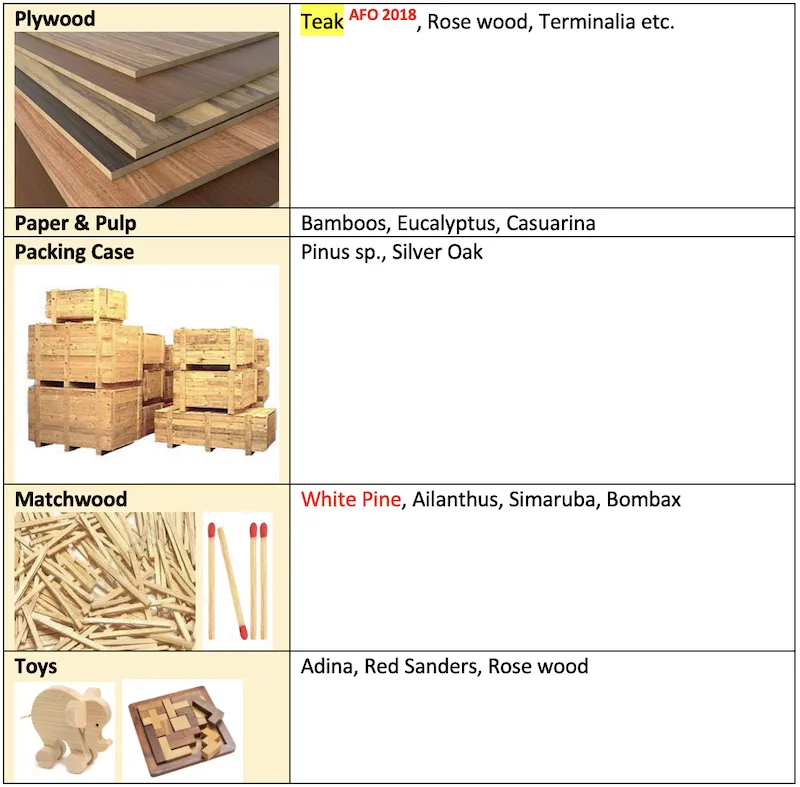
Non-Timber Forest Products (NTFPs) -- Quick List
| NTFP Category | Key Species |
|---|---|
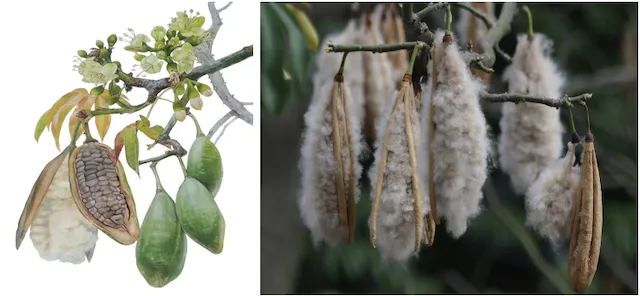
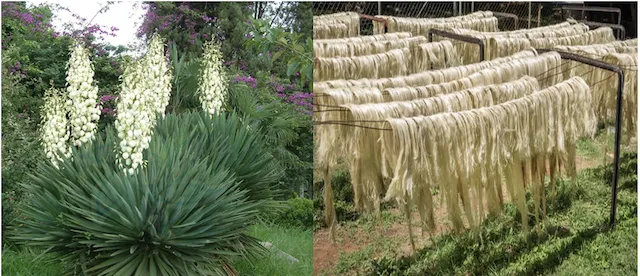
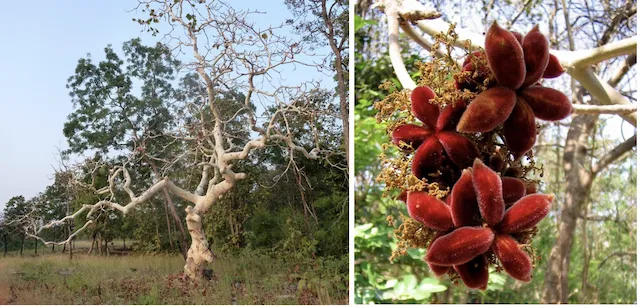
| Fibre/Flosses | Ceiba pentandra exams, Agave sisalana |
| Grasses/Bamboos | 80,000 tonnes of bamboo harvested annually |
| Essential oils | Eucalyptus, Sandalwood |
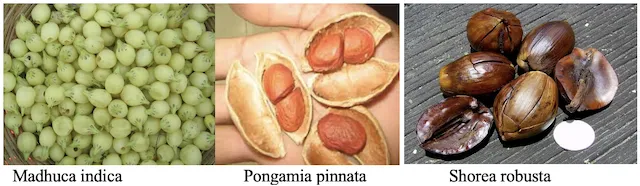
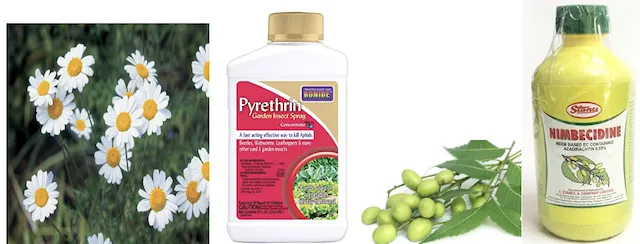
| Oil seeds | Madhuca indica, Pongamia, Neem |
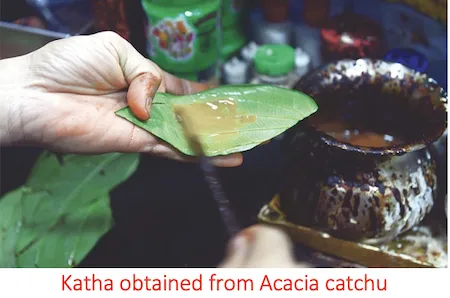
| Tans/Dyes | Acacia catechu, Acacia nilotica |
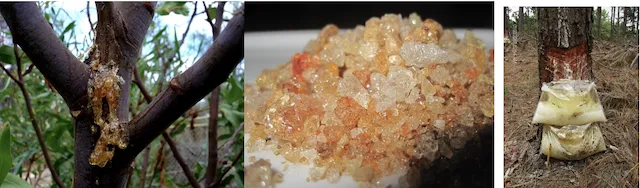
| Gums/Resins | Pinus roxburghii (resin) |
| Drugs/Spices | Rauvolfia serpentina, Cinnamon, Cardamom |
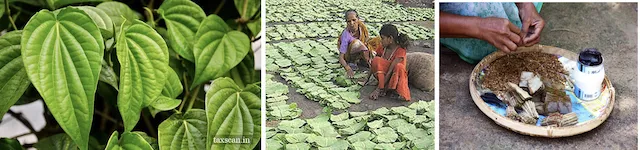
| Tendu leaves | Diospyros melanoxylon (bidi leaves) |
| Lac | Butea monosperma (main host tree) |
| Fodder | Leucaena, Albizia, Hardwickia |
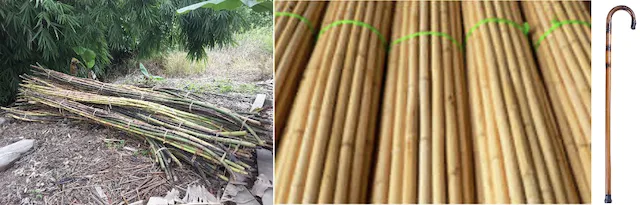
| Cane | Walking sticks, baskets, mats |
B. Protective Roles (Ecological Services)
| Protective Function | How Forests Help |
|---|---|
| Air purification | Act as carbon sinks; absorb CO2 during photosynthesis |
| Climate amelioration | Increase local precipitation by 5-10%; reduce temperature; increase humidity |
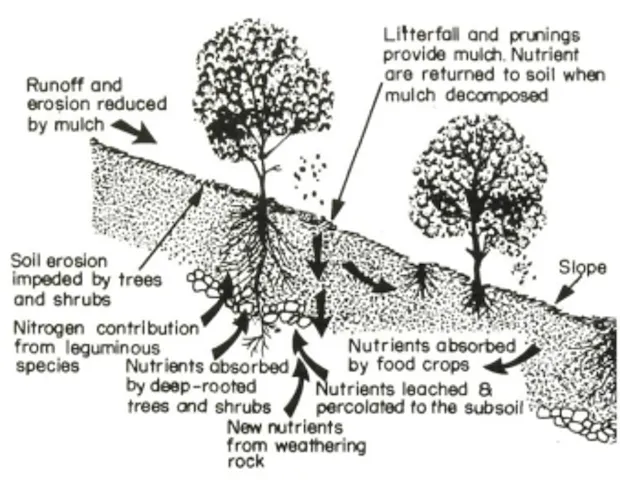
| Soil and water conservation | Intercept 15-30% of rainfall; tree roots bind soil; leaf litter absorbs water |
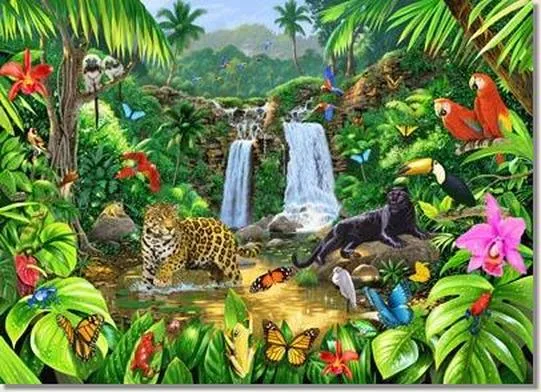
| Wildlife habitat | Home to ~80% of world's terrestrial biodiversity |
| Flood control | Slow surface runoff; recharge groundwater |
- Amazon Rainforest is called the "Lungs of the Planet" for its role in global carbon cycling
- Atmospheric CO2 has reached 0.042% (against a normal of 0.03%) -- forests help reduce this
Status of Forests -- Global and India
Having understood what forests do, we now need to know how much forest the world and India actually have. These statistics are among the most frequently tested numbers in competitive exams.
Global
| Fact | Value |
|---|---|
| World's forest area | ~4 billion hectares (31% of land surface) |
| Pre-industrial forest area | 5.9 billion hectares |
| Forests in developing countries | ~55% |
| Forest plantations | Only ~3% (rest are natural/semi-natural) |
India
| Fact | Value |
|---|---|
| India's global rank (forest area) | 10th |
| Mega-diversity status | One of 12 mega-diversity countries |
| Share of world's biodiversity | 7% |
| Major forest types | 16 (Champion and Seth classification) |
| Forests as terrestrial-biodiversity habitat | About 80% of terrestrial biodiversity |
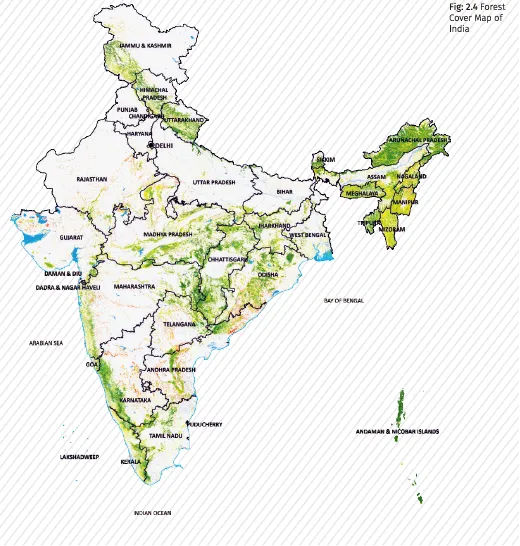
| Total forest cover | 7,13,789 sq km (21.71%) |
| Tree cover | 95,748 sq km (2.85%) |
| Total forest + tree cover | 8,07,276 sq km (24.62%) |
| Forest cover in hectares | 71.37 million ha |
| NFP 1988 target | 33% (plains), 66% (hills) |
| Country with largest forest area | Russia |
- The Forest Survey of India (FSI), headquartered at Dehradun, was established in 1981.
- The India State of Forest Report (ISFR) is published biennially by FSI, and the first forest report was issued in 1987.
IMPORTANT
India's total forest and tree cover is 24.62% -- still short of the National Forest Policy 1988 target of 33%. There is a gap of nearly 8-9 percentage points to bridge.
Exam Tips
TIP
High-frequency exam facts:
- "Forest" from Latin foris = outside the village boundary
- Forest contribution to Indian GDP -- 1.7%
- Rural population dependent on fuelwood -- 70%
- India's forest + tree cover -- 24.62% of geographical area
- NFP 1988 target -- 33% (plains), 66% (hills)
- India's biodiversity share -- 7% of world's biodiversity
- India is one of 12 mega-diversity countries
- India ranks 10th globally in forest area
- Largest forest area -- Russia
- Flosses from -- Ceiba pentandra (exams)
Summary Table
| Topic | Key Fact |
|---|---|
| Word origin | Latin "foris" = outside the village |
| Four definitions | General, Technical, Ecological, Legal |
| Productive roles | Food, Fuel, Timber, Clothing, NTFPs |
| Protective roles | Carbon sink, Climate, Soil/water conservation, Wildlife |
| India's GDP contribution | 1.7% |
| People dependent on forests | ~300 million |
| India's forest + tree cover | 24.62% (target: 33%) |
| Global forest area | ~4 billion hectares (31% of land) |
| Largest forest country | Russia |
| India's rank | 10th globally |
| Mega-diversity countries | 12 (India is one) |
| Amazon Rainforest | "Lungs of the Planet" |
TIP
Next lesson: Now that you understand what forests are and why they matter, the next lesson covers Forest Classification -- how forests are categorised by age, composition, ownership, legal status, and the Champion & Seth system of 16 forest types.
Summary Cheat Sheet
| Concept / Topic | Key Details |
|---|---|
| Forest (ecological) | Community of trees, plants, animals interacting with environment |
| Forest (legal) | Area proclaimed as forest under a forest law |
| Word origin | Latin foris = outside the village boundary |
| Forest products' share of world GDP | ~1% |
| India's forestry GDP contribution | 1.7% |
| India's geographic area under forest | 21.71% (ISFR 2021) |
| National Forest Policy target | 33% of total geographical area |
| Productive functions | Timber, fuelwood, NTFPs, fodder, medicinal plants |
| Protective functions | Soil conservation, watershed protection, windbreak, climate regulation |
| Recreational functions | Eco-tourism, aesthetic value, spiritual significance |
| Forests and climate | Act as carbon sinks; regulate temperature & rainfall |
| Forests and soil | Prevent erosion; improve fertility via leaf litter |
| Forests and water | Regulate water cycle; recharge groundwater; reduce floods |
| Forests and biodiversity | Harbour 80% of terrestrial biodiversity |
| India's forest categories | Reserved, Protected, Village (under IFA 1927) |
| Forest cover types | Very Dense (>70%), Moderately Dense (40-70%), Open (10-40%) |