Agriculture
This agriculture course takes students from basic to advanced across the core subjects repeatedly asked in agriculture exams, bringing together the most important facts and concepts in agronomy, horticulture, soil science, entomology, plant pathology, genetics, animal husbandry, agricultural economics, extension education and more. The focus is on conceptual clarity and exam relevance rather than rote learning.
Course Structure
What's Inside


Agronomy 🌾
Crop production systems, cropping patterns, tillage, weed management, irrigation, organic farming, soil health. Covers Principles of Agronomy, Crop Production, Water Management, Mushroom Cultivation, Weed Science & Meteorology.
Soil Science 🏖️
Soil formation, classification (USDA, FAO), physical and chemical properties, fertility management and amendments. Covers Soil Properties, Soil Fertility & Soil Amendments — high-weightage for all agriculture exams.
Plant Physiology
Photosynthesis (C3, C4, CAM), respiration, transpiration, water and mineral nutrient uptake, plant growth regulators (auxins, gibberellins, cytokinins, ABA, ethylene), vernalization and photoperiodism.
Genetics 🧬 & Plant Breeding
Genetics and plant breeding for exams — Mendel's laws, quantitative genetics, hybridization methods, mutation and polyploidy breeding, biotechnology (Bt crops, molecular markers), cell biology, seed certification and biochemistry fundamentals.

Horticulture 🍇
Horticulture notes for IBPS AFO and NABARD Grade A and exams — fruit science (pomology), vegetable production (olericulture), floriculture, plantation crops, spices and medicinal plants, post-harvest technology and protected cultivation in greenhouse structures.
Plant Pathology
Plant disease symptoms, disease triangle, major fungal, bacterial and viral diseases of crops, disease forecasting, integrated disease management, chemical, biological and cultural control methods.
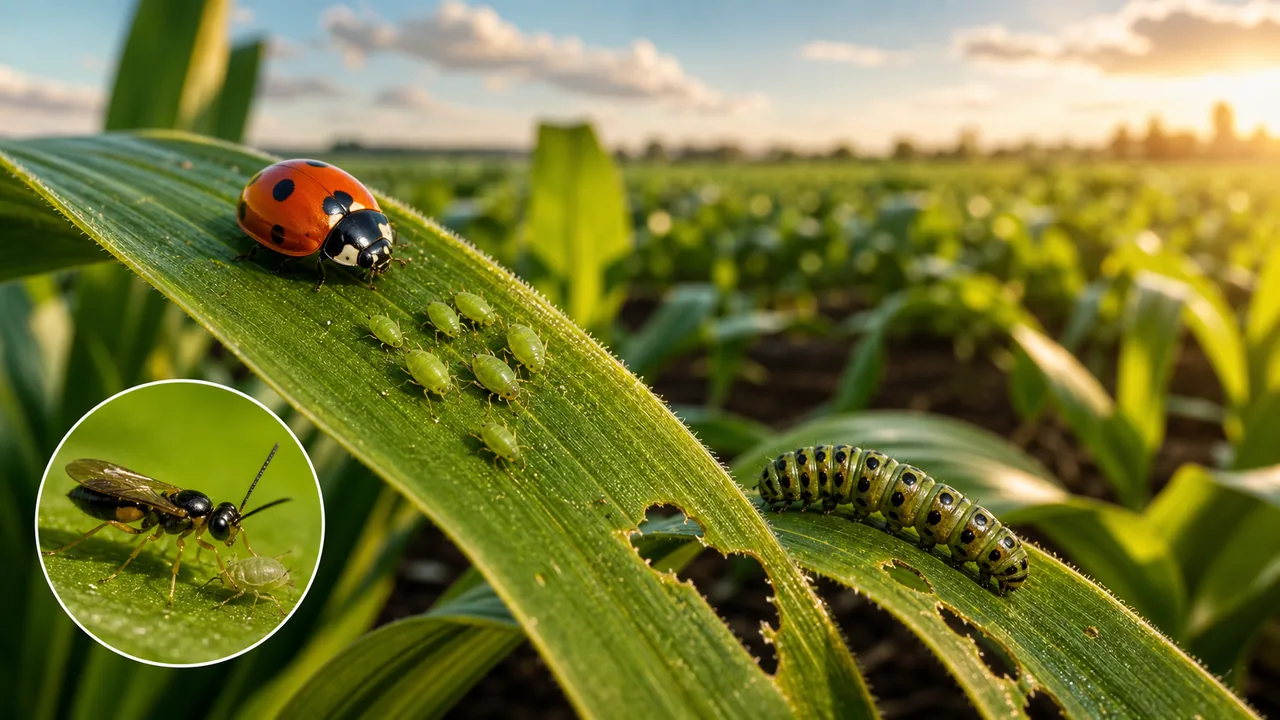
Entomology
Complete agricultural entomology notes covering insect morphology, anatomy, physiology & systematics, important crop pests (rice, wheat, cotton, vegetables), stored grain pests, IPM, toxicology, apiculture, sericulture, lac culture & nematology. Prepared for IBPS AFO, NABARD Grade A, ICAR, FCI, and state agriculture officer exams.
Agricultural Engineering
Farm machinery (tractors, tillage implements, harvesters), irrigation systems (drip, sprinkler, surface), drainage engineering, soil & water conservation structures, post-harvest equipment — for exams.

Animal Husbandry
Master the science of rearing cattle, buffalo, goat, sheep, poultry, and pig — with a focus on understanding why, not just memorising facts. Covers livestock production parameters, breed characteristics, nutrition, disease management, reproduction, and key government schemes like Rashtriya Gokul Mission and Operation Flood. Designed for IBPS AFO, NABARD Grade A, FCI, and ICAR exams.

Fisheries
Freshwater and marine fisheries, aquaculture systems (cage, pond, RAS), fish nutrition, hatchery management, common fish diseases, fishing gear types, government fisheries schemes and policies.

AgroForestry 🌲
Comprehensive course covering forests, silviculture, silvicultural systems, tree species, agroforestry systems, NTFPs, wasteland development, and forest legislation for competitive exams.

Ecology & Environmental Science 🌦️
Ecosystem structure, food chains, energy flow, biogeochemical cycles, biodiversity conservation, climate change, pollution, environmental laws, agroecology — tested in IBPS AFO, NABARD Grade A, and FCI exams.

Extension and Rural Development 💬
Comprehensive course on Agricultural Extension Education, Rural Development, Communication, Adoption & Diffusion, Panchayat Raj, ATMA, KVK, and important programmes for competitive exams.

Agricultural Economics 💹
Comprehensive course on Principles of Economics, Consumer Behaviour, Market Structure, National Income, Farm Management, Production Economics, Agricultural Finance, Credit, Marketing, APMC, Direct Marketing Channels & Modal Bankable Projects.
Agricultural Statistics
Measures of central tendency, dispersion, probability, hypothesis testing, correlation, regression, ANOVA, chi-square test, and experimental designs (CRD, RBD, LSD) — essential for exams.

Food & Nutrition
Macronutrients and micronutrients, caloric value of foods, food quality standards, preservation methods, food safety regulations, nutritional deficiency diseases, FSSAI standards and food fortification policies.

Agriculture Test Series
Revision Warrior test series built from the public Daily Agriculture practice feed. 115 mixed-subject quiz lessons with 40 questions per test across agronomy, horticulture, soil science, plant pathology, entomology, animal husbandry, genetics and allied agriculture topics.
Frequently Asked Questions
What subjects are included in the Agriculture course on AgriDots?
The Agriculture course brings together core agriculture subjects such as agronomy, soil science, horticulture, entomology, plant pathology, genetics and plant breeding, agricultural economics, animal husbandry, and other exam-relevant areas.
Which exams can this Agriculture course help with?
It is designed for agriculture-focused competitive exams such as IBPS AFO, NABARD, ICAR-related preparation, FCI agriculture roles, state agriculture officer exams, and other agri-recruitment tests with professional agriculture sections.
How should a beginner study this Agriculture course?
A practical starting order is agronomy, soil science, horticulture, entomology, plant pathology, genetics, and agricultural economics. Once fundamentals are built, use topic-wise tests and mixed revision to improve retention.
Which Agriculture subjects usually carry the highest weight?
Agronomy, soil science, horticulture, entomology, plant pathology, genetics and plant breeding, and agricultural economics usually carry strong weight because they contain many direct factual and concept-based questions.
Is this Agriculture course better for IBPS AFO or for NABARD?
It supports both, but candidates should use it differently. IBPS AFO preparation often needs faster professional-knowledge recall, while NABARD preparation needs ARD integration and broader stage-wise balance. The same agriculture content can serve both once the exam strategy is adjusted.
How should I revise agriculture subjects without forgetting older topics?
Agriculture preparation works best with layered revision. Finish a subject once, then cycle back through short notes, MCQs, crop-wise tables, and mixed tests. Because many facts are highly specific, spaced revision is more effective than one-time long reading.
Should I study crop-wise or subject-wise in agriculture exams?
Start subject-wise so the concepts become clear, then revise crop-wise and theme-wise. Many serious aspirants switch to crop-based comparison near the exam because questions often connect varieties, pests, diseases, nutrients, or management practices across subjects.
What is the biggest mistake in agriculture exam preparation?
A common mistake is reading too much without converting it into retention. Another is over-investing in one favourite subject while leaving high-yield areas like agronomy, soil science, horticulture, or pest and disease management under-revised.
Can this Agriculture course help state agriculture officer exams too?
Yes. While every state paper has its own pattern, the core agriculture backbone overlaps strongly with agriculture banking, ICAR-oriented, and state technical exams. Candidates usually need only exam-specific additions on top of the core subject base.
How important are MCQs in agriculture preparation if I am already reading notes?
They are essential because agriculture exams repeatedly test factual precision and applied recall. Notes build coverage, but MCQs reveal where memory is weak, where concepts are getting confused, and which topics need another revision pass.