🏕🐄 Agrisilvipastoral Systems -- Trees, Crops, and Animals Together
Home gardens (multi-tier system), woody hedge-rows, apiculture with trees, aquaforestry, and mixed wood lots
A Kerala Homestead -- The Perfect Farm
In the previous lesson, we examined silvipasture -- combining trees with pasture and livestock. Now we add the third component: crops. The agrisilvipastoral system integrates all three -- trees, crops, and animals -- making it the most diversified and resilient form of agroforestry.
Step into a typical homestead in Kerala's Wayanad district. On just half a hectare, a family grows coconut palms towering above, arecanut and jackfruit in the middle layer, pepper vines climbing the tree trunks, banana and tapioca at the shrub level, and ginger and turmeric on the ground. Two cows graze on fodder grasses at the edges. Bees buzz around flowering trees. Fish swim in a small backyard pond. This is an agrisilvipastoral system -- the most complete form of agroforestry, integrating trees, crops, and animals on the same land.
This lesson covers:
- Home gardens -- Kerala's multi-tier system with 3-4 vertical canopy layers
- Woody hedge-rows -- linear hedgerows for fodder, mulch, and soil conservation
- Silviapiary -- bee-keeping with nectar-producing trees
- Aquaforestry -- trees around fish ponds
- Mixed wood lots -- diverse tree plantations
Home garden facts (strata, area, location) are extremely high-frequency in exams.
Pro Content Locked
Upgrade to Pro to access this lesson and all other premium content.
₹99 charged monthly · Cancel anytime
- All Agriculture & Banking Courses
- AI Lesson Questions (100/day)
- AI Doubt Solver (50/day)
- Glows & Grows Feedback (30/day)
- AI Section Quiz (20/day)
- 22-Language Translation (100/day)
- Recall Questions (20/day)
- AI Quiz (15/day)
- AI Quiz Paper Analysis (100/day)
- AI Step-by-Step Explanations (100/day)
- Spaced Repetition Recall (FSRS)
- AI Tutor
- Immersive Text Questions
- Audio Lessons — Hindi & English
- Mock Tests & Previous Year Papers
- Summary & Mind Maps
- XP, Levels, Leaderboard & Badges
- Generate New Classrooms
- Voice AI Teacher (AgriDots Live)
- AI Revision Assistant
- Knowledge Gap Analysis
- Interactive Revision (LangGraph)
🔒 Secure via Razorpay · Cancel anytime · No hidden fees
A Kerala Homestead -- The Perfect Farm
In the previous lesson, we examined silvipasture -- combining trees with pasture and livestock. Now we add the third component: crops. The agrisilvipastoral system integrates all three -- trees, crops, and animals -- making it the most diversified and resilient form of agroforestry.
Step into a typical homestead in Kerala's Wayanad district. On just half a hectare, a family grows coconut palms towering above, arecanut and jackfruit in the middle layer, pepper vines climbing the tree trunks, banana and tapioca at the shrub level, and ginger and turmeric on the ground. Two cows graze on fodder grasses at the edges. Bees buzz around flowering trees. Fish swim in a small backyard pond. This is an agrisilvipastoral system -- the most complete form of agroforestry, integrating trees, crops, and animals on the same land.
This lesson covers:
- Home gardens -- Kerala's multi-tier system with 3-4 vertical canopy layers
- Woody hedge-rows -- linear hedgerows for fodder, mulch, and soil conservation
- Silviapiary -- bee-keeping with nectar-producing trees
- Aquaforestry -- trees around fish ponds
- Mixed wood lots -- diverse tree plantations
Home garden facts (strata, area, location) are extremely high-frequency in exams.
What is the Agrisilvipastoral System?
Unlike agrisilviculture (2 components: trees + crops) and silvipasture (2 components: trees + animals), agrisilvipastoral systems bring all three together. This creates maximum diversity but also requires the highest management skill.
The agrisilvipastoral system (also called agrosilvopastoral) combines three components on the same land:
| Component | Role | Examples |
|---|---|---|
| Trees (Silvi) | Long-term products + ecological services | Coconut, Jackfruit, Timber trees |
| Crops (Agri) | Food and annual income | Rice, Vegetables, Turmeric |
| Pasture/Animals (Pastoral) | Livestock products + nutrient recycling | Cattle, Goats, Poultry, Fodder grasses |
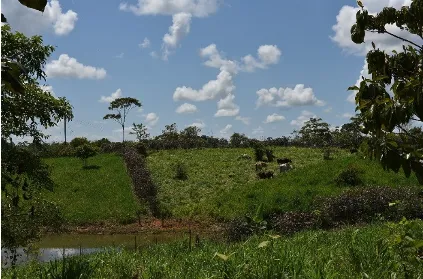
This system is grouped into two main categories:
- Home gardens (multi-tier cropping)
- Woody hedge-rows (for browse, mulch, green manure, and soil conservation)
IMPORTANT
Agrisilvipastoral systems are the most diversified form of agroforestry. They combine all three component types (trees + crops + animals), providing maximum resilience against single-component failure.
1. Home Gardens (Multi-tier System)
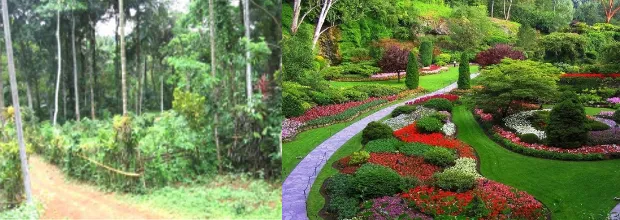
Home gardens are one of the oldest and most complex agroforestry systems, mimicking the structure of a natural forest through multiple vertical layers.
| Feature | Detail |
|---|---|
| Suitable climate | High rainfall areas, tropical conditions |
| Vertical canopy strata | 3-4 layers |
| Most prevalent in | Kerala (internationally recognized model) |
| Homestead area | 0.20-0.50 ha |
| Primary function | Food production |
| Labour type | Family labour |
The Four Vertical Layers
| Layer | Height | Typical Species | Products |
|---|---|---|---|
| Upper canopy | >15 m | Coconut, Arecanut, Jackfruit | Nuts, Fruit, Timber |
| Middle canopy | 5-15 m | Mango, Cashew, Neem | Fruit, Nuts, Medicine |
| Shrub layer | 1-5 m | Banana, Papaya, Coffee | Fruit, Beverages |
| Ground layer | <1 m | Turmeric, Ginger, Vegetables, Fodder grasses | Spices, Food, Animal feed |
Animals (cows, goats, poultry) are also included in many home gardens, with fodder grasses and legumes grown specifically for them. Livestock manure recycles nutrients back into the system.
- In exam-oriented canopy-language, a double-layered arrangement is the simpler case where a crop such as tea or coffee grows under a distinct shade-tree layer, whereas a Kerala home garden is a multi-layered / multi-tier system because it organizes production into 3-4 vertical strata instead of only two.
TIP
Exam favourite: Home gardens have 3-4 vertical canopy strata, are most prevalent in Kerala, and their primary function is food production. Area is typically 0.20-0.50 ha, managed by family labour.
Choice of Species
| Category | Species Examples |
|---|---|
| Woody species | Coconut (Cocos nucifera), Cashew (Anacardium occidentale), Jackfruit (Artocarpus heterophyllus), Mango (Mangifera indica), Neem (Azadirachta indica), Citrus spp. |
| Herbaceous species | Onion, Cabbage, Pumpkin, Sweet potato, Banana, Beans |
Why Home Gardens Are So Productive
Despite their small size (0.20-0.50 ha), home gardens achieve high total biomass production because:
- Vertical space utilization -- multiple canopy layers capture light at different heights
- Year-round production -- different species mature at different times
- Nutrient recycling -- leaf litter, animal manure, and crop residues continuously enrich the soil
- No external inputs needed -- the system is largely self-sustaining
2. Woody Hedge-rows
While home gardens are complex multi-tier systems, woody hedge-rows represent a simpler agrisilvipastoral approach where fast-growing woody plants are planted in linear arrangements.
| Feature | Detail |
|---|---|
| Main aim | Food, fodder, fuelwood, and soil conservation |
| Arrangement | Linear hedgerows, periodically pruned |
| Biomass use | Fed to livestock OR applied as mulch/green manure |
| Suitable species | Erythrina spp., Leucaena leucocephala, Sesbania grandiflora |
These species are preferred because they are nitrogen-fixing legumes that grow rapidly, tolerate frequent pruning, and produce biomass rich in protein.
NOTE
Woody hedge-rows differ from alley cropping in that they include an animal component -- the pruned biomass is primarily used as livestock fodder, making this a pastoral system rather than purely an agrisilviculture system.
3. Other Agrisilvipastoral Systems
Beyond home gardens and hedge-rows, several specialised systems integrate trees with non-traditional animal components like bees and fish. These cross-disciplinary systems are increasingly tested in exams.
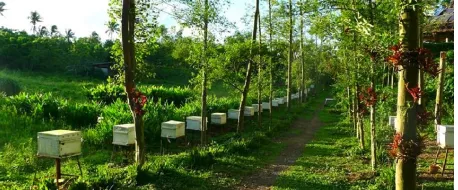
A. Apiculture with Trees (Silviapiary)
| Feature | Detail |
|---|---|
| Also called | Silviapiary (silvi = trees, apiary = bee-keeping) |
| Principle | Plant nectar-producing trees to support honey bee colonies |
| Suitable species | Syzygium cumini, Gliricidia sepium, Cassia spp. |
| Products | Honey, beeswax, improved crop pollination |
Trees are selected for their profuse flowering and extended flowering duration to ensure year-round floral resources for bees. As a bonus, bees improve pollination of nearby agricultural crops.
B. Aquaforestry
| Feature | Detail |
|---|---|
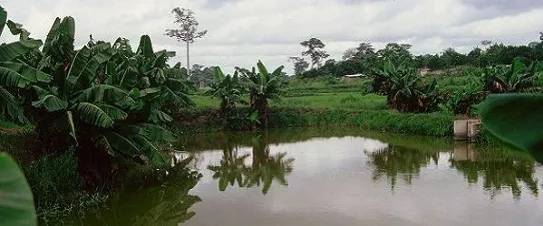
| Principle | Trees planted around fish ponds |
| Primary benefit | Reduces evaporation, improves microclimate for fish |
| Bank-planting species | Mulberry, Acacia nilotica, Bamboos, Salix, Eucalyptus |
| Special species | Taxodium scandens (Pond Cypress) -- extremely flood-tolerant conifer |
How it works:
- Tree canopy lowers water temperature during hot months
- Leaf litter supplements fish feed
- Tree roots stabilize pond embankments
- Reduced wind speed over pond reduces evaporation
TIP
Aquaforestry connects forestry with fisheries -- a cross-disciplinary topic. Remember that Taxodium (Pond Cypress) is the key species because it thrives in waterlogged conditions where most trees fail.
C. Mixed Wood Lots
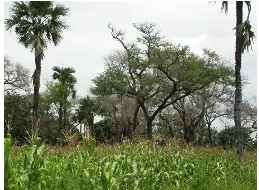
- Multipurpose trees grown in a mixed fashion (unlike monoculture plantations)
- Objectives: wood, fodder, soil conservation, soil reclamation
- Species diversity reduces pest and disease risk
- Ensures continuous supply of diverse products over time
Comparison of Agrisilvipastoral Sub-systems
This comparison table is useful for distinguishing between sub-systems when exam questions present scenarios and ask you to identify the correct system.
| System | Components | Scale | Primary Output | Key Feature |
|---|---|---|---|---|
| Home gardens | Trees + crops + animals | Small (0.2-0.5 ha) | Food | 3-4 vertical layers |
| Woody hedge-rows | Tree hedges + crops + animals | Field level | Fodder + green manure | Linear arrangement |
| Silviapiary | Nectar trees + bees | Farm level | Honey | Trees support bee colonies |
| Aquaforestry | Trees + fish ponds | Pond periphery | Fish + wood | Trees improve pond microclimate |
| Mixed wood lots | Multiple tree species | Plantation level | Wood + fodder | Species diversity for resilience |
Agricultural Connection: Integration Benefits
The ultimate advantage of agrisilvipastoral systems is economic resilience through diversification. A farmer practising agrisilvipastoral agroforestry benefits from multiple income streams:
| Component | Annual Income Source | Frequency |
|---|---|---|
| Timber trees | Timber at rotation end | Every 10-20 years |
| Fruit trees | Fruits, nuts | Seasonal |
| Field crops | Grains, vegetables | Every season |
| Livestock | Milk, eggs, meat | Daily/weekly |
| Bees | Honey | Seasonal |
| Fish | Fish harvest | Annual |
This diversification makes the farm economically resilient -- no single failure can cause total income loss.
Exam Tips
TIP
Frequently tested facts:
- Home gardens have 3-4 vertical strata
- Most prevalent in Kerala
- Area: 0.20-0.50 ha, managed by family labour
- Primary function: food production
- Silviapiary = trees + bee-keeping
- Aquaforestry = trees + fish ponds
- Woody hedge-row species: Leucaena, Erythrina, Sesbania (all nitrogen-fixing)
- Taxodium scandens = flood-tolerant conifer for pond banks
Summary Table
| Topic | Key Fact |
|---|---|
| System definition | Trees + Crops + Pasture/Animals on same land |
| Home garden strata | 3-4 vertical canopy layers |
| Most common in | Kerala (high rainfall areas) |
| Homestead size | 0.20-0.50 ha |
| Primary function | Food production |
| Labour | Family labour |
| Hedge-row species | Leucaena, Erythrina, Sesbania (N-fixing legumes) |
| Silviapiary | Nectar trees + honey bees |
| Aquaforestry species | Taxodium scandens (Pond Cypress) |
| Mixed wood lots | Multiple tree species for diverse products |
Summary Cheat Sheet
| Concept / Topic | Key Details |
|---|---|
| Agrisilvipasture | Trees + Crops + Pasture/Animals on same land (3-component system) |
| Home garden | Most common in Kerala; 3–4 vertical canopy layers; 0.20–0.50 ha |
| Home garden function | Food production using family labour; multi-tier system |
| Silviapiary | Nectar trees + honey bees; trees with profuse & extended flowering |
| Silviapiary species | Syzygium cumini, Gliricidia, Cassia spp. |
| Silviapiary products | Honey, beeswax, improved crop pollination |
| Aquaforestry | Trees + fish ponds; flood-tolerant species on pond banks |
| Aquaforestry species | Taxodium scandens (Pond Cypress) — flood-tolerant conifer |
| Mixed wood lots | Multiple tree species for diverse products |
| Hedge-row species | Leucaena, Erythrina, Sesbania (all N-fixing legumes) |
| Humid tropical AF | Home gardens, multi-tier systems |
| Arid zone AF | Silvipasture, shelterbelts |
TIP
Next: Lesson 05 covers Agroforestry System Design -- how to arrange components in space (spatial) and time (temporal), plus the functional, socioeconomic, and ecological classification frameworks.