🎋 Bamboo -- India's Green Gold (Cultivation, Uses & Exam Facts)
Complete guide to bamboo cultivation -- species, gestation period, soil and climate requirements, India's production ranking, INBAR, and all exam-important facts about Green Gold.
In the Barak Valley of Assam, entire villages sustain their livelihoods from bamboo -- using it for house construction, crafting baskets, even fermenting young shoots into traditional pickles. Despite being a "grass", bamboo grows as tall as a tree, matures faster than any timber species, and has earned two remarkable titles: Green Gold for its immense economic value and Poor Man's Timber for its affordability. This chapter covers every exam-important aspect of bamboo cultivation.
This lesson covers:
- Botanical profile -- Poaceae family, 136 species in India
- Climate and soil -- 5-year gestation period, acidic pH preference
- India's position -- second largest producer after China
- Uses -- construction, paper, food, handicrafts
- INBAR -- international bamboo organisation headquartered in Beijing
Botanical Profile

| Parameter | Details |
|---|---|
| Classification | A type of woody grass |
| Family | Poaceae (the grass family) |
| Common names | Green Gold, Poor Man's Timber |
| Species in India | 136 species across 13.96 million hectares |
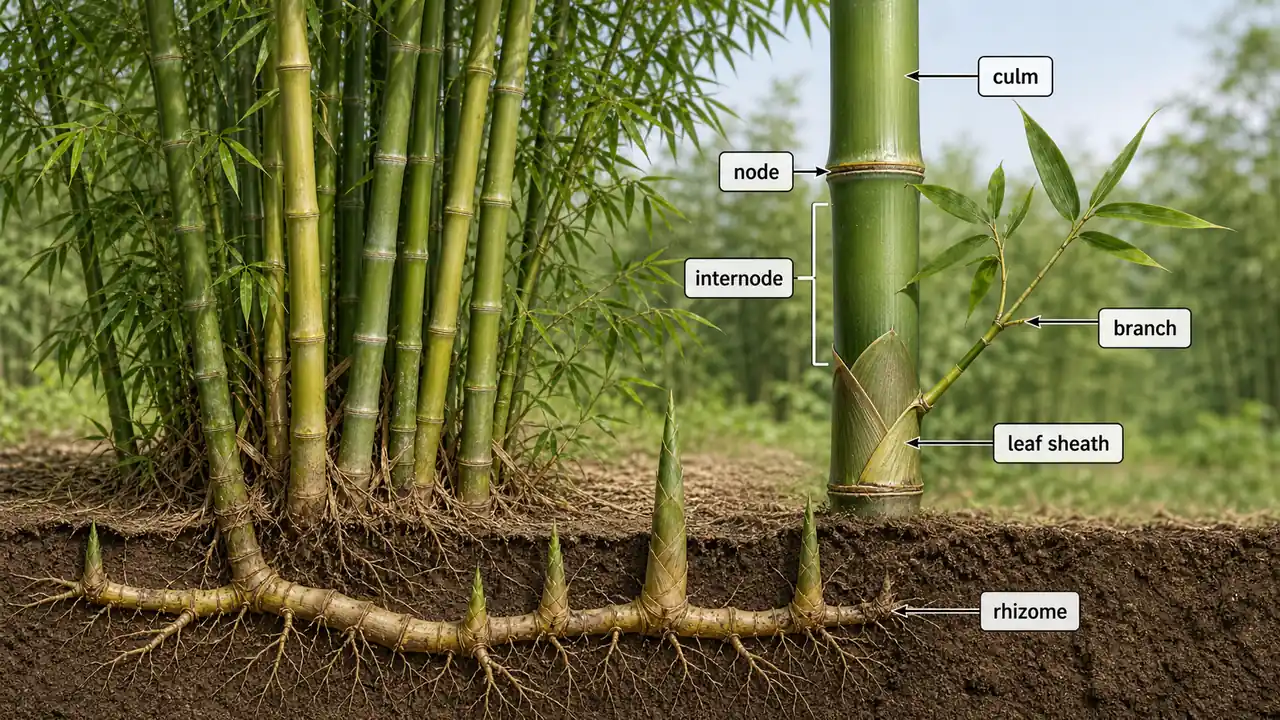
Bamboo belongs to the grass family Poaceae, making it one of the fastest-growing plants on Earth. Despite being a grass, it can grow as tall as a tree, which is why it is often mistaken for timber.
Pro Content Locked
Upgrade to Pro to access this lesson and all other premium content.
Pay once valid for one year · Effective ₹99/month
- All Agriculture & Banking Courses
- AI Lesson Questions (100/day)
- AI Doubt Solver (50/day)
- Glows & Grows Feedback (30/day)
- AI Section Quiz (20/day)
- 22-Language Translation (100/day)
- Recall Questions (20/day)
- AI Quiz (15/day)
- AI Quiz Paper Analysis (100/day)
- AI Step-by-Step Explanations (100/day)
- Spaced Repetition Recall (FSRS)
- AI Tutor
- Immersive Text Questions
- Audio Lessons — Hindi & English
- Mock Tests & Previous Year Papers
- Summary & Mind Maps
- XP, Levels, Leaderboard & Badges
- Generate New Classrooms
- Voice AI Teacher (AgriDots Live)
- AI Revision Assistant
- Knowledge Gap Analysis
- Interactive Revision (LangGraph)
🔒 Secure one-time yearly payment via Razorpay · No hidden fees
In the Barak Valley of Assam, entire villages sustain their livelihoods from bamboo -- using it for house construction, crafting baskets, even fermenting young shoots into traditional pickles. Despite being a "grass", bamboo grows as tall as a tree, matures faster than any timber species, and has earned two remarkable titles: Green Gold for its immense economic value and Poor Man's Timber for its affordability. This chapter covers every exam-important aspect of bamboo cultivation.
This lesson covers:
- Botanical profile -- Poaceae family, 136 species in India
- Climate and soil -- 5-year gestation period, acidic pH preference
- India's position -- second largest producer after China
- Uses -- construction, paper, food, handicrafts
- INBAR -- international bamboo organisation headquartered in Beijing
Botanical Profile
| Parameter | Details |
|---|---|
| Classification | A type of woody grass |
| Family | Poaceae (the grass family) |
| Common names | Green Gold, Poor Man's Timber |
| Species in India | 136 species across 13.96 million hectares |
Bamboo belongs to the grass family Poaceae, making it one of the fastest-growing plants on Earth. Despite being a grass, it can grow as tall as a tree, which is why it is often mistaken for timber.
Climate and Soil Requirements
| Parameter | Details |
|---|---|
| Climate | Hot to warm temperate conditions |
| Best region in India | Barak Valley, Assam |
| pH | 4.5-6.0 (slightly acidic) |
| Soil | All types except rock-strewn soils |
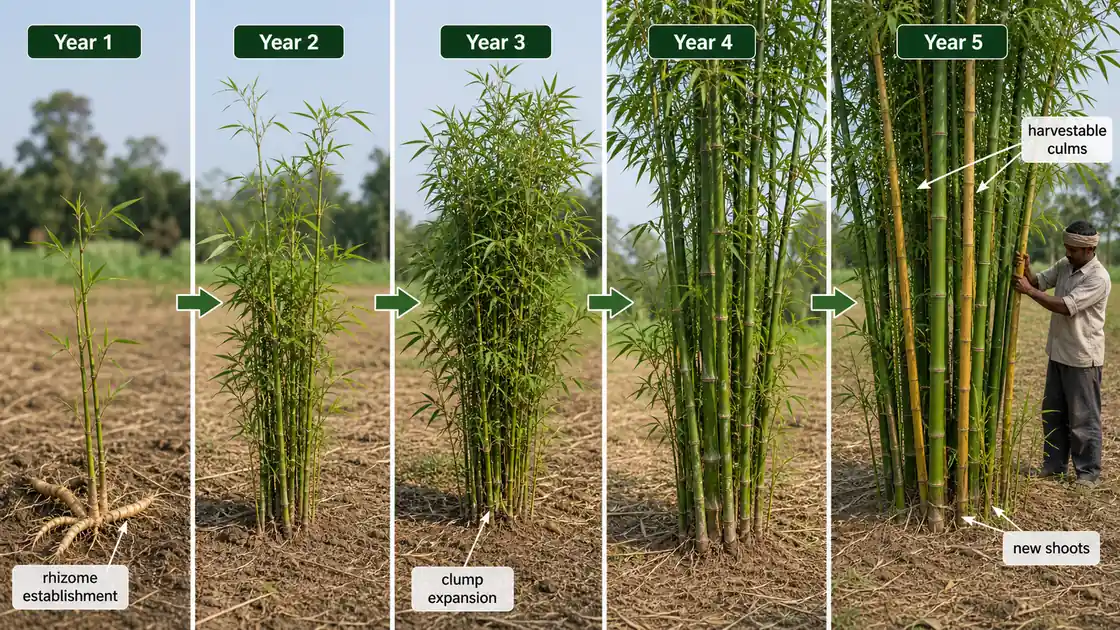
| Gestation period | 5 years |
Bamboo thrives in tropical and subtropical regions, though some species can tolerate cooler temperate climates. The slightly acidic pH of 4.5-6.0 is ideal because bamboo roots absorb nutrients most efficiently under these conditions. Well-drained, loamy soils with good organic matter content further boost growth.
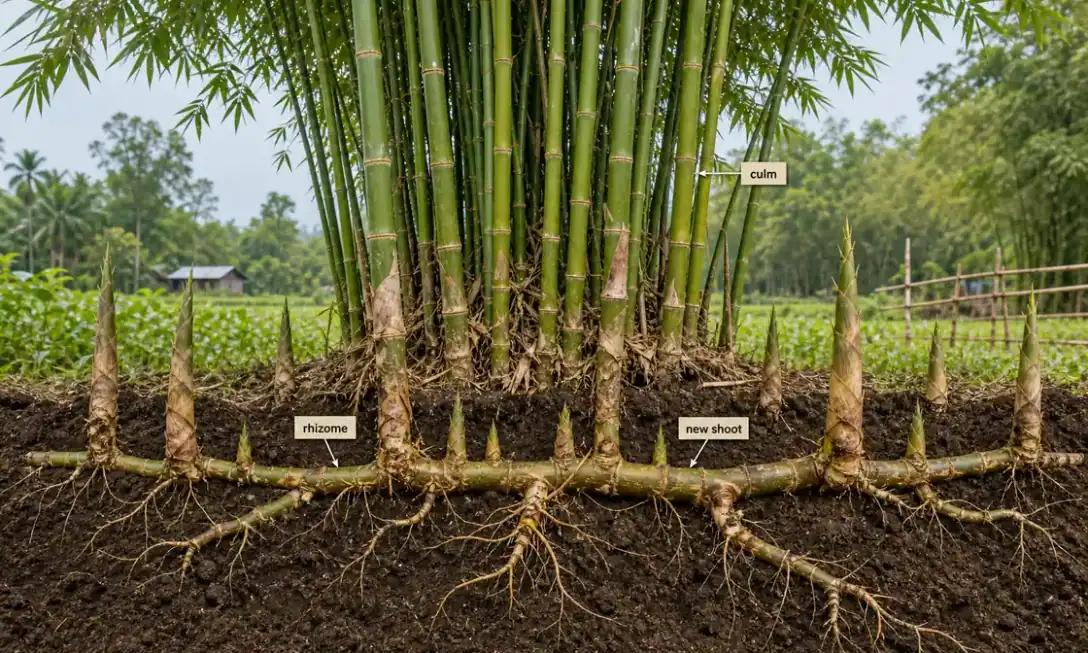
The 5-year gestation period means bamboo takes about five years from planting before it can be commercially harvested. During this period, the plant establishes a strong rhizome network underground, which later supports rapid above-ground growth.
India's Position in World Bamboo Production
- India is the second largest producer of bamboo in the world after China.
- China dominates global bamboo production, but India holds a significant share due to its vast natural bamboo forests, especially in the North-Eastern states.
- Assam is the largest bamboo-producing state in India. The warm, humid climate and fertile alluvial soils of the Brahmaputra and Barak valleys provide ideal growing conditions.
Uses of Bamboo
The versatility of bamboo is unmatched -- it serves purposes ranging from construction to food to industrial raw material. Bamboo is called Green Gold because of its immense economic value. Its major uses include:
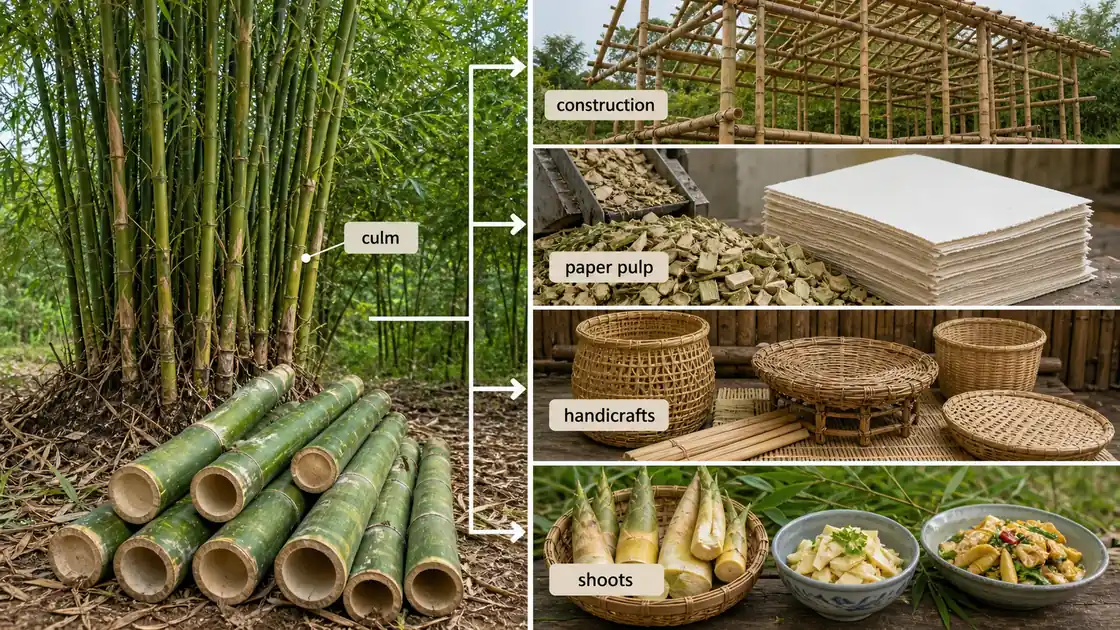
- Construction -- scaffolding, house frames, flooring
- Furniture -- chairs, tables, shelves
- Paper and pulp industry
- Handicrafts -- baskets, mats, decorative items
- Food -- bamboo shoots (a delicacy in NE India and South-East Asia)
- Industrial products -- charcoal, activated carbon, textiles
The name Poor Man's Timber reflects its affordability and accessibility, serving as a building material for millions of rural households who cannot afford conventional timber.
International Bamboo and Rattan Organisation (INBAR)
- Located in Beijing, China
- An intergovernmental organisation that promotes the use of bamboo and rattan for sustainable development, poverty reduction, and environmental conservation across its member countries
- India is a founding member of INBAR
Summary Table -- Bamboo Key Facts
| Fact | Details |
|---|---|
| Family | Poaceae (grass family) |
| Common names | Green Gold, Poor Man's Timber |
| World rank | 2nd largest producer (after China) |
| Top state in India | Assam |
| Area in India | 13.96 million hectares |
| Species in India | 136 |
| Gestation period | 5 years |
| Preferred pH | 4.5-6.0 |
| Soil | All types except rock-strewn |
| INBAR HQ | Beijing, China |
NOTE
Bamboo exam mnemonic -- "GASP 5": Green Gold, Assam (#1 state), Second largest producer (after China), Poaceae family, 5-year gestation. These five facts cover over 80% of bamboo questions in competitive exams.
Summary Cheat Sheet
| Concept / Topic | Key Details / Explanation |
|---|---|
| Classification | A type of woody grass |
| Family | Poaceae (the grass family) |
| Common names | Green Gold (economic value); Poor Man's Timber (affordability) |
| Species in India | 136 species across 13.96 million hectares |
| World rank | India = 2nd largest producer (after China) |
| Top producing state | Assam (Brahmaputra + Barak valleys) |
| Best region | Barak Valley, Assam |
| Climate | Hot to warm temperate; tropical and subtropical |
| Preferred pH | 4.5-6.0 (slightly acidic) |
| Soil | All types except rock-strewn soils |
| Gestation period | 5 years from planting to commercial harvest (rhizome network establishment) |
| Uses | Construction, furniture, paper/pulp, handicrafts, bamboo shoots (food), charcoal |
| INBAR | International Bamboo and Rattan Organisation; HQ = Beijing, China; India = founding member |
| Why "Green Gold" | Immense economic value — construction, industry, food |
| Why "Poor Man's Timber" | Affordable building material for rural households |