🌿 Sunhemp -- India's Dual-Purpose Fiber and Green Manure Crop
Complete guide to sunhemp (Crotalaria juncea) -- bast fiber crop, green manuring champion (60-80 kg N/ha), monocrotaline toxin, retting process, and cultivation practices for AFO/ exams.
Before chemical fertilisers became widespread, Indian farmers had a time-tested trick for restoring soil fertility: they would sow sunhemp after the rabi harvest and plough the lush green crop back into the soil at flowering. In just 45-60 days, sunhemp could add 60-80 kg of nitrogen per hectare -- nature's own fertiliser factory. This dual-purpose crop serves both as a valuable bast fiber source and as one of the best green manure crops in tropical agriculture. For exam aspirants, sunhemp bridges the topics of fiber crops and soil fertility management.
This lesson covers:
- Botanical profile -- Fabaceae family, self-pollinated, Indian origin
- Dual uses -- bast fiber production and green manuring
- Climate and cultivation -- drought tolerance, seed rate differences by purpose
- Retting process -- microbial fiber separation
- Sunhemp vs Jute comparison -- legume vs non-legume distinction
Botanical Profile
Sunhemp is the only major fiber crop that is also a legume -- this dual identity (fiber + nitrogen fixer) makes it unique and a favourite exam distinction.
Pro Content Locked
Upgrade to Pro to access this lesson and all other premium content.
Pay once valid for one year · Effective ₹99/month
- All Agriculture & Banking Courses
- AI Lesson Questions (100/day)
- AI Doubt Solver (50/day)
- Glows & Grows Feedback (30/day)
- AI Section Quiz (20/day)
- 22-Language Translation (100/day)
- Recall Questions (20/day)
- AI Quiz (15/day)
- AI Quiz Paper Analysis (100/day)
- AI Step-by-Step Explanations (100/day)
- Spaced Repetition Recall (FSRS)
- AI Tutor
- Immersive Text Questions
- Audio Lessons — Hindi & English
- Mock Tests & Previous Year Papers
- Summary & Mind Maps
- XP, Levels, Leaderboard & Badges
- Generate New Classrooms
- Voice AI Teacher (AgriDots Live)
- AI Revision Assistant
- Knowledge Gap Analysis
- Interactive Revision (LangGraph)
🔒 Secure one-time yearly payment via Razorpay · No hidden fees
Before chemical fertilisers became widespread, Indian farmers had a time-tested trick for restoring soil fertility: they would sow sunhemp after the rabi harvest and plough the lush green crop back into the soil at flowering. In just 45-60 days, sunhemp could add 60-80 kg of nitrogen per hectare -- nature's own fertiliser factory. This dual-purpose crop serves both as a valuable bast fiber source and as one of the best green manure crops in tropical agriculture. For exam aspirants, sunhemp bridges the topics of fiber crops and soil fertility management.
This lesson covers:
- Botanical profile -- Fabaceae family, self-pollinated, Indian origin
- Dual uses -- bast fiber production and green manuring
- Climate and cultivation -- drought tolerance, seed rate differences by purpose
- Retting process -- microbial fiber separation
- Sunhemp vs Jute comparison -- legume vs non-legume distinction
Botanical Profile
Sunhemp is the only major fiber crop that is also a legume -- this dual identity (fiber + nitrogen fixer) makes it unique and a favourite exam distinction.
| Parameter | Details |
|---|---|
| Botanical name | Crotalaria juncea |
| Family | Fabaceae (Leguminosae) |
| Chromosome number | 2n = 16 |
| Origin | India |
| Pollination | Self-pollinated |
| Common names | Sann hemp / Indian hemp |
| Fiber source | Stem bark (phloem) -- bast fiber |
Uses -- Fiber and Green Manuring
As a Fiber Crop
- Used for making ropes, twines, fishing nets, canvas, tissue paper
- The fiber is obtained from the stem bark through the retting process
As a Green Manure Crop
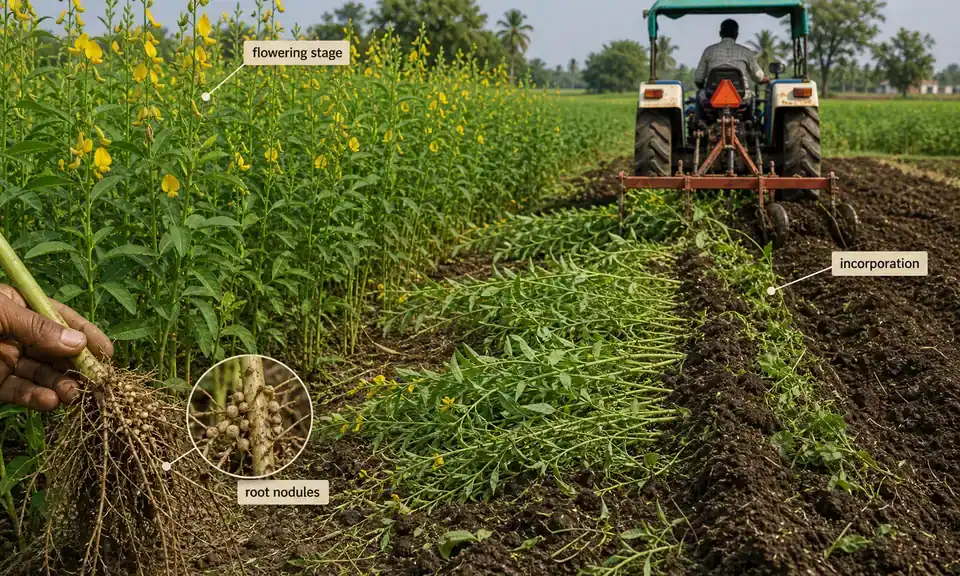
- Sunhemp is one of the best green manure crops -- adds 60-80 kg N/ha in just 45-60 days
- The crop is incorporated into soil at flowering stage (45-60 DAS) for green manuring
- Being a legume, it fixes atmospheric nitrogen through root nodules
Toxicity
- Seeds contain the toxic alkaloid monocrotaline -- not suitable for human or animal consumption
Climate and Soil Requirements
Sunhemp is notably hardy -- it tolerates drought, grows in poor sandy soils, and requires minimal inputs. This low-maintenance nature is what makes it ideal as a green manure crop that farmers can fit into rotations without significant investment.
| Parameter | Details |
|---|---|
| Climate | Tropical crop |
| Temperature | 25-35°C (optimum) |
| Rainfall | 500-1000 mm |
| Drought tolerance | Drought tolerant -- grows well in poor, sandy soils |
| Soil | Sandy loam to loam, well-drained |
| Sensitivity | Sensitive to waterlogging and frost |
Cultivation Practices
| Parameter | Details |
|---|---|
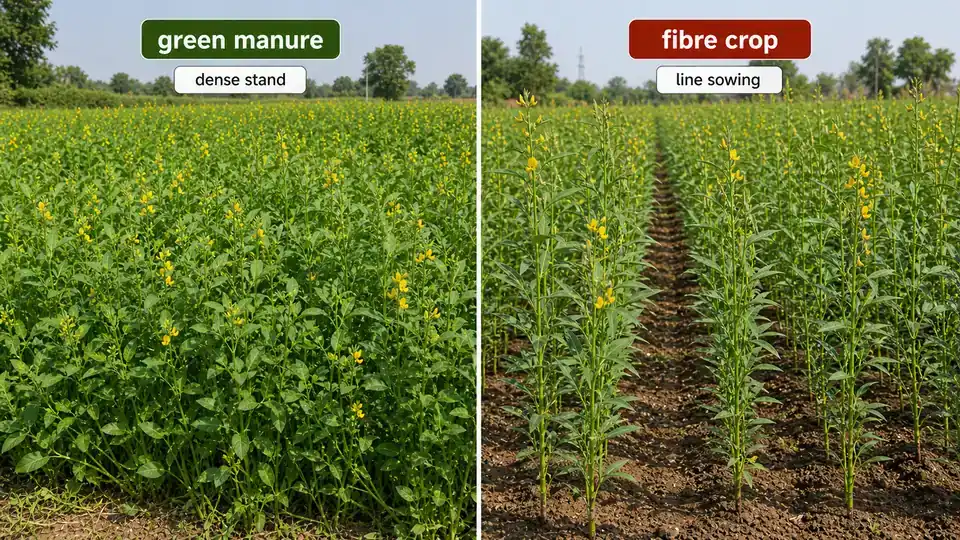
| Seed rate (fiber) | 40-50 kg/ha |
| Seed rate (green manure) | 80-90 kg/ha (broadcasting) |
| Spacing | 30 x 10 cm (line sowing for fiber) |
| Sowing time | Kharif: June-July (fiber); March-April or June-July (green manure) |
| Fertilizers (NPK) | 20:40:20 kg/ha |
| Fiber yield | 8-10 q/ha |
| Green matter yield | 150-200 q/ha |
Note the higher seed rate for green manuring (80-90 kg/ha) compared to fiber production (40-50 kg/ha). When grown for green manure, a dense stand is desired for maximum biomass, while fiber production requires moderate spacing for better stem quality.

Retting Process
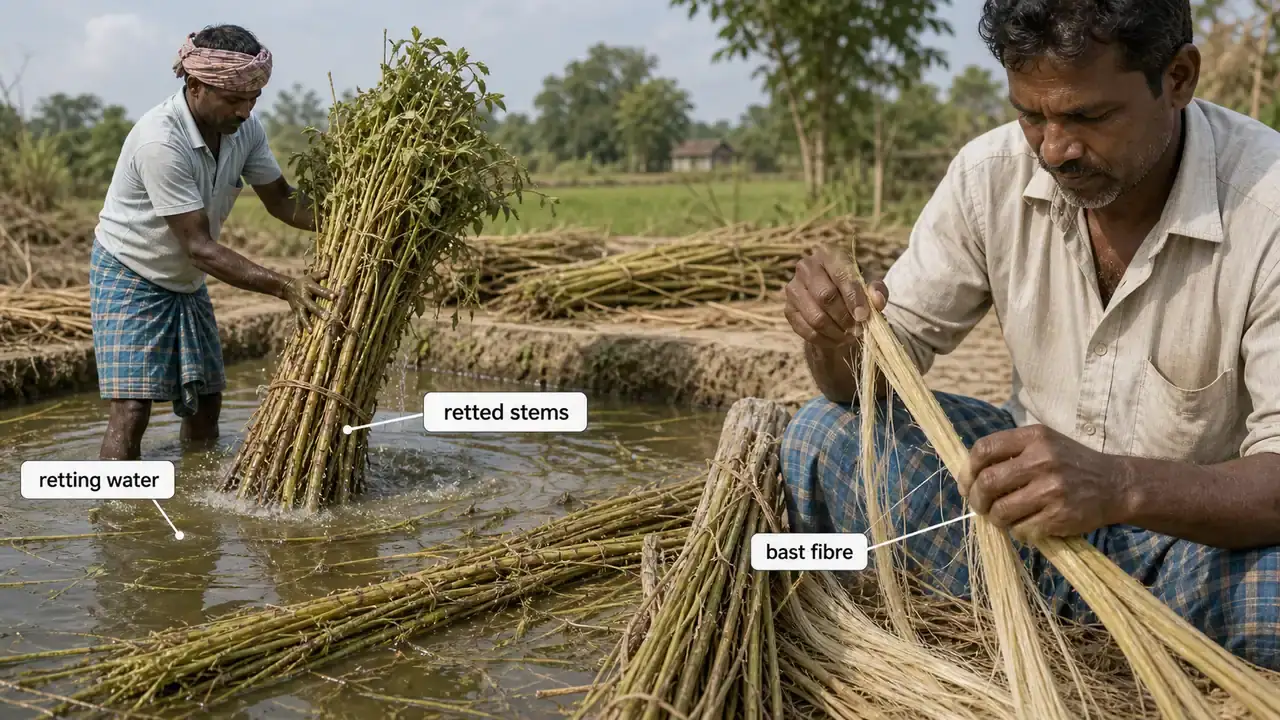
Like jute, sunhemp fiber is extracted through retting -- a biological process that uses microbial action to dissolve the pectin binding fiber to the woody stem. After harvesting, stems undergo retting -- a biological process to separate fiber from the stem:
- Harvested stems are tied into bundles
- Bundles are immersed in stagnant or slow-flowing water for 8-15 days
- Microbial action (mainly bacteria) breaks down the pectin that binds fiber to the stem
- Fibers are then stripped, washed, and dried
Sunhemp vs Jute -- Comparison
| Character | Sunhemp | Jute |
|---|---|---|
| Family | Fabaceae (Legume) | Malvaceae (NOT a legume) |
| Fiber type | Bast fiber | Bast fiber |
| N fixation | Yes (legume -- fixes N) | No |
| Green manure use | Yes (major use) | No |
| Fiber quality | Coarser but more durable | Finer, softer |
| Origin | India | China/India |
TIP
Sunhemp vs Jute (exam favourite): Both are bast fiber crops. Sunhemp is a legume (fixes N, used as green manure) while Jute is NOT a legume. Sunhemp fiber is coarser than jute but more durable. For IBPS AFO, NABARD, and FCI exams, remember sunhemp = green manure + fiber dual purpose.
Summary Table -- Sunhemp Key Facts
| Fact | Details |
|---|---|
| Family | Fabaceae (Leguminosae) |
| Origin | India |
| Chromosome | 2n = 16 |
| Fiber source | Stem bark (bast fiber) |
| N fixation | 60-80 kg N/ha in 45-60 days |
| Green manure stage | Flowering (45-60 DAS) |
| Toxin | Monocrotaline (in seeds) |
| Retting duration | 8-15 days in water |
| Fiber yield | 8-10 q/ha |
| Pollination | Self-pollinated |
NOTE
Exam mnemonic -- "SuN-FiG": Sunhemp is from INdia, produces Fiber + Green manure. It is the only major fiber crop that doubles as a green manure crop -- a favourite exam distinction.
Summary Cheat Sheet
| Concept / Topic | Key Details / Explanation |
|---|---|
| Botanical name | Crotalaria juncea; Family Fabaceae (Leguminosae); Chromosome 2n = 16 |
| Origin | India |
| Common names | Sann hemp / Indian hemp |
| Fiber source | Stem bark (phloem) — bast fiber |
| Unique identity | Only major fiber crop that is also a legume (fixes N) |
| Pollination | Self-pollinated |
| Climate | Tropical; temperature 25-35°C; rainfall 500-1000 mm |
| Drought tolerance | Drought tolerant; sensitive to waterlogging and frost |
| Seed rate (fiber) | 40-50 kg/ha (line sowing, 30 x 10 cm) |
| Seed rate (green manure) | 80-90 kg/ha (broadcasting — denser stand for biomass) |
| N fixation | 60-80 kg N/ha in just 45-60 days |
| Green manure stage | Crop incorporated at flowering stage (45-60 DAS) |
| Fiber yield | 8-10 q/ha; green matter yield 150-200 q/ha |
| Toxin | Seeds contain monocrotaline — not safe for human/animal consumption |
| Retting | Immerse bundles in water 8-15 days; bacteria break down pectin to release fiber |
| Fiber uses | Ropes, twines, fishing nets, canvas, tissue paper |
| Sunhemp vs Jute | Both = bast fiber; Sunhemp = legume (fixes N, green manure); Jute = NOT a legume |
Lesson Doubts
Ask questions, get expert answers