🔺 Buckwheat -- The Himalayan Pseudocereal (Gluten-Free, Rutin & Exam Facts)
Complete guide to buckwheat (Fagopyrum esculentum) -- pseudocereal classification, Polygonaceae family, Rutin alkaloid, gluten-free grain, achene fruit, C3 day-neutral plant, and cultivation in Himalayan regions.
During Navratri fasting across India, millions reach for kuttu ka atta (buckwheat flour) -- one of the few "grains" permitted during religious fasts precisely because it is not a true cereal. High in the Himalayan valleys of Uttarakhand and the North-Eastern states, farmers grow this hardy crop on steep, acidic soils where conventional cereals struggle. Buckwheat is a pseudocereal -- its triangular seeds are eaten like grain and packed with high-quality protein, yet it belongs to the Polygonaceae family, far removed from wheat, rice, or maize. This chapter covers every testable aspect of this unique crop.
Botanical Profile
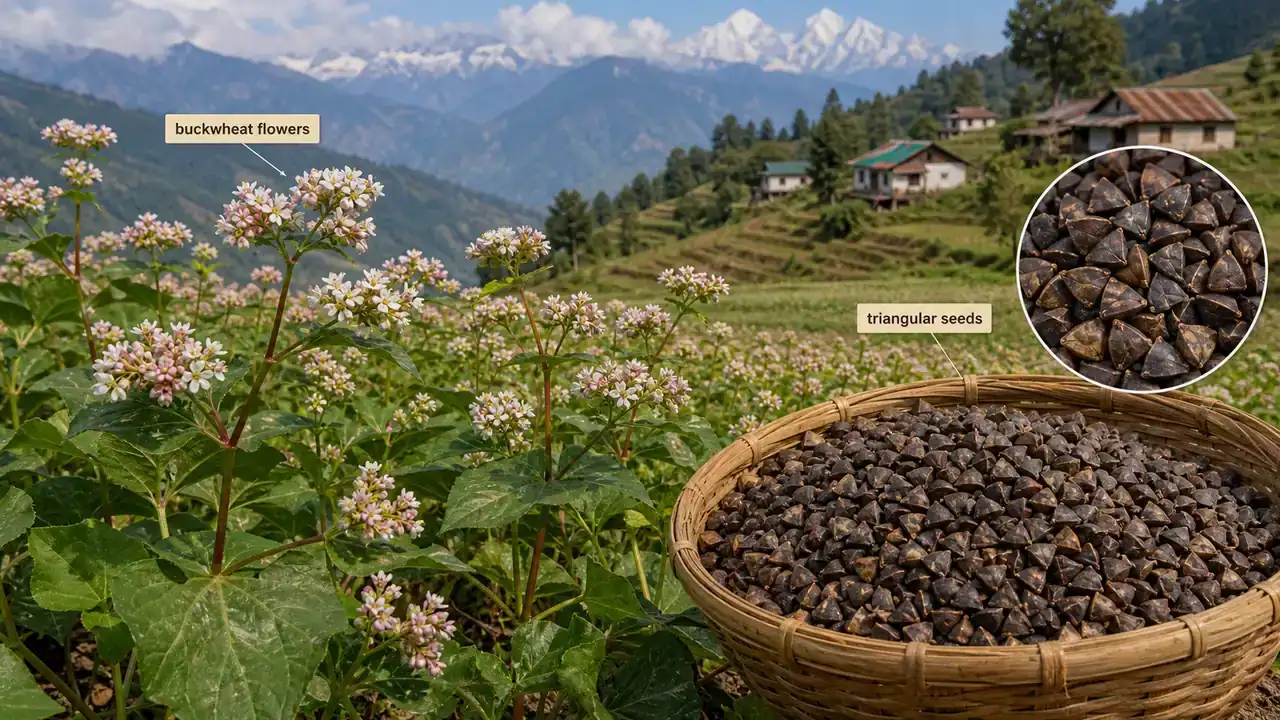
Buckwheat belongs to the Polygonaceae family -- completely unrelated to wheat or any true cereal (Poaceae). This family placement is the single most important botanical fact for exams and instantly classifies buckwheat as a pseudocereal.
Pro Content Locked
Upgrade to Pro to access this lesson and all other premium content.
Pay once valid for one year · Effective ₹99/month
- All Agriculture & Banking Courses
- AI Lesson Questions (100/day)
- AI Doubt Solver (50/day)
- Glows & Grows Feedback (30/day)
- AI Section Quiz (20/day)
- 22-Language Translation (100/day)
- Recall Questions (20/day)
- AI Quiz (15/day)
- AI Quiz Paper Analysis (100/day)
- AI Step-by-Step Explanations (100/day)
- Spaced Repetition Recall (FSRS)
- AI Tutor
- Immersive Text Questions
- Audio Lessons — Hindi & English
- Mock Tests & Previous Year Papers
- Summary & Mind Maps
- XP, Levels, Leaderboard & Badges
- Generate New Classrooms
- Voice AI Teacher (AgriDots Live)
- AI Revision Assistant
- Knowledge Gap Analysis
- Interactive Revision (LangGraph)
🔒 Secure one-time yearly payment via Razorpay · No hidden fees
During Navratri fasting across India, millions reach for kuttu ka atta (buckwheat flour) -- one of the few "grains" permitted during religious fasts precisely because it is not a true cereal. High in the Himalayan valleys of Uttarakhand and the North-Eastern states, farmers grow this hardy crop on steep, acidic soils where conventional cereals struggle. Buckwheat is a pseudocereal -- its triangular seeds are eaten like grain and packed with high-quality protein, yet it belongs to the Polygonaceae family, far removed from wheat, rice, or maize. This chapter covers every testable aspect of this unique crop.
Botanical Profile
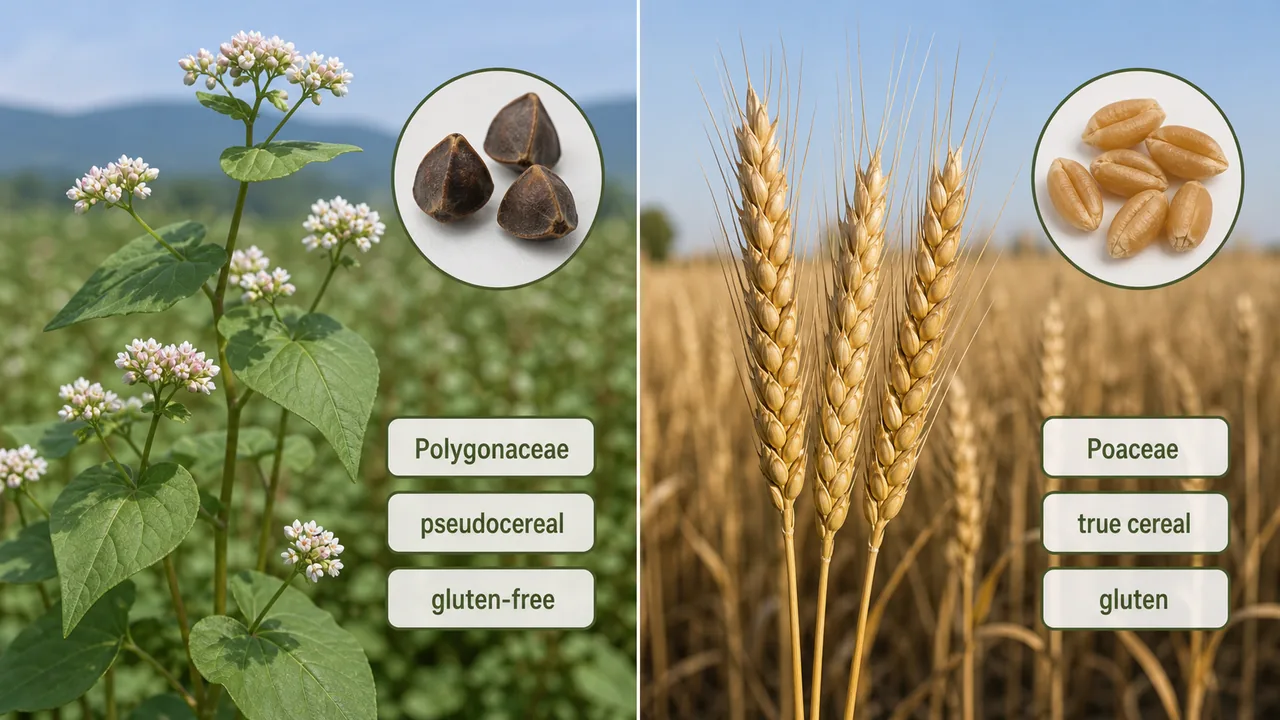
Buckwheat belongs to the Polygonaceae family -- completely unrelated to wheat or any true cereal (Poaceae). This family placement is the single most important botanical fact for exams and instantly classifies buckwheat as a pseudocereal.
| Parameter | Details |
|---|---|
| Botanical name | Fagopyrum esculentum |
| Family | Polygonaceae |
| Origin | China |
| Crop type | False cereal / Pseudocereal |
| Common name | Kuttu (Hindi) |
| Photosynthetic pathway | C3 plant |
| Photoperiod | Day-neutral plant |
| Pollination | Cross-pollinated (by insects) |
| Fruit | Achene (similar to sunflower seed) |
| Seed shape | Triangular -- resembles a beechnut (hence the name "buckwheat") |
| Wild ancestor | F. esculentum ssp. Ancestrale |
Rutin -- The Medicinal Alkaloid
Beyond its food value, buckwheat has significant medicinal importance due to the presence of Rutin in its leaves and flowers. This dual food-medicine profile is a frequently tested exam point.
- Leaves and flowers contain the alkaloid Rutin (a flavonoid glycoside) -- Rutin strengthens capillary walls and reduces their fragility, which is why it has clinical applications
- Rutin is used medicinally to treat high blood pressure and capillary fragility -- it improves blood circulation by preventing capillary leakage
- This medicinal value adds to buckwheat's importance beyond just food use, giving it a niche in the pharmaceutical industry
What Are Pseudocereals? Asked in ICAR-NET
Pseudocereals are non-grass plants whose seeds are used like cereals. Unlike true cereals (Poaceae family), pseudocereals belong to diverse botanical families:
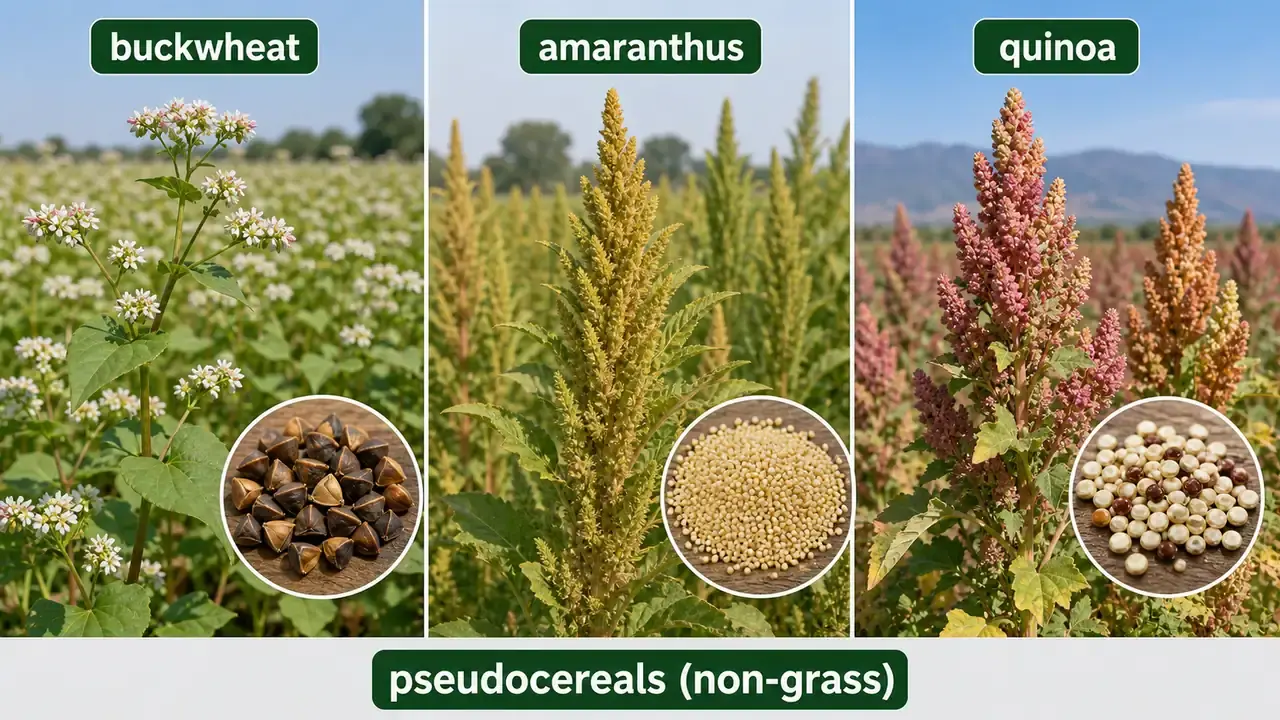
| Pseudocereal | Family |
|---|---|
| Buckwheat | Polygonaceae |
| Amaranthus | Amaranthaceae |
| Chenopodium (Quinoa) | Chenopodiaceae |
TIP
Pseudocereal mnemonic -- "BAQ": Buckwheat (Polygonaceae), Amaranthus (Amaranthaceae), Quinoa/Chenopodium (Chenopodiaceae). All three are non-grass plants with grain-like seeds. None belong to Poaceae. All are gluten-free.
Gluten-Free Advantage
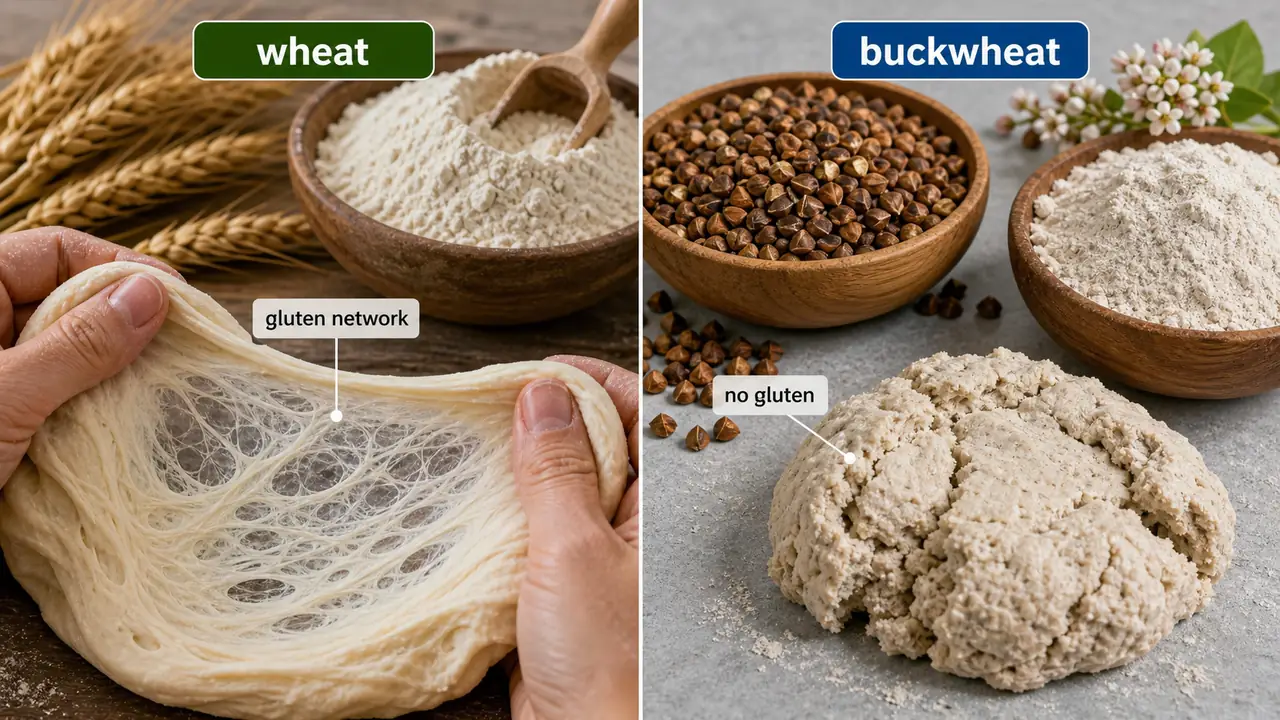
Since buckwheat is not a true cereal, it lacks the gluten proteins (gliadin and glutenin) found in wheat, barley, and rye. This absence of gluten is both a nutritional advantage and a cultural factor driving its consumption.
Buckwheat contains no gluten, making it suitable for:
- People with celiac disease or gluten intolerance
- Fasting food in India (kuttu ka atta during Navratri)
- Health-conscious consumers seeking alternative grains
Climate and Soil Requirements
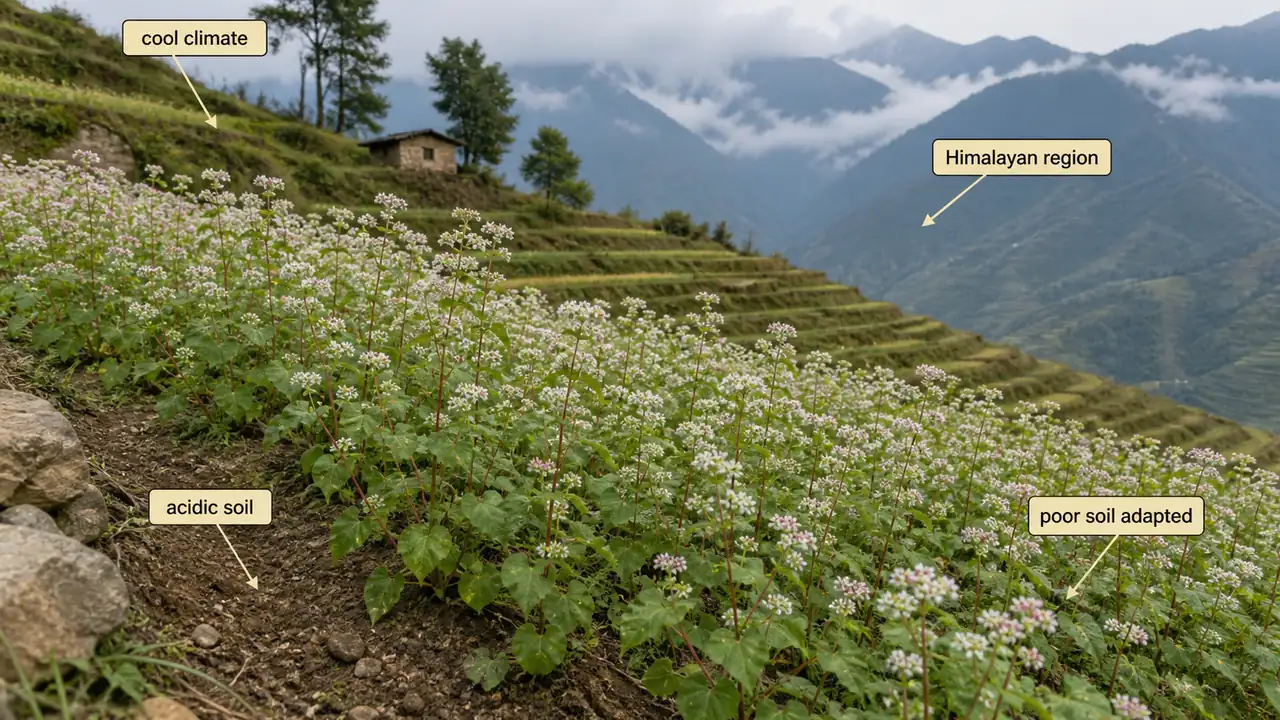
Buckwheat is adapted to cool, moist hill climates and poor acidic soils -- conditions that exclude most conventional cereals. This marginal-land adaptability is why it remains an important crop in the Himalayan region.
| Parameter | Details |
|---|---|
| Climate | Cool, moist climates |
| Temperature | 15-20°C (optimum) |
| Sensitivity | Sensitive to frost and high temperatures |
| Growing regions | Himalayan regions (J&K, Himachal Pradesh, Uttarakhand, NE states) |
| Soil | Light, well-drained sandy loam; can grow on poor, acidic soils |
Cultivation Practices
Buckwheat is a short-duration crop (70-90 days) that fits well into cropping sequences where a quick harvest is needed. Its low input requirements make it suitable for resource-poor hill farmers.
| Parameter | Details |
|---|---|
| Seed rate | 20 kg/ha |
| Sowing time | June-July |
| Test weight | 32 g |
| Duration | 70-90 days (short-duration crop) |
| Yield | 8-10 q/ha |
Important Varieties
- Indian varieties: Himgiri, Himpriya, RRB-1, VL-7 -- developed for the Himalayan growing conditions
- Exotic varieties: Tokyo, Manor, Tempest, Winson Royal, Keukett -- introduced from temperate regions

Nutritional Value
Buckwheat stands out nutritionally among grain-like crops because its protein contains all essential amino acids -- particularly lysine, which is the limiting amino acid in rice, wheat, and maize. This makes buckwheat protein complementary to true cereal proteins.
| Nutrient | Content |
|---|---|
| Protein | 11-14% |
| Key amino acid | Rich in lysine (limiting amino acid in true cereals) |
| Carbohydrates | 70-75% |
| Minerals | Rich in dietary fiber, magnesium, manganese |
| Protein quality | High biological value -- all essential amino acids present |
Summary Cheat Sheet
| Fact | Details |
|---|---|
| Family | Polygonaceae (NOT Poaceae) |
| Origin | China |
| Crop type | Pseudocereal (false cereal) |
| Fruit | Achene (triangular seeds) |
| Alkaloid | Rutin (in leaves/flowers -- treats BP) |
| Gluten | Gluten-free |
| Photosynthesis | C3 plant |
| Photoperiod | Day-neutral |
| Duration | 70-90 days |
| Protein | 11-14% (rich in lysine) |
| Test weight | 32 g |
| Growing region | Himalayan areas |
| Other pseudocereals | Amaranthus, Quinoa |
TIP
Buckwheat exam essentials: Polygonaceae family (NOT a true cereal/grass), achene fruit, triangular seeds, Rutin alkaloid in leaves/flowers, gluten-free, pseudocereal along with Amaranthus and Quinoa, grown in Himalayan regions, C3 day-neutral plant.
Lesson Doubts
Ask questions, get expert answers