🌻 Niger -- The Tribal Oilseed of Marginal Lands (Ramtil Cultivation & Exam Facts)
Complete guide to niger (Guizotia abyssinica) -- minor oilseed from Ethiopia, Asteraceae family, 35-45% oil, cross-pollinated achene, grown on marginal tribal lands, and all exam-important cultivation facts.
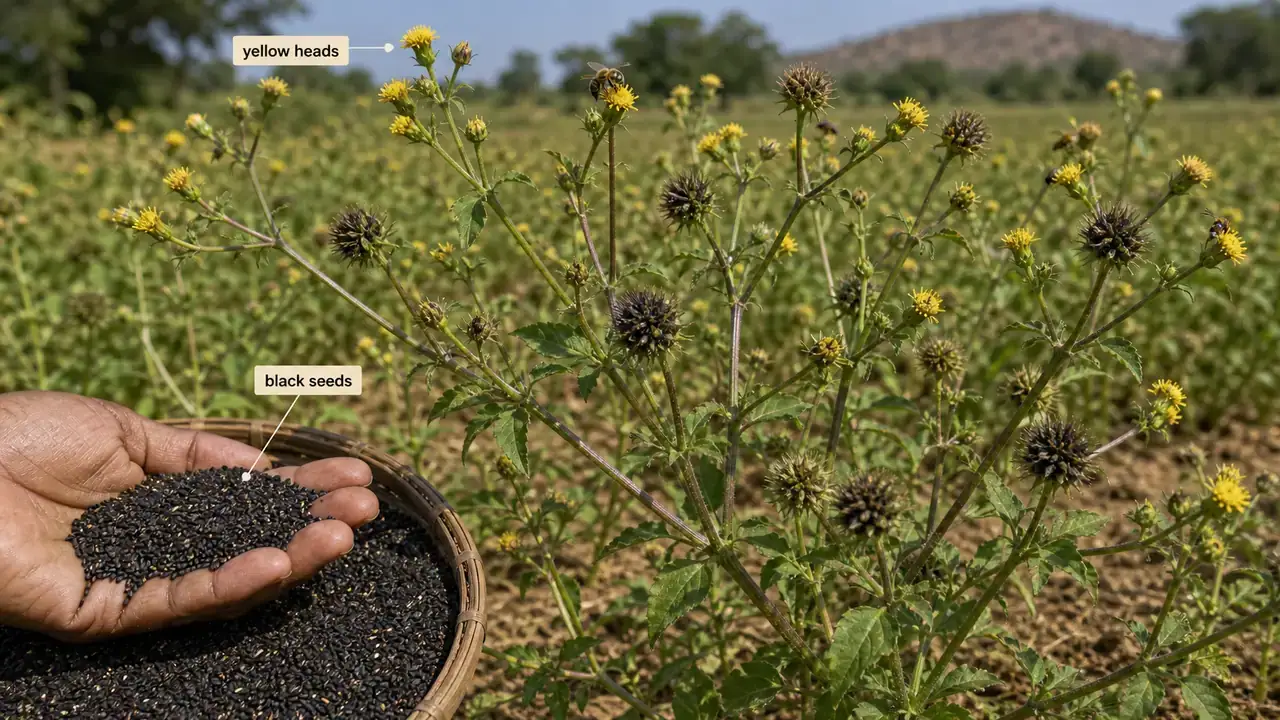
In the tribal belts of Madhya Pradesh, Odisha, and Jharkhand, on gravelly hillsides too poor for soybean or mustard, a small yellow-flowered crop quietly sustains thousands of farming households. This is niger (locally known as Ramtil or Jagni) -- a minor oilseed crop that thrives precisely where other oilseeds cannot. Originating in Ethiopia, niger is one of the hardiest crops in Indian agriculture, grown with minimal inputs on marginal soils by tribal and small farmers. India is the second largest producer of niger in the world after Ethiopia.
Botanical Profile
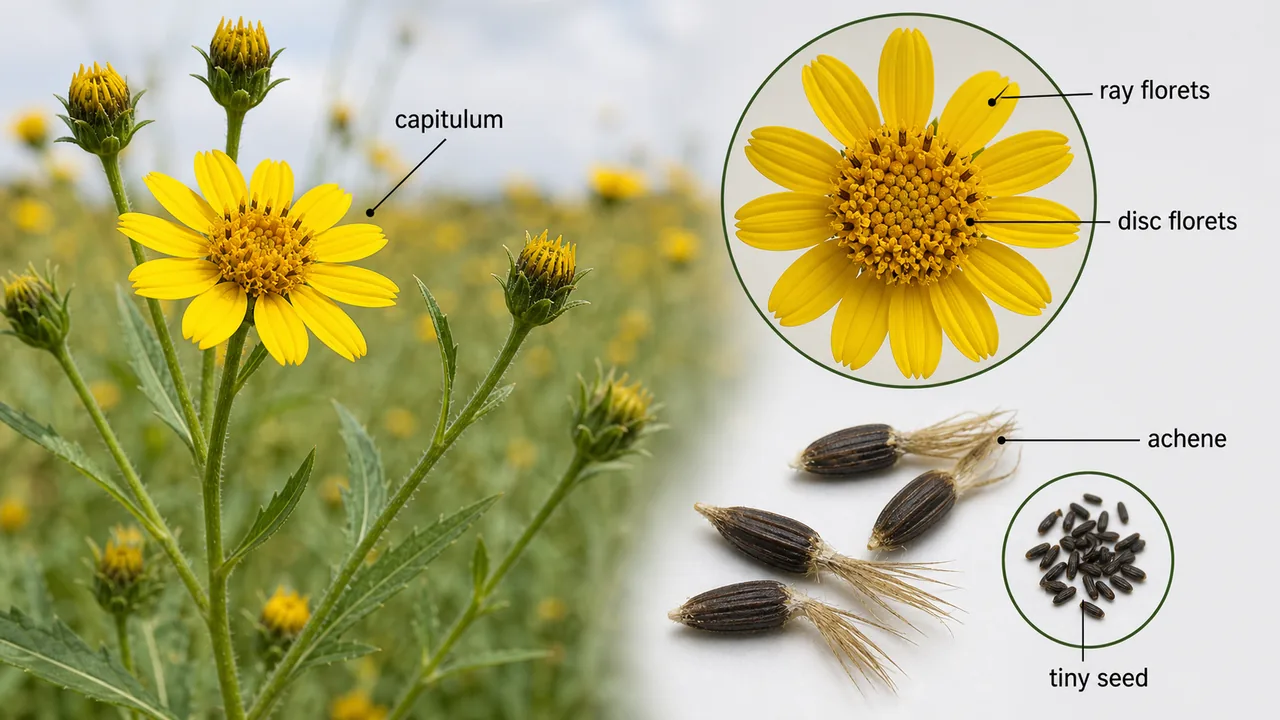
Niger belongs to the Asteraceae (Compositae) family -- the same family as sunflower and safflower. Its cross-pollinated nature, achene fruit, and capitulum inflorescence are all characteristic of this family. The plant produces small yellow flowers with both disc and ray florets.
| Parameter | Details |
|---|---|
| Botanical name | Guizotia abyssinica |
| Family | Compositae (Asteraceae) |
| Chromosome number | 2n = 30 |
| Origin | Ethiopia |
| Common names | Ramtil, Jagni, Jatangi |
| Pollination | Cross-pollinated (by insects) |
| Flowers | Two types -- disc and ray florets |
| Germination | Epigeal |
| Fruit | Achene |
| Photoperiod | Short-day plant |

Composition and Uses
Niger seeds are valued primarily for their high oil content (35-45%), which is comparable to safflower and linseed. The oil serves both culinary and industrial purposes, while the protein-rich oil cake is used as animal feed.
Pro Content Locked
Upgrade to Pro to access this lesson and all other premium content.
Pay once valid for one year · Effective ₹99/month
- All Agriculture & Banking Courses
- AI Lesson Questions (100/day)
- AI Doubt Solver (50/day)
- Glows & Grows Feedback (30/day)
- AI Section Quiz (20/day)
- 22-Language Translation (100/day)
- Recall Questions (20/day)
- AI Quiz (15/day)
- AI Quiz Paper Analysis (100/day)
- AI Step-by-Step Explanations (100/day)
- Spaced Repetition Recall (FSRS)
- AI Tutor
- Immersive Text Questions
- Audio Lessons — Hindi & English
- Mock Tests & Previous Year Papers
- Summary & Mind Maps
- XP, Levels, Leaderboard & Badges
- Generate New Classrooms
- Voice AI Teacher (AgriDots Live)
- AI Revision Assistant
- Knowledge Gap Analysis
- Interactive Revision (LangGraph)
🔒 Secure one-time yearly payment via Razorpay · No hidden fees
In the tribal belts of Madhya Pradesh, Odisha, and Jharkhand, on gravelly hillsides too poor for soybean or mustard, a small yellow-flowered crop quietly sustains thousands of farming households. This is niger (locally known as Ramtil or Jagni) -- a minor oilseed crop that thrives precisely where other oilseeds cannot. Originating in Ethiopia, niger is one of the hardiest crops in Indian agriculture, grown with minimal inputs on marginal soils by tribal and small farmers. India is the second largest producer of niger in the world after Ethiopia.
Botanical Profile
Niger belongs to the Asteraceae (Compositae) family -- the same family as sunflower and safflower. Its cross-pollinated nature, achene fruit, and capitulum inflorescence are all characteristic of this family. The plant produces small yellow flowers with both disc and ray florets.
| Parameter | Details |
|---|---|
| Botanical name | Guizotia abyssinica |
| Family | Compositae (Asteraceae) |
| Chromosome number | 2n = 30 |
| Origin | Ethiopia |
| Common names | Ramtil, Jagni, Jatangi |
| Pollination | Cross-pollinated (by insects) |
| Flowers | Two types -- disc and ray florets |
| Germination | Epigeal |
| Fruit | Achene |
| Photoperiod | Short-day plant |
Composition and Uses
Niger seeds are valued primarily for their high oil content (35-45%), which is comparable to safflower and linseed. The oil serves both culinary and industrial purposes, while the protein-rich oil cake is used as animal feed.
| Component | Details |
|---|---|
| Oil content | 35-45% |
| Protein | 20% |
| Oil cake protein | 24-34% |
Applications of Niger Oil
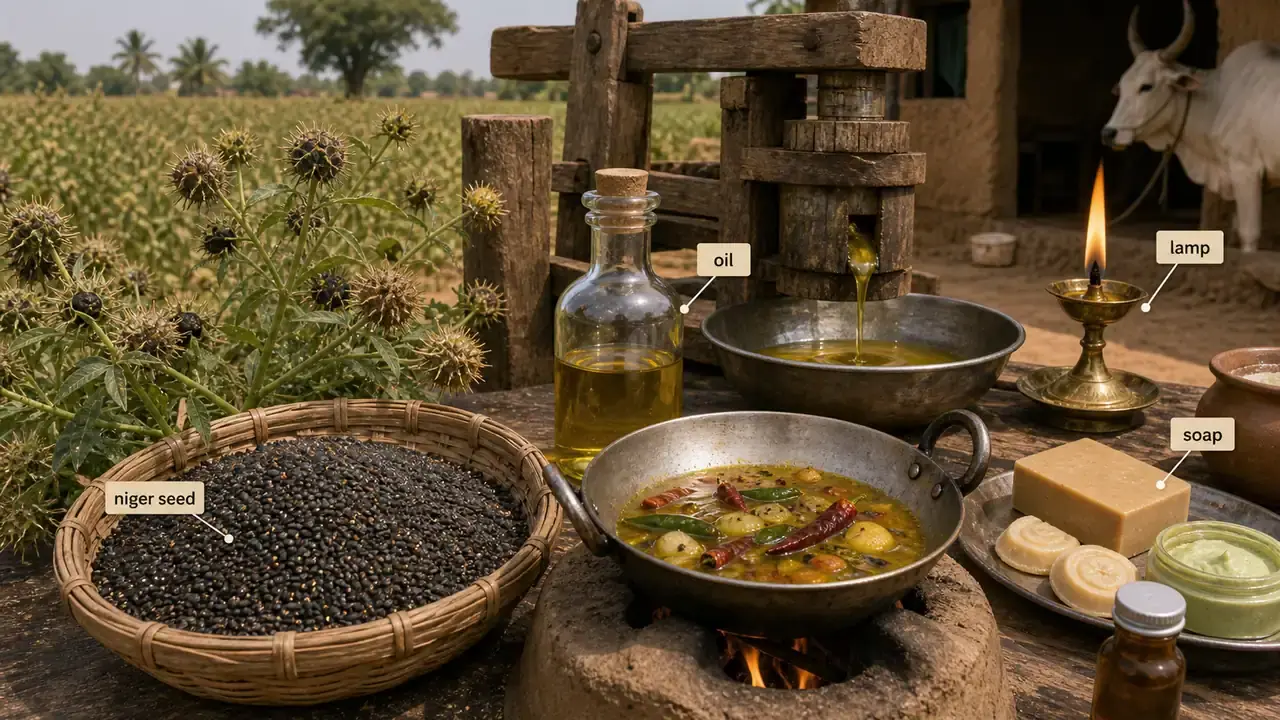
- Culinary purposes -- cooking oil in tribal areas
- Industrial uses -- manufacturing paints, soaps, lubricants, and cosmetics
- Traditional medicine -- used for birth control and treatment of syphilis
- Health benefits -- improves heart health

Climate and Soil Requirements
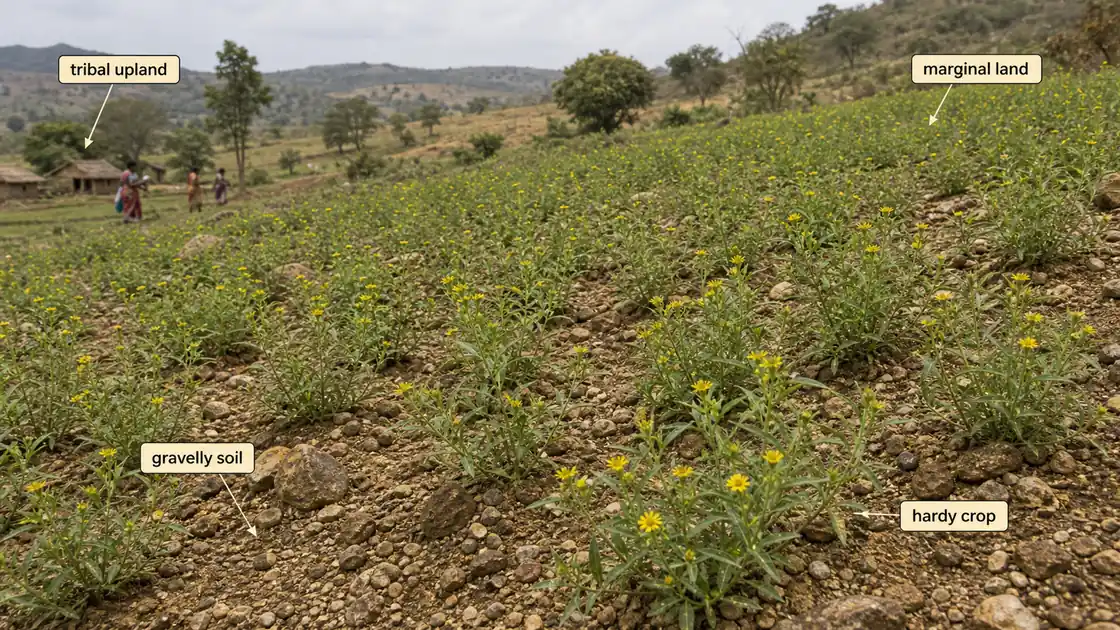
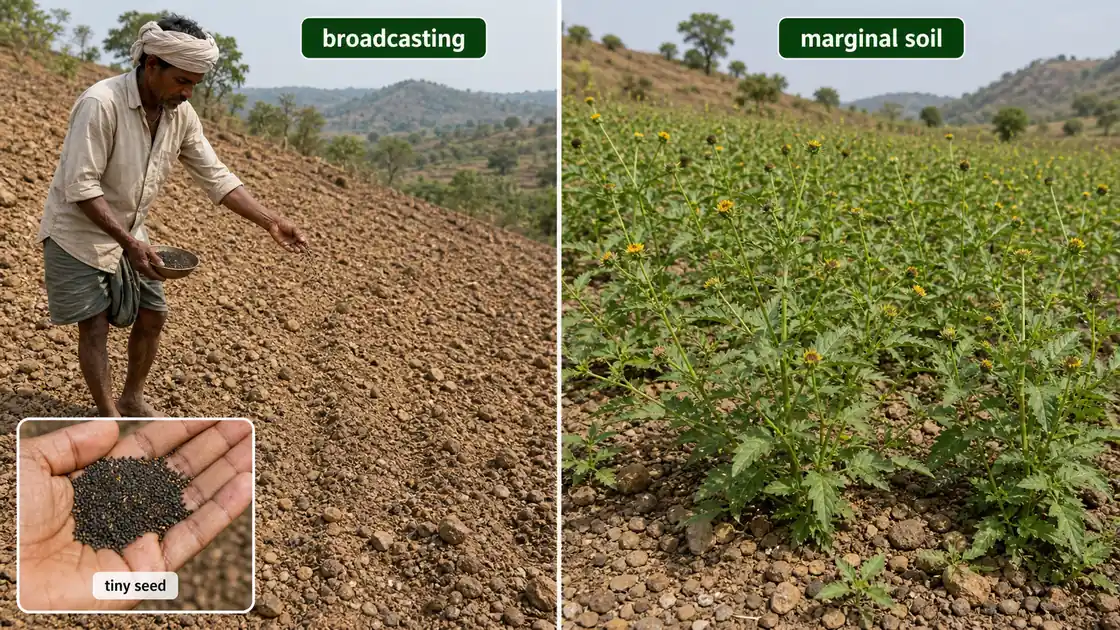
Niger's defining agronomic feature is its ability to produce a harvest on soils too poor for other oilseeds. This adaptability to marginal, gravelly, and hilly terrains is why it remains the oilseed of choice for tribal farmers in central and eastern India.
| Parameter | Details |
|---|---|
| Climate | Temperate crop grown in tropical and sub-tropical regions |
| Temperature | 18-23°C (optimum) |
| Upper temperature limit | Above 30°C -- reduced growth and pollen fertility |
| Rainfall | 1000-1300 mm (optimum) |
| Soil | Can grow on poor, marginal, gravelly soils |
| Crop type | Hardy crop suitable for tribal and hilly areas |
Niger is often grown on lands not suitable for other oilseeds -- this is one of its most important agricultural features and a favourite exam point.
Cultivation Practices
Niger is typically grown with minimal inputs -- broadcasting is the most common sowing method because the crop is cultivated on hilly and uneven terrain where line sowing is impractical. The very small seed size (test weight just 3-5 g) requires careful sowing depth management.

| Parameter | Details |
|---|---|
| Seed rate | 5-8 kg/ha |
| Sowing method | Broadcasting (mostly used) |
| Spacing | 30 x 10 cm |
| Sowing time | Kharif: Mid-June to early August; Rabi: September |
| Test weight | 3-5 g (very small seeds) |
| Best irrigation method | Check basin or border strip system |
| Moisture at harvest | Bud moisture 45-50% or heads turn brown |
| Moisture at storage | 5% |
Yield and Growing Regions
Niger yields are modest compared to major oilseeds, reflecting its low-input cultivation on marginal lands. The crop is concentrated in the tribal belts of central and eastern India.
| Cropping System | Yield |
|---|---|
| Pure crop | 4-5 q/ha |
| Intercropped | 1-2 q/ha |
Major niger-growing states in India: Madhya Pradesh, Odisha, Maharashtra, Chhattisgarh, Jharkhand
Important Varieties
Niger improvement has focused on developing both open-pollinated varieties and hybrids with higher oil content, better seed retention, and drought tolerance. Note that the hybrid names reflect their developing institutions (e.g., TNAU = Tamil Nadu Agricultural University).
| Type | Varieties |
|---|---|
| Varieties | Paiyur 1, Sahyardi (IGP 76), Pooja 1 (BNS 10), GA 10, Utkal Niger 150, N 5, RCR 18, KBN 1, Birsa Niger 1, Birsa Niger 2, Paitur-1, Gujarat Niger-1, NRS-96-1 |
| Hybrids | APSH 11, PKVSH 27, LDMRSH 1, LDMRSH 3, BSH-1 (Dryland), KSFH 1, MSFH 8, MSFH 17, TNAU SUF-7 |

Niger vs Other Minor Oilseeds -- Comparison
Niger, safflower, and linseed are all minor oilseeds, but they differ sharply in family, origin, pollination mechanism, and preferred growing conditions. This comparison helps distinguish them in MCQs.
| Character | Niger | Safflower | Linseed |
|---|---|---|---|
| Family | Asteraceae | Asteraceae | Linaceae |
| Origin | Ethiopia | Middle East | Mediterranean |
| Oil content | 35-45% | 28-35% | 33-45% |
| Pollination | Cross (insects) | Cross (insects) | Self |
| Soil preference | Marginal, gravelly | Black cotton soil | Alluvial |
| Drought tolerance | Hardy | Highly tolerant | Moderate |
Summary Cheat Sheet
| Fact | Details |
|---|---|
| Family | Compositae (Asteraceae) |
| Origin | Ethiopia |
| Chromosome | 2n = 30 |
| Common names | Ramtil, Jagni, Jatangi |
| Oil content | 35-45% |
| Pollination | Cross-pollinated (by insects) |
| Photoperiod | Short-day plant |
| Fruit | Achene |
| Test weight | 3-5 g (very small seeds) |
| Soil | Poor, marginal, gravelly |
| India's position | 2nd largest producer (after Ethiopia) |
| Major states | Madhya Pradesh, Odisha, Maharashtra, Chhattisgarh, Jharkhand |
IMPORTANT
Niger key points: Ethiopia origin, Compositae/Asteraceae family, cross-pollinated (by insects), short-day plant, achene fruit, oil 35-45%, grown on marginal/tribal lands, test weight only 3-5 g (very small seeds), inflorescence = Capitulum. India is the second largest producer of niger after Ethiopia.
Lesson Doubts
Ask questions, get expert answers