🫘 Horse Gram -- India's Most Drought-Resistant Pulse (Medicinal Value & Cultivation)
Complete guide to horse gram (Macrotyloma uniflorum) -- most drought-tolerant pulse crop, anti-hyperglycemic properties, Ayurvedic medicinal value, trypsin inhibitor, and cultivation on marginal lands.
In the rocky, rain-starved hillsides of Karnataka and Chhattisgarh, where even hardy millets sometimes fail, horse gram (locally called Kulthi) quietly produces a harvest. This remarkable pulse crop is considered the most drought-resistant pulse in Indian agriculture -- thriving on laterite and shallow soils with minimal irrigation. Beyond its agronomic toughness, horse gram has gained modern scientific attention for its anti-hyperglycemic properties (blood sugar control) and rich iron and molybdenum content. For centuries, Ayurvedic practitioners have prescribed horse gram preparations for kidney stones and urinary disorders. This chapter covers its cultivation, medicinal value, and all exam-important facts.
Botanical Profile
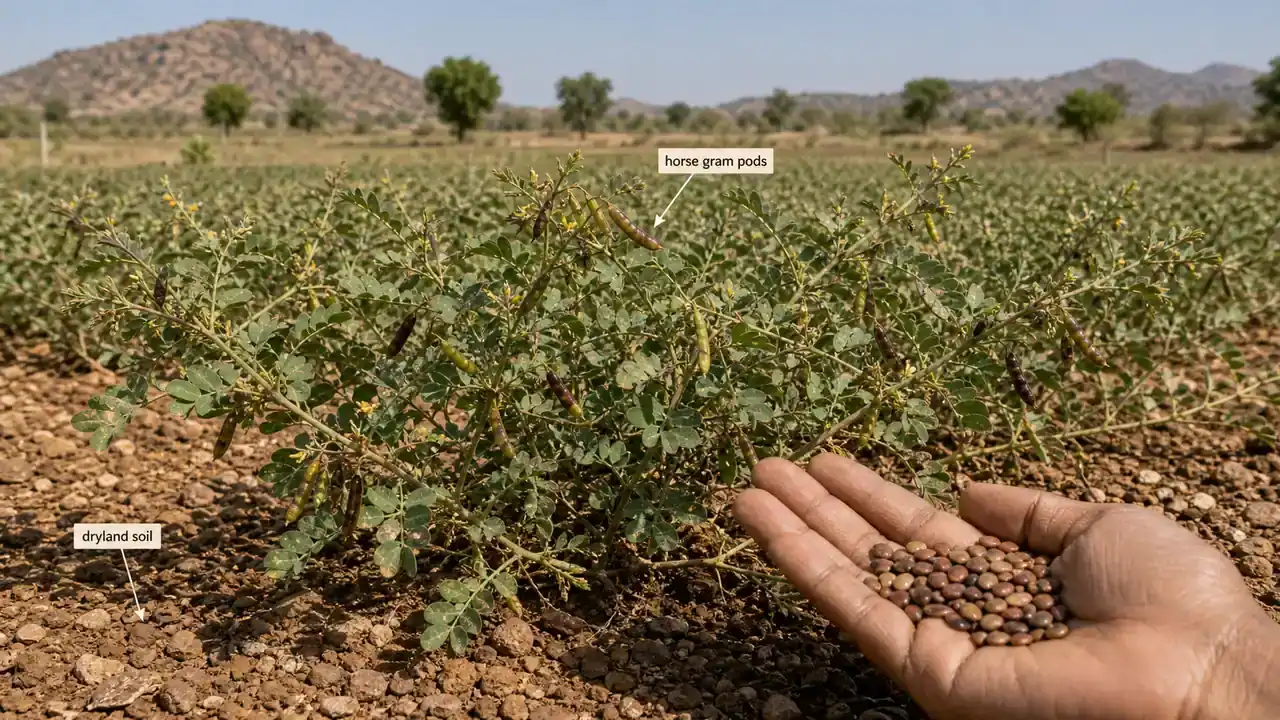
Horse gram was earlier classified under Dolichos biflorus and has been reclassified to Macrotyloma uniflorum -- a name change that exams still test. It belongs to the Fabaceae family and is self-pollinated, unlike many other tropical pulses.
Pro Content Locked
Upgrade to Pro to access this lesson and all other premium content.
Pay once valid for one year · Effective ₹99/month
- All Agriculture & Banking Courses
- AI Lesson Questions (100/day)
- AI Doubt Solver (50/day)
- Glows & Grows Feedback (30/day)
- AI Section Quiz (20/day)
- 22-Language Translation (100/day)
- Recall Questions (20/day)
- AI Quiz (15/day)
- AI Quiz Paper Analysis (100/day)
- AI Step-by-Step Explanations (100/day)
- Spaced Repetition Recall (FSRS)
- AI Tutor
- Immersive Text Questions
- Audio Lessons — Hindi & English
- Mock Tests & Previous Year Papers
- Summary & Mind Maps
- XP, Levels, Leaderboard & Badges
- Generate New Classrooms
- Voice AI Teacher (AgriDots Live)
- AI Revision Assistant
- Knowledge Gap Analysis
- Interactive Revision (LangGraph)
🔒 Secure one-time yearly payment via Razorpay · No hidden fees
In the rocky, rain-starved hillsides of Karnataka and Chhattisgarh, where even hardy millets sometimes fail, horse gram (locally called Kulthi) quietly produces a harvest. This remarkable pulse crop is considered the most drought-resistant pulse in Indian agriculture -- thriving on laterite and shallow soils with minimal irrigation. Beyond its agronomic toughness, horse gram has gained modern scientific attention for its anti-hyperglycemic properties (blood sugar control) and rich iron and molybdenum content. For centuries, Ayurvedic practitioners have prescribed horse gram preparations for kidney stones and urinary disorders. This chapter covers its cultivation, medicinal value, and all exam-important facts.
Botanical Profile
Horse gram was earlier classified under Dolichos biflorus and has been reclassified to Macrotyloma uniflorum -- a name change that exams still test. It belongs to the Fabaceae family and is self-pollinated, unlike many other tropical pulses.
| Parameter | Details |
|---|---|
| Botanical name | Macrotyloma uniflorum |
| Earlier classification | Dolichos biflorus |
| Family | Fabaceae (Leguminosae) |
| Common names | Kulthi, Hurali |
| Origin | India (South-East Asia) |
| Pollination | Self-pollinated |
| Key distinction | One of the most drought-resistant pulse crops |
| Cropping type | Dryland crop in arid and semi-arid regions |
Nutritional and Medicinal Value
Horse gram is unique among pulses for its dual nutritional-medicinal profile:
| Component | Details |
|---|---|
| Protein | 22-25% |
| Key minerals | Excellent source of iron and molybdenum |
| Anti-nutritional factors | Higher trypsin inhibitor and hemagglutinin activities than other pulses |
| Bioactive compounds | Phenolic compounds and antioxidants |
Medicinal Properties
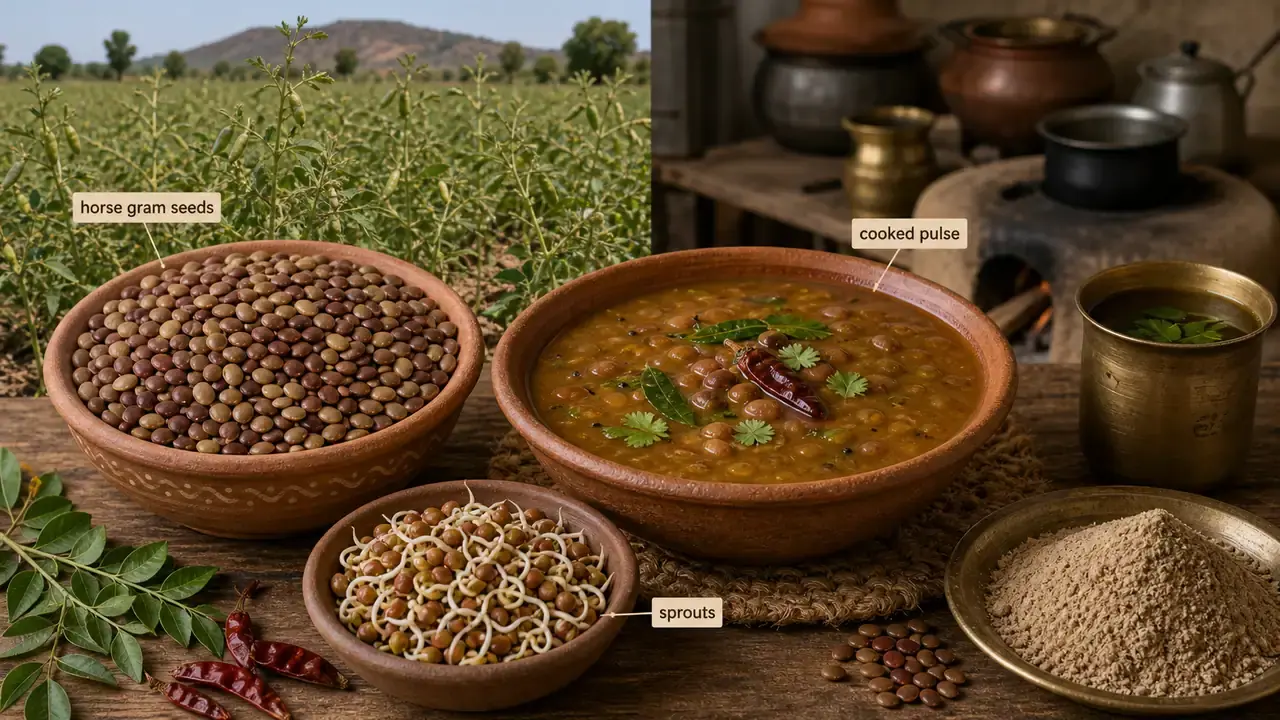
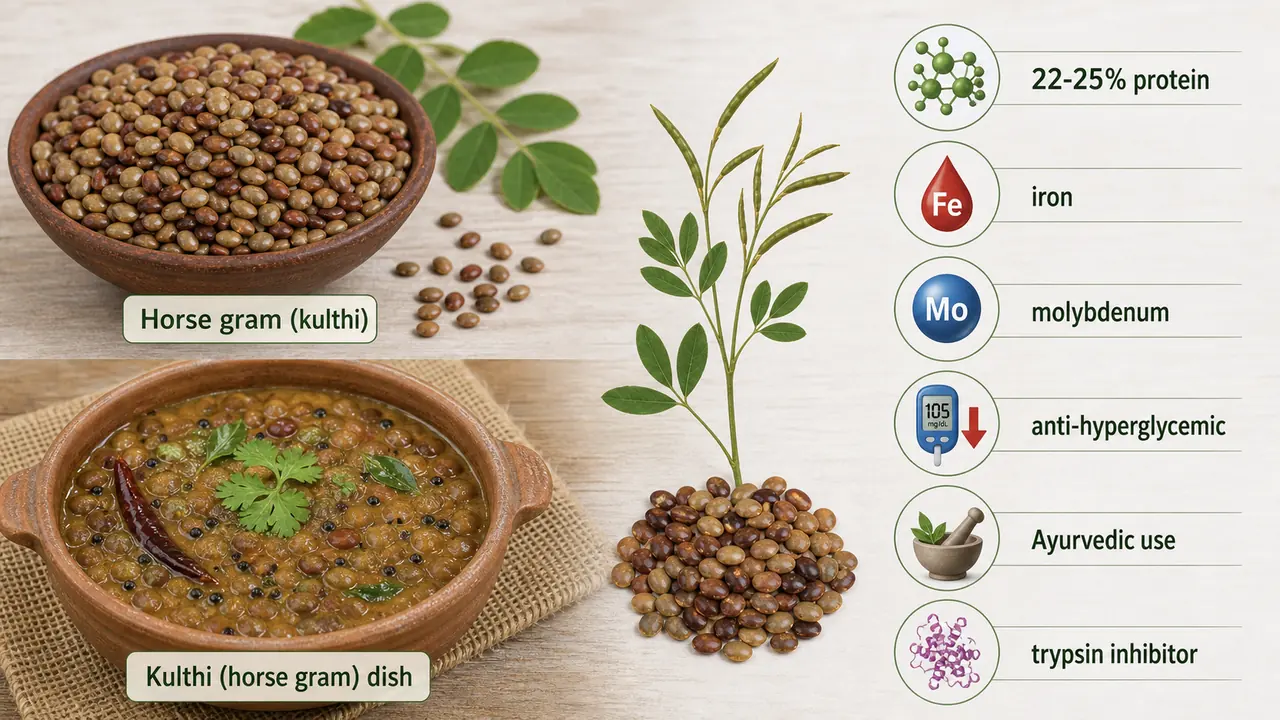
- Horse gram has significant medicinal value -- used extensively in Ayurvedic preparations
- Raw seeds possess anti-hyperglycemic properties (helps control blood sugar)
- Seeds have qualities that reduce insulin resistance
- Traditionally used for treating kidney stones and urinary disorders
TIP
Exam distinction -- Horse gram vs Moth bean: Both are drought-tolerant kharif pulses of arid regions. Horse gram = medicinal (anti-hyperglycemic, Ayurvedic). Moth bean = most drought-tolerant kharif pulse. Horse gram = most drought-resistant pulse crop overall.
Climate and Soil Requirements
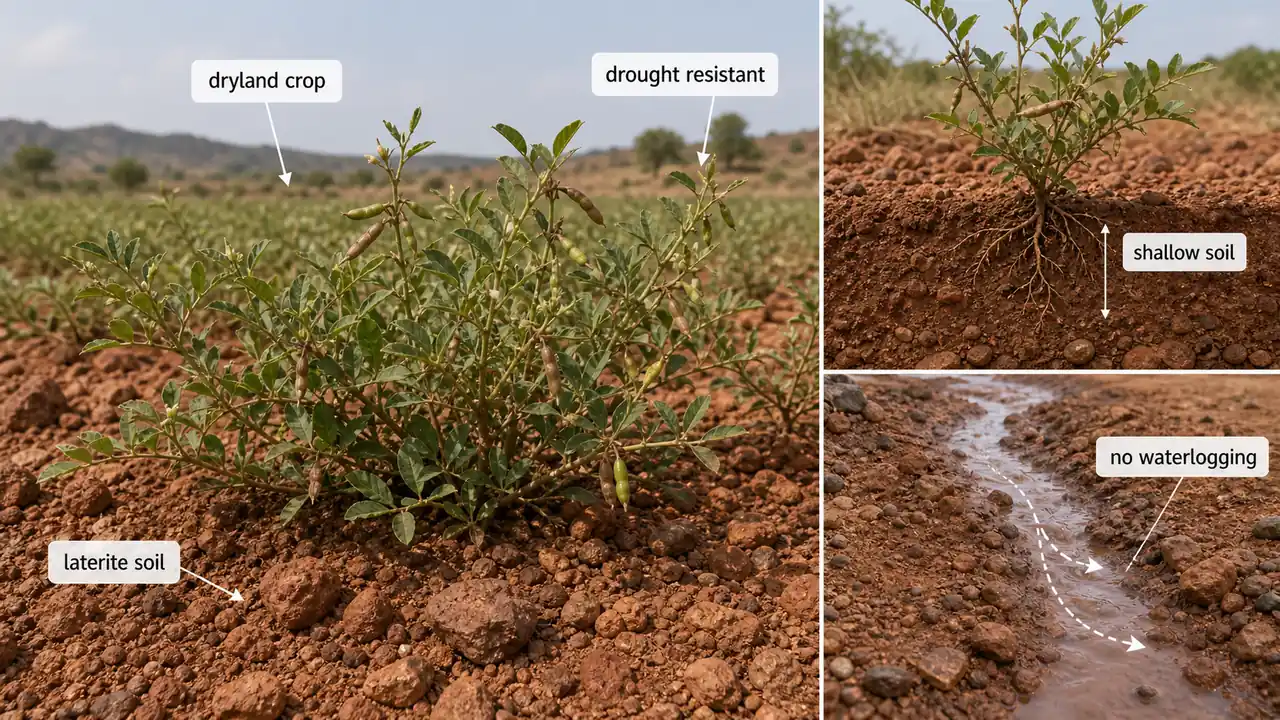
Horse gram's extreme drought resistance stems from its ability to survive on residual soil moisture and shallow, laterite soils that other pulses cannot tolerate. It prefers warm, dry conditions and is highly sensitive to waterlogging.
| Parameter | Details |
|---|---|
| Climate | Extremely drought-resistant |
| Preferred climate | Medium warm and dry |
| Temperature | 25-30°C (optimum) |
| Relative humidity | 50-80% |
| Soil | Light red, sandy loam; does well on laterite and shallow soils |
| Marginal land | Can be grown on poor, marginal soils |
| Sensitivity | Does NOT tolerate waterlogging |
Cultivation Practices
Horse gram requires minimal inputs, making it ideal for resource-poor farmers. It is sown during the kharif season (August-September) and matures relatively quickly under dryland conditions.
| Parameter | Details |
|---|---|
| Seed rate | 20-25 kg/ha (line sowing), 30-40 kg/ha (broadcast) |
| Spacing | 30 x 10 cm |
| Sowing time | Kharif: August-September |
| Fertilizers (NPK) | 20:40:20 kg/ha |
| Yield | 5-8 q/ha |

Growing Regions
Horse gram is concentrated in the peninsular and central Indian states where dry, semi-arid conditions prevail and marginal lands are abundant.
- Major horse gram-growing states: Karnataka, Tamil Nadu, Andhra Pradesh, Madhya Pradesh, Chhattisgarh, Odisha, Jharkhand
- Mostly grown by tribal and small farmers on marginal lands where other pulses fail to produce economically viable yields
Horse Gram vs Other Dryland Pulses -- Comparison
Exams frequently compare horse gram with moth bean and cowpea -- all three are kharif pulses of dry regions, but they differ in drought tolerance ranking, medicinal properties, and end-uses.
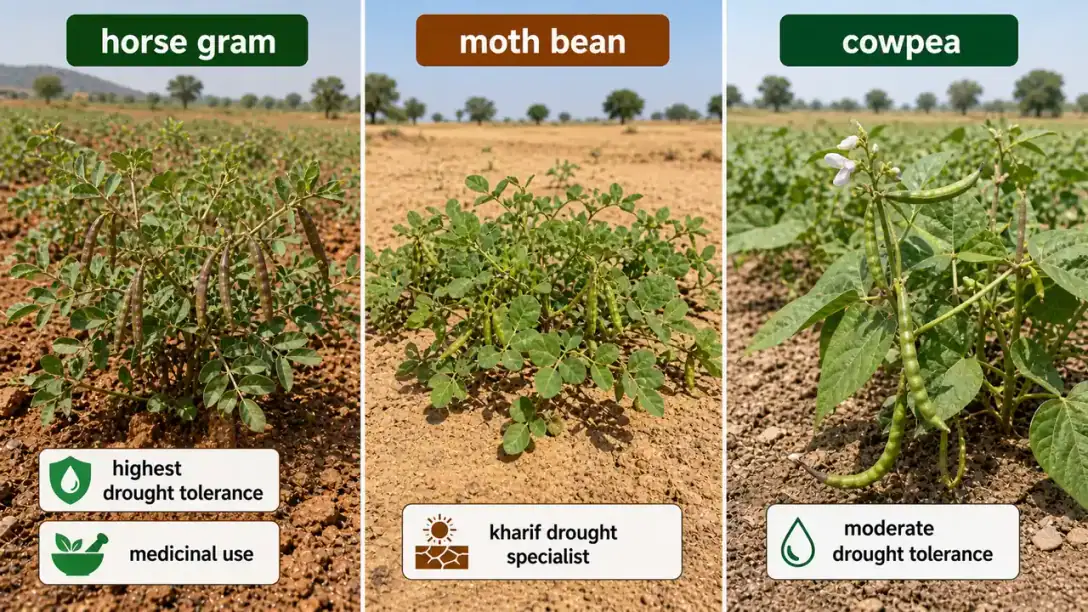
| Character | Horse Gram | Moth Bean | Cowpea |
|---|---|---|---|
| Scientific name | Macrotyloma uniflorum | Vigna aconitifolia | Vigna unguiculata |
| Drought tolerance | Most drought-resistant pulse | Most drought-tolerant kharif pulse | Moderate |
| Medicinal value | High (Ayurvedic, anti-hyperglycemic) | Low | Low |
| Key minerals | Iron, molybdenum | -- | -- |
| Soil | Laterite, shallow soils | Sandy, arid soils | Various |
| Season | Kharif (Aug-Sep) | Kharif | Kharif |
Summary Cheat Sheet
| Fact | Details |
|---|---|
| Botanical name | Macrotyloma uniflorum (earlier Dolichos biflorus) |
| Family | Fabaceae |
| Origin | India (South-East Asia) |
| Common names | Kulthi, Hurali |
| Key distinction | Most drought-resistant pulse crop |
| Medicinal value | Anti-hyperglycemic, Ayurvedic use |
| Key minerals | Iron and molybdenum |
| Anti-nutritional | High trypsin inhibitor and hemagglutinin |
| Protein | 22-25% |
| Soil | Laterite, shallow, marginal soils |
| Yield | 5-8 q/ha |
| Major states | Karnataka, Tamil Nadu, Andhra Pradesh, Madhya Pradesh, Chhattisgarh |
NOTE
Horse gram exam points: Most drought-tolerant pulse crop, anti-hyperglycemic properties, high trypsin inhibitor, rich in iron and molybdenum, Macrotyloma uniflorum (earlier classified as Dolichos biflorus). Used in Ayurvedic medicine. Often asked in comparison with moth bean (both are drought-tolerant kharif pulses of arid regions).
Lesson Doubts
Ask questions, get expert answers