🫛 Lathyrus (Khesari / Grass Pea) -- BOAA Neurotoxin, Lathyrism & Utera Cultivation
Complete guide to Lathyrus sativus -- BOAA/ODAP neurotoxin causing lathyrism, utera/paira cultivation in standing rice, three Lathyrus species, low-BOAA varieties, and all exam-critical facts.
In the rice-growing belts of Bihar and Chhattisgarh, farmers practice an ingenious technique: about 7-10 days before harvesting their rice, they broadcast Lathyrus seeds directly into the standing paddy field. The seeds germinate using residual moisture, and by the time the rice stubble dries out, a lush Lathyrus crop is already established -- all without a single irrigation or tillage operation. This method, called utera or paira cultivation, showcases the extraordinary hardiness of Lathyrus. However, this crop carries a serious health risk: its seeds contain BOAA/ODAP, a neurotoxin that can cause lathyrism -- irreversible paralysis of the lower limbs -- when consumed excessively. This chapter covers both the agronomy and the toxicology of this frequently examined crop.
Botanical Profile
Lathyrus belongs to the Fabaceae family and is a rabi (cold-weather) pulse crop. Its extreme hardiness allows it to grow in adverse conditions where other pulses fail -- but this same crop carries a serious neurotoxin risk that makes its safe cultivation a public health concern.
Pro Content Locked
Upgrade to Pro to access this lesson and all other premium content.
Pay once valid for one year · Effective ₹99/month
- All Agriculture & Banking Courses
- AI Lesson Questions (100/day)
- AI Doubt Solver (50/day)
- Glows & Grows Feedback (30/day)
- AI Section Quiz (20/day)
- 22-Language Translation (100/day)
- Recall Questions (20/day)
- AI Quiz (15/day)
- AI Quiz Paper Analysis (100/day)
- AI Step-by-Step Explanations (100/day)
- Spaced Repetition Recall (FSRS)
- AI Tutor
- Immersive Text Questions
- Audio Lessons — Hindi & English
- Mock Tests & Previous Year Papers
- Summary & Mind Maps
- XP, Levels, Leaderboard & Badges
- Generate New Classrooms
- Voice AI Teacher (AgriDots Live)
- AI Revision Assistant
- Knowledge Gap Analysis
- Interactive Revision (LangGraph)
🔒 Secure one-time yearly payment via Razorpay · No hidden fees
In the rice-growing belts of Bihar and Chhattisgarh, farmers practice an ingenious technique: about 7-10 days before harvesting their rice, they broadcast Lathyrus seeds directly into the standing paddy field. The seeds germinate using residual moisture, and by the time the rice stubble dries out, a lush Lathyrus crop is already established -- all without a single irrigation or tillage operation. This method, called utera or paira cultivation, showcases the extraordinary hardiness of Lathyrus. However, this crop carries a serious health risk: its seeds contain BOAA/ODAP, a neurotoxin that can cause lathyrism -- irreversible paralysis of the lower limbs -- when consumed excessively. This chapter covers both the agronomy and the toxicology of this frequently examined crop.
Botanical Profile
Lathyrus belongs to the Fabaceae family and is a rabi (cold-weather) pulse crop. Its extreme hardiness allows it to grow in adverse conditions where other pulses fail -- but this same crop carries a serious neurotoxin risk that makes its safe cultivation a public health concern.
| Parameter | Details |
|---|---|
| Botanical name | Lathyrus sativus |
| Family | Fabaceae (Leguminosae) |
| Chromosome number | 2n = 14 |
| Origin | Southern Europe and West Asia |
| Common names | Khesari, Kesari dal, Almorta, Grass pea |
| Pollination | Self-pollinated |
| Season | Cold-weather (rabi) crop |
| Key character | Hardy and versatile -- grown in adverse climatic conditions |
asked in exams
Three Species of Lathyrus
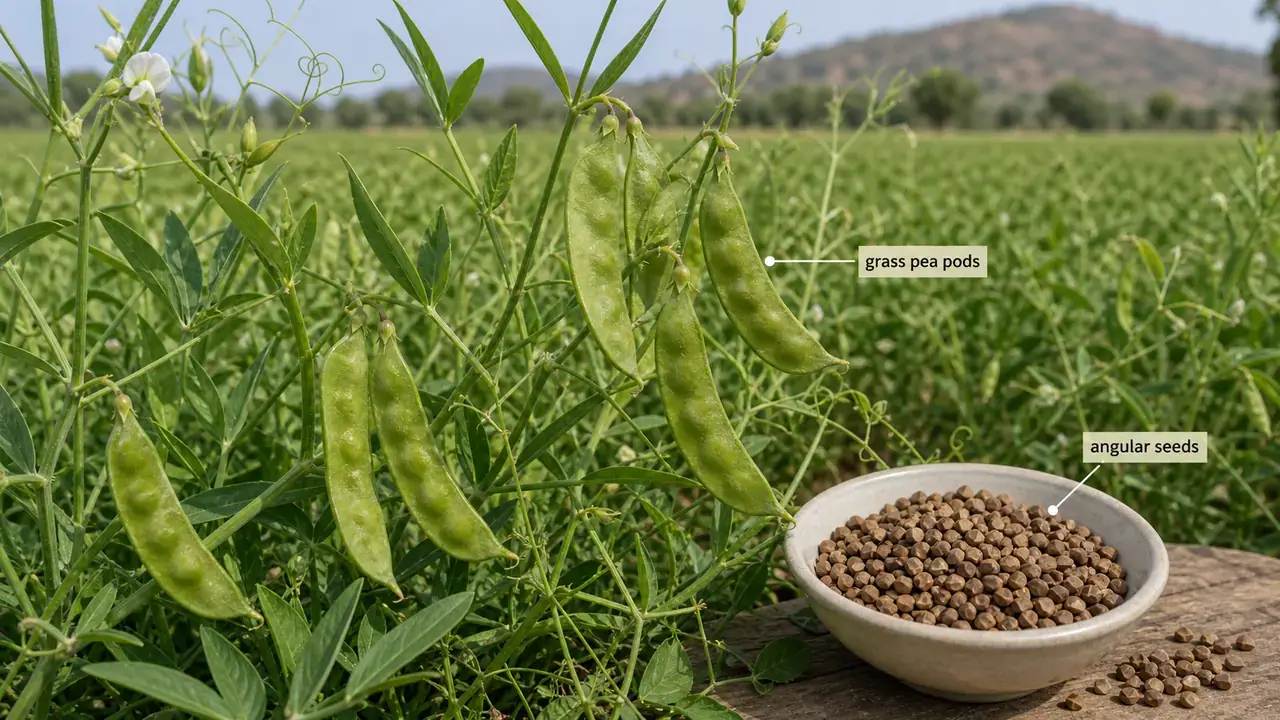
The genus Lathyrus includes multiple species, but only three are agriculturally relevant. Critically, only L. sativus (grass pea) is the problematic pulse crop with the BOAA neurotoxin -- the other two are used as fodder or ornamental plants.
| Species | Common Name | Use |
|---|---|---|
| Lathyrus sativus | Grass pea | Pulse crop |
| Lathyrus odoratus | Sweet pea | Fodder (also ornamental) |
| Lathyrus latifolius | Everlasting pea | Fodder |
TIP
Species mnemonic -- "SOL": Sativus = pulse (Seed crop), Odoratus = ornamental/fodder, Latifolius = lasting fodder. Only L. sativus is the problematic pulse crop with BOAA.

BOAA / ODAP -- The Neurotoxin Most Important Exam Point
This is the single most tested fact about Lathyrus in competitive exams:
| Parameter | Details |
|---|---|
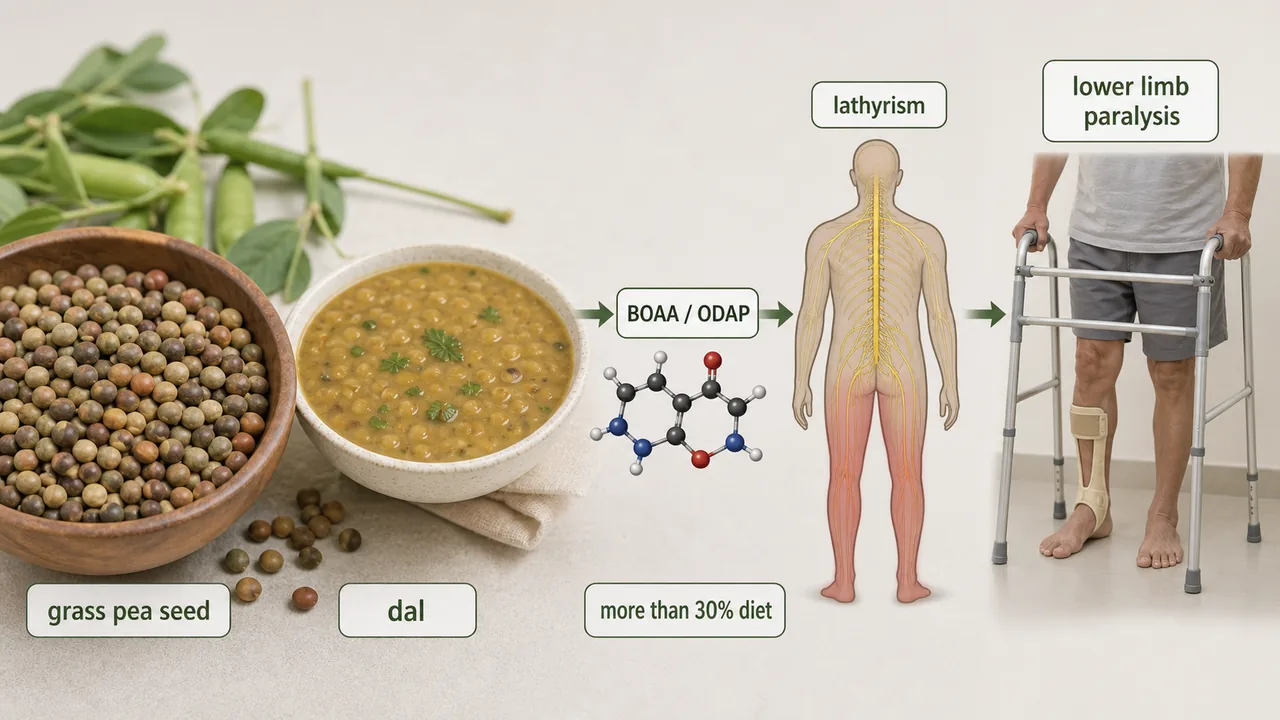
| Toxin name | ODAP (Oxalyl Diamino Propionic acid) |
| Alternative name | BOAA (Beta-Oxalyl Amino Alanine) |
| Content in seeds | 0.1-2.5% |
| Disease caused | Lathyrism -- a neurodegenerative disease |
| Symptoms | Paralysis of lower limbs (irreversible) |
| Trigger threshold | Occurs when Lathyrus constitutes more than 30% of the diet for prolonged periods |
| Low-BOAA varieties | Prateek, Mahateora, Ratan (BOAA < 0.1%) |
WARNING
Lathyrism is irreversible. Regular consumption of Lathyrus as more than 30% of the diet causes progressive paralysis of the lower limbs. Low-BOAA varieties (Prateek, Mahateora, Ratan) have been developed with BOAA content below 0.1%.
Utera / Paira Cultivation
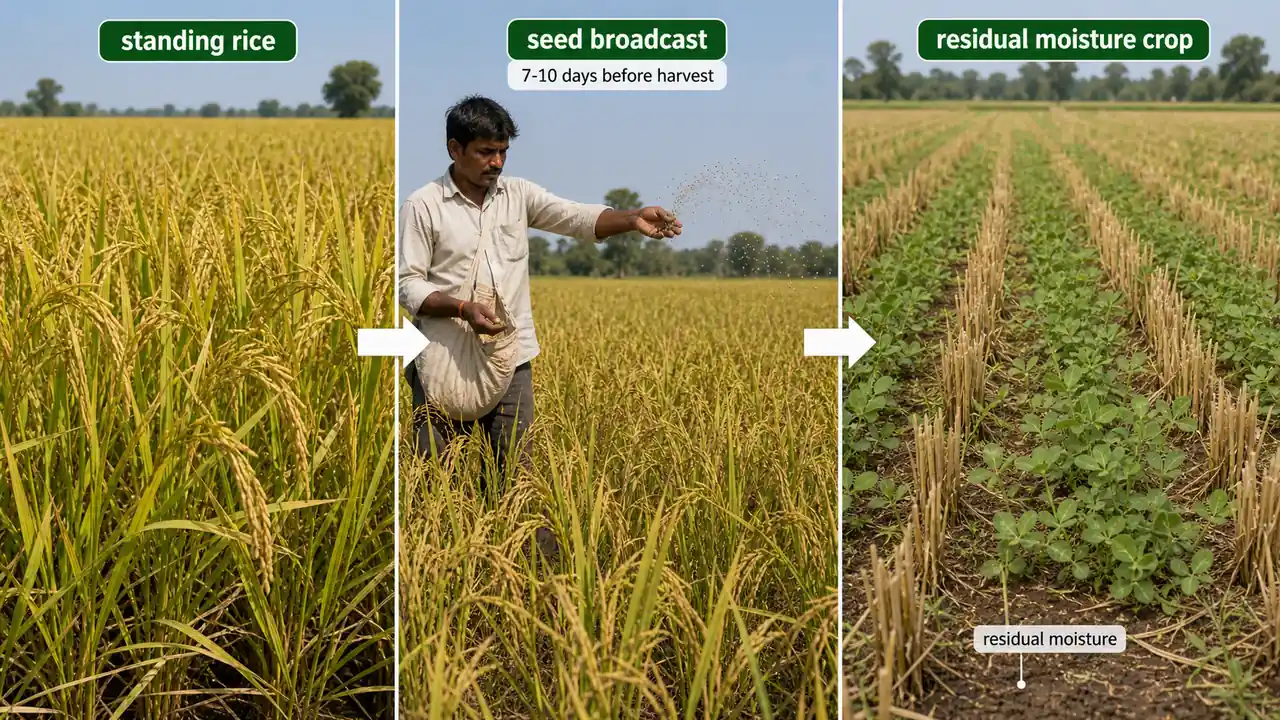
This unique cultivation method is a favourite exam topic:
- Seeds are broadcasted in standing rice crop before 7-10 days of rice harvesting
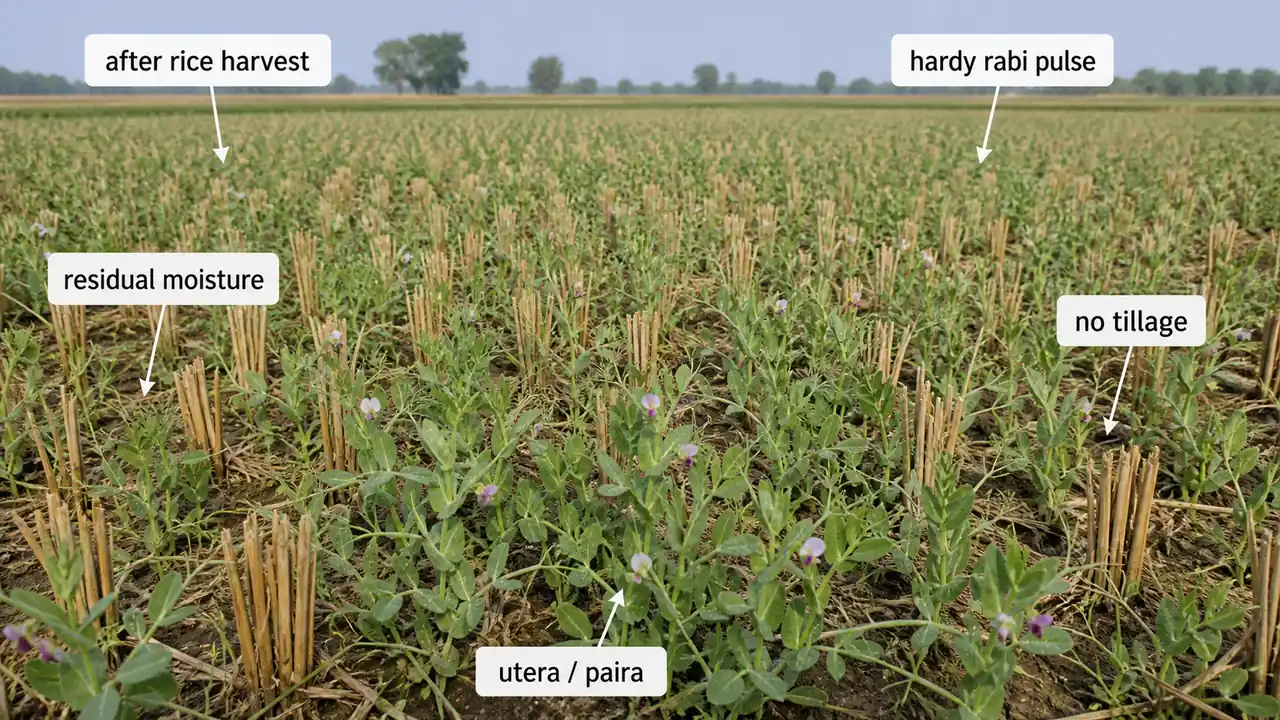
- The crop uses residual moisture from the rice field -- requires no irrigation
- No tillage or land preparation needed
- Widely practised in Bihar, Chhattisgarh, Madhya Pradesh, West Bengal
This method works because Lathyrus is exceptionally hardy and can germinate and establish itself with minimal moisture, making it ideal for resource-poor farmers who lack irrigation facilities.
Lathyrus vs Lentil -- Key Differences
Lathyrus is often confused with Lentil (Masur) in exams because both are rabi pulses grown in similar regions. The critical distinction is the BOAA neurotoxin present only in Lathyrus, and the unique utera cultivation method.
| Character | Lathyrus | Lentil |
|---|---|---|
| Scientific name | Lathyrus sativus | Lens culinaris |
| Toxin | BOAA (causes lathyrism) | None |
| Seed shape | Wedge-shaped | Lens-shaped |
| Cultivation method | Utera/Paira method | Normal sowing |
| Hardiness | Extremely hardy | Moderately hardy |
| Health risk | Yes (excessive consumption) | No |
Cultivation Practices
Beyond the unique utera method, Lathyrus can also be grown through conventional sowing. Its low fertilizer requirement (no potassium needed) reflects its adaptation to low-input farming systems.
| Parameter | Details |
|---|---|
| Seed rate | 50-75 kg/ha |
| Spacing | 30 x 10 cm |
| Sowing time | October-November (rabi) |
| Fertilizers (NPK) | 20:40:0 kg/ha |
| Yield | 8-12 q/ha |
Summary Cheat Sheet
| Fact | Details |
|---|---|
| Family | Fabaceae |
| Origin | Southern Europe and West Asia |
| Chromosome | 2n = 14 |
| Common names | Khesari, Kesari dal, Grass pea |
| Neurotoxin | BOAA/ODAP (0.1-2.5%) |
| Disease | Lathyrism (lower limb paralysis) |
| Diet threshold | >30% of diet for prolonged period |
| Low-BOAA varieties | Prateek, Mahateora, Ratan (<0.1%) |
| Cultivation method | Utera/Paira (in standing rice) |
| Season | Rabi (October-November) |
| Yield | 8-12 q/ha |
| L. sativus | Pulse crop |
| L. odoratus | Sweet pea (fodder/ornamental) |
IMPORTANT
Lathyrus key exam facts: BOAA/ODAP neurotoxin (0.1-2.5%) causes lathyrism (lower limb paralysis). Utera/Paira cultivation = broadcasting in standing rice 7-10 days before harvest. Lathyrus sativus = grass pea (pulse crop), L. odoratus = sweet pea (ornamental/fodder). Very hardy -- grows where other pulses fail.
Lesson Doubts
Ask questions, get expert answers