🧹 Weed Control Methods: Preventive, Cultural and Mechanical
Understand the four principles of weed management, preventive methods, cultural techniques like stale seedbed and blind tillage, and all physical/mechanical weed control methods with their agricultural applications.
The Onion Farmer's Dilemma
The previous lessons established what weeds are, how they are classified, and the damage they cause through competition, parasitism, and pest hosting. Now we turn to the practical question: how do we control them?
An onion grower in Nashik faces a cruel problem: onion has a shallow root system, narrow upright leaves, and very slow canopy closure -- it provides almost no shade to suppress weeds. Left unmanaged, weeds can reduce onion yield by 68%. The farmer cannot rely on herbicides alone (few selective options exist for onion), nor on hand weeding alone (too expensive with 4-5 rounds needed). The answer lies in combining multiple methods -- stale seedbed before planting, mulching between rows, targeted hand weeding at the critical period.
This lesson covers:
- Four principles of weed control -- prevention, eradication, control, management
- Preventive methods -- stopping weeds before they enter
- Cultural methods -- crop rotation, solarisation, stale seedbed, blind tillage
- Physical/mechanical methods -- hand pulling, hoeing, mulching, flaming, flooding
Weed Control vs Weed Management
These two terms are often confused but have different scopes:
Pro Content Locked
Upgrade to Pro to access this lesson and all other premium content.
Charged once for one year · ₹1188 total
Save ₹100/month vs ₹2388/year launch price
- All Agriculture & Banking Courses
- AI Lesson Questions (100/day)
- AI Doubt Solver (50/day)
- Glows & Grows Feedback (30/day)
- AI Section Quiz (20/day)
- 22-Language Translation (100/day)
- Recall Questions (20/day)
- AI Quiz (15/day)
- AI Quiz Paper Analysis (100/day)
- AI Step-by-Step Explanations (100/day)
- Spaced Repetition Recall (FSRS)
- AI Tutor
- Immersive Text Questions
- Audio Lessons — Hindi & English
- Mock Tests & Previous Year Papers
- Summary & Mind Maps
- XP, Levels, Leaderboard & Badges
- Generate New Classrooms
- Voice AI Teacher (AgriDots Live)
- AI Revision Assistant
- Knowledge Gap Analysis
- Interactive Revision (LangGraph)
🔒 Secure one-time yearly payment via Razorpay · No hidden fees
The Onion Farmer's Dilemma
The previous lessons established what weeds are, how they are classified, and the damage they cause through competition, parasitism, and pest hosting. Now we turn to the practical question: how do we control them?
An onion grower in Nashik faces a cruel problem: onion has a shallow root system, narrow upright leaves, and very slow canopy closure -- it provides almost no shade to suppress weeds. Left unmanaged, weeds can reduce onion yield by 68%. The farmer cannot rely on herbicides alone (few selective options exist for onion), nor on hand weeding alone (too expensive with 4-5 rounds needed). The answer lies in combining multiple methods -- stale seedbed before planting, mulching between rows, targeted hand weeding at the critical period.
This lesson covers:
- Four principles of weed control -- prevention, eradication, control, management
- Preventive methods -- stopping weeds before they enter
- Cultural methods -- crop rotation, solarisation, stale seedbed, blind tillage
- Physical/mechanical methods -- hand pulling, hoeing, mulching, flaming, flooding
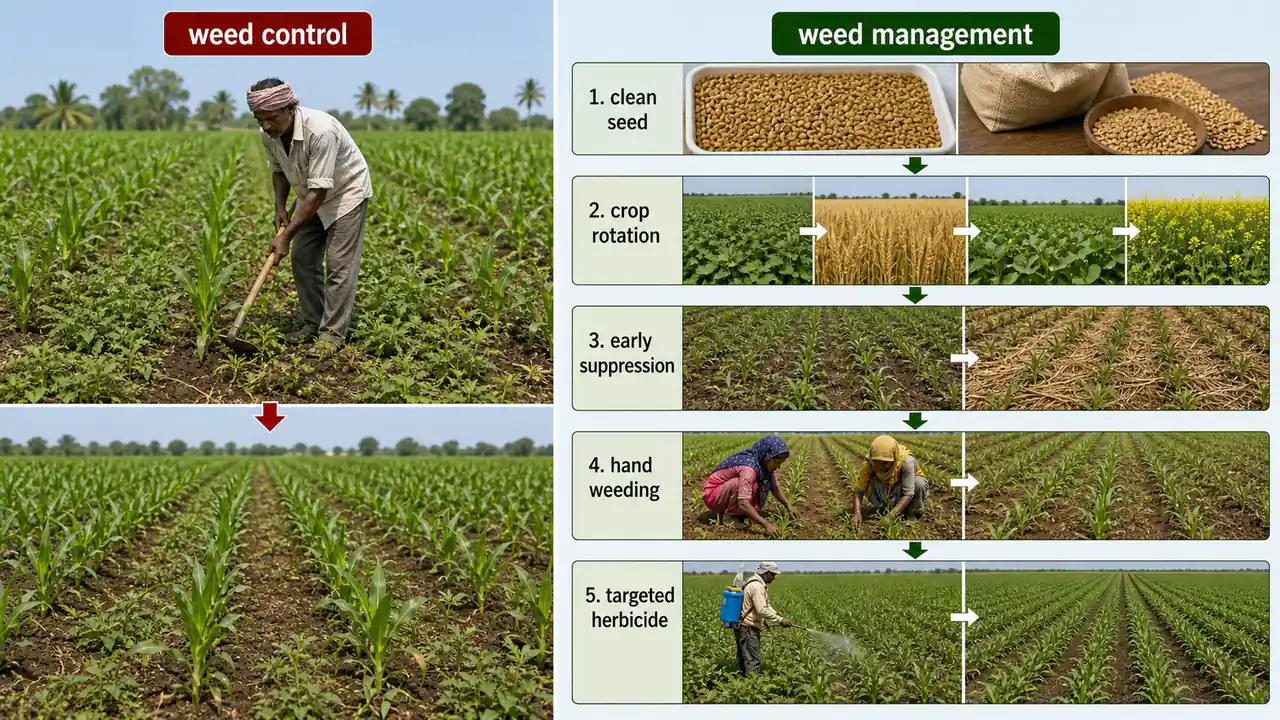
Weed Control vs Weed Management
These two terms are often confused but have different scopes:
| Term | Definition | Scope |
|---|---|---|
| Weed Control | Process of limiting infestations so crops can be grown profitably | A single activity |
| Weed Management | Includes prevention, eradication and control -- regulated use, restricting invasion, suppressing growth, preventing seed production, complete destruction | A system approach with whole-field planning |
Weed control is one component of the broader weed management system.
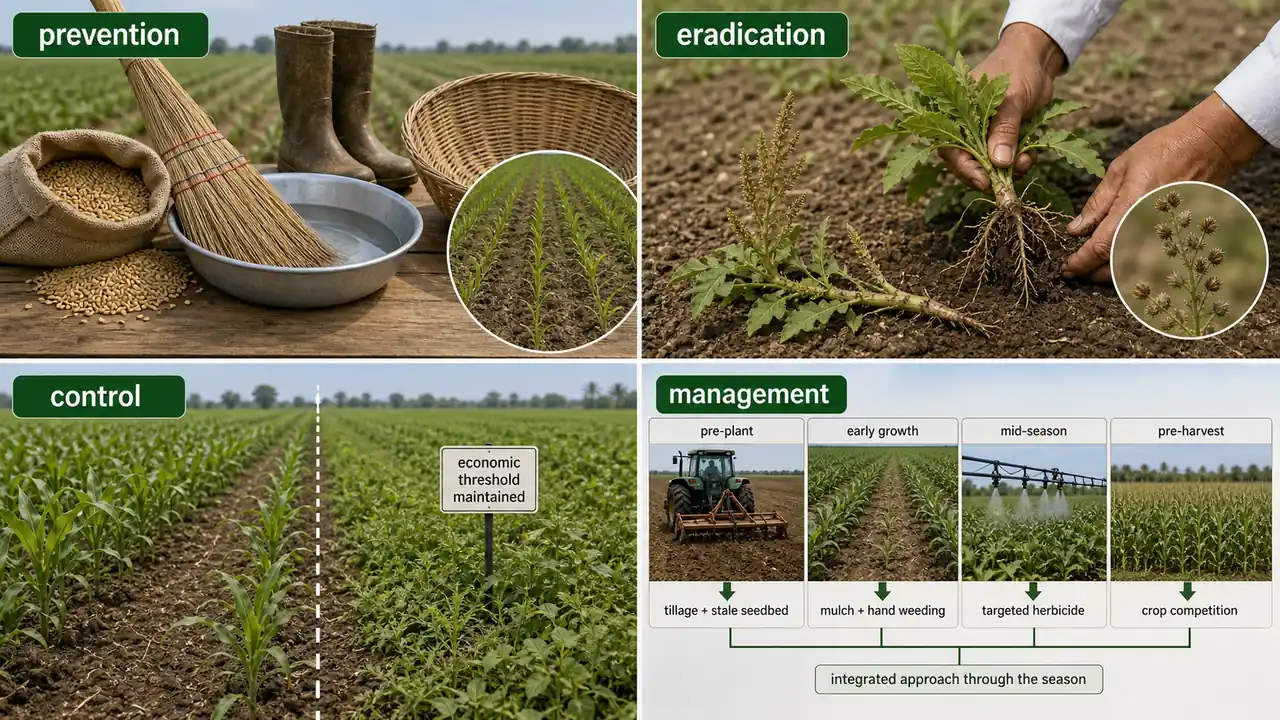
Four Principles of Weed Control
| Principle | Definition | Practicality |
|---|---|---|
| A. Prevention | Stopping a weed species from contaminating an area currently free of it | Most practical and economical -- easier to prevent entry than eliminate |
| B. Eradication | Complete elimination of all living plants, propagules and seeds | Rarely achieved in practice due to persistent seed banks |
| C. Control | Limiting infestations to an acceptable level | Cost-benefit driven -- balance cost of control vs profit from reduced competition |
| D. Management | Holistic system approach giving crops a strongly competitive advantage | Combines prevention, cultural practices and control methods |
TIP
Mnemonic -- "PECM": Prevention (cheapest), Eradication (hardest), Control (practical), Management (holistic). For exams, remember that prevention is most economical and eradication is rarely achieved.
Five Categories of Weed Control Methods
- Preventive methods
- Cultural methods
- Physical / Mechanical methods
- Biological methods (covered in next lesson)
- Chemical methods (covered in herbicide lessons)
1. Preventive Methods -- First Line of Defence
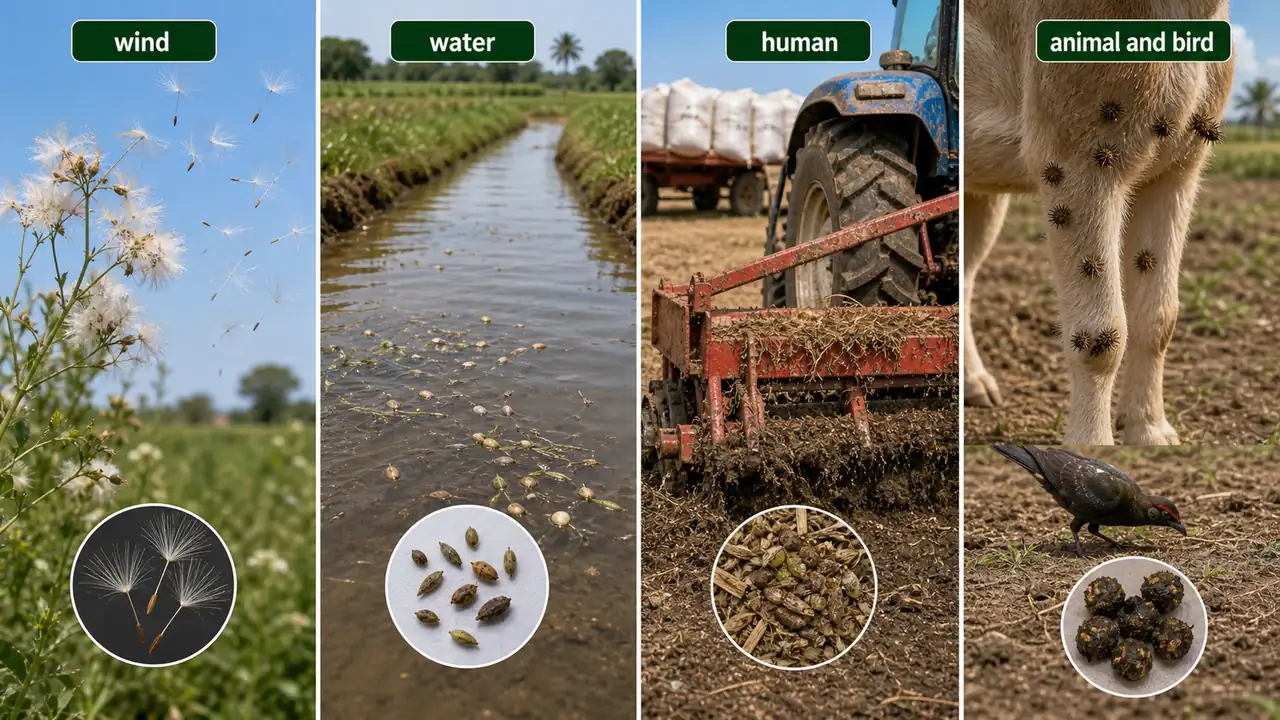
These measures stop new weed species from entering or spreading within a field:
| Preventive Measure | How It Works |
|---|---|
| Sow weed-free certified seeds | Minimal weed seed contamination in planting material |
| Use clean implements | Tillage tools and harvesters carry weed seeds between fields |
| Remove weeds along canals and irrigation channels | Irrigation water is a major carrier of weed seeds |
| Inspect transplanting seedlings | Nursery stock may harbour weed contamination |
| Use well-rotted manure | Composting heat kills weed seeds; fresh manure introduces weeds |
| Avoid cattle passage from weed-infested areas | Livestock carry seeds in fur, hooves and digestive tracts |
| Timely sowing, proper spacing, adequate fertilisation | Help crops outcompete weeds from the start |
| Enforce Weed Laws | Legal regulations preventing sale of weed-contaminated seed. No national weed law in India except Karnataka (declared Parthenium hysterophorus as noxious weed) |
| Quarantine methods + pre-emergence herbicides | Quarantine prevents entry of exotic weeds into the country |
| Stale Seedbed (cultural-cum-preventive) | Described below |
2. Cultural Methods -- Agronomic Advantage

Cultural methods manipulate agronomic practices to give the crop a competitive edge over weeds.
Crop Rotation
Alternating crops across seasons disrupts weed life cycles. Especially effective against crop-bound and parasitic weeds (like Orobanche, Striga) that depend on a specific host.
Example: Rotating tobacco with chilli (trap crop for Orobanche) breaks the parasite's cycle.
Solarisation
Covering soil with transparent polyethylene (20-25 micron PE film) during the hottest months for 2-4 weeks. Trapped solar heat raises soil temperature to levels lethal to weed seeds, pathogens and nematodes in the top few centimetres. No tillage is needed after solarisation.
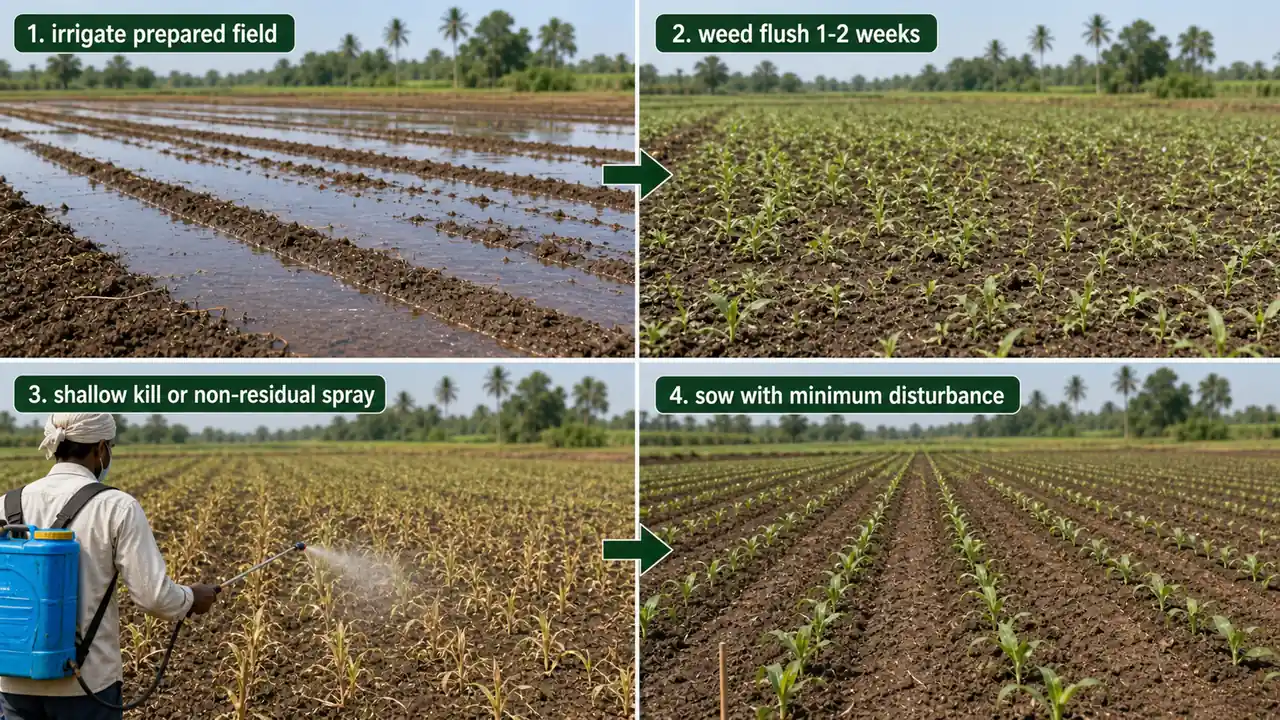
Stale Seedbed (Highly Effective Technique)
A technique that depletes the surface weed seed bank before crop planting:
| Step | Action | Purpose |
|---|---|---|
| 1 | Soak a well-prepared field with irrigation or rain | Trigger weed germination |
| 2 | Allow weeds to emerge for 1-2 weeks | Let first flush grow |
| 3 | Destroy emerged weeds with a non-residual herbicide (paraquat, glyphosate, glufosinate) or shallow cultivation | Kill the flush without disturbing deeper seeds |
| 4 | Plant the crop with minimum soil disturbance | Avoid bringing up new weed seeds |
TIP
The stale seedbed technique is especially useful for slow-establishing crops like onion and carrot that are poor competitors against early weeds.
Intercropping and Smother Cropping
Smother crops establish a dense canopy quickly, shading out weeds. Common smother crops: cowpea, lucerne, berseem, millets. Used as intercrops to reduce light available to weeds between crop rows.
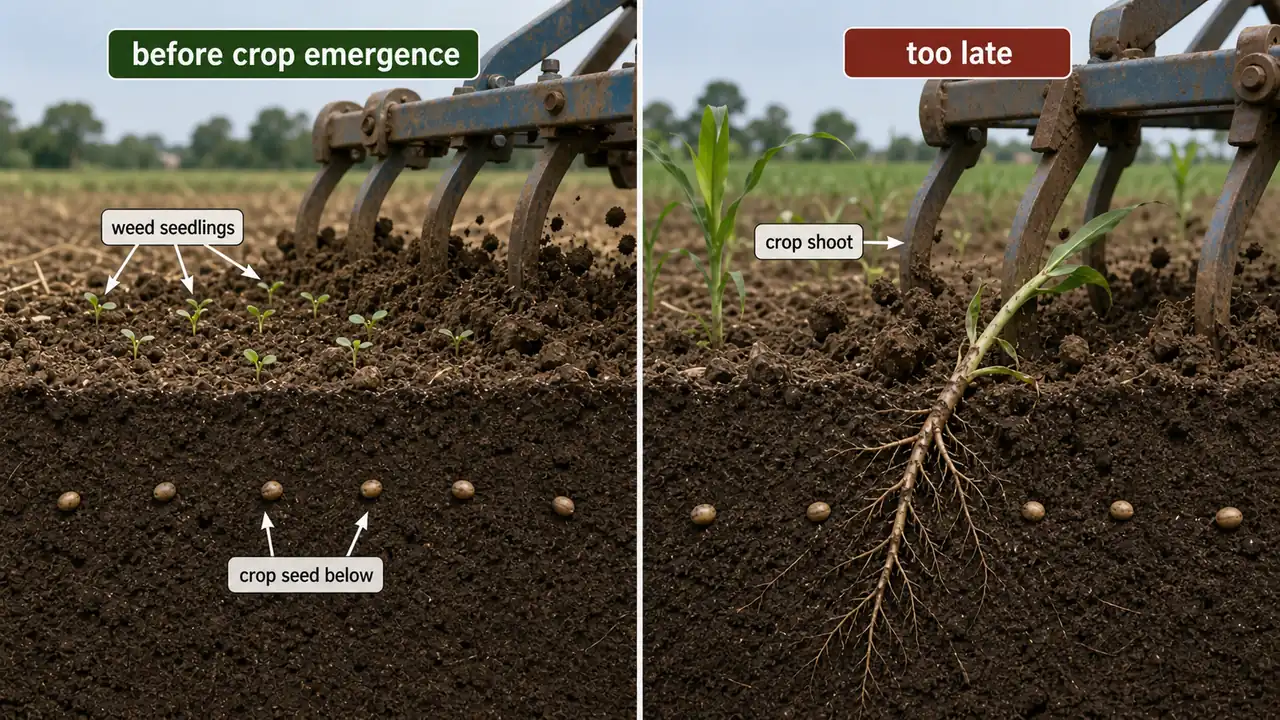
Blind Tillage (Blind Hoeing)
Tillage done after sowing but before crop emergence. Destroys germinating weed seedlings without damaging crop seeds still safely below tillage depth. Timing is critical -- must be done before the crop radicle reaches the surface.
Fouling Crops
Fouling crops are crops whose agronomic practices allow intensive weed infestation — for example, direct-seeded upland rice, which lacks the flooding that suppresses weeds in transplanted rice. These crops need extra weed management attention through closer spacing, timely herbicide application, or intercropping with smother crops.
Other Cultural Methods
| Method | Mechanism |
|---|---|
| Higher seed rate | Denser crop stand leaves less space for weeds |
| Early seedling vigour / vigorous varieties | Fast-starting crop outcompetes weeds from establishment |
| Selective crop stimulation | Soil amendments (gypsum, lime, manures) favour crop over weeds |
| Fertiliser placement near crop rows | Benefits crops more than weeds |
| Summer fallowing | Repeated cultivation exhausts perennial weed reserves |
| Minimum tillage | Reduces disturbance of buried weed seeds. May increase perennial weeds |
| Summer tillage | Exposes weed rhizomes and tubers to desiccation and heat |
3. Physical / Mechanical Methods
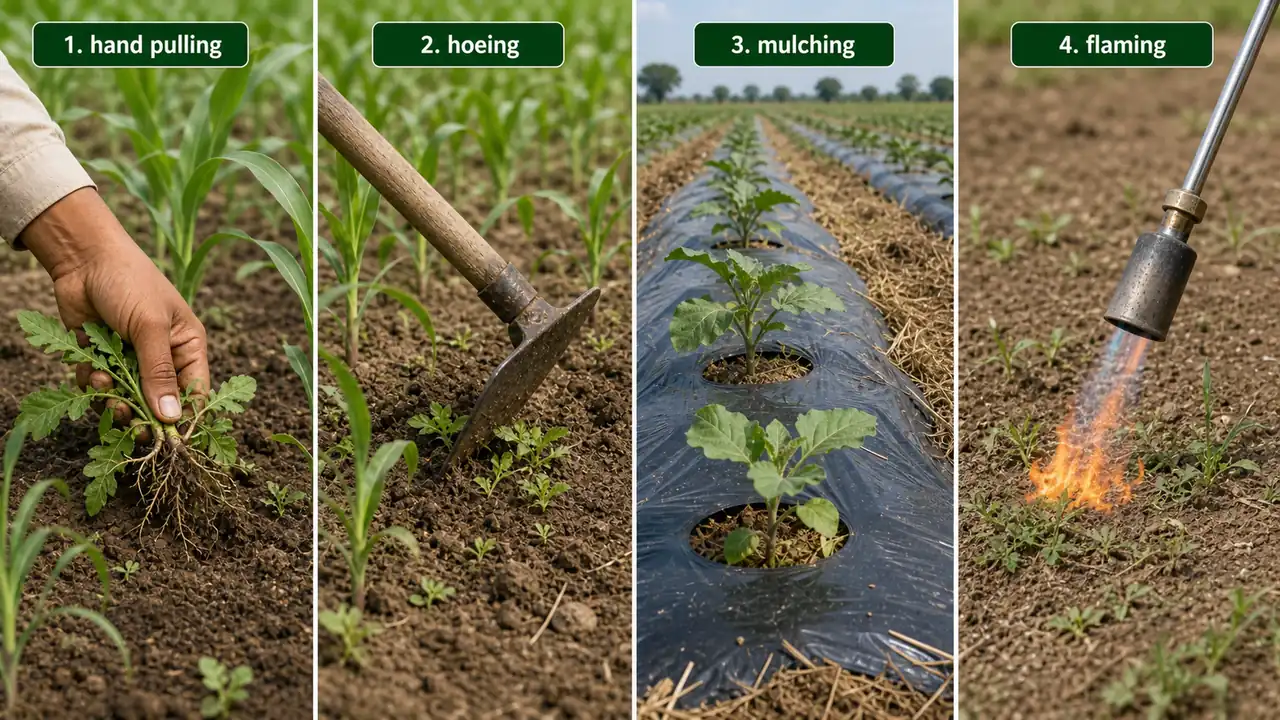
These methods use physical force or energy to destroy weeds. They remain the most widely used methods in Indian agriculture.
Comparison of Mechanical Methods
| Method | How It Works | Best For | Key Detail |
|---|---|---|---|
| Hand pulling | Oldest method; manual uprooting | Annual weeds, small holdings | 2-4 weedings per crop at 15-20 day intervals |
| Hand hoeing | Animal/human-drawn hoe cuts weeds | Annual weeds in row crops | First implement by Jethro Tull, 1731; requires row sowing |
| Spudding | Hand weeding + sharp-edged sickle | Close to crop plants | Effective where hoeing may damage crop |
| Shallow tillage | Mechanical soil disturbance, top layer | Annual weeds with shallow roots | -- |
| Deep tillage | Mechanical soil disturbance, deeper | Perennial weeds with deep rhizomes/tubers | -- |
| Mowing | Mechanised cutting at uniform height | Roadsides, lawns | -- |
| Sickling | Hand-cutting with sickle, roots left intact | Sloping areas -- roots hold soil | Prevents erosion |
| Mulching | Blocks sunlight with covers (polythene, paddy husk, groundnut shells, sawdust) | Prevents germination and growth | Works by light exclusion |
| Flooding | Excludes oxygen from root zone | Rice fields (paddy) | Suppresses upland weeds |
| Flaming | Momentary exposure to 1000 degrees C | Annual weeds | Coagulates cell proteins, ruptures membranes |
| Searing | Repeated flaming targeting the same area | Perennial weeds | Destroys root system through repeated treatment |
| Chaining | Heavy chain dragged through ditch bottom by two tractors | Aquatic weeds (obsolete) | Uproots submerged vegetation |
| Dredging | Mechanical pulling of weeds from bottom mud | Aquatic weeds (obsolete) | Removes roots and rhizomes |
| Cheeling | Cutting/scraping top growth at soil surface with cheel hoe | Shallow-rooted weeds | -- |
| Digging | Removing underground structures from deeper soil | Cyperus rotundus and perennials | Targets rhizomes and tubers |
Modern Mechanical Weeders
| Equipment | Application |
|---|---|
| Cono weeder | Wetland rice |
| Dryland weeder | Rainfed crops |
| Power rotary weeder | Large-scale mechanised farming |
| Tractor-drawn weeding + earthing-up | Row crops like sugarcane, maize |
These are increasingly important as farm labour becomes scarce and expensive.
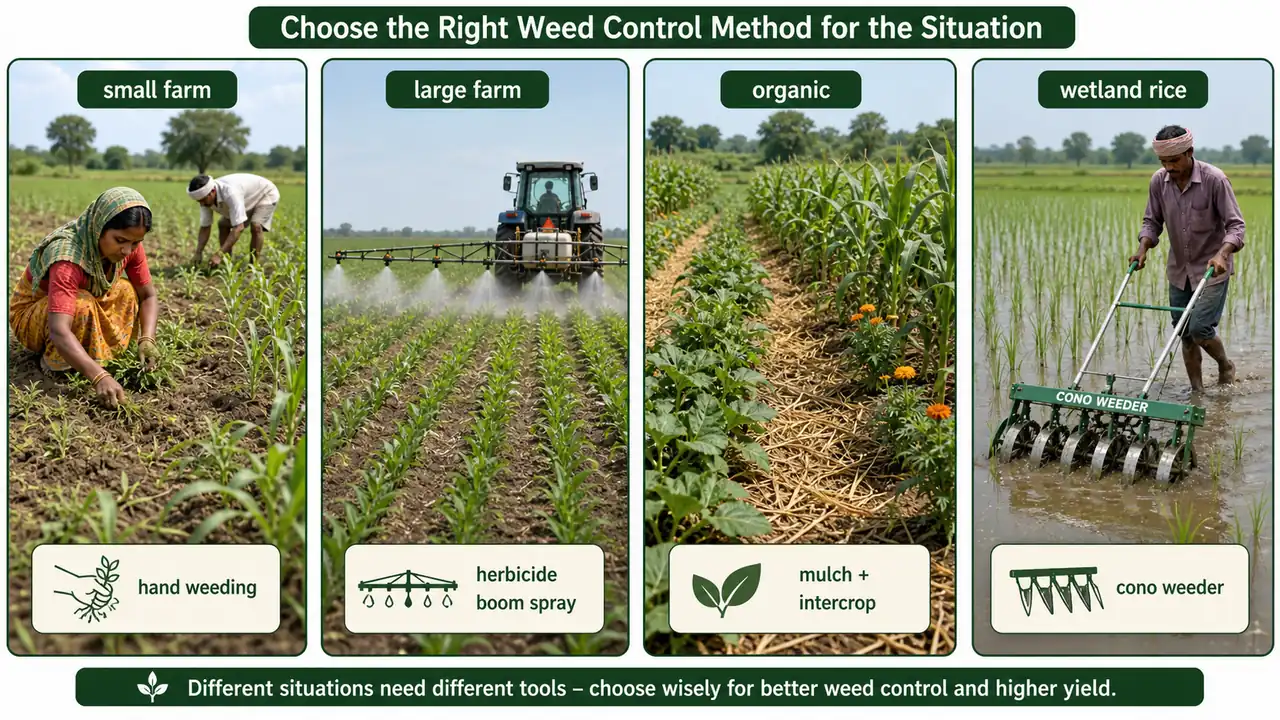
Which Weed Control Method for Which Situation?
Decision guide — match method to farm context:
| Situation | Best Method | Why | Limitation |
|---|---|---|---|
| Small farm, cheap labour | Hand weeding (2 weedings at 20 + 40 DAS) | Most thorough; no chemical residue | Labour-intensive; 30-40 person-days/ha |
| Large farm, labour shortage | Herbicide (pre-emergence + one hand weeding) | Fast, economical at scale | Requires knowledge of right herbicide + timing |
| Organic farming | Mulching + intercropping + hand weeding | No chemicals; builds soil health | Slower weed suppression |
| Wetland rice (puddled) | Cono weeder (mechanical) at 20 + 40 DAT | Works well in standing water; incorporates weeds into soil | Only for transplanted rice with row spacing |
| Orchards/perennial crops | Cover cropping + directed spray (Paraquat between rows) | Avoids root damage from tillage | Cover crop must not compete with tree |
| Irrigated channels/ponds | Biological control (grass carp for submerged; Neochetina for water hyacinth) | Long-term, self-sustaining | Slow establishment; not for emergency control |
The economics of weed control: Weeds cause an estimated 33% overall yield loss in India. In many crops, the cost of two hand weedings (₹3,000-5,000/ha) or one herbicide application (₹500-1,500/ha) is recovered many times over through yield saved. The critical weed-free period for most crops is the first 30-45 days after sowing — focus resources here.
Summary Cheat Sheet
| Concept / Topic | Key Details |
|---|---|
| Control vs Management | Control = limiting infestation; Management = holistic system |
| Most economical principle | Prevention |
| Rarely achieved principle | Eradication |
| Stale seedbed | 1-2 weeks weed emergence before destruction |
| Solarisation | 2-4 weeks with transparent PE (20-25 micron) |
| Oldest weed control | Hand pulling |
| Jethro Tull | First animal-drawn hoeing implement (1731) |
| Mulching principle | Exclusion of sunlight |
| Flooding principle | Exclusion of oxygen |
| Flaming temperature | 1000°C |
| Best method for slopes | Sickling (roots hold soil) |
| Best weeder for paddy | Cono weeder |
| Power rotary weeder | For large-scale mechanised farming |
| Tractor-drawn weeding | For row crops like sugarcane, maize |
| Blind tillage | After sowing, before crop emergence — destroys germinating weeds |
| Fouling crops | Crops with practices allowing heavy weed infestation (e.g., direct-seeded upland rice) |
| Weed laws in India | No national weed law; only Karnataka (Parthenium as noxious weed) |
| Spudding | Hand weeding + sharp-edged sickle, close to crop plants |
| Higher seed rate | Denser stand suppresses weeds |
| Minimum tillage caveat | May increase perennial weeds |