🐓 Poultry Introduction - Nomenclature, Egg Grading, Terminology and Basic Concepts
Introduction to poultry farming covering scientific classification, chromosome number (2n=78), nomenclature (cock, hen, pullet, cockerel), egg grading, incubation period, and essential terminology for exams.
Nomenclature
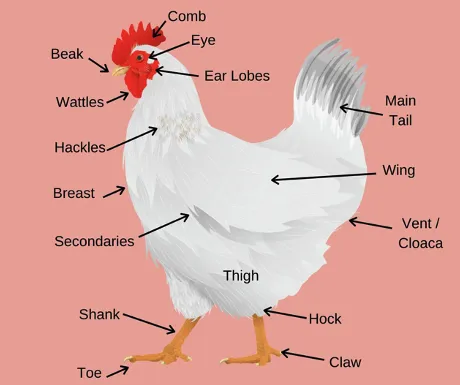 - **Wild Chicken (Red Jungle Fowl):** *Gallus gallus*
- **Domesticated Chicken**: *Gallus gallus domesticus*
- **Chromosome number in chicken (2n):** 78
- **Wild Chicken (Red Jungle Fowl):** *Gallus gallus*
- **Domesticated Chicken**: *Gallus gallus domesticus*
- **Chromosome number in chicken (2n):** 78
The domesticated chicken (Gallus gallus domesticus) traces its ancestry to the Red Jungle Fowl (Gallus gallus), which was first domesticated in Southeast Asia thousands of years ago. Understanding the scientific classification and chromosome number is essential for studies in poultry genetics and breeding.
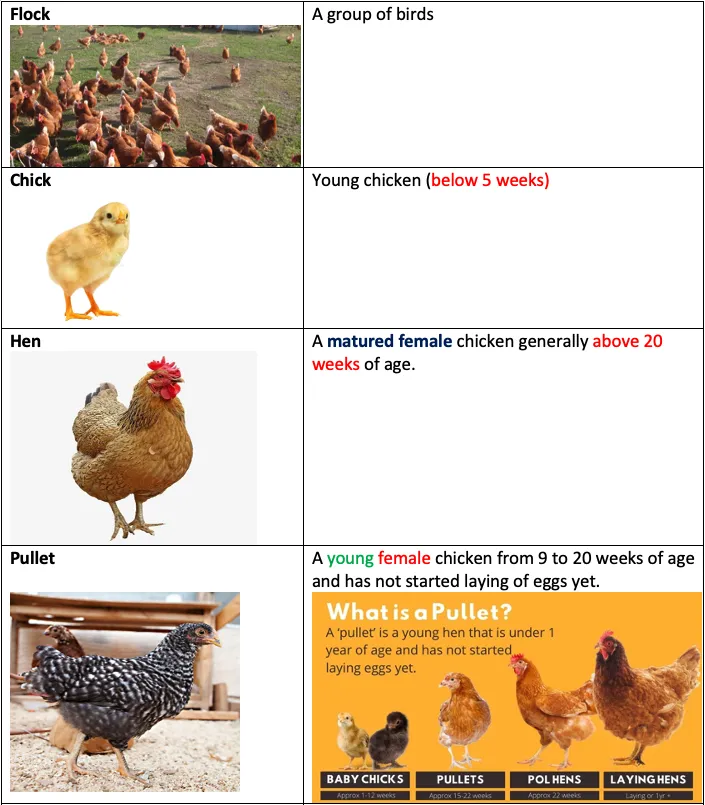
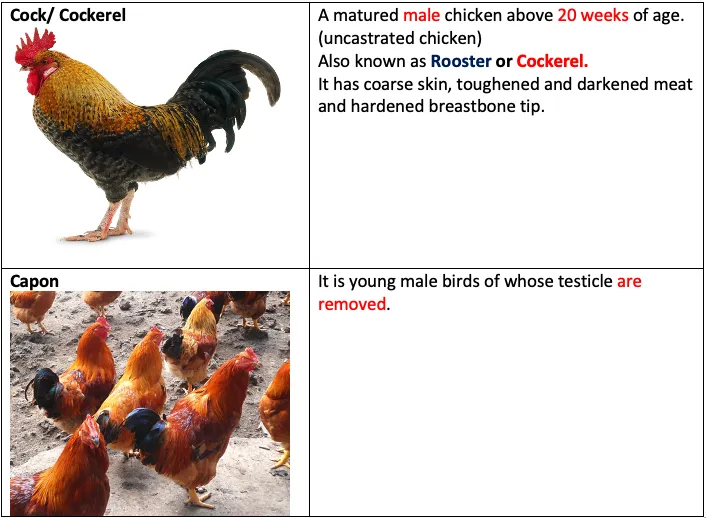
Terms for Chicken at Different Ages / Roles
| Term | Definition |
|---|---|
| Cock / Rooster | Adult male chicken |
| Hen | Adult female chicken (after laying first egg) |
| Pullet | Young female before first egg (typically < 18–22 weeks) |
| Cockerel | Young male under 1 year of age |
| Chick | Newly hatched young chicken |
| Capon | Castrated male, fattened for meat |
| Broiler | Meat-type chicken, marketed at 6–8 weeks |
| Layer | Egg-type hen kept for commercial egg production |
| Spent Hen | Layer at the end of her productive life (after ~72 weeks) |
NOTE
Pro Content Locked
Upgrade to Pro to access this lesson and all other premium content.
₹99 charged monthly · Cancel anytime
- All Agriculture & Banking Courses
- AI Lesson Questions (100/day)
- AI Doubt Solver (50/day)
- Glows & Grows Feedback (30/day)
- AI Section Quiz (20/day)
- 22-Language Translation (100/day)
- Recall Questions (20/day)
- AI Quiz (15/day)
- AI Quiz Paper Analysis (100/day)
- AI Step-by-Step Explanations (100/day)
- Spaced Repetition Recall (FSRS)
- AI Tutor
- Immersive Text Questions
- Audio Lessons — Hindi & English
- Mock Tests & Previous Year Papers
- Summary & Mind Maps
- XP, Levels, Leaderboard & Badges
- Generate New Classrooms
- Voice AI Teacher (AgriDots Live)
- AI Revision Assistant
- Knowledge Gap Analysis
- Interactive Revision (LangGraph)
🔒 Secure via Razorpay · Cancel anytime · No hidden fees
Nomenclature
- **Wild Chicken (Red Jungle Fowl):** *Gallus gallus*
- **Domesticated Chicken**: *Gallus gallus domesticus*
- **Chromosome number in chicken (2n):** 78
The domesticated chicken (Gallus gallus domesticus) traces its ancestry to the Red Jungle Fowl (Gallus gallus), which was first domesticated in Southeast Asia thousands of years ago. Understanding the scientific classification and chromosome number is essential for studies in poultry genetics and breeding.
Terms for Chicken at Different Ages / Roles
| Term | Definition |
|---|---|
| Cock / Rooster | Adult male chicken |
| Hen | Adult female chicken (after laying first egg) |
| Pullet | Young female before first egg (typically < 18–22 weeks) |
| Cockerel | Young male under 1 year of age |
| Chick | Newly hatched young chicken |
| Capon | Castrated male, fattened for meat |
| Broiler | Meat-type chicken, marketed at 6–8 weeks |
| Layer | Egg-type hen kept for commercial egg production |
| Spent Hen | Layer at the end of her productive life (after ~72 weeks) |
NOTE
Capon — Why are they produced? Castration (caponisation) removes the male hormones that cause toughness and aggression. Capons grow larger, deposit more fat (marbling), and develop softer, more flavourful meat than intact males — making them a premium meat bird.
TIP
Quick memory aid for terminology:
- Age-based: Chick → Cockerel/Pullet → Cock/Hen
- Purpose-based: Broiler (meat, 6–8 wk), Layer (eggs, 18–20 wk onwards), Capon (premium meat, castrated male), Spent Hen (retired layer)
Incubation period of chicken = 21 days
What is Poultry?
- Rearing and breeding of domesticated fowls such as chicken, ducks, turkey and some varieties of pigeon for their meat and eggs. Poultry farming is one of the fastest-growing sectors of animal husbandry globally, driven by the increasing demand for affordable animal protein.
- Word poultry related to Chicken, Duck, Turkey etc.
IMPORTANT
India's Poultry — 20th Livestock Census 2019: Total poultry population = 851.81 million, making India the world's 3rd largest poultry producer. Andhra Pradesh has the highest poultry population among all states. This figure includes backyard and commercial poultry across all species.
Poultry Sector
- Indian poultry sector contribute 0.7% in National GDP and about 10% to the livestock GDP. India is one of the world's largest producers of both eggs and poultry meat, with the industry experiencing rapid growth due to increasing urbanisation, rising incomes, and changing dietary preferences.
- There are two types of birds 1. Layer 2. Broiler. Layers are raised primarily for egg production, while broilers are raised for meat production. Each type has been selectively bred for its specific purpose.
Layer
- An egg laying female chicken up to one year after starting the laying of eggs. A layer is a commercial hen specifically bred and managed to produce the maximum number of eggs over her productive life.
- Laying: The act of parturition in chickens. In poultry, the term laying refers to the process of an egg being formed in the oviduct and deposited by the hen.
- Clutch: The number of eggs laid by a bird on consecutive days. A clutch of 3-4 eggs is preferred. A larger clutch size indicates better laying consistency and is a desirable trait in commercial layer breeds.
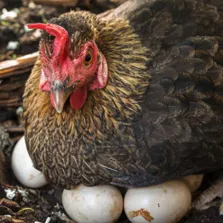
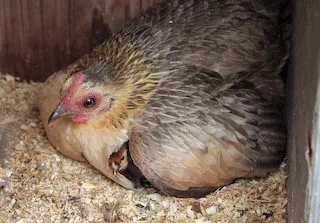
- Broody: A hen which has stopped laying eggs temporarily. A broody hen exhibits the natural instinct to sit on and incubate eggs. In commercial operations, broodiness is undesirable as it halts egg production.
NOTE
Broodiness suppression in modern layers: Through selective breeding over decades, commercial layer strains (e.g., BV-300, Lohmann LSL) have had the broodiness instinct almost completely eliminated. This allows them to keep laying without interruption. Indigenous breeds retain stronger broodiness.
-
Laying period start: Commercial layers begin laying at 18–20 weeks of age. Peak production is typically achieved around 28–32 weeks.
-
Average egg laying throughout the year:
- Indian hen: 60-80 eggs
- Improved breed: 220-260 eggs
The vast difference between indigenous and improved breeds highlights the importance of selective breeding and genetic improvement in poultry production.
-
Pause: It is the period between two clutches in which eggs are not laid by hen. The pause period is a natural resting phase in the laying cycle. Shorter pauses are desirable in commercial flocks.
-
Hen day production: This is arrived by dividing total number of eggs laid in the season by the average number of birds in the house. This metric accounts for daily flock size changes and provides a more accurate measure of current laying performance.
-
Hen housed average: This is arrived at by dividing the total number of eggs laid in the season by the number of birds originally placed in the house. No deductions are made for any losses from the flocks. This measure reflects overall flock performance including mortality, making it a stricter and more comprehensive metric.
-
World Egg production: 2nd globally (after China) as per BAHS 2024.
-
Egg Production: In 2023-24, the total egg production in the country is 142.77 billion eggs — ↑3.18% over 2022-23 (BAHS 2024).
-
Total five major egg producing States are Andhra Pradesh (17.85%), Tamil Nadu (15.64%), Telangana (12.88%), West Bengal (11.37%) and Karnataka (6.63%).
Egg
- Egg is the physiological product of the female reproductive system. Each egg is a self-contained package of high-quality nutrients designed to support the complete development of a chick embryo.
- Hen's egg, apart from the ovum does contain other impotant nutrients for the growth and development of the embryo until hatching.
- Average weight: 50-60 gm
- Yolk: 30%
- White or albumin: 58%
- Inner & outer shell membranes and shell: 12%
Egg Structure — Internal Anatomy (Frequently Tested)
IMPORTANT
Albumen (egg white) has 4 layers (from yolk outward):
- Chalaziferous layer — dense, twisted; forms the chalaza
- Inner thick albumen — firm gel; largest fraction; most important for quality (measured by Haugh Unit)
- Inner thin albumen — liquid; adjacent to yolk
- Outer thin albumen — liquid layer just inside shell membranes
Exam tip: There are 4 albumen layers, not 3.
- Chalaza: Two twisted protein (mucin) strands that anchor the yolk at the centre of the egg. Function: keeps the yolk suspended centrally so the embryo disc always faces upward toward the warmth source. Prominent chalazae = fresher egg.
- Vitelline membrane: Thin transparent membrane that directly surrounds the yolk, separating it from the albumen.
- Shell membranes: Two membranes (inner and outer) lie just inside the shell. They are separated at the broad end to form the air cell.
- Air cell: Located at the broad end of the egg. It forms as the egg cools after laying due to contraction of contents. As the egg ages, moisture evaporates through the porous shell → air cell enlarges. Used in the float test for freshness: fresh egg sinks flat; stale egg stands upright or floats.
- Shell composition: Approximately 94% calcium carbonate (CaCO₃), with small amounts of magnesium carbonate and calcium phosphate. The outermost coating is the cuticle (bloom) — a thin protein layer that seals shell pores to reduce bacterial entry and moisture loss.
TIP
Egg Freshness Tests:
- Float test (specific gravity): Fresh egg sinks (high density); stale egg floats (air cell expanded, lower density). Simple field test.
- Candling: Passing light through the egg to visualise internal contents — detects cracks, blood spots, meat spots, and air cell size. Used in grading.
- Haugh Unit (HU): Log-based index of albumen height relative to egg weight. Higher HU = thicker albumen = fresher egg. Grade AA ≥ 72 HU; Grade A = 60–72 HU; Grade B < 60 HU.
- Nutrient composition of egg weight
- 12 % minerals
- 12 % protein
- 11% fat
- 65 % water
- Calories: 148 Cal/100 gm
Eggs are considered a complete food because they contain almost all the essential nutrients required by the human body, including all essential amino acids, making egg protein the reference standard for evaluating protein quality.
Grading of Eggs
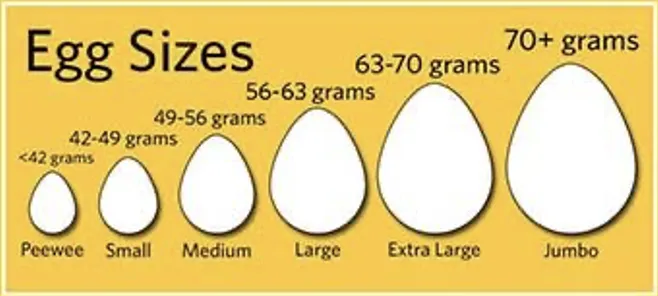
Egg grading is the process of sorting eggs by size and quality. It ensures that consumers receive eggs of consistent weight and internal quality, and it helps producers fetch better market prices.
NOTE
Shell strength in grading is assessed by measuring the force (kg/cm²) required to crack the shell. It is influenced by dietary calcium and phosphorus levels, hen age (older hens lay thinner-shelled eggs), and breed. Poor shell strength leads to breakage losses — a major economic concern.
Broiler
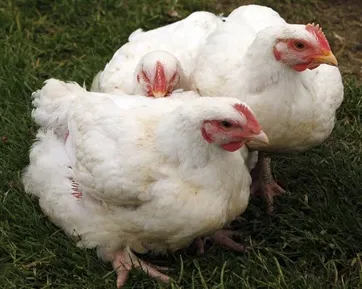 - These are young chicken (usually 9 to 12 weeks of age) of either sex, which are reared primarily for meat purposes and marketable age 6-8 weeks. **Broiler chickens** have been genetically selected for **rapid growth** and efficient feed conversion, reaching market weight in a remarkably short time.
- Broiler has tender meat with soft pliable, smooth-textured skin and flexible *breastbone cartilage*.
- Broiler chickens are breed and sold as White meat and Chicken Breast. **White meat** from the breast is particularly popular because it is lean, low in fat, and high in protein.
- Sold for table purpose as they possess a very tender and delicious meat.
- These are young chicken (usually 9 to 12 weeks of age) of either sex, which are reared primarily for meat purposes and marketable age 6-8 weeks. **Broiler chickens** have been genetically selected for **rapid growth** and efficient feed conversion, reaching market weight in a remarkably short time.
- Broiler has tender meat with soft pliable, smooth-textured skin and flexible *breastbone cartilage*.
- Broiler chickens are breed and sold as White meat and Chicken Breast. **White meat** from the breast is particularly popular because it is lean, low in fat, and high in protein.
- Sold for table purpose as they possess a very tender and delicious meat.
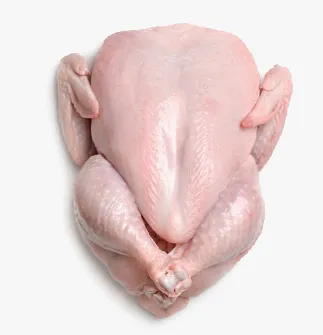 - Dressing percentage in broiler poultry is 70-75%. **Dressing percentage** is the ratio of carcass weight to live weight, expressed as a percentage. A dressing percentage of 70-75% means that approximately three-quarters of the broiler's live weight becomes usable meat.
- They are the hybrid chicks having *rapid growth* and attaining about 1.5 - 2 kg weight during the period of 6 to 8 weeks of age. This remarkable growth rate is the result of decades of **selective breeding** combined with optimised nutrition and management practices.
- Dressing percentage in broiler poultry is 70-75%. **Dressing percentage** is the ratio of carcass weight to live weight, expressed as a percentage. A dressing percentage of 70-75% means that approximately three-quarters of the broiler's live weight becomes usable meat.
- They are the hybrid chicks having *rapid growth* and attaining about 1.5 - 2 kg weight during the period of 6 to 8 weeks of age. This remarkable growth rate is the result of decades of **selective breeding** combined with optimised nutrition and management practices.
IMPORTANT
Broiler vs Layer — Key Differences (MCQ-critical):
| Parameter | Broiler | Layer |
|---|---|---|
| Purpose | Meat production | Egg production |
| Market age | 6–8 weeks | ~72 weeks productive life |
| Body weight at market | 1.5–2 kg | ~1.8 kg (lighter frame) |
| FCR | 1.8–2.0 (feed:gain) | Not the primary metric |
| Egg laying start | Not applicable | 18–20 weeks |
| Annual eggs | Not applicable | 220–260 (improved breeds) |
| Spent hen | Not applicable | Layer past productive life |
Composition of poultry meat
- Water - 75%
- Protein - 21%
- Fat - 5-9%
- Carbohydrates - small quantities
Poultry meat is considered one of the healthiest animal protein sources due to its high protein content, low fat percentage (especially in breast meat), and good balance of essential amino acids.
Incubation Parameters (Very Frequently Tested)
IMPORTANT
Artificial Incubation — Critical Parameters:
| Parameter | Setter (Day 1–18) | Hatcher (Day 18–21) |
|---|---|---|
| Temperature | 37.5°C (99.5°F) | 37.2°C (99°F) |
| Relative Humidity | 55–60% | 65–70% |
| Egg turning | Min. 3–4 times/day | Stop on Day 18 |
- Incubation period: 21 days (chicken) | 28 days (duck and turkey)
- Natural incubation: A broody hen can cover approximately 10–12 eggs
- Turning is stopped on Day 18 to allow the chick to position itself correctly for hatching (internal pipping begins)
- Higher humidity in the last 3 days (hatch phase) prevents the shell membrane from drying and sticking to the chick
Economic Importance of Poultry
- Cheapest animal protein: Eggs are the most affordable source of complete animal protein — critical for food security of rural and low-income populations.
- Poultry manure: High nitrogen content (approximately 2.5–3% N on dry basis) makes it an excellent organic fertiliser. Also contains phosphorus and potassium.
- Short generation interval: Poultry has the shortest generation interval (~6 months) of all livestock species, allowing the fastest genetic improvement through selective breeding.
- Employment: Poultry farming provides significant employment to rural poor, with women playing a major role in backyard poultry — contributing to women's economic empowerment.
- Low capital, quick returns: Broilers reach market in just 6–8 weeks — far faster than cattle or pigs — making poultry the most capital-efficient livestock enterprise.
Key Poultry Research Institutions
| Institution | Location | Key Details |
|---|---|---|
| CARI (Central Avian Research Institute) | Izatnagar, Bareilly, Uttar Pradesh | Established 1979; premier ICAR institute for poultry research |
| ICAR-DPR (Directorate of Poultry Research) | Hyderabad, Telangana | Develops synthetic breeds for egg and meat production |
Broiler Industry — Key Statistics
- India's broiler meat production: ~4.8 million MT (2023-24)
- India ranks among the top 5 globally in poultry meat production.
FCR — Feed Conversion Ratio
- FCR = kg of feed required to produce 1 kg of body weight gain.
- Broiler FCR: 1.5–1.8 (among the best in livestock).
- Poultry has the lowest (best) FCR among all livestock species, making it the most feed-efficient source of animal protein.
Explore More 🔭
🟢 https://www.youtube.com/watch?v=KsuesiVJgtI
References
2 sources • [1] [2]
References
Summary Cheat Sheet
| Concept / Topic | Key Details |
|---|---|
| Wild chicken | Gallus gallus (Red Jungle Fowl) |
| Domesticated chicken | Gallus gallus domesticus |
| Chromosome number | 2n = 78 |
| Poultry sector GDP | 0.7% of National GDP; 10% of livestock GDP |
| Cock / Rooster | Adult male chicken |
| Hen | Adult female (after first egg) |
| Pullet | Young female before first egg (< 18–22 weeks) |
| Cockerel | Young male under 1 year |
| Chick | Newly hatched young |
| Capon | Castrated male, fattened for meat |
| Layer | Egg-laying hen; up to 1 year after starting to lay |
| Broiler | Meat chicken; reaches 1.5–2 kg in 6–8 weeks |
| Indian hen eggs/year | 60–80 eggs |
| Improved breed eggs/year | 220–260 eggs |
| India egg rank (world) | 2nd globally (after China) — BAHS 2024 |
| Total egg production (2023-24) | 142.77 billion (↑ 3.18% over 2022-23) — BAHS 2024 |
| Top egg-producing state | Andhra Pradesh (17.85%) |
| Top 5 egg-producing states | AP 17.85%, TN 15.64%, Telangana 12.88%, WB 11.37%, Karnataka 6.63% |
| Clutch | Eggs laid on consecutive days; 3–4 preferred |
| Broody | Hen that stopped laying temporarily (incubation instinct) |
| Hen day production | Total eggs ÷ average birds in house |
| Hen housed average | Total eggs ÷ birds originally placed (includes mortality) |
| Egg average weight | 50–60 gm |
| Egg composition | Yolk 30%, Albumin 58%, Shell 12% |
| Egg nutrients | Protein 12%, Fat 11%, Minerals 12%, Water 65%; 148 Cal/100 gm |
| Jumbo egg | >70 gm |
| Broiler dressing % | 70–75% |
| Poultry meat composition | Water 75%, Protein 21%, Fat 5–9% |
| Incubation period (chicken) | 21 days |
| Incubation period (duck/turkey) | 28 days |
| Incubation temp | 37.5°C (99.5°F) — setter phase |
| Incubation humidity | 55–60% (setter) → 65–70% (hatcher, last 3 days) |
| Egg turning | Min. 3–4×/day; stop on Day 18 |
| Natural incubation | Broody hen covers 10–12 eggs |
| Total poultry (20th LC 2019) | 851.81 million — world's 3rd largest |
| Highest poultry state | Andhra Pradesh (also #1 in egg production) |
| Layer laying start | 18–20 weeks of age |
| Spent hen | Layer past productive life (~72 weeks) |
| Broiler FCR | 1.8–2.0 (feed kg per kg weight gain) |
| Egg shell composition | ~94% CaCO₃; outer coating = cuticle (bloom) |
| Albumen layers | 4: chalaziferous, inner thick, inner thin, outer thin |
| Chalaza | Twisted protein strands anchoring yolk centrally |
| Air cell | Broad end; enlarges with age — used in float test |
| Haugh Unit (HU) | Albumen height index; higher = fresher (AA ≥ 72 HU) |
| Candling | Light-based method to detect cracks, blood spots, air cell |
| Broiler meat production | ~4.8 million MT (2023-24); India in top 5 globally |
| CARI | Central Avian Research Institute, Izatnagar, Bareilly, UP — est. 1979 |
| ICAR-DPR | Directorate of Poultry Research, Hyderabad — develops synthetic breeds |
Lesson Doubts
Ask questions, get expert answers