🌾 Rice Pests Part 1: The Six Major Enemies of Paddy
Complete guide to the 6 major pests of rice — brown plant hopper (BPH), yellow stem borer, gall midge, green leafhopper (GLH), thrips, and rice hispa with scientific names, ETL values, damage symptoms, management, and exam mnemonics
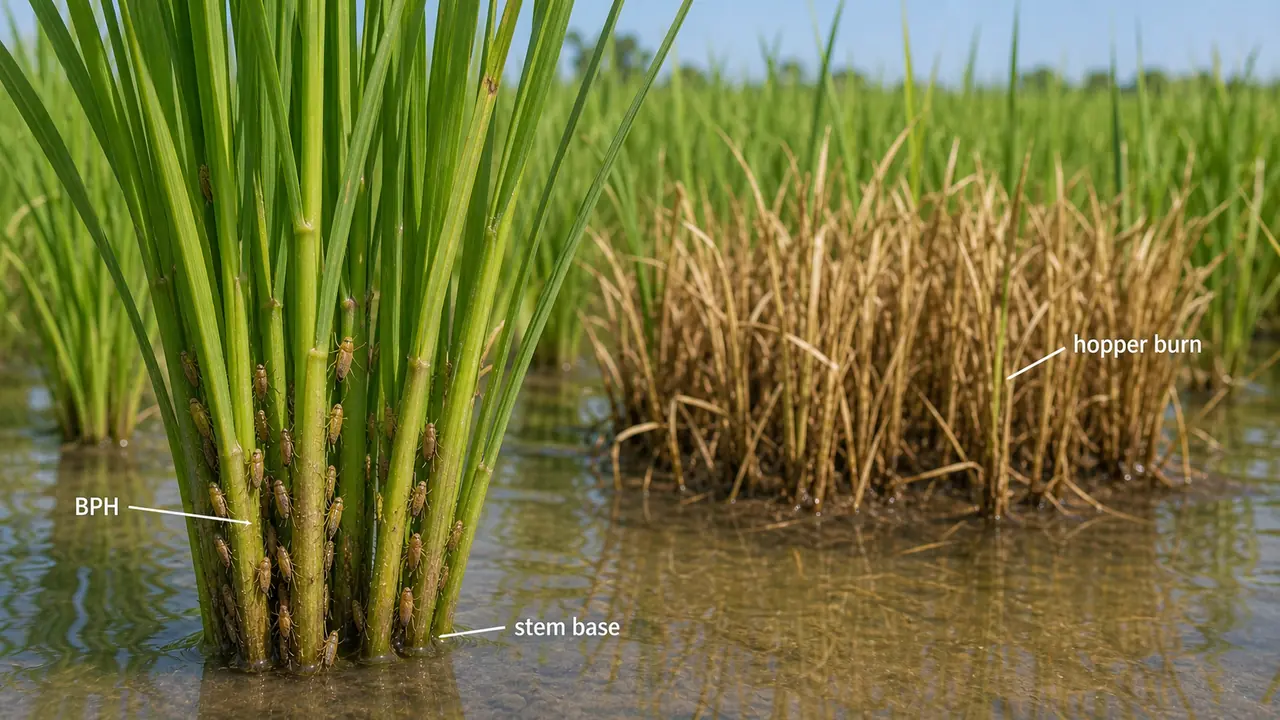
Walk into any paddy field in Tamil Nadu during the tillering stage and you may notice something alarming: circular patches of brown, dried-up plants that look as if someone set fire to them. This is "hopper burn" — caused by the Brown Plant Hopper (BPH) sucking sap from thousands of rice tillers. Rice is the staple food of over half of India's population, and it faces attack from more than 100 insect species, of which about 20 are economically important. In this lesson, we cover the six major pests that cause the most damage and appear most frequently in competitive exams.
NOTE
Among the sucking pests of rice, BPH, GLH, WBPH, and the rice earhead bug pose the most severe threat to production. BPH and GLH are covered in this lesson; WBPH and earhead bug are covered in Part 2.
Rice Pests at a Glance
Rice Pests — Quick Reference Table
| Pest | Scientific Name | Family | Order | Key Damage |
|---|---|---|---|---|
| Brown Plant Hopper (BPH) | Nilaparvata lugens | Delphacidae | Hemiptera | Hopper burn (circular patches) |
| Yellow Stem Borer | Scirpophaga incertulas | Pyralidae | Lepidoptera | Dead heart / white ear |
| Gall Midge | Orseolia oryzae | Cecidomyiidae | Diptera | Silver shoot (onion needle) |
| Green Leafhopper (GLH) | Nephotettix virescens | Cicadellidae | Hemiptera | Tungro virus vector |
| Thrips | Stenchaetothrips biformis | Thripidae | Thysanoptera | Silvery streaks on leaves |
| Rice Hispa | Dicladispa armigera | Chrysomelidae | Coleoptera | Transparent leaf blotches |
Understanding the Pest Categories
Before studying individual pests, note that rice pests fall into clear functional groups:
| Category | Pests | Damage Type |
|---|---|---|
| Sap suckers | BPH, GLH, Thrips | Drain plant vitality; cause yellowing and drying |
| Stem borers | Yellow Stem Borer | Bore inside stem; cause dead heart and white ear |
| Gall makers | Gall Midge | Cause abnormal growth (silver shoots) |
| Leaf feeders | Rice Hispa | Mine leaves and scrape tissue |
This grouping helps because exam questions often ask about damage types rather than specific pests.
1. Brown Plant Hopper (BPH) — Nilaparvata lugens
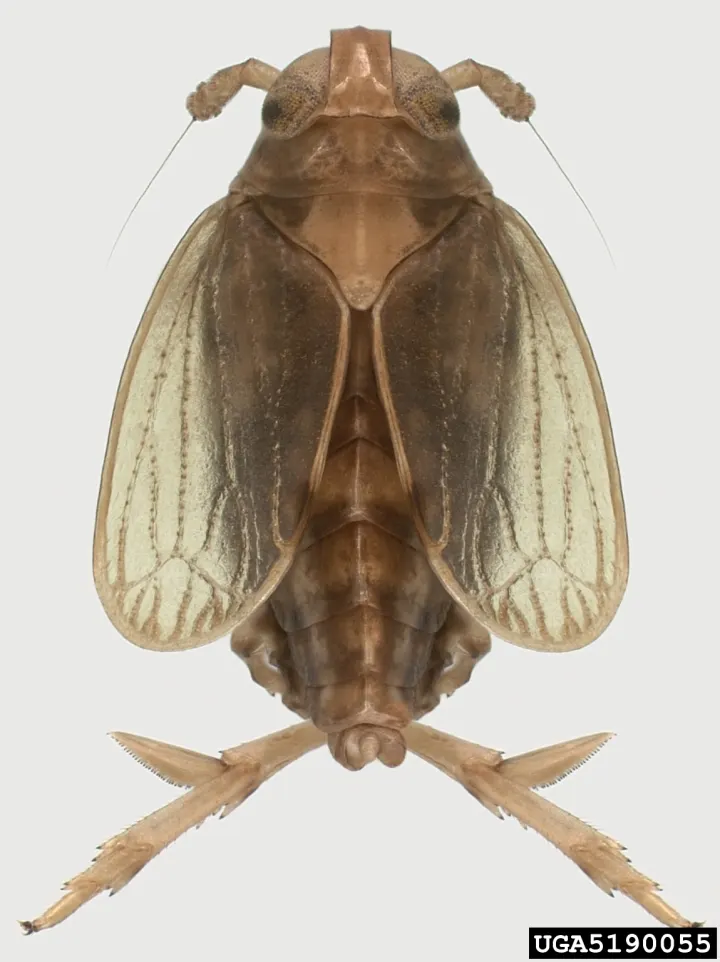
Family: Delphacidae | Order: Hemiptera
Host range: Rice, sugarcane, grasses
BPH is arguably the most feared pest of irrigated rice in Asia. It caused the infamous "hopper burn" epidemics in the 1970s-80s that devastated rice production across Southeast Asia and India.
Damage Symptoms
- Nymphs and adults congregate at the base of the plant above the water level and suck sap from the tillers
- Affected plants dry up and give a scorched appearance called "hopper burn"
- Circular patches of drying and lodging of matured plants are the typical field symptom
- BPH is the vector of grassy stunt, ragged stunt, and wilted stunt diseases — the virus transmission makes it doubly dangerous
IMPORTANT
ETL: 8-10 insects per hill (or 20 insects per hill when spiders are present at 1 spider per hill). The higher threshold with spiders reflects the natural biocontrol effect.
Management of BPH (also applies to WBPH and GLH)
- Spray Imidacloprid (a neonicotinoid)
- Avoid closer spacing — crowded canopy creates a humid microclimate that favours BPH
- Alternate wetting and drying of paddy fields — disrupts BPH habitat
- Adopt planting with alleys of 25 cm at intervals of 2 m to provide good aeration and sunlight
- Use light traps to monitor and mass-trap adults
Agricultural context: In the Cauvery delta of Tamil Nadu and the Godavari delta of Andhra Pradesh, BPH outbreaks are common during the samba and thaladi seasons. Extension workers advise farmers to check the base of plants (not the leaves) for BPH — because these hoppers hide at the stem base, they are often missed during casual field visits.
BPH was sporadic in 1958 and 1962 but has now become a key pest of irrigated rice. Wide spacing of transplanted seedlings reduces BPH buildup in endemic areas by improving aeration and reducing the humid microclimate that BPH prefers.
TIP
"Silver-Gall, Burn-BPH" — Silver shoot = Gall midge (hollow tubular gall from leaf sheath modification); Circular burn patches (hopper burn) = BPH.
2. Yellow Stem Borer — Scirpophaga incertulas
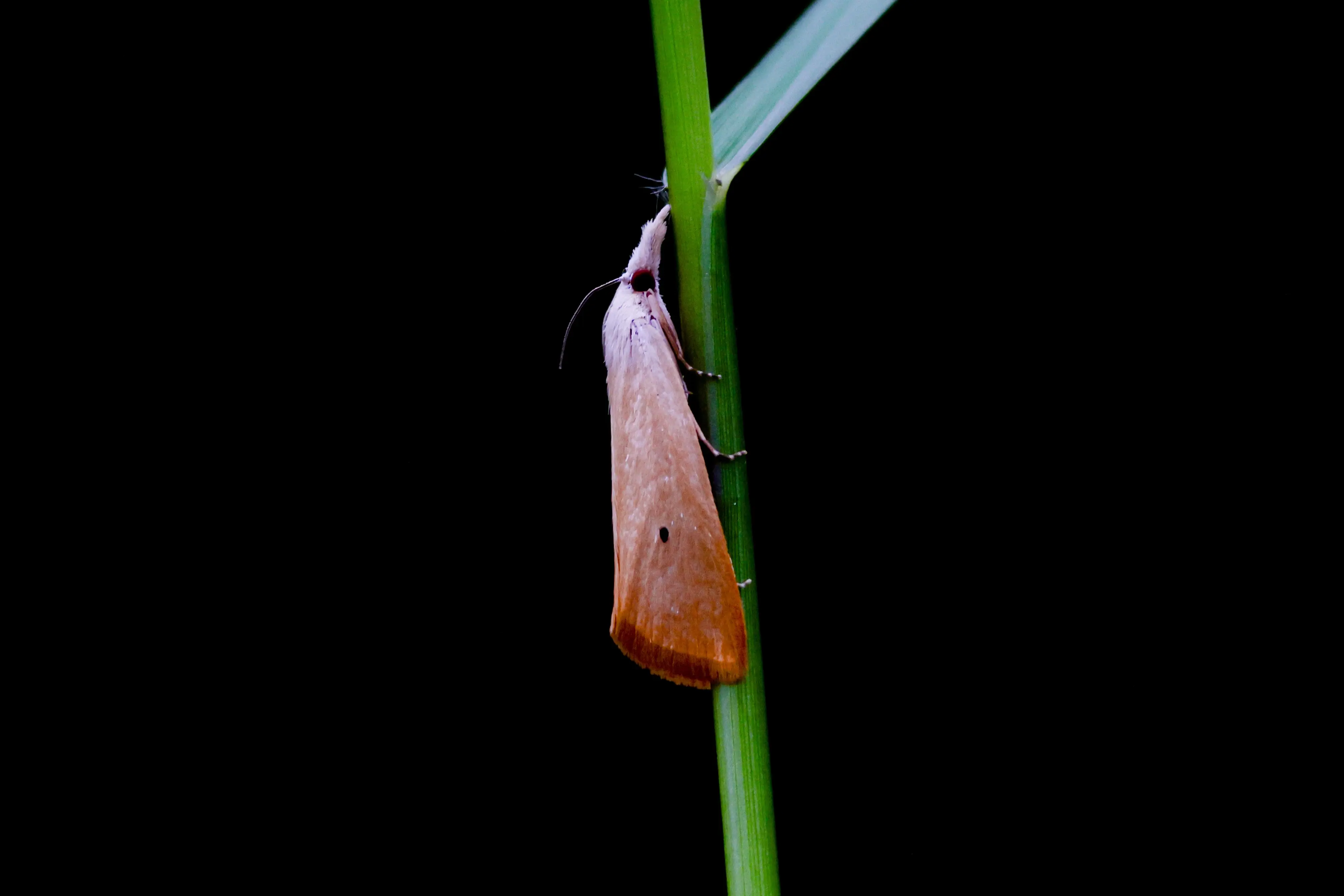
Family: Pyralidae | Order: Lepidoptera
Host range: Rice only — this is a monophagous pest (absolute pest), meaning it feeds exclusively on rice.
The yellow stem borer is the single most widespread and consistently damaging pest of rice across India. Every rice-growing state reports stem borer damage.
Damage Symptoms
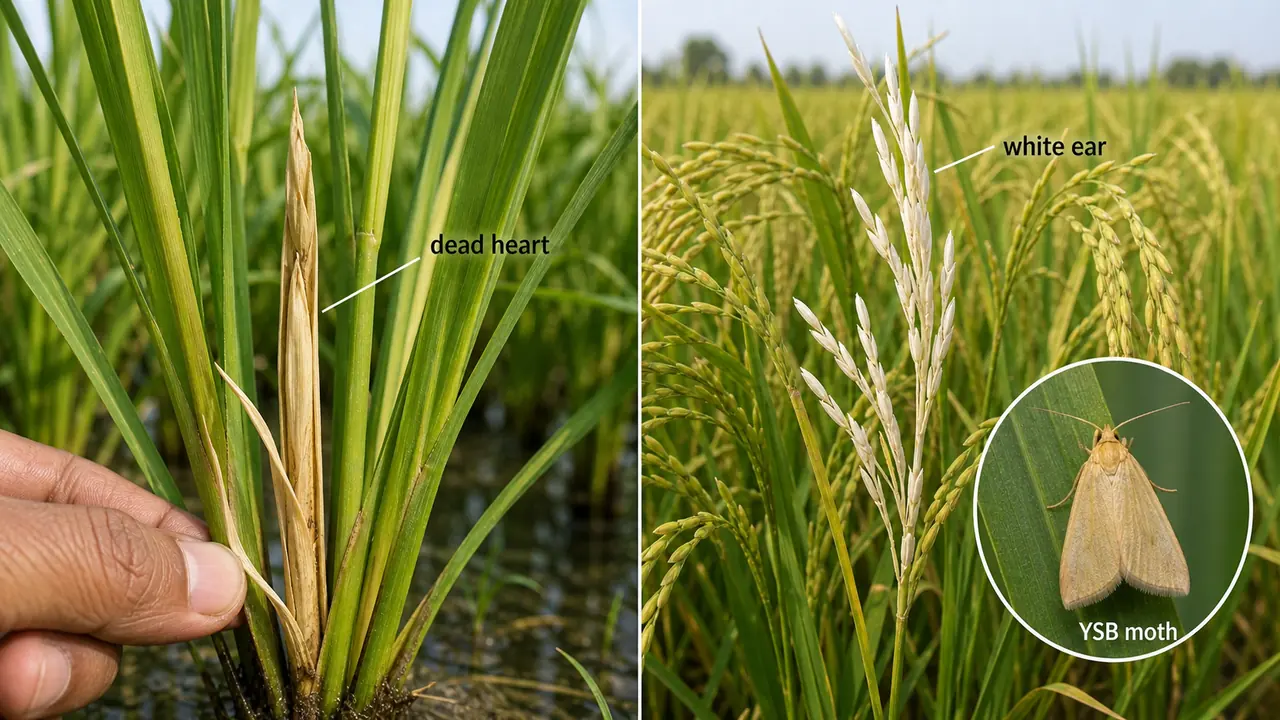
- The caterpillar bores into the stem (hibernates in rice stubbles between seasons) and causes two distinct symptoms depending on the crop stage:
- Vegetative stage: Drying of the central shoot known as "dead heart" — the central leaf turns brown and can be pulled out easily
- Reproductive stage: Drying of the panicle called "white ear" — the ear emerges but is completely empty
- Damage ranges from 30-80% in severe infestations
- Only the caterpillar is destructive — it bores and feeds inside the stem (Asked in IBPS PSB-2019)
- Affected panicles are devoid of grains
IMPORTANT
ETL: 2 egg masses per m2. Yellow stem borer is monophagous (feeds only on rice) — it is called an "absolute pest" of rice. This is a high-frequency exam fact.
Management
- Grow resistant varieties: Ratna, Jaya, TKM 6, IR 20, IR 26, Sayasree, Saket
- Clip the tips of seedlings before transplanting — this removes egg masses laid on leaf tips
- Release the egg parasitoid Trichogramma japonicum twice (on 30 and 37 DAT) @ 5 cc/ha/release
- Apply Bacillus thuringiensis var kurstaki + neem seed kernel extract (2.5 g/L + 1%) to reduce oviposition
- Set up light traps to attract and kill moths
TIP
Exam mnemonic for stem borer symptoms: "Dead heart in Development (vegetative); White ear at Wheat stage (reproductive)." Two stages, two symptoms — dead heart early, white ear late.
Agricultural context: Farmers in Punjab and Haryana are advised to destroy rice stubbles after harvest (by incorporation or composting, not burning) because stem borer larvae hibernate in the stubbles and emerge the following season.
3. Gall Midge — Orseolia oryzae
Family: Cecidomyiidae | Order: Diptera
Host range: Rice, wild Oryza species, and grasses like Paspalum scrobiculatum, Panicum spp., Cynodon dactylon, and Eleusine indica
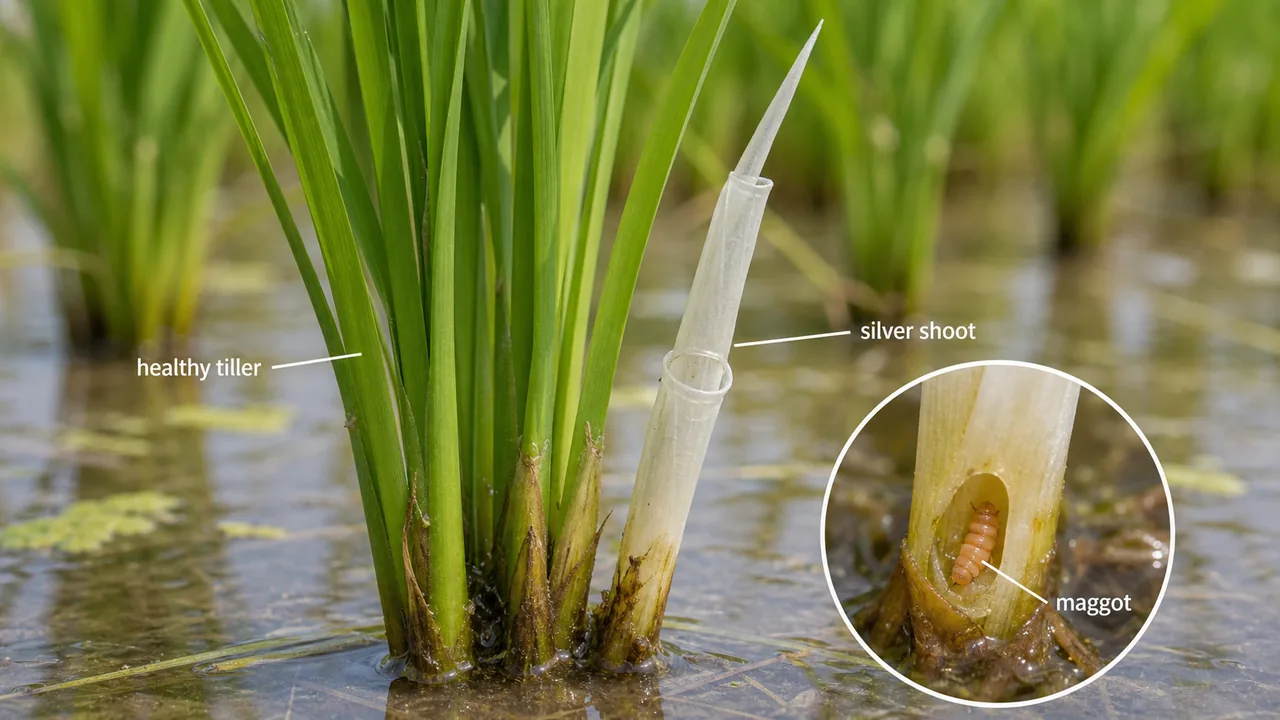
The gall midge is a tiny fly whose maggot causes a very distinctive and unusual symptom in rice.
Damage Symptoms
- The maggot feeds at the base of the growing shoot, causing the formation of a tube-like gall that looks like an "onion needle" or "silver-shoot"
- In functional terms, the maggot induces the young tissues to produce the hollow gall through a growth-altering stimulus often remembered in older crop-protection language as cecidogen.
- The silver shoot is hollow, elongated, and silvery-white in colour
- Infested tillers produce no panicles — each silver shoot represents a lost tiller
- Particularly severe in upland and semi-deep water rice
IMPORTANT
ETL: 10% silver shoots. The "onion needle" or "silver-shoot" symptom is absolutely diagnostic for gall midge — no other pest produces this symptom.
Management
- Use resistant varieties: IR 20, IR 50, CR 1009
- Apply neem cake @ 12.5 kg/800 m2 nursery as basal dose
Agricultural context: Gall midge is particularly damaging in the rain-fed rice areas of Odisha, Jharkhand, and Chhattisgarh. The silver shoots are easy to spot in the field — they stand out like silver tubes among the green tillers.
NOTE
The silver shoot is actually a modification of the leaf sheath — the maggot feeds at the growing point, causing the leaf sheath to elongate into a hollow, tubular gall. Resistant variety: Phalguna is resistant to gall midge.
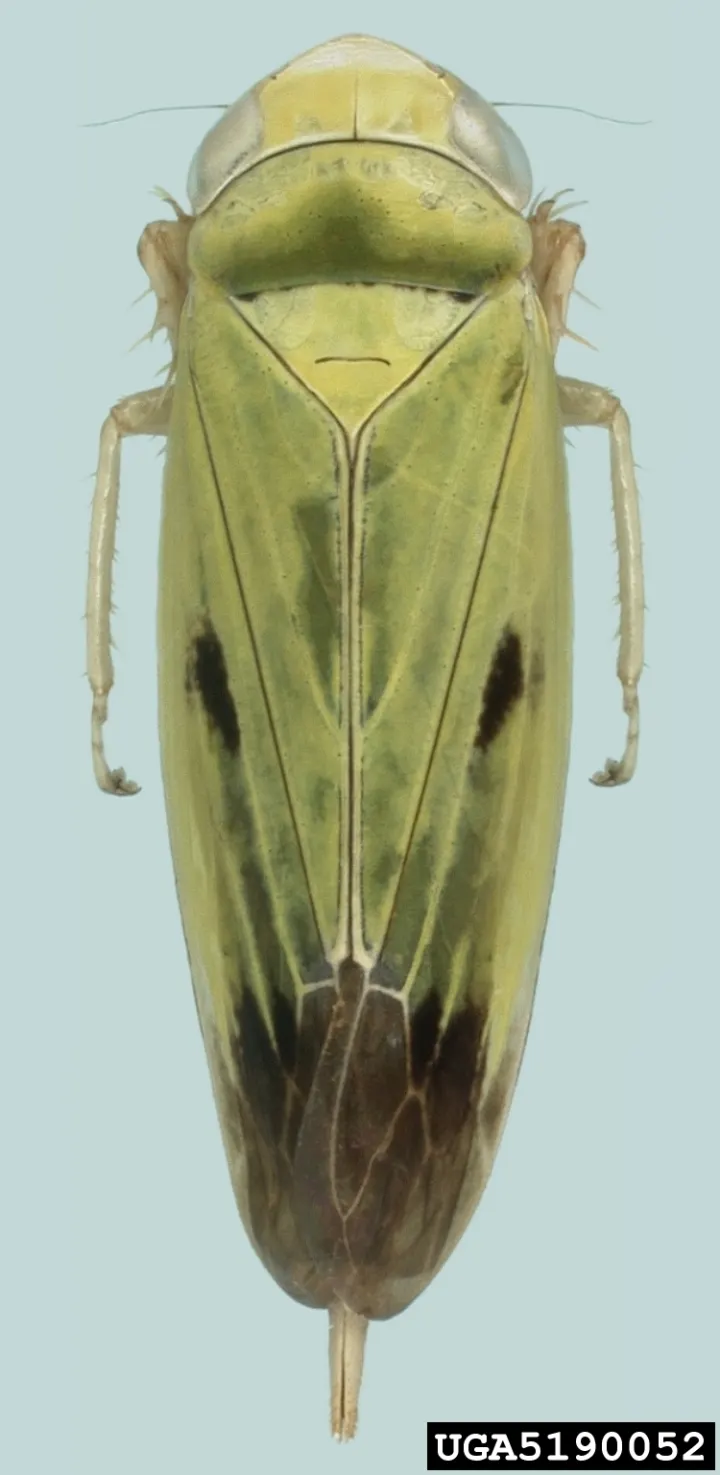
4. Green Leafhopper (GLH) — Nephotettix virescens
Also: N. nigropictus and N. cincticeps
Family: Cicadellidae | Order: Hemiptera
Host range: Rice, millets, grasses
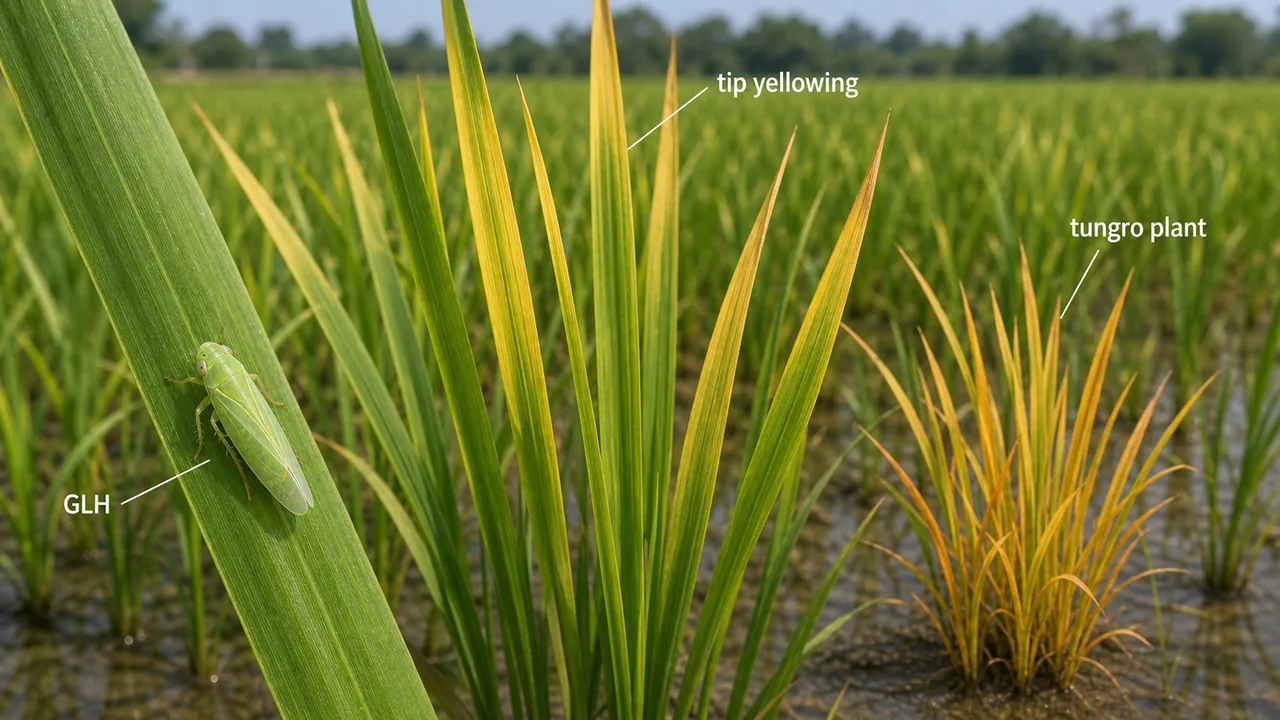
GLH is important not so much for its direct feeding damage but primarily as a virus vector.
Damage Symptoms
- Both nymphs and adults suck sap from leaves, causing "hopper burn" in heavy infestations
- Yellowing of leaves from tip downwards is the typical direct damage symptom
- Far more important as a vector for rice tungro virus, rice yellow dwarf, and transitory yellowing diseases
- Tungro is the most destructive viral disease of rice, causing stunting, yellowing, and drastic yield loss
IMPORTANT
ETL values vary by crop stage:
| Stage | ETL |
|---|---|
| Nursery | 60 insects / 25 sweeps |
| Vegetative stage | 5 insects / hill |
| Flowering stage | 10 insects / hill |
| Tungro endemic area | 2 insects / hill |
Note the lowest ETL (2/hill) is in tungro endemic areas — because even a few leafhoppers can transmit the virus.
TIP
Why is GLH ETL lower at vegetative stage (5/hill) than flowering (10/hill)? Because during the vegetative stage, tungro virus transmission causes maximum damage to yield. At flowering, the critical period for virus impact has passed.
5. Thrips — Stenchaetothrips biformis
Family: Thripidae | Order: Thysanoptera
Host range: Echinochloa sp. and rice
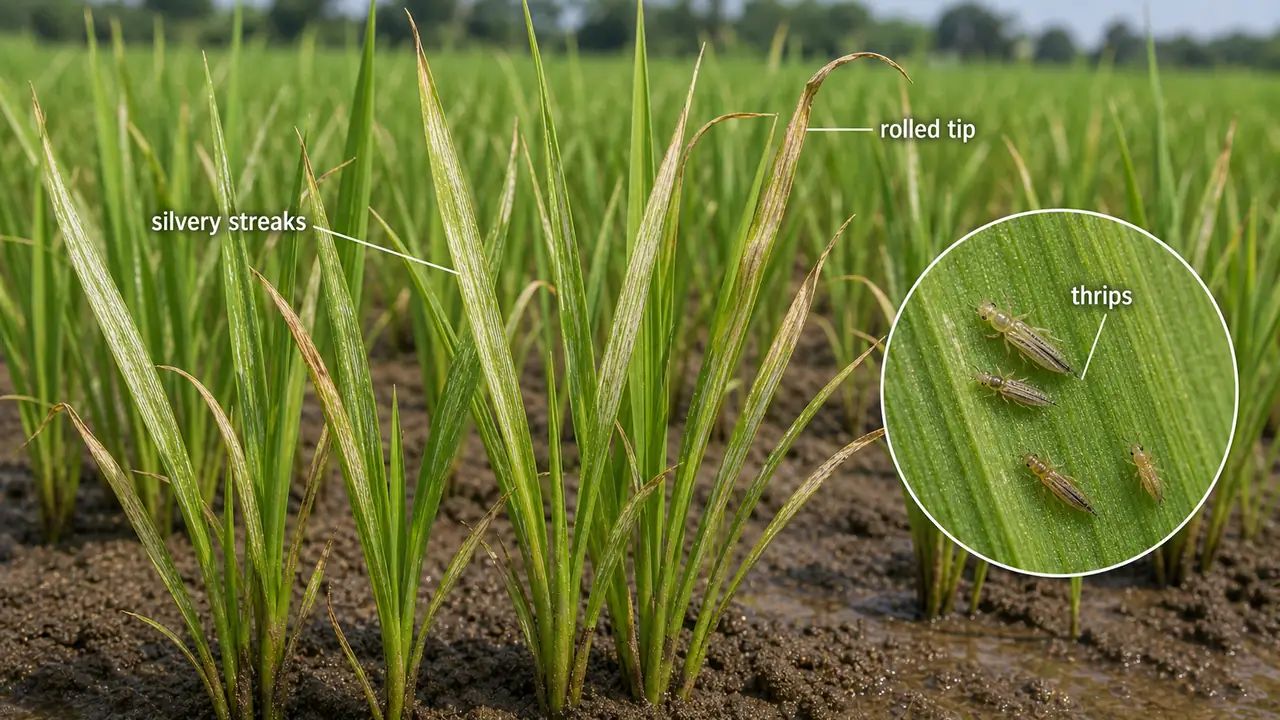
Thrips are tiny, slender insects that are most damaging in the nursery stage.
Damage Symptoms
- Both nymphs and adults lacerate the tender leaves and suck plant sap
- Cause yellow or silvery streaks on the leaves of young seedlings
- Terminal rolling and drying of leaves from tip to base is the typical symptom
- Cause damage both in nursery and main field, but nursery damage is most critical
NOTE
ETL: 60 insects per 12 wet hand sweeps in nursery. Thrips are the most important nursery pest of rice.
Management
- Grow resistant cultivars: PTB 12, PTB 20, PT 321, H 4
6. Rice Hispa — Dicladispa armigera
Family: Chrysomelidae | Order: Coleoptera
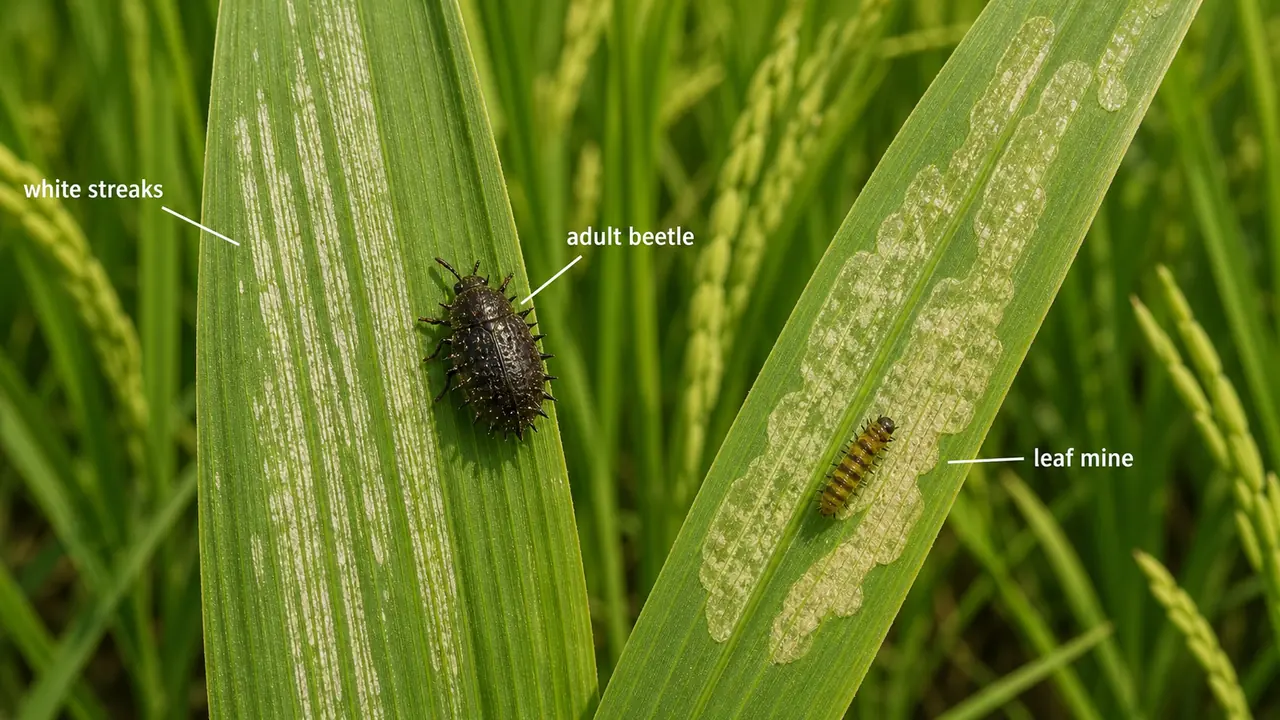
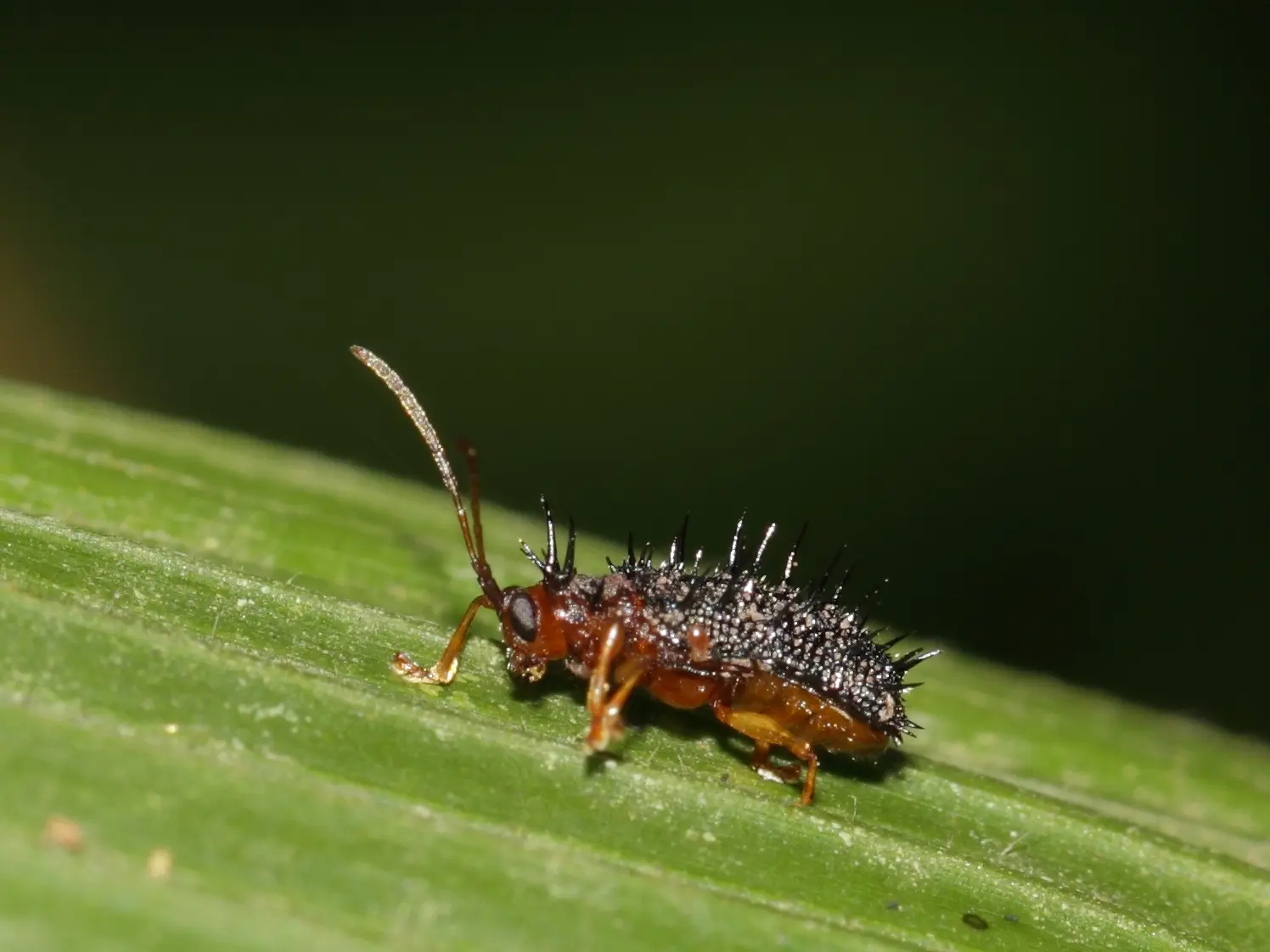
Rice hispa is unique among rice pests because the larva is a leaf miner while the adult scrapes leaf tissue — two completely different feeding modes in the same species.
Damage Symptoms
- Larvae (leaf miners) produce transparent blotches on the upper surface of the leaf
- Adults feed on green matter and produce whitish streaks parallel to the midrib
- As the surface scraping advances, these adult-feeding streaks may merge into the classic ladder-shaped scraping pattern described in rice hispa diagnosis.
- The field develops a white, dried-up appearance
- Serious pest of rice, particularly in eastern India
Management
- Larval parasitoid: Eulophus femoralis
- Clip off leaf tips before transplanting seedlings
- Flood nursery beds with water
- Chlorpyriphos @ 625 ml
TIP
Exam Quick Recall: Hispa is a beetle (Coleoptera) — remember "Hispa = Hard wings = Coleoptera". The larva mines the leaf (transparent blotches), while the adult scrapes the surface (white streaks). Two stages, two damage types.
Field Diagnosis Decision Tree
When you walk into a damaged paddy field, follow this flowchart to identify the pest:
Step 1: Where is the damage?
- Damage at stem base → Go to Step 2A
- Damage on leaves → Go to Step 2B
- Damage on panicle/ear → Likely Yellow Stem Borer (white ear — empty panicle, pull test positive)
Step 2A: Stem base damage
- Circular brown dried patches (hopper burn)? → BPH — check for tiny brown hoppers at stem base above water level. ETL: 8-10/hill
- Central shoot dries and pulls out easily (dead heart)? → Yellow Stem Borer — look for bore hole on stem with frass. ETL: 2 egg masses/m²
- Silver tubular hollow galls replacing tillers? → Gall Midge — break open the silver shoot, look for pink/orange maggot inside. ETL: 10% silver shoots
Step 2B: Leaf damage
- Silvery/yellow streaks + rolled leaf tips (nursery)? → Thrips — shake seedlings over white paper, tiny insects visible. ETL: 60/12 sweeps
- Yellowing from leaf tip downward + stunted plants? → GLH — tap plants, small green wedge-shaped hoppers jump. Check for tungro (orange-yellow stunting). ETL: 2-10/hill
- White streaks parallel to midrib OR transparent blotches? → Rice Hispa — look for spiny blue-black beetles on leaves. Blotches = larval mining, streaks = adult scraping
Pro tip for IBPS AFO aspirants: Always check stem base first (part the canopy and look at water level) — BPH and stem borer cause the most economic damage but are easily missed because they hide inside or at the base of the plant.
Comparing the Big Six — Damage Pattern Table
| Pest | Symptom Name | What to Look For in the Field | Plant Part Affected |
|---|---|---|---|
| BPH | Hopper burn | Circular brown patches; insects at stem base | Stem base |
| Stem Borer | Dead heart / White ear | Central shoot pulled out easily; empty panicles | Stem |
| Gall Midge | Silver shoot | Silver tubular galls replacing tillers | Growing point |
| GLH | Yellowing / Tungro | Leaf tips yellowing; stunted orange-yellow plants | Leaves (+ virus) |
| Thrips | Silvery streaks | Rolled, dried leaf tips in nursery | Young leaves |
| Hispa | Transparent blotches | White streaks and mined patches on leaves | Leaves |
Exam Tips and Mnemonics
TIP
"BSG-GTH" — The Big Six of Rice:
- BPH — Hopper burn, circular patches, vector of stunt diseases
- Stem Borer — Dead heart + white ear, monophagous, absolute pest
- Gall Midge — Silver shoot / onion needle
- GLH — Tungro vector, ETL varies by stage
- Thrips — Silvery streaks, nursery pest
- Hispa — Transparent blotches (larva) + white streaks (adult)
Key numbers to memorise:
- BPH ETL: 8-10/hill (20 with spider)
- Stem Borer ETL: 2 egg masses/m2
- Gall Midge ETL: 10% silver shoots
- GLH ETL: 2/hill (tungro area) to 60/25 sweeps (nursery)
- Thrips ETL: 60/12 sweeps (nursery)
ETL Summary Table
| Pest | ETL |
|---|---|
| BPH (Nilaparvata lugens) | 8-10 Nos./hill (20 Nos./hill if spider present) |
| Yellow Stem Borer (Scirpophaga incertulas) | 2 egg masses/m2 |
| Gall Midge (Orseolia oryzae) | 10% silver shoots |
| GLH (Nephotettix virescens) — Nursery | 60 Nos./25 sweeps |
| GLH — Vegetative stage | 5 Nos./hill |
| GLH — Flowering stage | 10 Nos./hill |
| GLH — Tungro endemic area | 2 Nos./hill |
| Thrips (Stenchaetothrips biformis) | 60 Nos./12 wet hand sweeps (nursery) |
Summary Cheat Sheet
| Concept / Topic | Key Details |
|---|---|
| BPH (Nilaparvata lugens) | Delphacidae, Hemiptera; sucks sap at stem base above water |
| BPH symptom | Hopper burn — circular brown patches of dried plants |
| BPH ETL | 8-10 insects/hill (20/hill if spider present) |
| BPH transmits | Grassy stunt, ragged stunt, wilted stunt viruses |
| BPH management | Imidacloprid; alternate wetting-drying; avoid close spacing |
| Yellow Stem Borer (S. incertulas) | Pyralidae, Lepidoptera; monophagous (rice only) = absolute pest |
| Stem borer symptoms | Dead heart (vegetative) + White ear (reproductive) |
| Stem borer ETL | 2 egg masses/m² |
| Stem borer damage | 30-80% in severe infestations |
| Stem borer biocontrol | Trichogramma japonicum (egg parasitoid); clip seedling tips |
| Resistant varieties (stem borer) | Ratna, Jaya, TKM 6, IR 20, IR 26 |
| Gall Midge (Orseolia oryzae) | Cecidomyiidae, Diptera; maggot causes tube-like gall |
| Gall midge symptom | Silver shoot / Onion needle — hollow, silvery-white tube |
| Gall midge ETL | 10% silver shoots |
| GLH (Nephotettix virescens) | Cicadellidae, Hemiptera; vector of rice tungro virus |
| GLH ETL | Nursery: 60/25 sweeps; vegetative: 5/hill; tungro area: 2/hill |
| Thrips (S. biformis) | Thripidae, Thysanoptera; silvery streaks; leaf rolling from tip |
| Thrips ETL | 60/12 wet hand sweeps (nursery) — most important nursery pest |
| Rice Hispa (Dicladispa armigera) | Chrysomelidae, Coleoptera; larva = leaf miner, adult = scraper |
| Hispa symptoms | Larva: transparent blotches; Adult: white streaks parallel to midrib |
| Hispa parasitoid | Eulophus femoralis |
TIP
Next: Part 2 covers minor rice pests (WBPH, earhead bug, mealy bug, black bug, case worm) and the complete Integrated Pest Management (IPM) strategy for rice.