🏛️ Panchayat Raj System
Three-tier Panchayat Raj system — Balwant Rai Mehta Committee, Ashok Mehta Committee, structure and key facts for IBPS AFO/NABARD exam.
Visual Overview
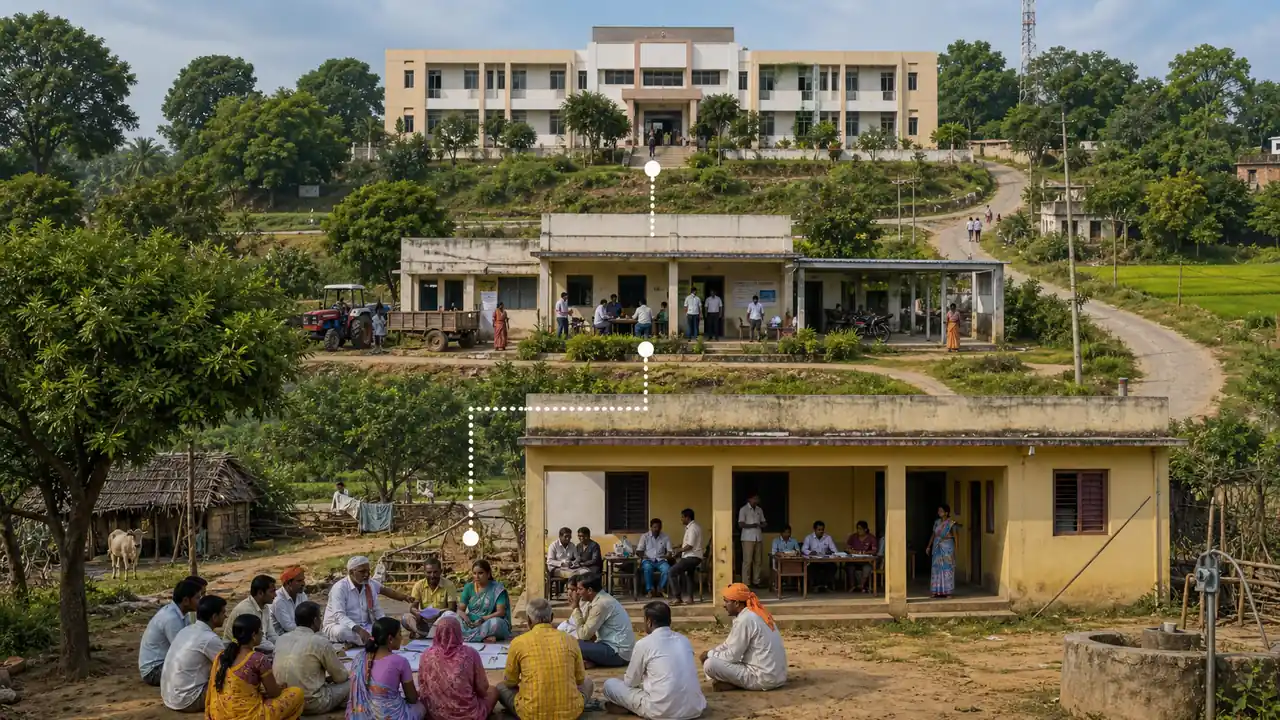
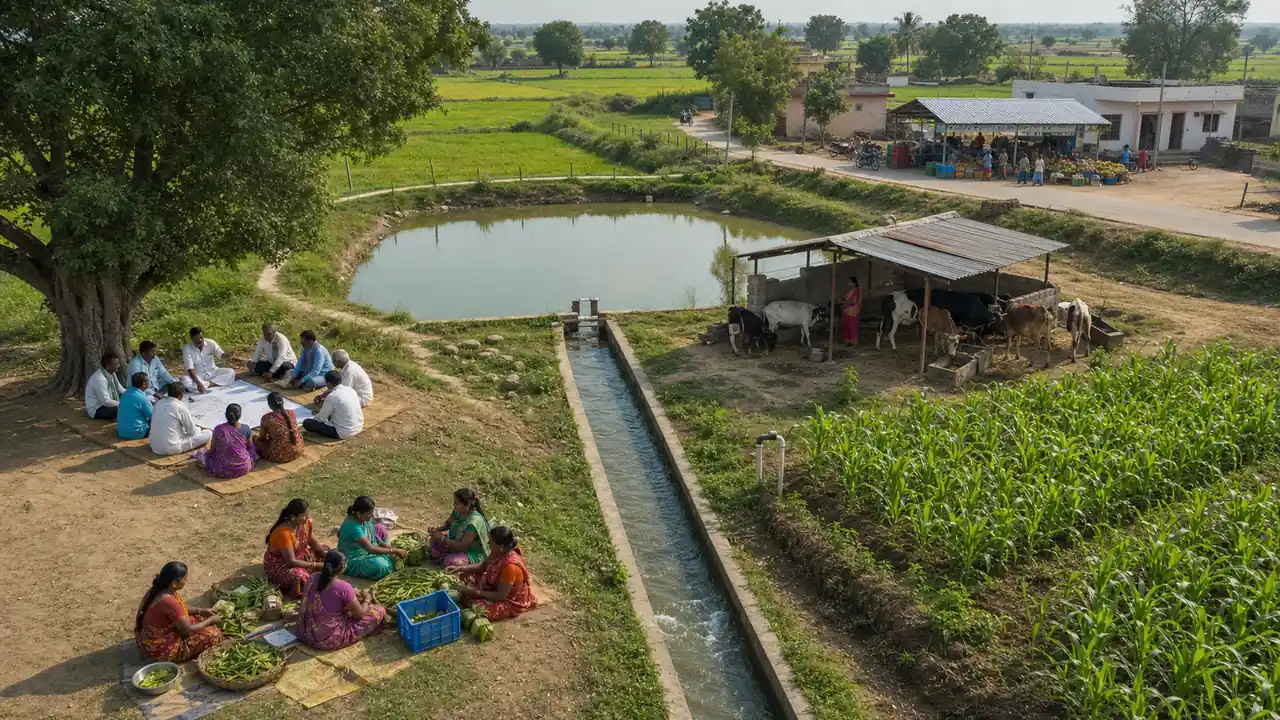
In the previous lesson, we examined important agricultural projects and schemes that shaped India's rural development landscape. Now we turn to the institutional framework that delivers governance at the grassroots — the Panchayat Raj System.
The Panchayat Raj system is India's framework of local self-governance at the village, block, and district levels. It was introduced to decentralize administration and bring governance closer to the people — ensuring that development programmes are planned and implemented with direct community participation rather than top-down directives from Delhi or state capitals.
This lesson covers:
- Origin and committees — Balwant Rai Mehta and Ashok Mehta recommendations
- Three-tier structure — Gram Panchayat, Panchayat Samiti, and Zila Parishad
- Key functionaries — Gram Sevak, BDO, and Collector roles
- Exam one-liners — high-yield facts for IBPS AFO and NABARD
All sections are frequently tested in exams.
Pro Content Locked
Upgrade to Pro to access this lesson and all other premium content.
₹99 charged monthly · Cancel anytime
- All Agriculture & Banking Courses
- AI Lesson Questions (100/day)
- AI Doubt Solver (50/day)
- Glows & Grows Feedback (30/day)
- AI Section Quiz (20/day)
- 22-Language Translation (100/day)
- Recall Questions (20/day)
- AI Quiz (15/day)
- AI Quiz Paper Analysis (100/day)
- AI Step-by-Step Explanations (100/day)
- Spaced Repetition Recall (FSRS)
- AI Tutor
- Immersive Text Questions
- Audio Lessons — Hindi & English
- Mock Tests & Previous Year Papers
- Summary & Mind Maps
- XP, Levels, Leaderboard & Badges
- Generate New Classrooms
- Voice AI Teacher (AgriDots Live)
- AI Revision Assistant
- Knowledge Gap Analysis
- Interactive Revision (LangGraph)
🔒 Secure via Razorpay · Cancel anytime · No hidden fees
Visual Overview
In the previous lesson, we examined important agricultural projects and schemes that shaped India's rural development landscape. Now we turn to the institutional framework that delivers governance at the grassroots — the Panchayat Raj System.
The Panchayat Raj system is India's framework of local self-governance at the village, block, and district levels. It was introduced to decentralize administration and bring governance closer to the people — ensuring that development programmes are planned and implemented with direct community participation rather than top-down directives from Delhi or state capitals.
This lesson covers:
- Origin and committees — Balwant Rai Mehta and Ashok Mehta recommendations
- Three-tier structure — Gram Panchayat, Panchayat Samiti, and Zila Parishad
- Key functionaries — Gram Sevak, BDO, and Collector roles
- Exam one-liners — high-yield facts for IBPS AFO and NABARD
All sections are frequently tested in exams.
Origin and Committees
The Panchayat Raj system emerged from India's need to decentralize rural governance. Two landmark committees shaped its design — one proposing a three-tier model, the other suggesting a simplified two-tier alternative for smaller districts.
Balwant Rai Mehta Committee
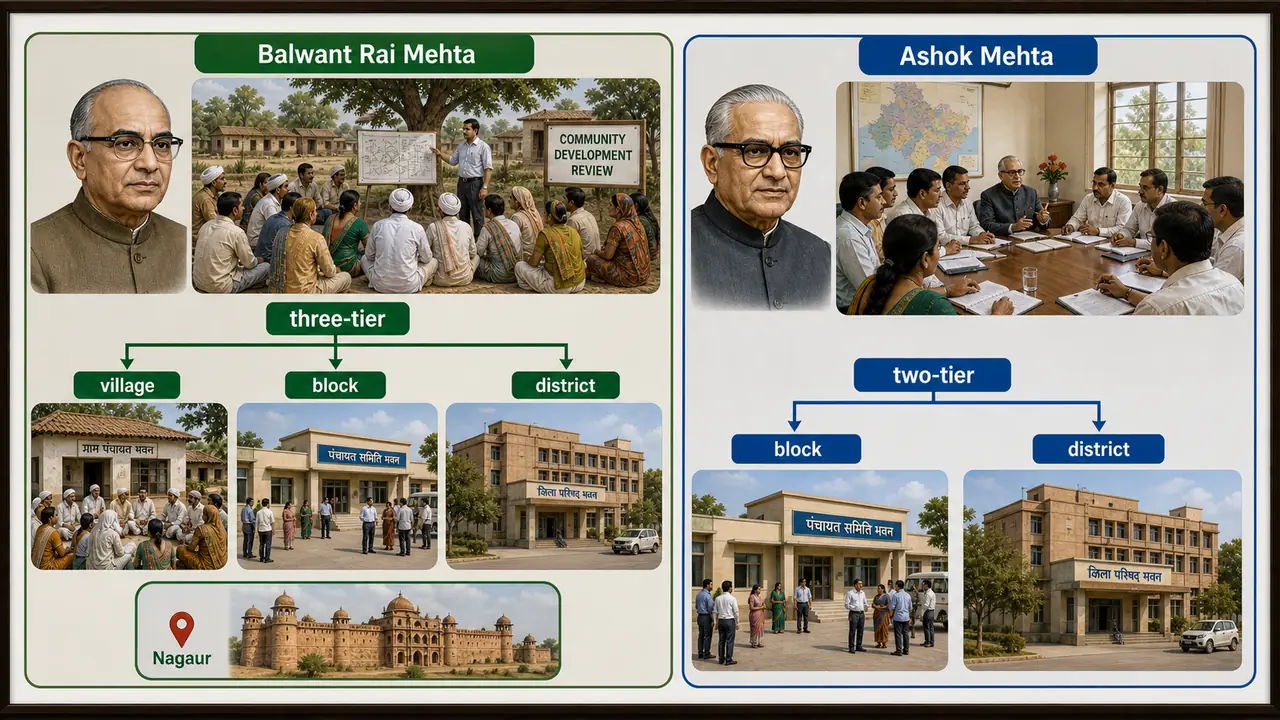
- Recommended by the Balwant Rai Mehta Committee (1956-58), which evaluated the Community Development Programme (1952) and National Extension Service (1953) and found they lacked popular participation
- First started at Nagaur, Rajasthan on October 2, 1959 — the date was chosen to honour Mahatma Gandhi's birth anniversary, symbolizing grassroots empowerment
- The basic unit of PRI (Panchayati Raj Institution) is the Gram Sabha — the assembly of all registered voters in a village, which legitimizes every decision the Gram Panchayat takes
- The basic operational unit for rural development is the Block — because most government schemes are administered and funded at the block level through the BDO's office
Ashok Mehta Committee
IMPORTANT
Two-tier Panchayati Raj was recommended by Ashok Mehta Committee (1978). This two-tier system exists in districts where population is below 2 lakh. The committee argued that very small districts did not need a middle tier (Panchayat Samiti) since the district body could directly coordinate with village panchayats.
Three Tiers of Panchayat Raj
The standard Panchayat Raj structure operates at three levels — village, block, and district. Each tier has a distinct role: the village tier handles local governance, the block tier coordinates development programmes, and the district tier oversees planning and fund allocation.
| Tier | Level | Body | Head/Secretary |
|---|---|---|---|
| 1st Tier | Village | Gram Panchayat | Secretary: Gram Sevak |
| 2nd Tier | Block | Panchayat Samiti | Leader: BDO (Block Development Officer) |
| 3rd Tier | District | Zila Parishad | Head: Collector |
1. Gram Panchayat (Village Level)
- Primary unit of local self-government — handles sanitation, drinking water, local roads, and welfare schemes at the village level
- Panchayat is a cabinet of village elders, directly elected by adult citizens of the village through universal adult franchise
- Secretary of Gram Panchayat: Gram Sevak — a government-appointed official (not elected) who maintains records, implements schemes, and serves as the link between the village and higher administrative levels
- The Gram Sevak is the grassroots-level extension functionary who links the village to government programmes — this makes the role critical for agricultural extension delivery
2. Panchayat Samiti (Block Level)
- Second tier of administration at the Block level — acts as the bridge between village panchayats and the district administration
- Consists of:
- Panchayat Union Chairman
- Presidents of all Panchayats in the area
- Local MLAs, MLCs, MPs (with right to vote, but not to hold office — this restriction prevents state/national politicians from dominating local governance)
- Nominated persons
- Block Development Officer (BDO) is appointed by the government and functions as the leader of the Block — the BDO is a career civil servant who ensures continuity of administration regardless of elected leadership changes
- BDO coordinates all development programmes at the block level, including agricultural extension, rural employment schemes, and infrastructure projects
3. Zila Parishad (District Level)
- Third tier of Panchayat Raj functioning at the district level — the apex body in the three-tier structure
- Key functions:
- Approves budget and plans of the blocks — ensuring resources are allocated based on local priorities
- Allots funds to the blocks — channeling central and state government grants to block-level implementation
- Coordinates and supervises block-level activities — reviews progress of schemes and resolves inter-block issues
- Head of Zila Parishad: Collector — the District Collector (also called District Magistrate) heads the Zila Parishad, combining elected local governance with the authority of the district administration
TIP
Quick Memory Aid — "G-P-Z":
- Gram Panchayat → Gram Sevak → Village
- Panchayat Samiti → BDO → Block
- Zila Parishad → Collector → District
Key One-Liners for Exam
- Panchayat Raj was first implemented in Nagaur, Rajasthan on 2nd October 1959
- Balwant Rai Mehta Committee recommended 3-tier PRI (1956-58)
- Ashok Mehta Committee recommended 2-tier PRI (1978) for districts with population below 2 lakh
- Basic unit of PRI = Gram Sabha
- Basic unit of rural development = Block
- Participatory development approach is also called Bottom-up approach
- The most preferred work in extension is Democratic
Summary Cheat Sheet
| Concept / Topic | Key Details |
|---|---|
| Panchayat Raj recommended by | Balwant Rai Mehta Committee (1956-58) |
| First started | Nagaur, Rajasthan on 2 October 1959 |
| Basic unit of PRI | Gram Sabha |
| Basic operational unit (rural dev) | Block |
| 3-tier system | Gram Panchayat (Village) → Panchayat Samiti (Block) → Zila Parishad (District) |
| Gram Panchayat secretary | Gram Sevak |
| Panchayat Samiti leader | BDO (Block Development Officer) |
| Zila Parishad head | Collector |
| 2-tier PRI | Recommended by Ashok Mehta Committee (1978); for population below 2 lakh |
| Participatory development | Also called Bottom-up approach |
| Most preferred work in extension | Democratic |
TIP
Next: Lesson 03-10 covers ATMA and KVK — the institutional mechanisms that deliver agricultural technology to farmers at the district and block levels, working within this same Panchayat Raj framework.