🏆Awards & Honours in Agriculture
World Food Prize winners (with Indian laureates), Rafi Ahmed Kidwai Award, SSSE Award — key facts, contributions, and exam-relevant details
In 1987, when Prof. M.S. Swaminathan received the very first World Food Prize for launching India’s Green Revolution, it was a landmark moment — an Indian scientist recognized globally for transforming a food-deficit nation into a food-surplus one. Since then, seven more Indian scientists have won this prestigious award, reflecting India’s significant contributions to global agriculture.
World Food Prize
The World Food Prize is the most prestigious international award in agriculture. India has an exceptional record with eight laureates — more than any other developing country. Understanding each winner’s contribution connects agricultural breakthroughs to the people who made them happen.

- Often called the “Nobel Prize for Food and Agriculture” — the most prestigious international recognition in the agricultural world.
- Awarded annually since 1987 for contributions in any field involved in the world food supply: plant science, soil science, nutrition, food technology, policy, and poverty alleviation.
Indian World Food Prize Laureates
Understanding each laureate’s contribution helps connect key agricultural breakthroughs to real people. The table below is followed by detailed notes on each winner.
| Year | Laureate | Contribution | Key Association |
|---|---|---|---|
| 1987 | Prof. M.S. Swaminathan | Introduced HYV wheat and rice; launched India’s Green Revolution | Father of Green Revolution in India |
| 1989 | Dr. Verghese Kurien | Founded Operation Flood; made India the largest milk producer | Milkman of India; Father of White Revolution |
| 1996 | Dr. G.S. Khush (with Dr. Henry Beachell) | Developed 300+ innovative rice strains including semi-dwarf IR36 | Miracle Rice; IRRI |
| 1998 | Dr. B.R. Barwale | Founded Mahyco seed company; provided affordable HYV seeds | Father of Indian Seed Industry |
| 2000 | Dr. S.K. Vasal (with Dr. E. Villegas) | Developed Quality Protein Maize (QPM) | QPM has 2x lysine and tryptophan |
| 2005 | Dr. M.V. Gupta | Low-cost freshwater fish farming techniques; Blue Revolution architect | Aquaculture for the rural poor |
| 2014 | Dr. Sanjaya Rajaram | Developed 480 varieties of disease-resistant wheat | Largest number by a single scientist |
| 2020 | Dr. Rattan Lal | Soil-centric approach to food production; carbon sequestration in soil | No-till farming, cover crops |
TIP
Mnemonic for Indian WFP winners: “S-K-K-B-V-G-R-L” — Swaminathan (87), Kurien (89), Khush (96), Barwale (98), Vasal (2000), Gupta (05), Rajaram (14), Lal (20).
Detailed Notes on Each Laureate
Understanding each laureate’s specific contribution is essential — exams test not just the year and name, but the exact innovation each scientist is credited with.
1987: Prof. M.S. Swaminathan
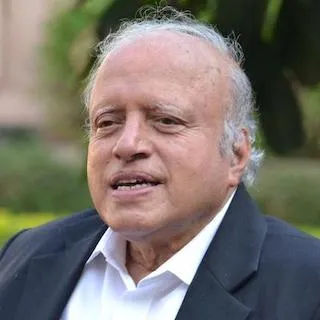
- The first scientist and first Indian to receive the World Food Prize.
- Father of the Green Revolution in India.
- Adapted Mexican dwarf wheat varieties to Indian conditions, transforming India from a food-deficit nation to a food-surplus one.
Agricultural example: Before Swaminathan’s work, India depended on wheat imports under PL-480 from the USA. After the Green Revolution, Punjab alone produced enough wheat to build national buffer stocks.
1989: Dr. Verghese Kurien
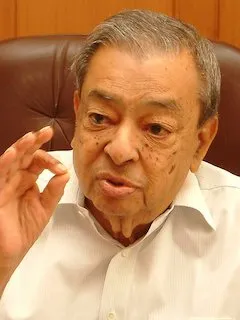
- Known as the “Milkman of India” and Father of the White Revolution.
- Founded Operation Flood — the world’s largest dairy development programme.
- Built the Amul cooperative model, empowering millions of small dairy farmers by cutting out middlemen.
- India became the largest producer of milk in 1998 — from milk scarcity when he started.
Agricultural example: The Amul cooperative model in Gujarat showed that even small farmers owning 1-2 buffaloes could earn a sustainable income through collective dairy marketing.
1996: Dr. G.S. Khush (with Dr. Henry Beachell)
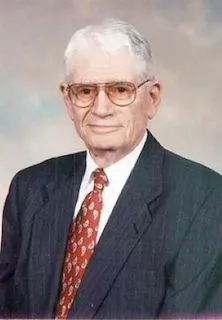
- G.S. Khush developed more than 300 innovative rice strains at IRRI, including semi-dwarf IR36 — called “Miracle Rice”.
- These varieties were disease-resistant, high-yielding, and matured faster, enabling multiple crops per year.
- Henry Beachell developed IR-8, the first widely adopted HYV rice variety.
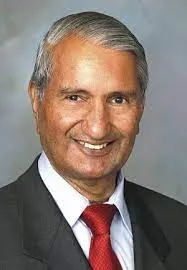
Agricultural example: IR36 replaced traditional tall rice varieties in South and Southeast Asia, dramatically increasing rice yields per hectare and reducing hunger for millions.
1998: Dr. B.R. Barwale
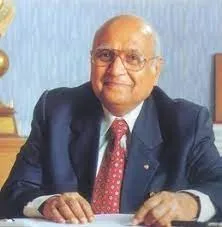
- Founded Mahyco — India’s first independent seed company.
- Father of the Indian Seed Industry.
- Made hybrid seeds commercially available and affordable to Indian farmers.
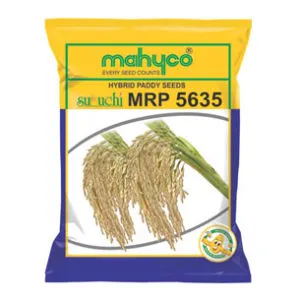
Agricultural example: Access to quality seeds is the single most important factor determining crop productivity. Mahyco’s hybrid cotton and vegetable seeds transformed yields for millions of farmers.
2000: Dr. S.K. Vasal (with Dr. Evangelina Villegas)
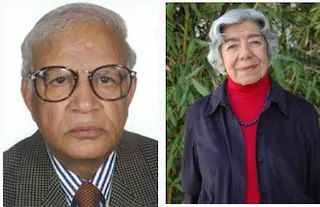
- Developed Quality Protein Maize (QPM) — a variety with higher usable protein content.
- QPM contains nearly twice the amount of lysine and tryptophan (two essential amino acids) compared to conventional maize.
- Called “Miracle Maize” for its role in alleviating malnutrition.
Agricultural example: In tribal and rain-fed areas of India where maize is a staple, QPM varieties can significantly improve nutritional status of children without changing dietary habits.
2005: Dr. M.V. Gupta
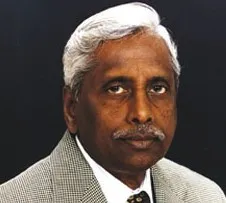
- Architect of a “Blue Revolution” in Asia — increased protein and mineral content in diets of over one million of the world’s most impoverished families.
- Developed low-cost techniques for freshwater fish farming using tilapia species.
- Made fish farming accessible to the poorest farmers with minimal investment.
Agricultural example: In rural Bangladesh and eastern India, Gupta’s techniques allowed landless farmers to raise fish in small ponds, providing both nutrition and income.
2014: Dr. Sanjaya Rajaram
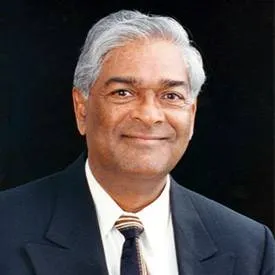
- Developed 480 varieties of disease-resistant wheat — the largest number ever developed by a single scientist.
- His research helped secure a 1.3% rise in global wheat production per annum over four decades.
- The ‘Veery’ lines (cross of Russian winter wheat ‘Kavkaz’ and Mexican spring wheat ‘Buho’) showed improved resistance to stripe and leaf rust.
Agricultural example: Rajaram’s rust-resistant varieties were crucial because rust diseases can destroy an entire wheat crop in weeks, as happened in several African countries.
2020: Dr. Rattan Lal
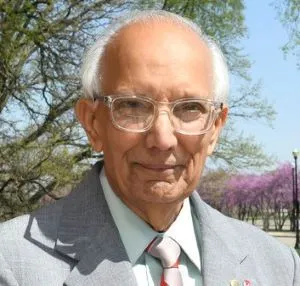
- Developed a soil-centric approach to increasing food production that conserves natural resources and mitigates climate change.
- Showed how no-till farming, cover crops, mulching, and agroforestry can restore degraded soils by sequestering atmospheric carbon.
- Benefited livelihoods of more than 500 million smallholder farmers and food security of more than two billion people.
Agricultural example: In the Indo-Gangetic plains, adopting no-till wheat after rice (as promoted by Lal’s research) saves water, reduces costs, and improves soil organic carbon.
2021: Dr. Shakuntala Haraksingh Thilsted (Denmark)
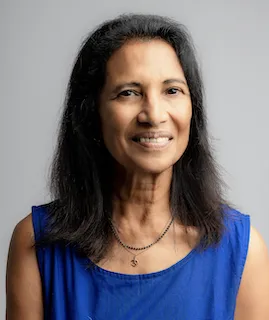
- Developed fish-based holistic, nutrition-sensitive approaches to improve health and livelihoods.
- Demonstrated that small indigenous fish species are rich in essential micronutrients (iron, zinc, vitamin A, calcium).
- Her work combats hidden hunger and malnutrition worldwide.
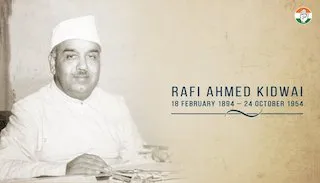
Rafi Ahmed Kidwai Award
Beyond the World Food Prize, India has its own prestigious agricultural awards. The Rafi Ahmed Kidwai Award is the most important national award for agricultural research.
| Feature | Detail |
|---|---|
| Created in | 1956 |
| Instituted by | ICAR (Indian Council of Agricultural Research) |
| Named after | Rafi Ahmed Kidwai — India’s first Food and Agriculture Minister |
| Given for | Outstanding contributions to Indian agricultural research |
| Frequency | Biennially (every two years) |
| Form | Medals, citations, and cash prizes |
Agricultural relevance: After the 1952 general election, Rafi Ahmed Kidwai shaped India’s early agricultural policies and food distribution systems, laying the groundwork for institutional support to farming.
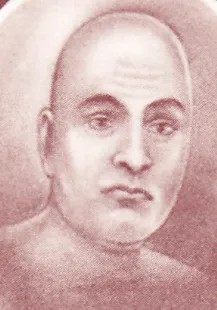
Swami Sahajanand Saraswati Extension Scientist/Worker Award (SSSE)
While the Kidwai Award recognizes research, the SSSE Award specifically honours extension work — the critical bridge between laboratory discoveries and farmer adoption.
| Feature | Detail |
|---|---|
| Created in | 1995 |
| Instituted by | ICAR |
| Named after | Swami Sahajanand Saraswati — freedom fighter and champion of farmers’ rights |
| Given for | Outstanding achievements in agricultural education and extension |
| Significance | Recognises scientists who successfully transfer technology from lab to farmer’s field |
Agricultural relevance: Extension work is the bridge between agricultural research and the farmer. This award honours those who ensure that new varieties, techniques, and knowledge actually reach the fields.
Exam Tips
Use the comparison table and quick recall aids below to consolidate all award-related facts before the exam.
IMPORTANT
Comparison of major agricultural awards:
| Award | Year Est. | Given by | Frequency | Scope |
|---|---|---|---|---|
| World Food Prize | 1987 | WFP Foundation | Annual | International |
| Rafi Ahmed Kidwai Award | 1956 | ICAR | Biennial | National (India) |
| SSSE Award | 1995 | ICAR | — | National (India) |
TIP
Quick recall — Indian WFP Winners: Swaminathan (1987), Kurien (1989), G.S. Khush (1996), Barwale (1998), Vasal (2000), M.V. Gupta (2005), Rajaram (2014), Rattan Lal (2020).
Key associations: Swaminathan = Green Revolution. Kurien = White Revolution. Khush = Miracle Rice (300+ varieties). Barwale = Mahyco seeds. Vasal = QPM. Gupta = Blue Revolution. Rajaram = 480 wheat varieties. Lal = Soil carbon sequestration.
Summary Table
This condensed table covers the most frequently tested award facts at a glance.
| Topic | Key Fact |
|---|---|
| World Food Prize started | 1987 |
| First recipient | M.S. Swaminathan (India) |
| Total Indian winners | 8 (Swaminathan, Kurien, Khush, Barwale, Vasal, Gupta, Rajaram, Lal) |
| QPM developed by | S.K. Vasal — 2x lysine and tryptophan |
| Most wheat varieties by one scientist | 480 by Sanjaya Rajaram |
| Soil-centric approach | Dr. Rattan Lal (2020) — no-till, cover crops, carbon sequestration |
| Rafi Ahmed Kidwai Award | 1956, ICAR, biennial |
| SSSE Award | 1995, ICAR, extension work |
Summary Cheat Sheet
This table covers every award, laureate, and key association for final exam revision.
| Concept / Topic | Key Details |
|---|---|
| World Food Prize started | 1987 — “Nobel Prize for Food and Agriculture” |
| First WFP recipient | M.S. Swaminathan (India) — Green Revolution |
| Verghese Kurien (1989) | White Revolution; Milkman of India; Amul cooperative |
| G.S. Khush (1996) | 300+ rice strains; Miracle Rice; semi-dwarf IR36 at IRRI |
| B.R. Barwale (1998) | Father of Indian Seed Industry; founded Mahyco |
| S.K. Vasal (2000) | Developed Quality Protein Maize (QPM) — 2× lysine & tryptophan |
| M.V. Gupta (2005) | Blue Revolution architect; low-cost freshwater fish farming |
| Sanjaya Rajaram (2014) | 480 wheat varieties — largest by a single scientist |
| Rattan Lal (2020) | Soil carbon sequestration; no-till farming, cover crops |
| Total Indian WFP winners | 8 scientists |
| Henry Beachell | Developed IR-8 — first widely adopted HYV rice |
| Rafi Ahmed Kidwai Award | 1956, by ICAR, biennial; India’s first Food & Agri Minister |
| SSSE Award | 1995, by ICAR; for agricultural education & extension |
| Operation Flood | World’s largest dairy development programme (Kurien) |
| India largest milk producer | Since 1998 |
| QPM advantage | Nearly twice the lysine and tryptophan of normal maize |
| Veery wheat lines | Cross of Russian winter × Mexican spring wheat (Rajaram) |
| Shakuntala Thilsted (2021) | Fish-based nutrition approaches; small indigenous fish species |
| WFP mnemonic | S-K-K-B-V-G-R-L (Swaminathan to Lal) |
TIP
Next: The next lesson covers Revolutions in Indian Agriculture — Green, White, Blue, and 20+ other colour-coded revolutions with their key persons and commodities.
Pro Content Locked
Upgrade to Pro to access this lesson and all other premium content.
₹2388 billed yearly
- All Agriculture & Banking Courses
- AI Lesson Questions (100/day)
- AI Doubt Solver (50/day)
- Glows & Grows Feedback (30/day)
- AI Section Quiz (20/day)
- 22-Language Translation (30/day)
- Recall Questions (20/day)
- AI Quiz (15/day)
- AI Quiz Paper Analysis
- AI Step-by-Step Explanations
- Spaced Repetition Recall (FSRS)
- AI Tutor
- Immersive Text Questions
- Audio Lessons — Hindi & English
- Mock Tests & Previous Year Papers
- Summary & Mind Maps
- XP, Levels, Leaderboard & Badges
- Generate New Classrooms
- Voice AI Teacher (AgriDots Live)
- AI Revision Assistant
- Knowledge Gap Analysis
- Interactive Revision (LangGraph)
🔒 Secure via Razorpay · Cancel anytime · No hidden fees
In 1987, when Prof. M.S. Swaminathan received the very first World Food Prize for launching India’s Green Revolution, it was a landmark moment — an Indian scientist recognized globally for transforming a food-deficit nation into a food-surplus one. Since then, seven more Indian scientists have won this prestigious award, reflecting India’s significant contributions to global agriculture.
World Food Prize
The World Food Prize is the most prestigious international award in agriculture. India has an exceptional record with eight laureates — more than any other developing country. Understanding each winner’s contribution connects agricultural breakthroughs to the people who made them happen.

- Often called the “Nobel Prize for Food and Agriculture” — the most prestigious international recognition in the agricultural world.
- Awarded annually since 1987 for contributions in any field involved in the world food supply: plant science, soil science, nutrition, food technology, policy, and poverty alleviation.
Indian World Food Prize Laureates
Understanding each laureate’s contribution helps connect key agricultural breakthroughs to real people. The table below is followed by detailed notes on each winner.
| Year | Laureate | Contribution | Key Association |
|---|---|---|---|
| 1987 | Prof. M.S. Swaminathan | Introduced HYV wheat and rice; launched India’s Green Revolution | Father of Green Revolution in India |
| 1989 | Dr. Verghese Kurien | Founded Operation Flood; made India the largest milk producer | Milkman of India; Father of White Revolution |
| 1996 | Dr. G.S. Khush (with Dr. Henry Beachell) | Developed 300+ innovative rice strains including semi-dwarf IR36 | Miracle Rice; IRRI |
| 1998 | Dr. B.R. Barwale | Founded Mahyco seed company; provided affordable HYV seeds | Father of Indian Seed Industry |
| 2000 | Dr. S.K. Vasal (with Dr. E. Villegas) | Developed Quality Protein Maize (QPM) | QPM has 2x lysine and tryptophan |
| 2005 | Dr. M.V. Gupta | Low-cost freshwater fish farming techniques; Blue Revolution architect | Aquaculture for the rural poor |
| 2014 | Dr. Sanjaya Rajaram | Developed 480 varieties of disease-resistant wheat | Largest number by a single scientist |
| 2020 | Dr. Rattan Lal | Soil-centric approach to food production; carbon sequestration in soil | No-till farming, cover crops |
TIP
Mnemonic for Indian WFP winners: “S-K-K-B-V-G-R-L” — Swaminathan (87), Kurien (89), Khush (96), Barwale (98), Vasal (2000), Gupta (05), Rajaram (14), Lal (20).
Detailed Notes on Each Laureate
Understanding each laureate’s specific contribution is essential — exams test not just the year and name, but the exact innovation each scientist is credited with.
1987: Prof. M.S. Swaminathan

- The first scientist and first Indian to receive the World Food Prize.
- Father of the Green Revolution in India.
- Adapted Mexican dwarf wheat varieties to Indian conditions, transforming India from a food-deficit nation to a food-surplus one.
Agricultural example: Before Swaminathan’s work, India depended on wheat imports under PL-480 from the USA. After the Green Revolution, Punjab alone produced enough wheat to build national buffer stocks.
1989: Dr. Verghese Kurien

- Known as the “Milkman of India” and Father of the White Revolution.
- Founded Operation Flood — the world’s largest dairy development programme.
- Built the Amul cooperative model, empowering millions of small dairy farmers by cutting out middlemen.
- India became the largest producer of milk in 1998 — from milk scarcity when he started.
Agricultural example: The Amul cooperative model in Gujarat showed that even small farmers owning 1-2 buffaloes could earn a sustainable income through collective dairy marketing.
1996: Dr. G.S. Khush (with Dr. Henry Beachell)

- G.S. Khush developed more than 300 innovative rice strains at IRRI, including semi-dwarf IR36 — called “Miracle Rice”.
- These varieties were disease-resistant, high-yielding, and matured faster, enabling multiple crops per year.
- Henry Beachell developed IR-8, the first widely adopted HYV rice variety.

Agricultural example: IR36 replaced traditional tall rice varieties in South and Southeast Asia, dramatically increasing rice yields per hectare and reducing hunger for millions.
1998: Dr. B.R. Barwale

- Founded Mahyco — India’s first independent seed company.
- Father of the Indian Seed Industry.
- Made hybrid seeds commercially available and affordable to Indian farmers.

Agricultural example: Access to quality seeds is the single most important factor determining crop productivity. Mahyco’s hybrid cotton and vegetable seeds transformed yields for millions of farmers.
2000: Dr. S.K. Vasal (with Dr. Evangelina Villegas)

- Developed Quality Protein Maize (QPM) — a variety with higher usable protein content.
- QPM contains nearly twice the amount of lysine and tryptophan (two essential amino acids) compared to conventional maize.
- Called “Miracle Maize” for its role in alleviating malnutrition.
Agricultural example: In tribal and rain-fed areas of India where maize is a staple, QPM varieties can significantly improve nutritional status of children without changing dietary habits.
2005: Dr. M.V. Gupta

- Architect of a “Blue Revolution” in Asia — increased protein and mineral content in diets of over one million of the world’s most impoverished families.
- Developed low-cost techniques for freshwater fish farming using tilapia species.
- Made fish farming accessible to the poorest farmers with minimal investment.
Agricultural example: In rural Bangladesh and eastern India, Gupta’s techniques allowed landless farmers to raise fish in small ponds, providing both nutrition and income.
2014: Dr. Sanjaya Rajaram

- Developed 480 varieties of disease-resistant wheat — the largest number ever developed by a single scientist.
- His research helped secure a 1.3% rise in global wheat production per annum over four decades.
- The ‘Veery’ lines (cross of Russian winter wheat ‘Kavkaz’ and Mexican spring wheat ‘Buho’) showed improved resistance to stripe and leaf rust.
Agricultural example: Rajaram’s rust-resistant varieties were crucial because rust diseases can destroy an entire wheat crop in weeks, as happened in several African countries.
2020: Dr. Rattan Lal

- Developed a soil-centric approach to increasing food production that conserves natural resources and mitigates climate change.
- Showed how no-till farming, cover crops, mulching, and agroforestry can restore degraded soils by sequestering atmospheric carbon.
- Benefited livelihoods of more than 500 million smallholder farmers and food security of more than two billion people.
Agricultural example: In the Indo-Gangetic plains, adopting no-till wheat after rice (as promoted by Lal’s research) saves water, reduces costs, and improves soil organic carbon.
2021: Dr. Shakuntala Haraksingh Thilsted (Denmark)

- Developed fish-based holistic, nutrition-sensitive approaches to improve health and livelihoods.
- Demonstrated that small indigenous fish species are rich in essential micronutrients (iron, zinc, vitamin A, calcium).
- Her work combats hidden hunger and malnutrition worldwide.
Rafi Ahmed Kidwai Award
Beyond the World Food Prize, India has its own prestigious agricultural awards. The Rafi Ahmed Kidwai Award is the most important national award for agricultural research.

| Feature | Detail |
|---|---|
| Created in | 1956 |
| Instituted by | ICAR (Indian Council of Agricultural Research) |
| Named after | Rafi Ahmed Kidwai — India’s first Food and Agriculture Minister |
| Given for | Outstanding contributions to Indian agricultural research |
| Frequency | Biennially (every two years) |
| Form | Medals, citations, and cash prizes |
Agricultural relevance: After the 1952 general election, Rafi Ahmed Kidwai shaped India’s early agricultural policies and food distribution systems, laying the groundwork for institutional support to farming.
Swami Sahajanand Saraswati Extension Scientist/Worker Award (SSSE)
While the Kidwai Award recognizes research, the SSSE Award specifically honours extension work — the critical bridge between laboratory discoveries and farmer adoption.

| Feature | Detail |
|---|---|
| Created in | 1995 |
| Instituted by | ICAR |
| Named after | Swami Sahajanand Saraswati — freedom fighter and champion of farmers’ rights |
| Given for | Outstanding achievements in agricultural education and extension |
| Significance | Recognises scientists who successfully transfer technology from lab to farmer’s field |
Agricultural relevance: Extension work is the bridge between agricultural research and the farmer. This award honours those who ensure that new varieties, techniques, and knowledge actually reach the fields.
Exam Tips
Use the comparison table and quick recall aids below to consolidate all award-related facts before the exam.
IMPORTANT
Comparison of major agricultural awards:
| Award | Year Est. | Given by | Frequency | Scope |
|---|---|---|---|---|
| World Food Prize | 1987 | WFP Foundation | Annual | International |
| Rafi Ahmed Kidwai Award | 1956 | ICAR | Biennial | National (India) |
| SSSE Award | 1995 | ICAR | — | National (India) |
TIP
Quick recall — Indian WFP Winners: Swaminathan (1987), Kurien (1989), G.S. Khush (1996), Barwale (1998), Vasal (2000), M.V. Gupta (2005), Rajaram (2014), Rattan Lal (2020).
Key associations: Swaminathan = Green Revolution. Kurien = White Revolution. Khush = Miracle Rice (300+ varieties). Barwale = Mahyco seeds. Vasal = QPM. Gupta = Blue Revolution. Rajaram = 480 wheat varieties. Lal = Soil carbon sequestration.
Summary Table
This condensed table covers the most frequently tested award facts at a glance.
| Topic | Key Fact |
|---|---|
| World Food Prize started | 1987 |
| First recipient | M.S. Swaminathan (India) |
| Total Indian winners | 8 (Swaminathan, Kurien, Khush, Barwale, Vasal, Gupta, Rajaram, Lal) |
| QPM developed by | S.K. Vasal — 2x lysine and tryptophan |
| Most wheat varieties by one scientist | 480 by Sanjaya Rajaram |
| Soil-centric approach | Dr. Rattan Lal (2020) — no-till, cover crops, carbon sequestration |
| Rafi Ahmed Kidwai Award | 1956, ICAR, biennial |
| SSSE Award | 1995, ICAR, extension work |
Summary Cheat Sheet
This table covers every award, laureate, and key association for final exam revision.
| Concept / Topic | Key Details |
|---|---|
| World Food Prize started | 1987 — “Nobel Prize for Food and Agriculture” |
| First WFP recipient | M.S. Swaminathan (India) — Green Revolution |
| Verghese Kurien (1989) | White Revolution; Milkman of India; Amul cooperative |
| G.S. Khush (1996) | 300+ rice strains; Miracle Rice; semi-dwarf IR36 at IRRI |
| B.R. Barwale (1998) | Father of Indian Seed Industry; founded Mahyco |
| S.K. Vasal (2000) | Developed Quality Protein Maize (QPM) — 2× lysine & tryptophan |
| M.V. Gupta (2005) | Blue Revolution architect; low-cost freshwater fish farming |
| Sanjaya Rajaram (2014) | 480 wheat varieties — largest by a single scientist |
| Rattan Lal (2020) | Soil carbon sequestration; no-till farming, cover crops |
| Total Indian WFP winners | 8 scientists |
| Henry Beachell | Developed IR-8 — first widely adopted HYV rice |
| Rafi Ahmed Kidwai Award | 1956, by ICAR, biennial; India’s first Food & Agri Minister |
| SSSE Award | 1995, by ICAR; for agricultural education & extension |
| Operation Flood | World’s largest dairy development programme (Kurien) |
| India largest milk producer | Since 1998 |
| QPM advantage | Nearly twice the lysine and tryptophan of normal maize |
| Veery wheat lines | Cross of Russian winter × Mexican spring wheat (Rajaram) |
| Shakuntala Thilsted (2021) | Fish-based nutrition approaches; small indigenous fish species |
| WFP mnemonic | S-K-K-B-V-G-R-L (Swaminathan to Lal) |
TIP
Next: The next lesson covers Revolutions in Indian Agriculture — Green, White, Blue, and 20+ other colour-coded revolutions with their key persons and commodities.
Knowledge Check
Take a dynamically generated quiz based on the material you just read to test your understanding and get personalized feedback.
Lesson Doubts
Ask questions, get expert answers