💔 Self-Incompatibility: Types, Mechanisms, and Breeding Use
Understand gametophytic and sporophytic self-incompatibility, their genetic control, and use in hybrid seed production — with agricultural examples and exam tips.
Why Self-Incompatibility Matters in Agriculture
In Brassica crops (cabbage, cauliflower, mustard), plant breeders exploit self-incompatibility to produce hybrid seed without manual emasculation. The plant's own genetic mechanism prevents self-pollination, ensuring that all seeds produced are true hybrids when two compatible but self-incompatible lines are planted together. Understanding SI systems is essential for hybrid breeding in several vegetable and oilseed crops.
Self-Incompatibility
- Self-incompatibility (SI) is a genetic mechanism that prevents self-fertilization in plants. A self-incompatible pollen grain does not germinate and if pollen grain germinates, its pollen tube fails to enter into stigma. If pollen tube enters into stigma and fertilization takes place but ultimately embryo aborts. It means any how embryo does not develop and occurrence of self-incompatibility is due to biochemical reaction but its precise nature is not clearly understood. This mechanism promotes outcrossing and maintains genetic diversity within plant populations.
- On the basis of the interaction between pollen grains and pistil, it is of two types:
- Complementary i.e. stimulatory type where pistil & pollen stimulate each other or either. e.g. Dendrobium. In this type, compatible pollen is actively stimulated to grow.
- Oppositional i.e. inhibitory type where pistil & pollen inhibit each other or either. Almost all the cases of self-incompatibility are inhibitory type. Here, incompatible pollen is actively prevented from completing fertilization.
- Lewis (1954) suggested various types of classifications of self-incompatibility (SI). A simpler classification is:
NOTE
Pro Content Locked
Upgrade to Pro to access this lesson and all other premium content.
Charged once for one year · ₹1188 total
Save ₹100/month vs ₹2388/year launch price
- All Agriculture & Banking Courses
- AI Lesson Questions (100/day)
- AI Doubt Solver (50/day)
- Glows & Grows Feedback (30/day)
- AI Section Quiz (20/day)
- 22-Language Translation (100/day)
- Recall Questions (20/day)
- AI Quiz (15/day)
- AI Quiz Paper Analysis (100/day)
- AI Step-by-Step Explanations (100/day)
- Spaced Repetition Recall (FSRS)
- AI Tutor
- Immersive Text Questions
- Audio Lessons — Hindi & English
- Mock Tests & Previous Year Papers
- Summary & Mind Maps
- XP, Levels, Leaderboard & Badges
- Generate New Classrooms
- Voice AI Teacher (AgriDots Live)
- AI Revision Assistant
- Knowledge Gap Analysis
- Interactive Revision (LangGraph)
🔒 Secure one-time yearly payment via Razorpay · No hidden fees
Why Self-Incompatibility Matters in Agriculture
In Brassica crops (cabbage, cauliflower, mustard), plant breeders exploit self-incompatibility to produce hybrid seed without manual emasculation. The plant's own genetic mechanism prevents self-pollination, ensuring that all seeds produced are true hybrids when two compatible but self-incompatible lines are planted together. Understanding SI systems is essential for hybrid breeding in several vegetable and oilseed crops.
Self-Incompatibility
- Self-incompatibility (SI) is a genetic mechanism that prevents self-fertilization in plants. A self-incompatible pollen grain does not germinate and if pollen grain germinates, its pollen tube fails to enter into stigma. If pollen tube enters into stigma and fertilization takes place but ultimately embryo aborts. It means any how embryo does not develop and occurrence of self-incompatibility is due to biochemical reaction but its precise nature is not clearly understood. This mechanism promotes outcrossing and maintains genetic diversity within plant populations.
- On the basis of the interaction between pollen grains and pistil, it is of two types:
- Complementary i.e. stimulatory type where pistil & pollen stimulate each other or either. e.g. Dendrobium. In this type, compatible pollen is actively stimulated to grow.
- Oppositional i.e. inhibitory type where pistil & pollen inhibit each other or either. Almost all the cases of self-incompatibility are inhibitory type. Here, incompatible pollen is actively prevented from completing fertilization.
- Lewis (1954) suggested various types of classifications of self-incompatibility (SI). A simpler classification is:
NOTE
Self-incompatibility systems are classified based on two criteria: (1) whether flowers of different groups look different (heteromorphic) or look the same (homomorphic), and (2) whether pollen compatibility is determined by the pollen's own genotype (gametophytic) or the parent plant's genotype (sporophytic).
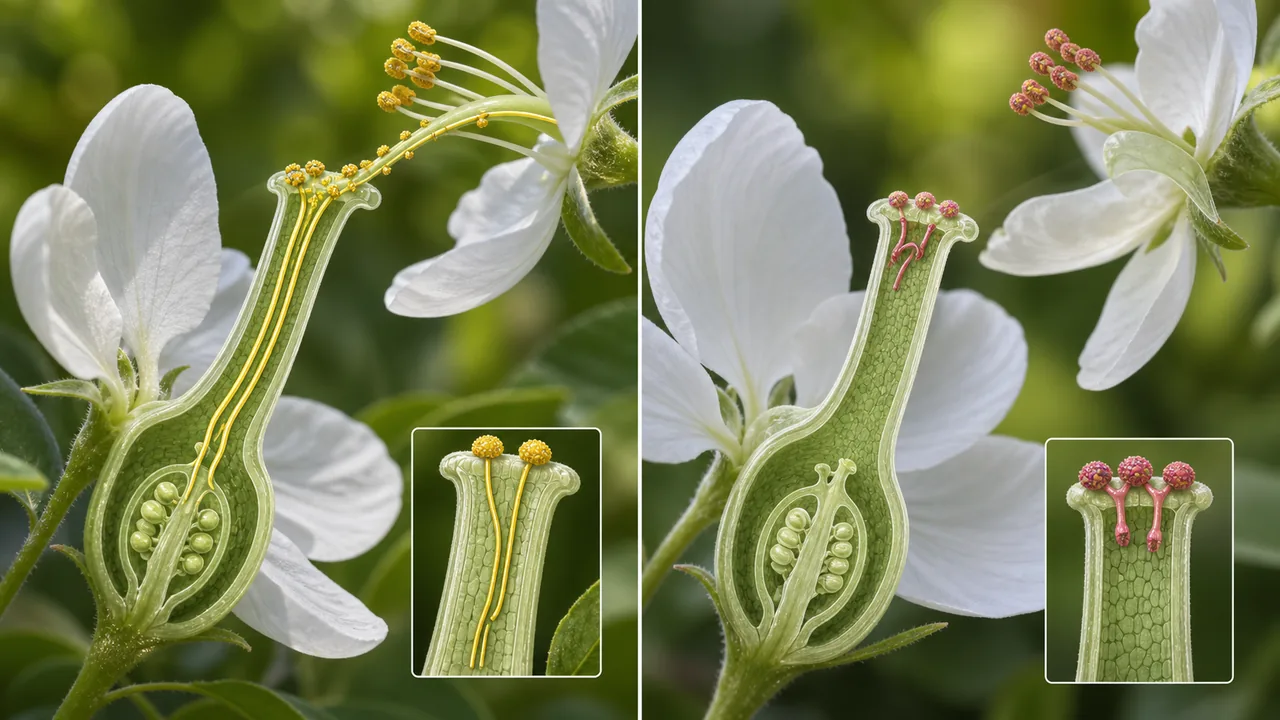
Heteromorphic System
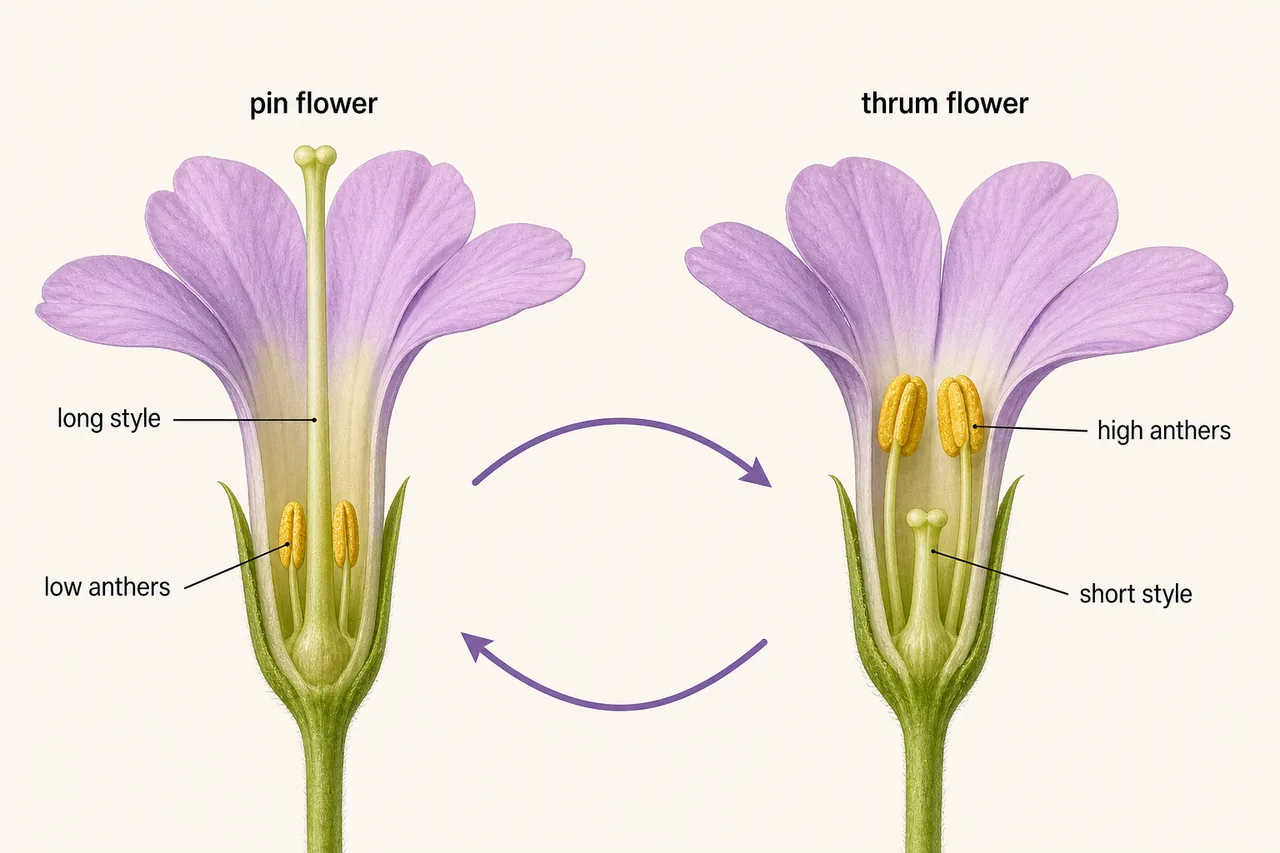
- Flowers of different incompatibility groups are different in morphology. This means you can visually distinguish flowers belonging to different incompatibility groups -- for example, differences in style length, anther position, or pollen size.
- The compatibility reaction of pollen is determined by the genotype of the plant producing them. The incompatibility system is heteromorphic-sporophytic. A classic example is pin and thrum flowers in Primula, where pin flowers have long styles and short stamens, while thrum flowers have short styles and long stamens.
Homomorphic System
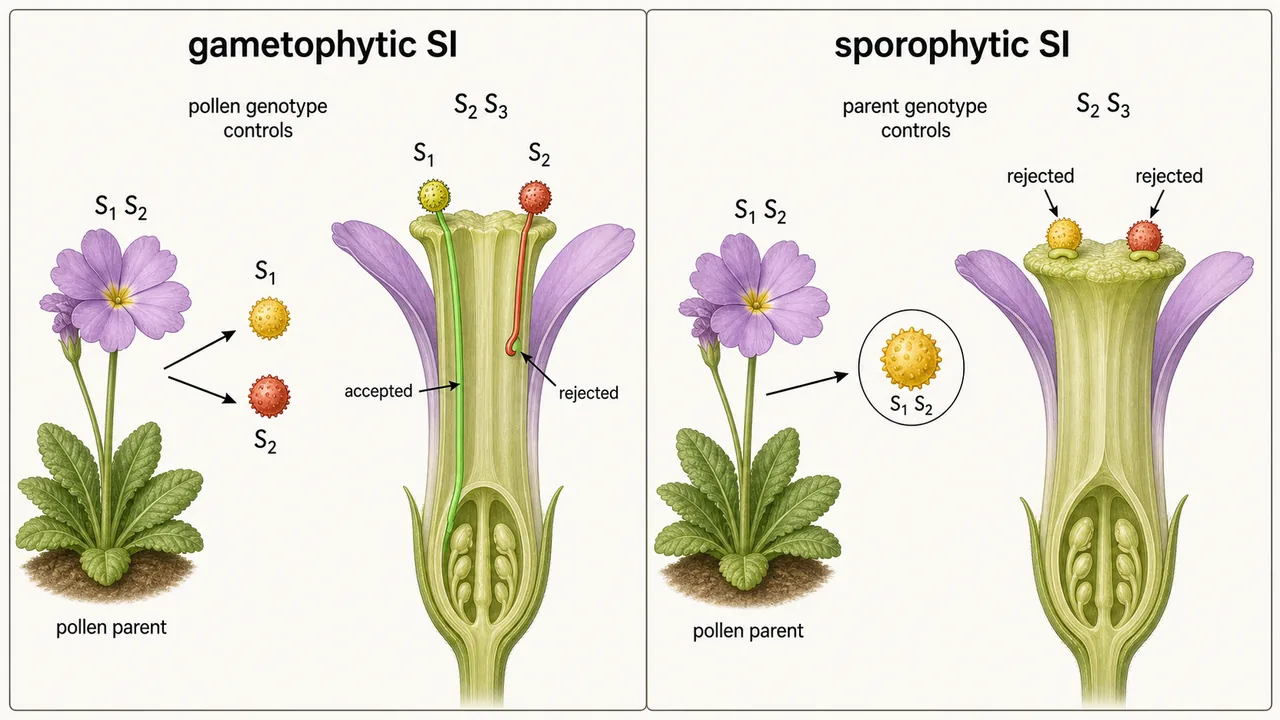
- Here morphological differences between flowers is not associated with incompatibility. All flowers look alike regardless of their incompatibility group. The incompatibility reaction of pollen is either controlled by the genotype of the plant on which it is produced (sporophytic control) or by its own genotype (gametophytic control).
- Gametophytic system: East and Mangelsdorf (1925) firstly described Gametophytic incompatibility in Nicotiana sanderae. The incompatibility reaction of pollen is determined by its own genotype and not by the genotype of the plant on which it is produced. This means each pollen grain acts independently based on its own S-allele. e.g. pineapple, ryegrass, diploid coffee, diploid clovers (Trifolium sp.) etc. The gametophytic system is controlled by a single S-locus with multiple alleles.
- In simple exam-style mating outcomes under a single-locus gametophytic system:
- Fully incompatible matings occur when both partners carry the same two S-alleles.
- Fully compatible matings occur when no S-allele is shared between the two parents.
- Partially compatible matings occur when one S-allele is shared, so only about 50% of pollen succeeds.
- In simple exam-style mating outcomes under a single-locus gametophytic system:
- Sporophytic system: First time this system was reported, by Hughes & Babcock (1950) in Crepis foetida and by Gerstel (1950) in Parthenium argentatum. The incompatibility reaction of pollen is determined by the genotype of the plant on which the pollen is produced and not by the genotype of the pollen. In this system, the diploid genotype of the pollen parent determines compatibility, and dominance interactions between S-alleles are common.
- Gametophytic system: East and Mangelsdorf (1925) firstly described Gametophytic incompatibility in Nicotiana sanderae. The incompatibility reaction of pollen is determined by its own genotype and not by the genotype of the plant on which it is produced. This means each pollen grain acts independently based on its own S-allele. e.g. pineapple, ryegrass, diploid coffee, diploid clovers (Trifolium sp.) etc. The gametophytic system is controlled by a single S-locus with multiple alleles.
Elimination of self-incompatibility
- By doubling the chromosome number in single locus gametophytic system. When the chromosome number is doubled, each pollen grain carries two different S-alleles, which can overcome the incompatibility barrier.
- Isolation of self-fertile mutations (very useful tool). Naturally occurring or induced mutations at the S-locus can break down self-incompatibility.
- The transfer of self-compatibility alleles from a related species through a back cross programme. This approach introduces functional self-compatible alleles into the breeding population.
Temporary suppression of self-incompatibility
- For the production of inbred (for hybrid seed production) it is essential to achieve self-fertility, where self-incompatibility is fully functional in the selfed progeny. This self-fertility is called as pseudo fertility. This pseudo fertility is achieved through temporary suppression of incompatibility by one of the following techniques:
- Bud pollination: Means application of mature pollen to immature non-receptive stigma generally 1-2 days before anthesis. Bud pollination is the most practicable & successful method in both gametophytic and sporophytic systems. The SI proteins have not yet accumulated on the immature stigma, allowing the pollen tube to grow successfully.
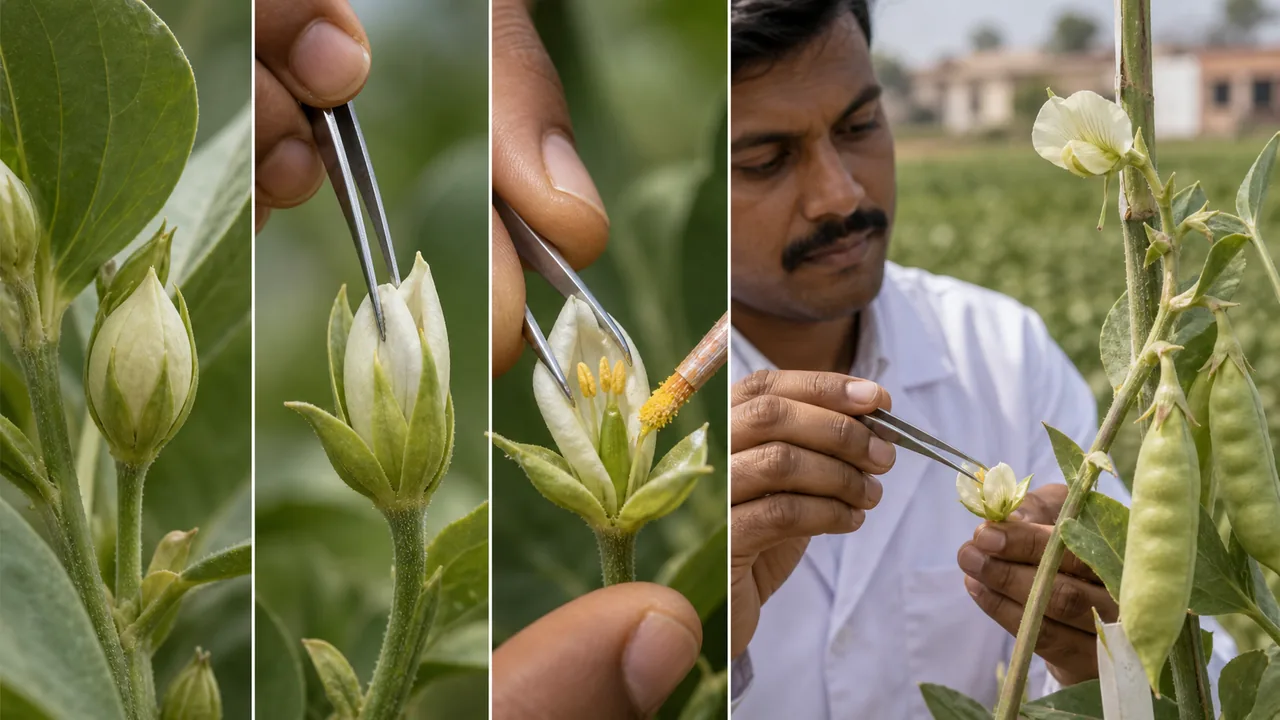
- Surgical techniques: Removal of stigma is very useful in sporophytic system. Pollen is directly dropped on to the ovules. By bypassing the stigma entirely, the SI barrier is physically removed.
- End-of-season pollination controversial technique.
- High temperature: May induce pseudo fertility E.g. in Trifolium, Lycopersicon, Brassica, Oenothera exposure of pistils upto 60 degrees C induces pseudo fertility. High temperatures can denature the SI proteins on the stigma surface.
| Technique | System | Mechanism |
|---|---|---|
| Bud pollination | Both | SI proteins not yet accumulated |
| Surgical (stigma removal) | Sporophytic | Bypasses stigma barrier |
| High temperature | Both | Denatures SI proteins |
| CO2 increase | Sporophytic | Alters biochemical environment |
| Irradiation | Gametophytic | Damages S-gene products |
| NaCl sprays | Both | Chemical disruption |
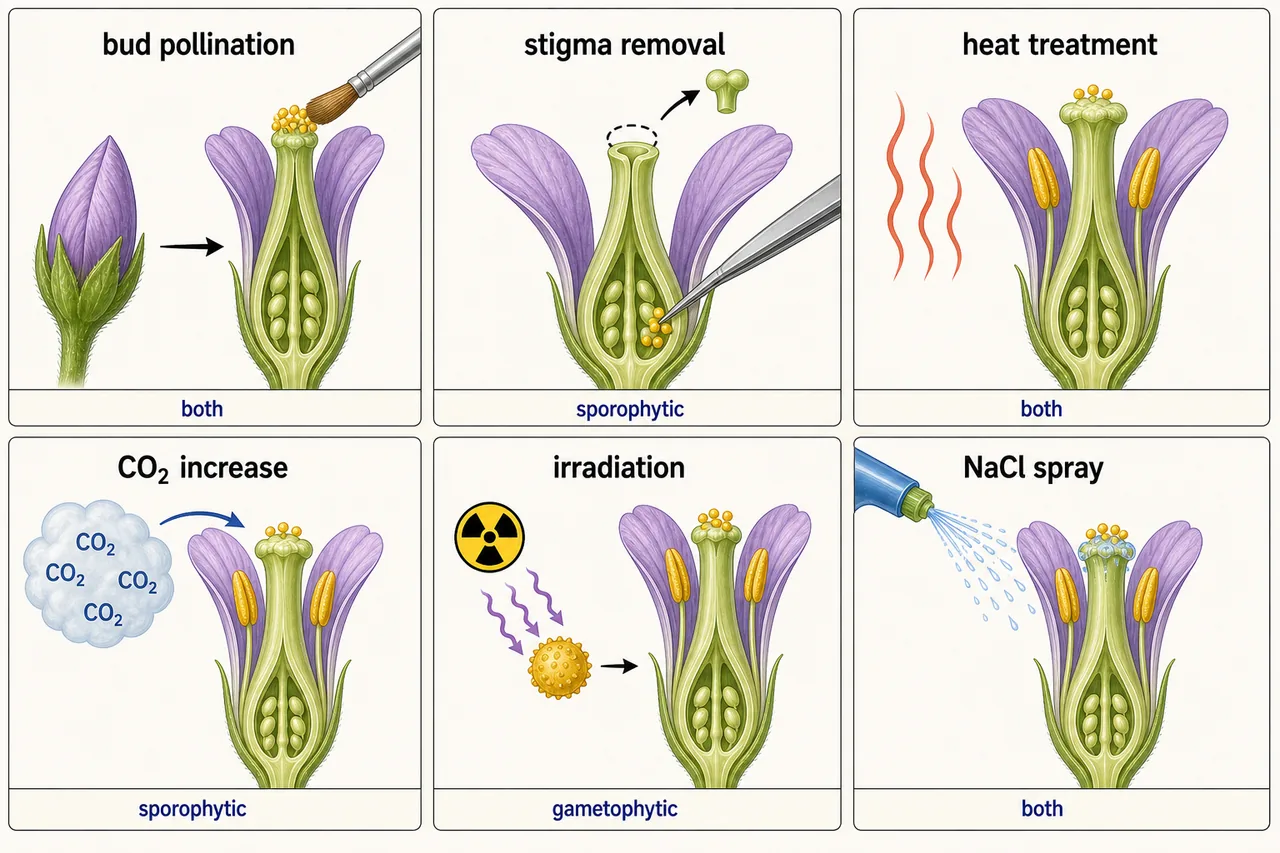
- Increased CO2 conc. in sporophytic system
- High humidity
- Salt, (NaCl) sprays are used by the Chinese
- Irradiation: In a single locus gametophytic system. e.g. in solanaceae, acute irradiation with x-rays or gamma-rays induces pseudo-fertility. Radiation can damage the S-gene products, temporarily disabling the SI mechanism.
- Grafting
- Double pollination
- Other techniques like use of phytohormones, treatment of flowers with carbon-monoxide etc.
Summary Cheat Sheet
| Concept / Topic | Key Details |
|---|---|
| Self-incompatibility (SI) | Inability of fertile plant to produce seed upon self-pollination |
| SI prevents | Self-fertilization; promotes cross-pollination |
| Controlled by | S-gene (multi-allelic locus) |
| Gametophytic SI (GSI) | Pollen phenotype determined by its own haploid genotype |
| GSI found in | Solanaceae (tobacco, tomato), Rosaceae, Poaceae |
| Sporophytic SI (SSI) | Pollen phenotype determined by diploid parent genotype |
| SSI found in | Brassicaceae (mustard, cabbage), Asteraceae |
| GSI rejection site | Pollen tube in style |
| SSI rejection site | Pollen on stigma surface |
| Homomorphic SI | Flowers look similar; SI based on S-alleles only |
| Heteromorphic SI | Flowers differ in style length (pin vs thrum) |
| Overcoming SI | Bud pollination, CO₂ treatment, mentor pollen, heat treatment |
| Bud pollination | Pollinate before flower opens (SI not yet active) |
| SI used in breeding | Hybrid seed production without emasculation (Brassica, sunflower) |
| Number of S-alleles | Can be very large (>50 in some species) |
| SI vs Male sterility | SI = pollen functional but rejected; MS = no functional pollen |