❄️ Breeding for Abiotic Stress: Drought, Salinity, Waterlogging, Cold
Understand breeding approaches for drought, waterlogging, salinity, and cold tolerance — resistance mechanisms, screening techniques, and sources — with exam tips.
Why Abiotic Stress Breeding Matters
Over 60% of India's agricultural land is rainfed — making drought the single biggest threat to crop production. Coastal areas face salinity, low-lying fields suffer waterlogging, and high-altitude regions deal with cold stress. Developing crop varieties that tolerate these stresses is not optional — it is essential for food security. Breeding for abiotic stress resistance is one of the most challenging but most impactful areas of modern plant breeding.
Breeding for Abiotic Stress Resistance
NOTE
This lesson covers four major abiotic stresses: drought, waterlogging, salinity, and cold (chilling + freezing). For each stress, learn the mechanisms of resistance, sources, screening techniques, and breeding methods.
Abiotic stresses -- caused by non-living environmental factors such as drought, flooding, salinity, and extreme temperatures -- are among the most significant limitations to crop production worldwide. Breeding for abiotic stress resistance aims to develop varieties that can maintain acceptable yields even under unfavorable environmental conditions.
Pro Content Locked
Upgrade to Pro to access this lesson and all other premium content.
Charged once for one year · ₹1188 total
Save ₹100/month vs ₹2388/year launch price
- All Agriculture & Banking Courses
- AI Lesson Questions (100/day)
- AI Doubt Solver (50/day)
- Glows & Grows Feedback (30/day)
- AI Section Quiz (20/day)
- 22-Language Translation (100/day)
- Recall Questions (20/day)
- AI Quiz (15/day)
- AI Quiz Paper Analysis (100/day)
- AI Step-by-Step Explanations (100/day)
- Spaced Repetition Recall (FSRS)
- AI Tutor
- Immersive Text Questions
- Audio Lessons — Hindi & English
- Mock Tests & Previous Year Papers
- Summary & Mind Maps
- XP, Levels, Leaderboard & Badges
- Generate New Classrooms
- Voice AI Teacher (AgriDots Live)
- AI Revision Assistant
- Knowledge Gap Analysis
- Interactive Revision (LangGraph)
🔒 Secure one-time yearly payment via Razorpay · No hidden fees
Why Abiotic Stress Breeding Matters
Over 60% of India's agricultural land is rainfed — making drought the single biggest threat to crop production. Coastal areas face salinity, low-lying fields suffer waterlogging, and high-altitude regions deal with cold stress. Developing crop varieties that tolerate these stresses is not optional — it is essential for food security. Breeding for abiotic stress resistance is one of the most challenging but most impactful areas of modern plant breeding.
Breeding for Abiotic Stress Resistance
NOTE
This lesson covers four major abiotic stresses: drought, waterlogging, salinity, and cold (chilling + freezing). For each stress, learn the mechanisms of resistance, sources, screening techniques, and breeding methods.
Abiotic stresses -- caused by non-living environmental factors such as drought, flooding, salinity, and extreme temperatures -- are among the most significant limitations to crop production worldwide. Breeding for abiotic stress resistance aims to develop varieties that can maintain acceptable yields even under unfavorable environmental conditions.
Draught Resistance
- Drought: Scarcity of moisture (soil moisture) which restricts the expression of full genetic yield potential of a plant.
- Drought resistance: The ability of crop plants to grow, develop and reproduce normally under moisture stress. Drought resistance is not a single trait but a complex of several mechanisms working together.
Mechanisms of drought resistance
👉🏻 There are 4 mechanisms of drought resistance.
IMPORTANT
The four mechanisms of drought resistance: (1) Drought Escape (early maturity), (2) Drought Avoidance (maintain water balance), (3) Drought Tolerance (survive low water potential), (4) Drought Resistance (sum of avoidance + tolerance).
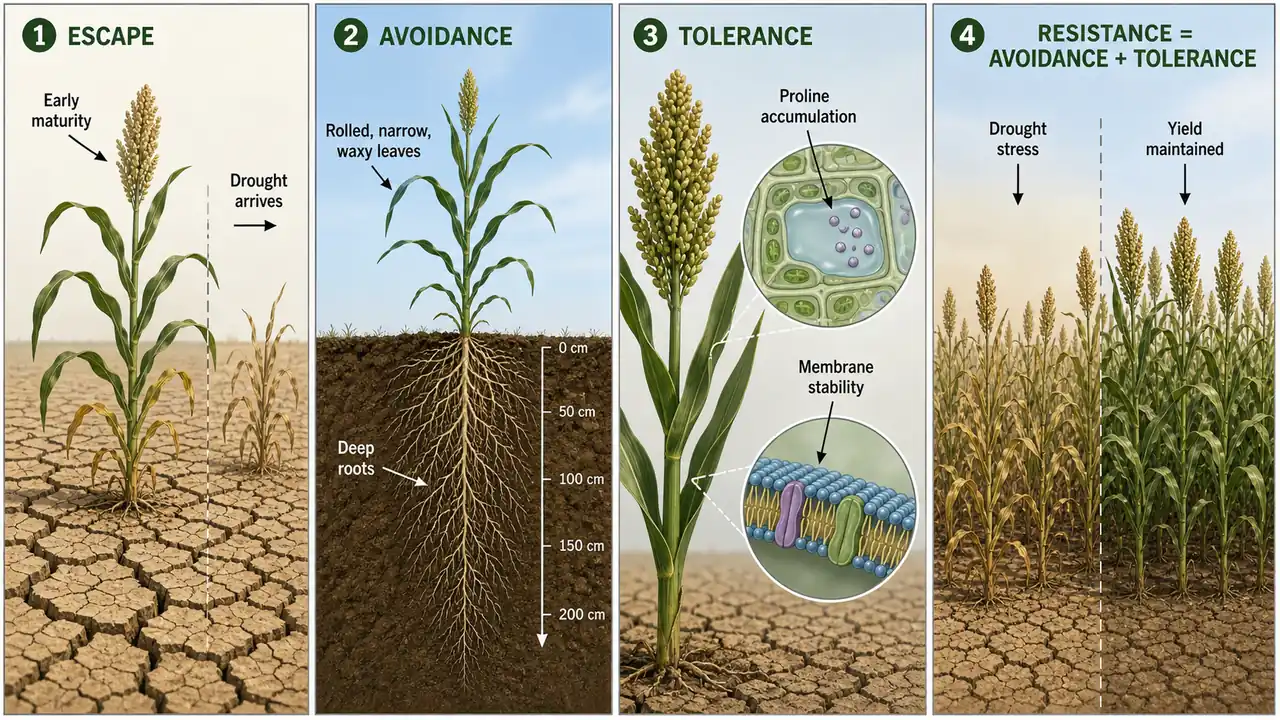
- Drought Escapes: It is due to ability of a genotype to mature early, before occurrence of drought. Drought escape is most common in plants grown in desert region. Eg. Early maturing varieties of sorghum, maize, bajra, wheat, rice etc. give more yield than late maturing under drought. By completing their life cycle before the drought sets in, these varieties avoid stress altogether.
- Drought Avoidance (Dehydration avoidance): It is due to the ability of plants to maintain favourable water balance even under stress. The plants which avoid drought retain high moisture content in their tissues and lose less water. This is possible either because of-
- Increased water uptake (due to increase in root development) plants are called water spenders. (or)
- Reduced water loss (due to reduction in growth of aerial parts are called water savers (i.e. to avoid transpiration)
- Dehydration avoidance is interpreted as the ability of genotypes to maintain high leaf water potential when grown under soil moisture stress.
- Several traits contribute to dehydration avoidance. Such as:
- Leaf rolling, folding and reflectance, narrow leaves, increased pubescence on aerial organs, presence of awns, osmotic adjustment of stomata, cuticular wax, increased water uptake; Reduced Transpiration: Increase in concentration of Abscisic Acid (ABA), closure of stomata, ABA plays role in reduction of leaf expansion, Promotion of root growth etc.
- Drought Tolerance (Dehydration tolerance): Ability of plants to produce higher yield even under 'low water potential'. In cereals drought tolerance generally occur during reproductive phase. Tolerant cultivars exhibit better germination, seedling growth and photosynthesis. Drought tolerance may be because of
- high proline accumulation⭐️ -- proline acts as an osmoprotectant, helping cells maintain their structure and function under water deficit
- maintenance of membrane integrity
- Drought Resistance: It is the sum total of avoidance and Tolerance. It refers to the genetic ability of plants to give good yield under moisture stress conditions. In practice, most drought-resistant varieties combine elements of escape, avoidance, and tolerance.
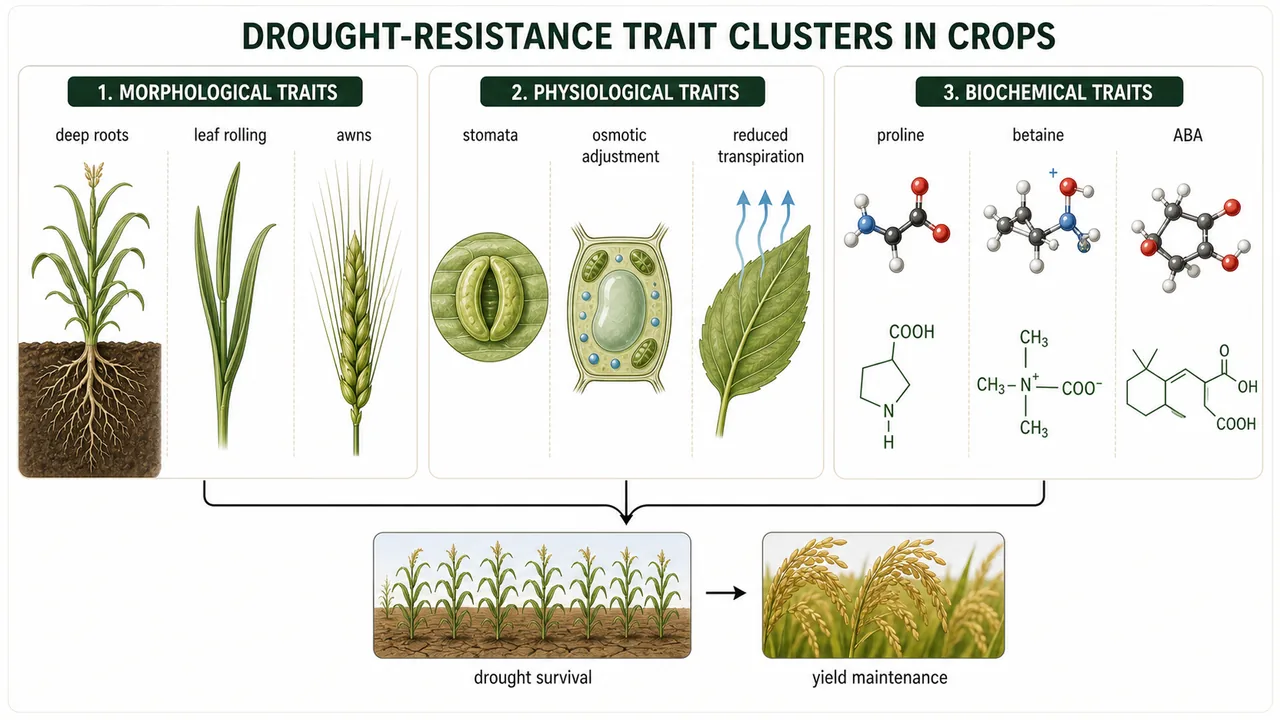
Features / parameters associated with drought resistance
Morphological
- Earliness -- allows drought escape
- Reduced tillering
- Leaf characters: Leaf rolling, Leaf folding, Leaf shedding, Leaf reflectance -- these reduce the leaf surface area exposed to sunlight, thereby decreasing water loss
- Reduced leaf area: Narrow leaf, Change in leaf angle
- Hairiness (presence of hairs on leaf and other parts, lowers leaf temperature and reduce transpiration)
- Colour of leaves -- lighter coloured leaves reflect more sunlight
- Wax content -- waxy coating on leaves reduces cuticular transpiration
- Awns (eg. wheat and barley) -- contribute to photosynthesis and grain filling under stress
- Root system (rooting depth and intensity) -- deeper roots access moisture from lower soil layers
Physiological
- Photosynthesis (efficient system like C4) under stress, photosynthetic efficiency is reduced due to chloroplast damage.
- Reduced Transpiration and reduced respiration losses
- Stomatal behavior (closure of stomata, also change in size and number of stomata) -- stomatal closure is the primary mechanism for reducing water loss
- Osmotic adjustment -- accumulation of solutes in cells to maintain turgor under water stress
- Leaf enlargement (increase in thickness)
- Leaf cuticle wax (increases)
Biochemical
- Accumulation of proline and betaine -- these act as compatible solutes that protect cellular structures
- Increase in Abscisic acid (barley) and Ethylene (maize & wheat) -- ABA triggers stomatal closure and other stress responses
- Protein synthesis (increases under stress) -- stress proteins help protect cells from damage
- Nitrate-reductase activity
Sources of drought resistance
- Cultivated varieties
- Land (old or desi primitive varieties) -- land races have evolved under centuries of natural selection in drought-prone areas
- Wild relatives (reported in several crops) -- wild species often possess superior drought tolerance mechanisms

- Transgenes: Eg. 'Rab' (Responsive to abscisic acid) in rice. Transgenic approaches can introduce specific stress-response genes that enhance drought tolerance.
👉🏻 Screening / Evaluation
- Field Environment. Highly desirable because it represents actual growing conditions, but difficult to control.
- Green house Environment. More precisely controlled than field, allowing systematic evaluation of specific stress levels.
👉🏻 Breeding Methods and Approaches
- It is important that drought resistance be incorporated in material with high genetic potential for yield.
- Yield and yield components are best evaluated under non stress / optimal environments, while
- Drought resistance must be evaluated under water stress.
This dual evaluation approach ensures that the resulting variety combines both high yield potential and stress tolerance.
Breeding methods
- Methods are same as for yield and other economic characters.
- Breeding for drought resistance refers to breeding for yield under moisture stress, i.e. developing varieties which can give high yields under stress. The common methods are
- Introduction
- Selection
- Hybridization
- Mutation
- Biotechnology
❌ Limitations
- Generally resistant varieties have low yield -- there is often a trade-off between stress tolerance and yield potential
- Do not have much wider adaptability (as abiotic resistance is location specific)
- Drought resistant genes may have linkage with undesirable genes.
- Transfer of resistant genes from wild types may pose problem.
- Drought resistance is a consequence of a combination of characters and single character can be used for selection.
- Measurement of many drought resistant traits is difficult and problematic, since virtually all the useful drought resistant traits are under polygenic control. (So pedigree method most common). But if resistant genes is from agronomically inferior race then 1 - 2 backcrossing with cultivated type is made. If resistance gene is from wild species -- go for backcrossing breeding. Generally selection is performed on individual plant progenies instead of individual plants (i.e. similar to line breeding)
- Creation of controlled moisture stress Environments
- Selection require considerable resources.
Water logging
- As per Levitt (1980) flooding (i.e. water logging) is the presence of water in soil excess of field capacity. It leads to deficiency of O2 and buildup of CO2, Ethylene and other toxic gases and this leads to reduction in aerobic respiration. Water logging is a serious problem in many low-lying and irrigated agricultural areas.
- Effects of water logging:
- Once soil becomes water logged, air space in soil is displaced with water, the O2 in the soil is dissolved in water. i.e. O2 decreases; CO2 ethylene and other toxic gases increases.
- O2 replacement in the soil is very inefficient. Diffusion of atmospheric O2 into the water logged soils is very inefficient (because of the slow diffusion of atmospheric O2 to water logged soil).
- Root systems are suddenly plunged into an anaerobic condition. This switching from aerobic to anaerobic respiration disrupts root metabolism.
- Carbohydrates level get depleted it is due to
- Dissipation of metabolism
- High water temperature
- Low light
Characteristics of plants in response to water logging stress
- Reduced growth / elongation
- Chlorosis, senescence and abscission of lower leaves -- yellowing and dropping of older leaves as the plant reallocates resources
- Wilting & leaf curling
- Hypertrophy (increase in size of organ due to increase in cell size) -- swelling of stem tissue near the waterline
- Epinasty (downward growth of petioles) -- caused by ethylene accumulation
Mechanisms of tolerance
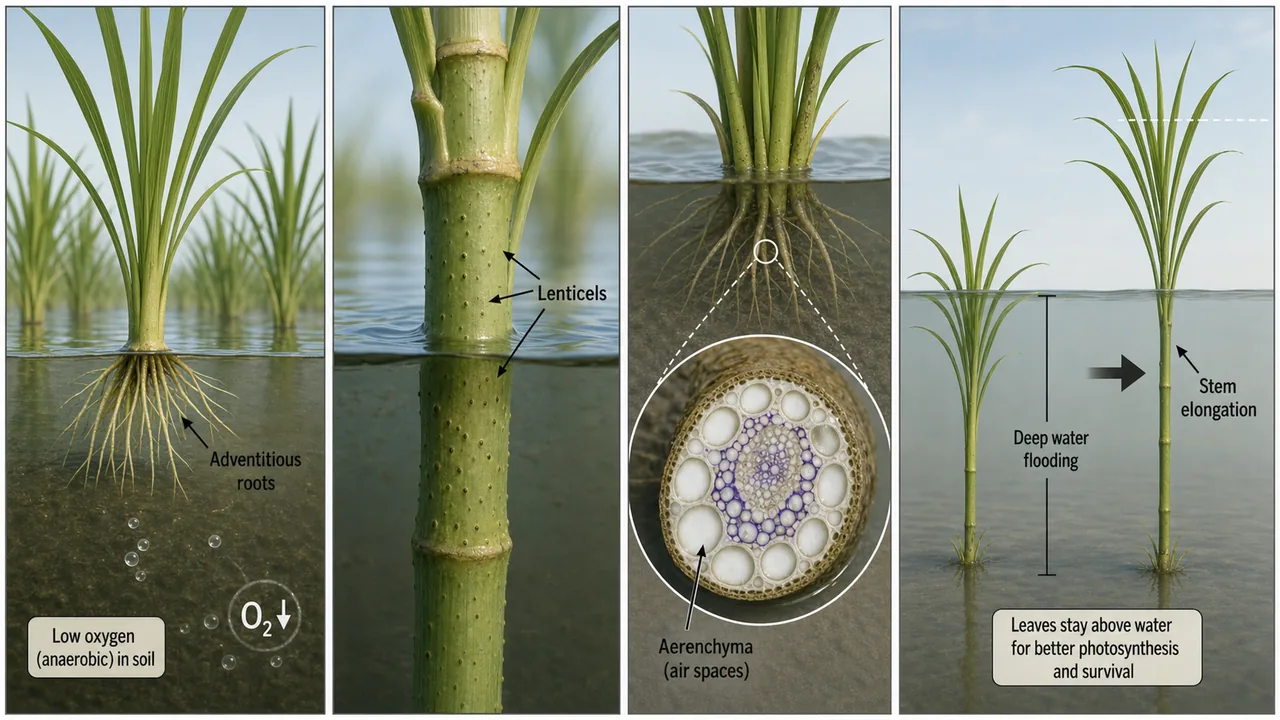
- Adventitious root formation on lower part of stem (close to surface so that O2 tension is quickly restored after transient water logging) eg. Tomato. These roots replace the submerged root system that can no longer function.
- Lenticel (i.e. raised pores in the stem of plants) formation -- provides gas exchange pathways
- Aerenchyma formation (soft plant tissue containing air spaces found in aquatic plants) in the cortex that provide canal parallel to the axis of the root through which gases can diffuse longitudinally (eg. rice). Aerenchyma is one of the most important adaptations to flooding, allowing oxygen to reach submerged roots.
- Elongation capacity (In rice -- best elongation response gives 100% recovery from submergence and poorest elongation gives upto 49% recovery)
- Scoring for elongation can be done between booting and flowering stage after flooding the crop to varying depths.
- In sugarcane, S. spontaneum has more tolerance to flooding.
- Some canes gave upto 70% of their production potential when in continuous flood for 5 months (in an east at canal point Florida, USA)
Ideotype for flooded areas:
👉🏻 The postulated ideotype for flooded areas should have the following characteristics. An ideotype is a model plant designed to have the optimal combination of traits for a particular environment.
- Capacity to carry out functional activity at low O2 concentration (i.e. High cytochrome activity)
- Ability for photosynthesis under low light intensity
- Capacity to synthesis food rapidly
- Regeneration capacity of shoots when damaged by flood
- Ability to withstand drought at later growth stage
- Deep root system
- Narrow, medium long and dark green leaves with high sugar and protein content.
Breeding methods: Same as in other stresses
Breeding for Salt Tolerance
- Salt Tolerance: refers to the ability of plants to prevent, reduce or overcome injurious effects of soluble salts present in their root zone.
- It is a global problem as saline and alkali soils are found in almost all the countries of the world, more in Semi-Arid Tropics (SAT) of world. Millions of hectares of agricultural land are affected by salinity, making this a critically important area of breeding.
👉🏻 Problem of salinity can be overcome by two ways:
- Soil reclamation: costly, time consuming and short lived
- Resistant varieties: less costly, more effective, long lasting but require longer period to develop. Developing salt-tolerant varieties is the most economically viable long-term solution.
👉🏻 Behavior / characteristics of plants to salt
- Land races more tolerant than High yielding varieties. Tolerant plants varieties are found in salt affected areas, having been naturally selected for this trait over generations.
- Salt tolerance capacity differs from species to species. Also genetic differences exist among cultivars for their salt tolerance capacity.
- Different crop plants show differential response to salinity.
Salinity Crops

- Higher ploidy level crops are more tolerant than lower ploidy level crops. Eg. Hexaploid wheat more tolerant than tetraploid. Tetraploid Brassica more tolerant than diploid Brassica. This is because polyploids have more gene copies and greater genetic buffering capacity.
TIP
Remember: Higher ploidy = more salt tolerant. Hexaploid > Tetraploid > Diploid. This pattern holds across multiple crop species.
- In rice tall, coarse grained, late maturing varieties - more tolerant
- In sugarcane different strains have differential tolerance. Barley more tolerant than wheat.
👉🏻 Symptoms of plants to salt stress
- Retardation / cessation of growth
- Necrosis -- death of plant tissue
- Leaf abscission -- premature dropping of leaves
- Loss of turgor -- wilting due to inability to absorb water from saline soil
- Ultimate death of plant
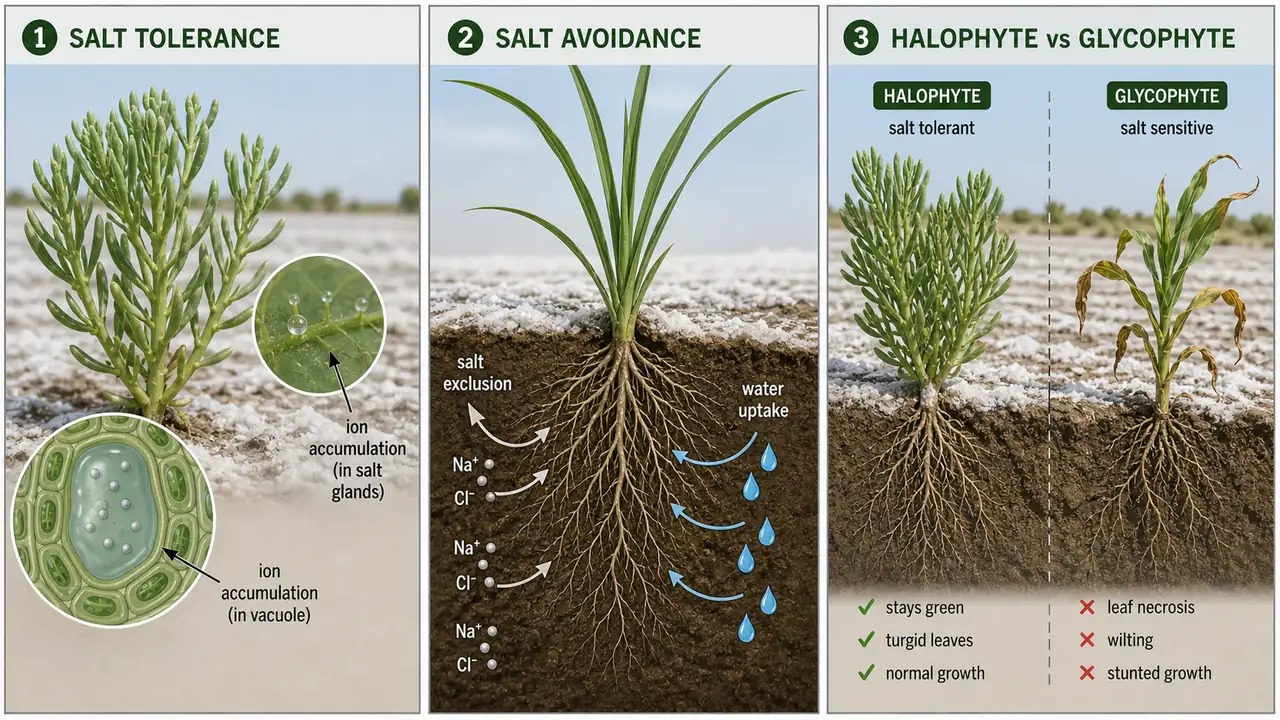
👉🏻 Mechanisms of salt tolerance
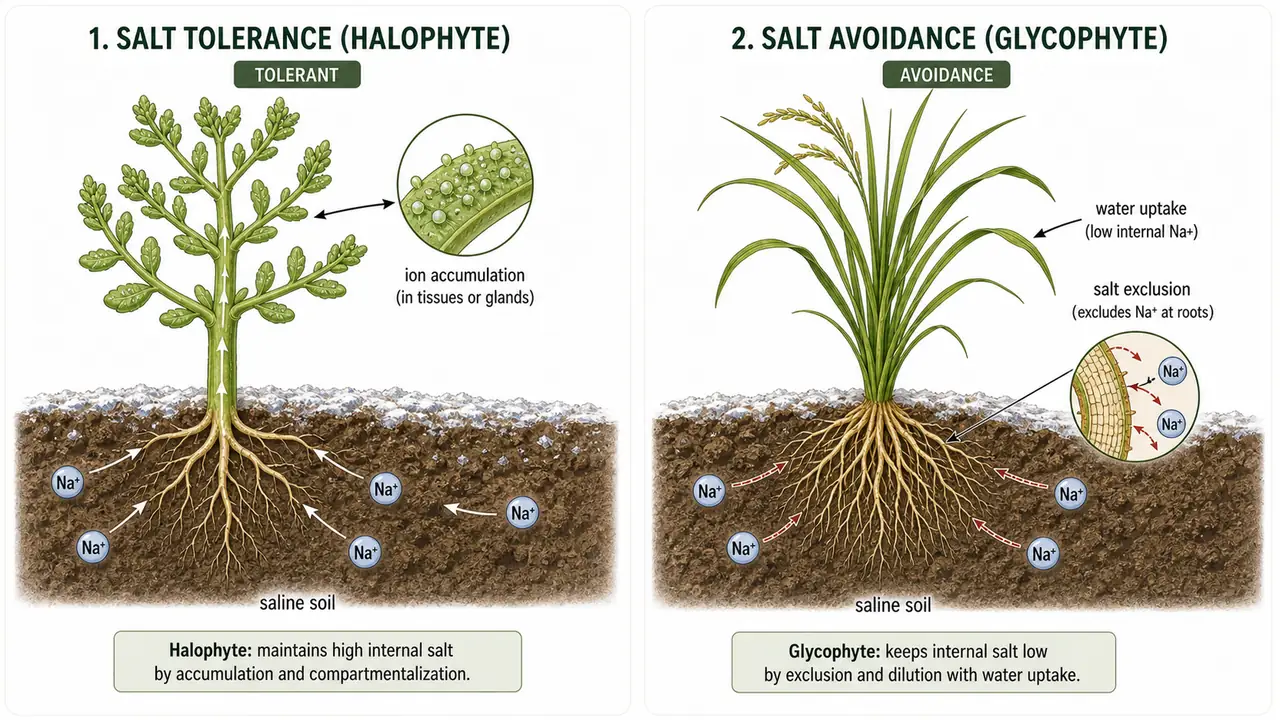
- Salt Tolerance: Plants respond to salinity stress by accumulating salt, generally in their cells or glands and roots etc. These plants can tolerate high internal salt concentrations without damage.
- Salt avoidance: plants avoid salt stress by maintaining their cell salt concentration unchanged either by water absorption eg. Rice, chenopodiaceae family or by salt exclusion eg. Tomato, soybean, citrus, wheat grass. Glycophytes (Non-halophytes) plants owe their resistance primarily to avoidance. Eg. Barley.
- Halophytes (plants that grow in salty or alkaline soils) show tolerance by ion accumulation mechanism. They have specialized structures like salt glands that excrete excess salt from their tissues.
Breeding methods
👉🏻 Breeding methods are same but breeding strategies are
- Breeding for yield potential should have greater emphasis than breeding for salt resistance per se (As screening is done on the basis of yield reduction in stress environment as compared to non-stress Environment).
- Selection should be done in stressed target environments (As abiotic stress resistance is an important part of Environmental Fitness & is bound to be location specific i.e. it is related to narrow adaptation).
👉🏻 Screening Techniques
- Sand culture by using nutrient solution in sand & irrigation with saline water
- Solution culture by using solution culture tanks (Hydroponic culture)
- Microplot techniques by using small microplots
👉🏻 Microplot Techniques
- By using small microplots of size 6 x 3 x 1 m at CSSRI, Karnal, Haryana (Central Soil Salinity Research Institute). Then Multilocation Trial (MLT) conducted over seasons to get more reliable results. Genotypes which survive better under salinity are considered tolerant & tested further.
👉🏻 Selection criteria
- Germination (%) in saline medium -- an early indicator of salt tolerance
- Dry matter accumulation (seedling / plant dry wt.) / Early vigour
- Leaf senescence or death -- Estimated by total dead leaf area or No. of dead leaves
- Leaf necrosis
- Leaf ion content -- measuring Na+ and K+ concentrations reveals salt exclusion ability
- Osmoregulation (Determined as maintenance of turgor under stress) Measured as proline or CHO accumulation or accumulation of glycine, betaine etc.
- Yield -- Economic yield is the ultimate criterion for selecting salt-tolerant varieties
Cold Tolerance
- When temperatures remain above-freezing i.e. > 0 degrees C to < 10-15 degrees C it is called chilling.
- When temperature remain below freezing i.e. < 0 degrees C it is called Freezing.
These two types of cold stress affect plants through different mechanisms and require different breeding strategies.
A. Chilling Resistance
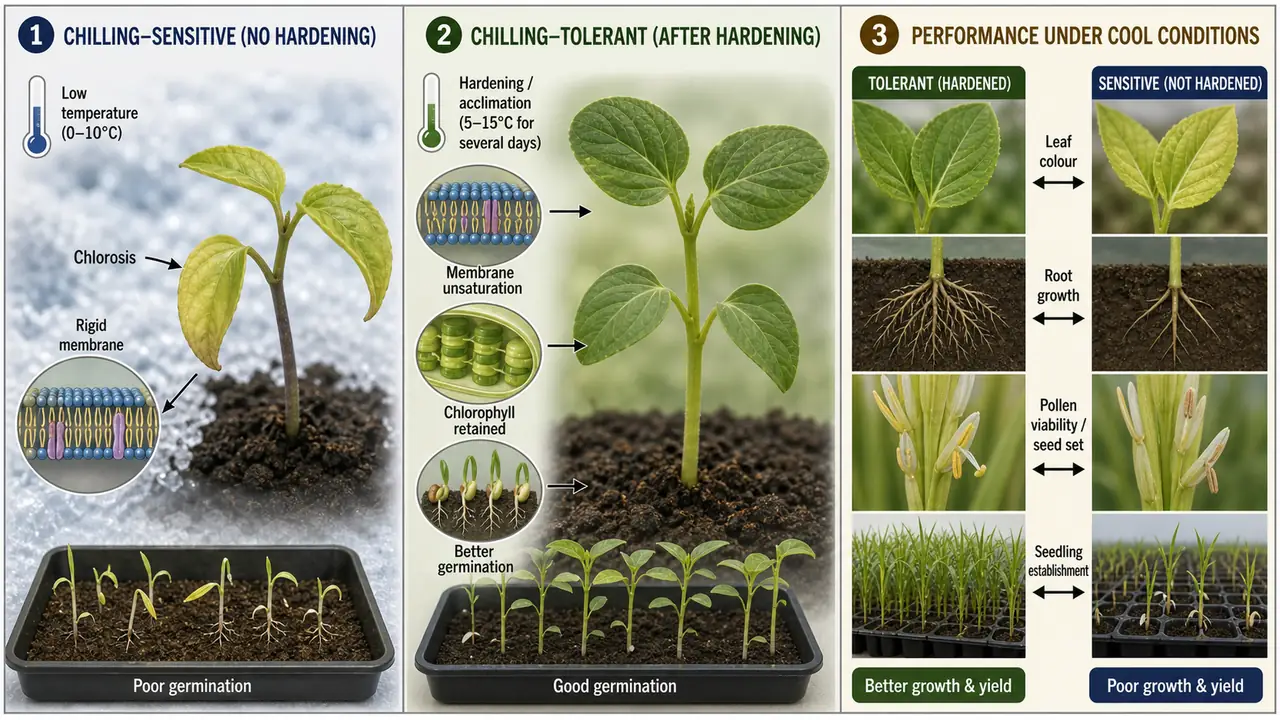
- Chilling sensitive plants are typically tropical plants. Temperate plants are generally tolerant to chilling injury. This is because tropical plants have not evolved mechanisms to cope with low temperatures.
- Effects of chilling stress on plants:
- Reduced germination
- Poor seedling establishment
- Stunted growth
- Wilting
- Chlorosis
- Necrosis
- Pollen sterility -- leading to poor grain set
- Poor fruit set / seed formation
- Reduced root growth
- Locked open stomata -- inability to close stomata leads to excessive water loss
- ABA accumulation -- a stress hormone response
- At subcellular level
- Reduces membrane stability -- cell membranes become rigid and lose their selective permeability
- Poor chlorophyll synthesis (affected)
- Reduced photosynthesis & respiration
- Toxicity due to H2O2 formation -- reactive oxygen species damage cell components
Chilling Tolerance
- Ability of some genotypes to survive / perform better under chilling stress than other genotypes is called chilling tolerance.
- It is because of chilling hardening, i.e. an earlier exposure to a near chilling temperature for a specified period as a result of which chilling tolerance of the concerned plants increases. This phenomenon demonstrates that plants can be acclimated to cold stress through gradual exposure.
👉🏻 Mechanisms of Chilling Tolerance
- Membrane lipid un-saturation -- unsaturated fatty acids keep membranes fluid at low temperatures
- Reduced sensitivity of photosynthesis
- Increased chlorophyll accumulation
- Improved germination
- Improved fruit / seed set
- Pollen fertility
👉🏻 Sources of Chilling Tolerance
- Late adopted breeding populations eg. maize
- Germplasm (eg. That collected from high altitude, low temperature geographic regions)
- Induced mutants for cold tolerance
- Cold tolerant somaclonal variants
- Related wild species eg. Tomato -- wild relatives of tomato from high altitude regions carry valuable cold tolerance genes
👉🏻 Selection Criteria
- Germination test
- Growth under stress (measured as plant dry matter accumulation)
- Chlorophyll Loss under chilling stress eg. rice, cucumber, tomato (measured as seedling colour) -- tolerant genotypes retain green colour
- Membrane stability: (Assayed in terms of solute leakage from tissues) -- less leakage indicates better membrane stability
- Photosynthesis: Chilling injury to photosynthesis is assayed as variable chlorophyll fluorescence at 685 nm
- Seedling mortality
- Seed / Fruit set
- Pollen fertility (apply during injury at PMC)
B. Freezing Resistance
- Freezing injury / Frost injury / cryo injury
- Freezing Stress: Dormant state is conducive to freezing resistance, while resistance in actively growing tissue is rare: Thus Freezing resistance largely involves surviving freezing stress in such a manner as to enable subsequent regrowth when the temperature rises. As water in plants cools below 0 degrees C, it may either
- Freeze i.e. form ice or
- Super cool without forming ice
Effects of freezing stress
1. Ice formation: Two types
- Intercellular ice formation: Initiation of ice formation on plant surface is sufficient to induce freezing of the internal (intercellular & xylem vessels etc.) water in most plant species.
- Intracellular ice formation: It is more lethal may be due to physical disruption of subcellular structure by ice crystal. Intracellular ice formation is the major and terminal freezing stress. Extracellular ice formation in turn increases the concentrations of extracellular solutes, thereby water is withdrawn from the cells during extracellular ice formation. This creates water stress in the frozen tissue / plant. This secondary dehydration effect is a key component of freezing damage.
2. Membrane disruptions:
- Freezing causes disruptions in and / or alter the semipermeable properties of plasma membrane
- Loss of solutes from the cells occur
- Cells remain plasmolyzed even after thawing which is often called as frost plasmolysis.
- Cells may become highly turgid due to uptake of excess water.
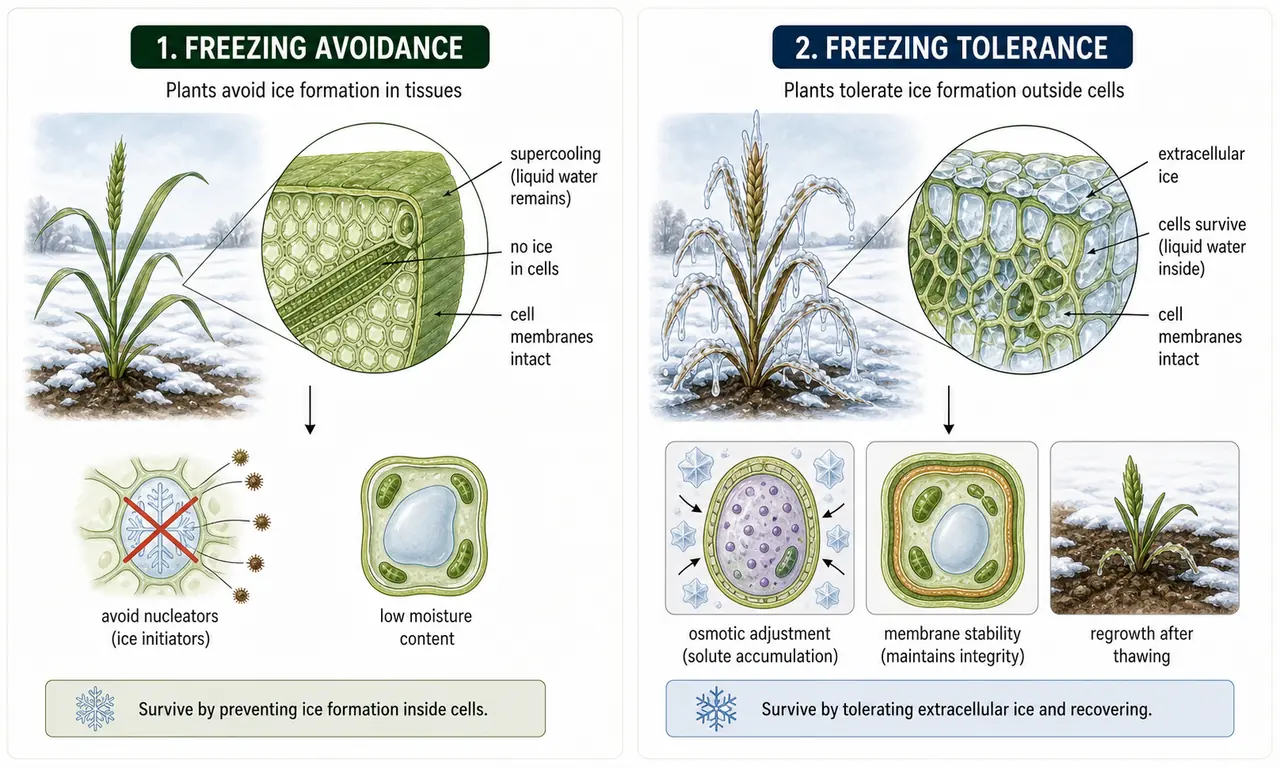
3. Supercooling: Cooling of water below 0 degrees C without ice crystal formation is called supercooling.
- In plants water may cool down to -1 to -15 degrees C in herbaceous species and to -40 to -45 degrees C in hardy trees.
- This becomes possible apparently because internal ice-nucleators are absent in such cases.
- This is regarded as an important Mechanism of freezing avoidance
4. Stress due to external factors: Consequent to freezing
- Ice sheet formation below and above the ground causes reserve depletion, anoxia etc. in plants.
- Tissues killed during freeze-thaw are highly prone to pathogen attacks
- Auto toxicity may occur.
Mechanism of Freezing Resistance
- The ability of a genotype to survive freezing stress and to recover and re-grow after thawing is known as freezing resistance
- Freezing resistance is a complex trait involving physiological, chemical & physical processes at the tissue and cell level.
- Freezing avoidance: The ability of plant tissues / or genes (but the whole plants) to avoid ice formation at sub-zero temperature is called freezing avoidance.
- Supercooling is a mechanism of freezing avoidance it is controlled by
- Lack of ice-nucleators
- Small cell size -- smaller cells have less water to freeze
- Little or no intercellular space
- Low moisture content
- Barriers against external nucleators
- Presence of anti-nucleators
- Freezing Tolerance: Ability of plants to survive the stresses generated by extra cellular ice formation and to recover and regrow after thawing is known as freezing tolerance. The various components of freezing tolerance are as follows:
- Osmotic adjustment
- Amount of bound water
- Plasma membrane stability -- the most critical factor in freezing tolerance
- Cell wall components properties
- Cold-responsive proteins Eg. ABA -- these proteins are produced during cold acclimation and protect cellular structures
👉🏻 Sources of freezing tolerance
- Cultivated varieties
- Germplasm lines
- Induced Mutations
- Related wild species Eg. Wheat -- Agropyron sps
- Transgenes: Eg. chemical Synthesized antifreeze protein gene, ala 3, in tobacco -- this demonstrates how biotechnology can complement traditional breeding for cold tolerance
👉🏻 Selection criteria
- Field survival -- the most practical but least controlled measure
- Freezing test in laboratory
- Cryo freezing -- controlled freezing under laboratory conditions
- Osmoregulation -- ability to maintain cellular osmotic balance
👉🏻 Problems in breeding for freezing tolerance
- Freezing Tolerance is a complex trait & involves several components. So, it is not readily measurable under field conditions
- Breeding work under field conditions is highly influenced by other environmental factors and biotic stresses
- Due to large G X E for the trait, field survival shows poor heritability
- Freezing tolerance also shows a large G X E interaction which limits progress under selection
- Laboratory tests are yet to be developed to screen large breeding populations. The development of reliable, high-throughput screening methods remains one of the biggest challenges in breeding for freezing tolerance.
Summary Cheat Sheet
| Concept / Topic | Key Details |
|---|---|
| Abiotic stress types | Drought, waterlogging, salinity, cold/frost |
| Drought resistance mechanisms | Escape, avoidance, tolerance |
| Drought escape | Early maturity; complete lifecycle before stress |
| Drought avoidance | Deep root system, leaf rolling, waxy cuticle |
| Drought tolerance | Osmotic adjustment, proline accumulation |
| Drought morphological traits | Deep roots, small leaves, leaf rolling, thick cuticle |
| Drought physiological traits | High WUE, stomatal regulation, osmotic adjustment |
| Salinity tolerance | Excluder mechanism; ion compartmentalization |
| Salt-tolerant rice | CSR-10, CSR-13, Lunishree |
| Waterlogging tolerance | Aerenchyma formation; adventitious roots |
| Waterlogging-tolerant rice | FR13A, FR43B |
| Cold/frost tolerance | Increased unsaturated fatty acids in membrane |
| Cold-hardy wheat | Sonalika |
| Breeding methods for abiotic stress | Backcross, recurrent selection, wide hybridization |
| Screening difficulty | Field screening unreliable; lab tests still developing |
| Proline accumulation | Key biochemical marker for drought tolerance |