💐 Floriculture — India's Flower Industry
Complete guide to Indian floriculture covering production statistics, leading states, global trade, cut flowers vs loose flowers, Hogarth curve, Ikebana, and key exam facts for competitive agriculture exams.
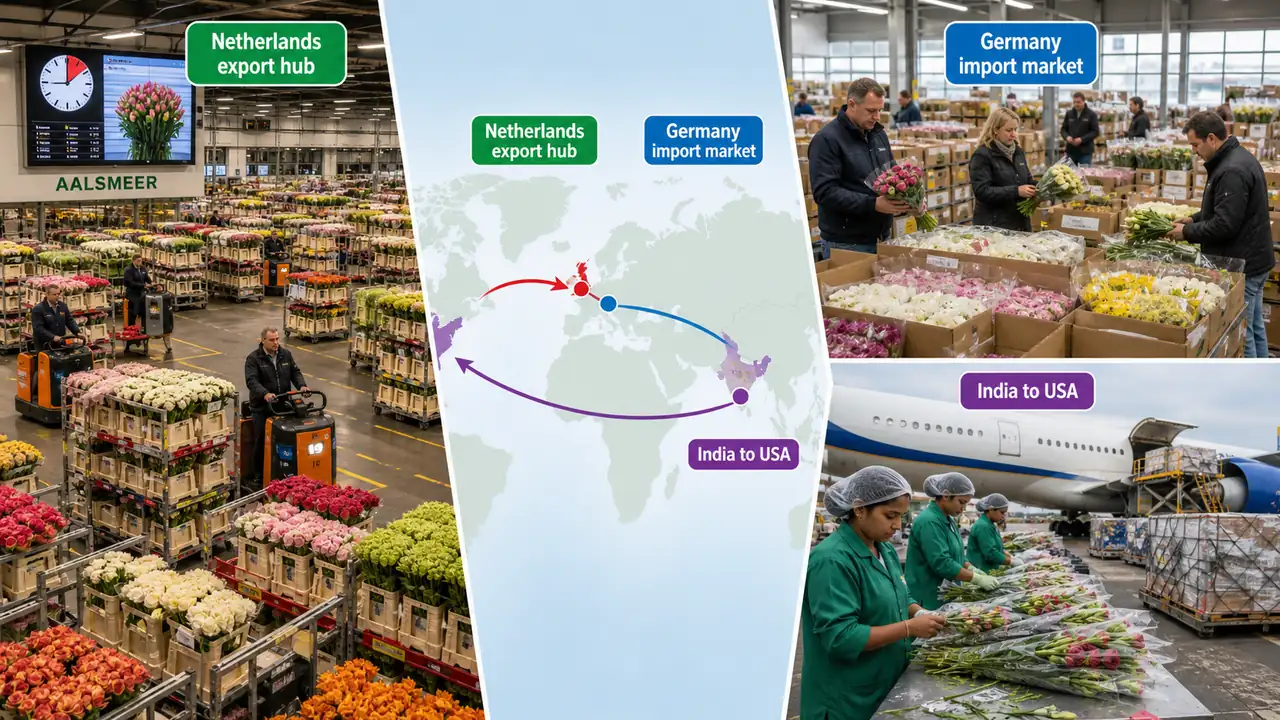
At the famous Dutch flower auctions in Aalsmeer, Netherlands, millions of flowers change hands every morning — the Netherlands alone controls over 57% of global flower exports. But thousands of kilometres away in Tamil Nadu, India quietly leads the world in a different way: India is the largest producer of loose flowers on the planet. From the jasmine garlands adorning a bride's hair in Madurai to the marigold strings decorating a temple in Varanasi, floriculture is deeply woven into India's cultural and economic fabric.
IMPORTANT
For exam purposes, remember the distinction between area leader (J&K), production leader (Tamil Nadu), and the crop with maximum area (Jasmine). Also: Netherlands exports the most, Germany imports the most, USA imports the most from India.
Global Floriculture Trade
| Parameter | Answer |
|---|---|
| Leading flower product exporting country | Netherlands (57%) |
| Leading flower product importing country | Germany |
| Largest market for cut flowers | Germany |
| Largest importer of floriculture from India | USA (27%) |
The Netherlands dominates global flower exports through its famous Dutch flower auctions — the world's largest flower trading hub located in Aalsmeer.
Pro Content Locked
Upgrade to Pro to access this lesson and all other premium content.
₹99 charged monthly · Cancel anytime
- All Agriculture & Banking Courses
- AI Lesson Questions (100/day)
- AI Doubt Solver (50/day)
- Glows & Grows Feedback (30/day)
- AI Section Quiz (20/day)
- 22-Language Translation (100/day)
- Recall Questions (20/day)
- AI Quiz (15/day)
- AI Quiz Paper Analysis (100/day)
- AI Step-by-Step Explanations (100/day)
- Spaced Repetition Recall (FSRS)
- AI Tutor
- Immersive Text Questions
- Audio Lessons — Hindi & English
- Mock Tests & Previous Year Papers
- Summary & Mind Maps
- XP, Levels, Leaderboard & Badges
- Generate New Classrooms
- Voice AI Teacher (AgriDots Live)
- AI Revision Assistant
- Knowledge Gap Analysis
- Interactive Revision (LangGraph)
🔒 Secure via Razorpay · Cancel anytime · No hidden fees
At the famous Dutch flower auctions in Aalsmeer, Netherlands, millions of flowers change hands every morning — the Netherlands alone controls over 57% of global flower exports. But thousands of kilometres away in Tamil Nadu, India quietly leads the world in a different way: India is the largest producer of loose flowers on the planet. From the jasmine garlands adorning a bride's hair in Madurai to the marigold strings decorating a temple in Varanasi, floriculture is deeply woven into India's cultural and economic fabric.
IMPORTANT
For exam purposes, remember the distinction between area leader (J&K), production leader (Tamil Nadu), and the crop with maximum area (Jasmine). Also: Netherlands exports the most, Germany imports the most, USA imports the most from India.
Global Floriculture Trade
| Parameter | Answer |
|---|---|
| Leading flower product exporting country | Netherlands (57%) |
| Leading flower product importing country | Germany |
| Largest market for cut flowers | Germany |
| Largest importer of floriculture from India | USA (27%) |
The Netherlands dominates global flower exports through its famous Dutch flower auctions — the world's largest flower trading hub located in Aalsmeer.
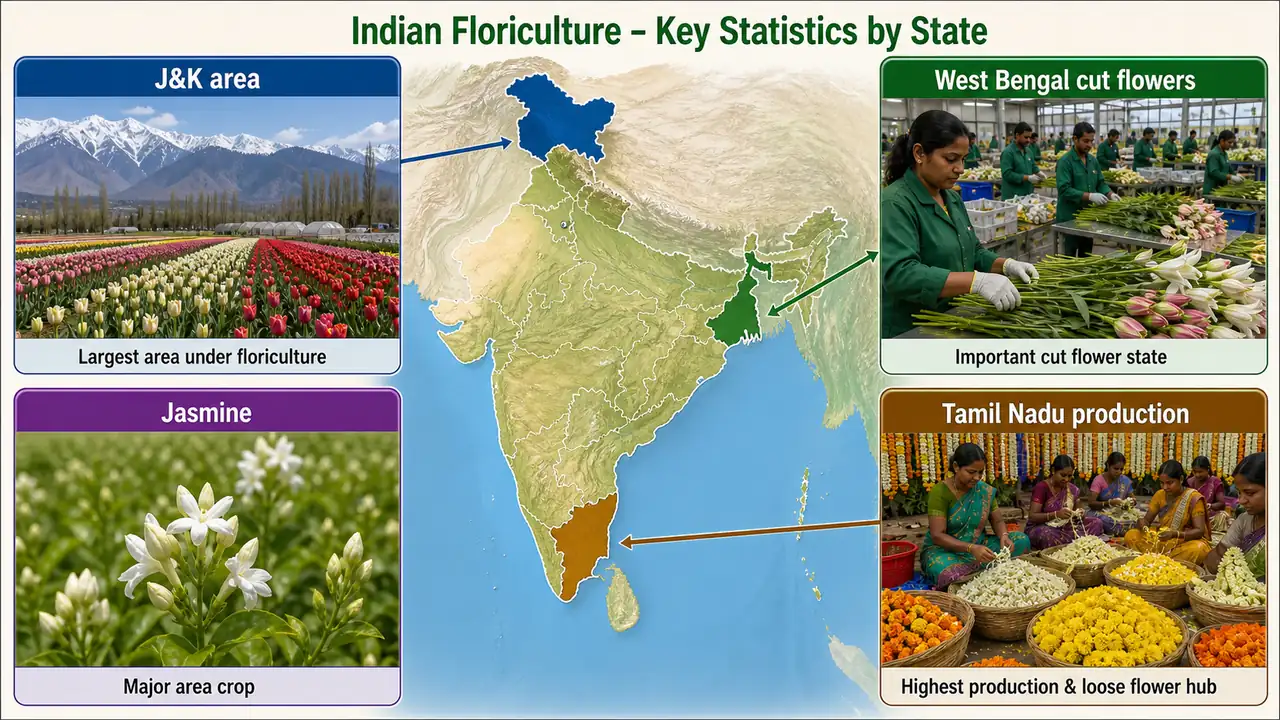
Indian Floriculture — Key Statistics
| Parameter | Answer |
|---|---|
| State with maximum area under floriculture | J&K (NHB 2017-18) |
| State with maximum production | Tamil Nadu |
| Largest loose flower producing state | Tamil Nadu |
| Largest cut flower producing state | West Bengal |
| Flower crop covering maximum area in India | Jasmine |
| India's global distinction | Largest producer of loose flowers in the world |
Why the Area-Production Mismatch?
J&K leads in area because its temperate climate supports crops like tulips, saffron, and lavender that require large growing areas. But Tamil Nadu tops in production because its tropical climate supports year-round flower cultivation, especially high-yielding loose flowers like jasmine, marigold, and chrysanthemum.
TIP
Memory aid for Indian states: J&K = area, Tamil Nadu = production (both loose and total), West Bengal = cut flowers. For global trade: Netherlands exports, Germany imports, USA imports from India.
Types of Flowers — Cut vs Loose
Flowers in the floriculture industry are classified into two categories based on how they are harvested and marketed:
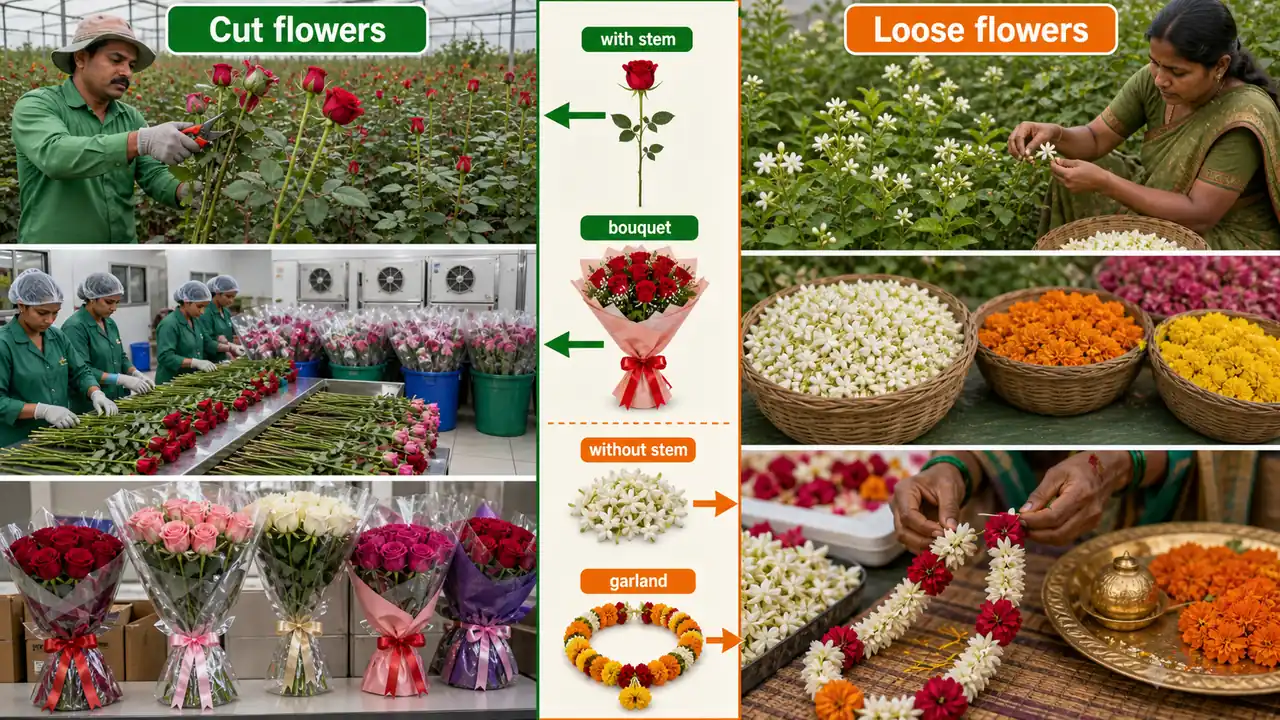
Cut Flowers
- Harvested at full open stage along with stems
- Used for bouquets, vase arrangements, and floral decorations
- Examples: roses, gladiolus, carnations, gerbera
- Global trade dominated by the Netherlands
Loose Flowers
- Individual flower heads harvested without stems
- Used for making garlands, religious offerings, and floral decorations
- Examples: jasmine, marigold, chrysanthemum, crossandra
- India is the world's largest producer
NOTE
India is the world's largest producer of loose flowers, while the Netherlands dominates the global cut flower trade. This distinction is frequently asked in competitive exams.
Floral Art and Design
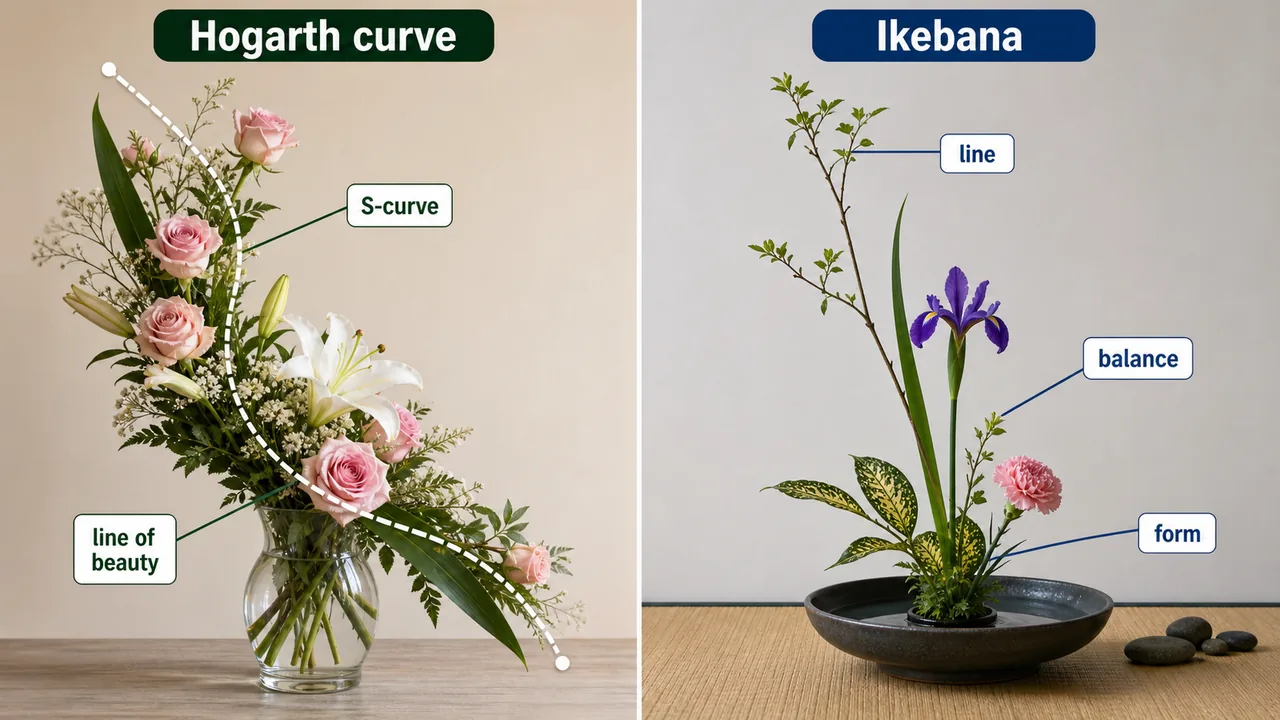
Hogarth Curve
- Also known as the Line of Beauty (S-shaped)
- An elegant S-shaped line used in floral design and art composition
- Named after the English painter William Hogarth, who considered this serpentine line the most aesthetically pleasing form
Ikebana
- Japanese flower arrangement art
- Emphasizes form, line, and balance rather than colour and abundance
- Considered a meditative practice and important cultural tradition in Japan
Important Book
- 'Beautiful Gardens' is written by M.S. Randhawa — a renowned Indian botanist, art historian, and civil servant who made significant contributions to horticulture and gardening in India.
Summary Cheat Sheet
| Concept / Topic | Key Details / Explanation |
|---|---|
| India’s floriculture identity | The lesson presents floriculture as both an economic and cultural sector, linking global flower trade with India’s strong domestic loose-flower tradition. |
| Global trade leaders | Netherlands is the leading flower-exporting country with about 57% share, Germany is the leading flower-importing country and also the largest market for cut flowers, and the USA is the largest importer of floriculture products from India at about 27%. |
| Indian floriculture rankings | In India, J&K leads in area under floriculture, Tamil Nadu leads in total production, Tamil Nadu is also the leading loose-flower-producing state, West Bengal leads in cut flowers, and Jasmine occupies the maximum area among flower crops. |
| India’s global distinction | India is identified as the largest producer of loose flowers in the world, which is a central exam fact in the lesson. |
| Why area and production leaders differ | J&K leads area because its temperate climate supports crops like tulips, saffron, and lavender over large tracts, while Tamil Nadu leads production because its tropical, year-round conditions favour high-yield loose flowers such as jasmine, marigold, and chrysanthemum. |
| Core exam recall set | The lesson repeatedly reinforces this contrast: J&K = area, Tamil Nadu = production and loose flowers, West Bengal = cut flowers, Netherlands = exports, Germany = imports, and USA = top importer from India. |
| Cut-flower concept | Cut flowers are harvested at the full open stage with stems and are used for bouquets, vase arrangements, and decorative floristry. |
Summary Continued
| Concept / Topic | Key Details / Explanation |
|---|---|
| Major cut-flower examples | The main cut-flower examples given are rose, gladiolus, carnation, and gerbera, and the global trade in this category is strongly associated with the Netherlands. |
| Loose-flower concept | Loose flowers are harvested as individual flower heads without stems and are mainly used for garlands, religious offerings, and decorative use. |
| Major loose-flower examples | The lesson lists jasmine, marigold, chrysanthemum, and crossandra as leading loose flowers and links this category to India’s world leadership. |
| Hogarth curve | The Hogarth Curve is the Line of Beauty, an S-shaped floral design line, named after William Hogarth, and is treated as a classic composition principle in floral art. |
| Ikebana | Ikebana is the Japanese art of flower arrangement, emphasizing form, line, and balance over mere abundance or colour. |
| Important book and author | Beautiful Gardens was written by M.S. Randhawa, a major Indian horticultural writer and scholar. |