🥑 Bael
Important points, varities, pests

-
Botanical Name: Aegle marmelos
-
Family: Rutaceae
-
Origin: India
-
Other names: Bengal quince, Indian quince, Golden apple, Wood Apple. Bael is one of the few fruit crops that is indigenous to India and holds immense cultural, religious, and medicinal significance.
-
It is a sacred tree for Hindus. Leaves are used to offer 'Lord Shiva'. The trifoliate leaves of bael are considered auspicious and are an essential offering in Shiva worship, making this tree a protected species near temples.
-
Unripe or half ripe fruit contains 31.3% - 31.8% carbohydrates, 1.8% proteins and 2.9% fibre. This rich nutritional profile makes bael a valuable functional food, especially in rural areas where it grows abundantly.
-
Richest source of Vitamin-B1 (Riboflavin). Among all fruits, bael stands out for its exceptionally high riboflavin content, which is essential for energy metabolism and maintaining healthy skin and eyes.
Pro Content Locked
Upgrade to Pro to access this lesson and all other premium content.
Charged once for one year · ₹1188 total
Save ₹100/month vs ₹2388/year launch price
- All Agriculture & Banking Courses
- AI Lesson Questions (100/day)
- AI Doubt Solver (50/day)
- Glows & Grows Feedback (30/day)
- AI Section Quiz (20/day)
- 22-Language Translation (100/day)
- Recall Questions (20/day)
- AI Quiz (15/day)
- AI Quiz Paper Analysis (100/day)
- AI Step-by-Step Explanations (100/day)
- Spaced Repetition Recall (FSRS)
- AI Tutor
- Immersive Text Questions
- Audio Lessons — Hindi & English
- Mock Tests & Previous Year Papers
- Summary & Mind Maps
- XP, Levels, Leaderboard & Badges
- Generate New Classrooms
- Voice AI Teacher (AgriDots Live)
- AI Revision Assistant
- Knowledge Gap Analysis
- Interactive Revision (LangGraph)
🔒 Secure one-time yearly payment via Razorpay · No hidden fees
-
Botanical Name: Aegle marmelos
-
Family: Rutaceae
-
Origin: India
-
Other names: Bengal quince, Indian quince, Golden apple, Wood Apple. Bael is one of the few fruit crops that is indigenous to India and holds immense cultural, religious, and medicinal significance.
-
It is a sacred tree for Hindus. Leaves are used to offer 'Lord Shiva'. The trifoliate leaves of bael are considered auspicious and are an essential offering in Shiva worship, making this tree a protected species near temples.
-
Unripe or half ripe fruit contains 31.3% - 31.8% carbohydrates, 1.8% proteins and 2.9% fibre. This rich nutritional profile makes bael a valuable functional food, especially in rural areas where it grows abundantly.
-
Richest source of Vitamin-B1 (Riboflavin). Among all fruits, bael stands out for its exceptionally high riboflavin content, which is essential for energy metabolism and maintaining healthy skin and eyes.
- Marmelosin - Active ingredient present in Bael, extracted from bark. Marmelosin is a coumarin compound with potent anti-diarrhoeal and anti-dysenteric properties, making bael a highly valued fruit in traditional Ayurvedic medicine.
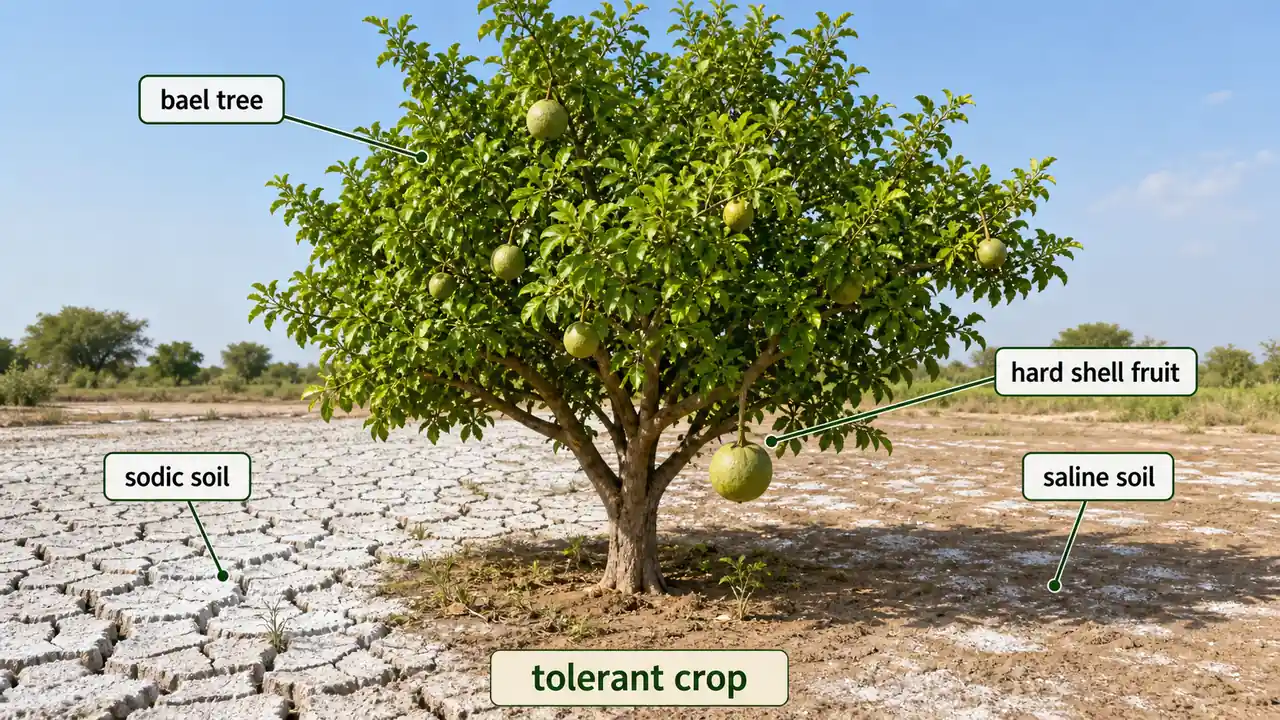
- It can withstand sodicity upto 30 ESP and salinity upto 9 EC. This remarkable tolerance to adverse soil conditions makes bael an ideal fruit crop for cultivation in salt-affected and alkaline wasteland areas where most other fruit crops fail to survive.
- Varieties: Kagzi Gonda, Kagzi Etawah, Kagzi Banarasi, Mitzapuri. These are the major cultivated varieties of bael, primarily selected for their fruit size, pulp quality, and shell thickness. The prefix "Kagzi" refers to varieties with a thin, paper-like shell, which are preferred by consumers.
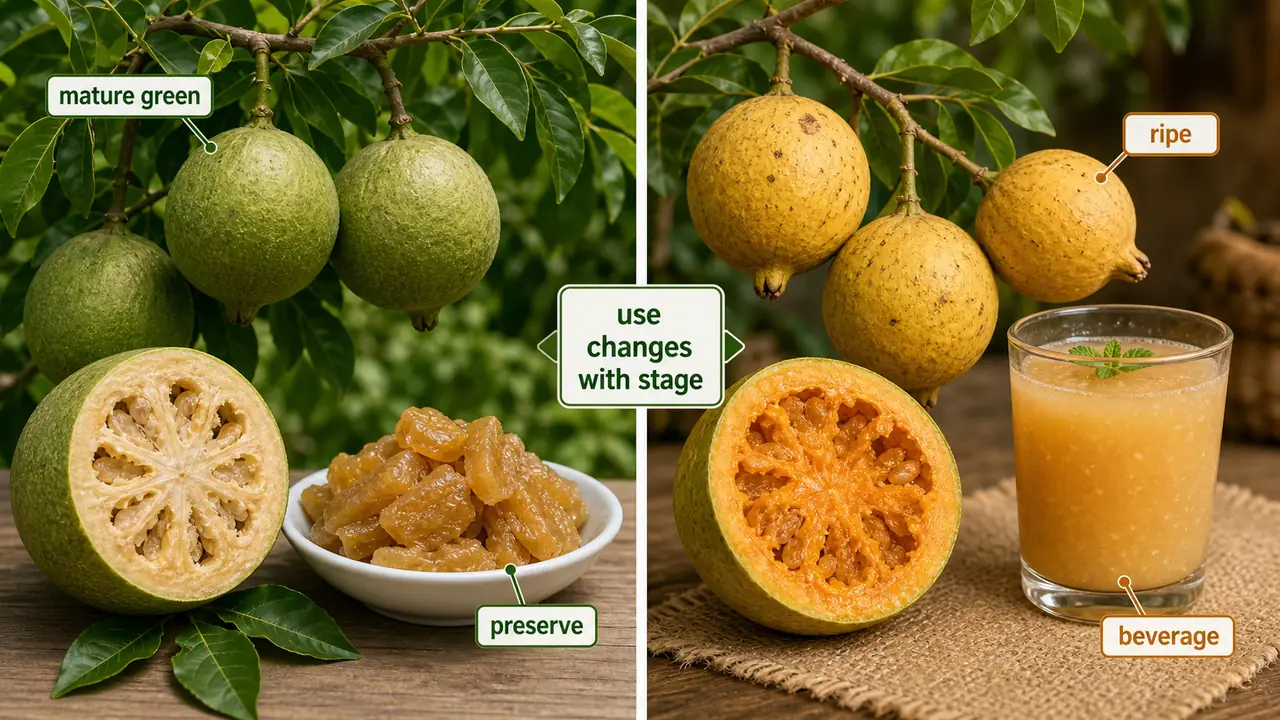
- Mature green fruits are ideal for harvesting. At this stage, the fruit has accumulated maximum nutrients and bioactive compounds while still being firm enough for transport.
- Ripe fruits are used for beverage making, hence they should be harvested at ripe stage. Ripe bael pulp is used to prepare sherbet (a popular summer drink in India) and squash, valued for their cooling and digestive properties.
- Mature green or raw fruits are most suitable for making preserve. The firm texture of unripe fruits holds up well during the preservation process, producing high-quality murabba (a traditional Indian preserve).
- Storage temperature: 9 °C + 85-90% RH. Maintaining this temperature and relative humidity combination prevents moisture loss and microbial spoilage, extending the shelf life of harvested bael fruits.
Summary Cheat Sheet
| Concept / Topic | Key Details / Explanation |
|---|---|
| Bael identity | Aegle marmelos of Rutaceae originated in India and is also known as Bengal quince, Indian quince, golden apple, and wood apple. |
| Cultural and nutritional importance | Bael is sacred in Hindu tradition and linked to Lord Shiva, unripe or half-ripe fruit is rich in carbohydrate, protein, and fibre, and the crop is highlighted as a rich source of vitamin B1 or riboflavin. |
| Medicinal and stress-tolerance points | Marmelosin from bark is the key medicinal compound, and bael tolerates very high sodicity up to 30 ESP and salinity up to 9 EC, making it suitable for alkali and salt-affected lands. |
| Varieties | Important varieties listed in the lesson are Kagzi Gonda, Kagzi Etawah, Kagzi Banarasi, and Mitzapuri, with Kagzi types preferred for their thinner shell. |
| Harvest and processing use | Mature green fruits are best for harvest and preserve making, ripe fruits are preferred for beverages such as sherbet and squash, and raw fruits are suited for preserve products. |
| Storage | Recommended storage condition is about 9°C with 85-90% relative humidity. |