🍂 Cultivation of Important Medicinal Plants
Complete guide to cultivation of aloe vera, isabgol (psyllium), and senna covering botanical details, growing conditions, active compounds, and key exam facts for competitive agriculture exams.
In the arid fields of Rajasthan, farmers grow isabgol (psyllium) — a crop whose mucilaginous seed husk has become a billion-dollar global export commodity used in digestive health products worldwide. Nearby, hardy aloe vera plants thrive in the same dry conditions, their gel-filled leaves destined for the cosmetics and pharmaceutical industries. Medicinal plant cultivation offers farmers in marginal lands an opportunity for high-value agriculture.
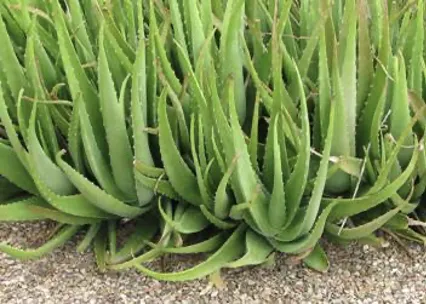
Aloe Vera
-
Family: Liaceae. Aloe vera belongs to the lily family, which is characterized by succulent, fleshy leaves that store water — a key adaptation for survival in arid and semi-arid environments.
-
There are three commercially important species which are the main sources of the drug. They are:
- A. barbadensis — the most widely cultivated species, commonly known simply as Aloe vera, grown extensively for its gel and latex.
- A. ferox — also known as Cape Aloe, native to South Africa, valued for its bitter sap used in traditional medicine.
- A. perryi — found primarily in Socotra Island (Yemen), used historically as a source of aloe resin.
-
Aloe is obtained by cutting the leaves at their base and letting the yellow, bitter juice drain out. It is currently obtained from A. barbadensis. This yellow exudate, called aloe latex, contains the active compound aloin, which has strong laxative and purgative properties. The clear gel found inside the leaf is a separate product, widely used in cosmetics, skin care, and wound healing.
Pro Content Locked
Upgrade to Pro to access this lesson and all other premium content.
Charged once for one year · ₹1188 total
Save ₹100/month vs ₹2388/year launch price
- All Agriculture & Banking Courses
- AI Lesson Questions (100/day)
- AI Doubt Solver (50/day)
- Glows & Grows Feedback (30/day)
- AI Section Quiz (20/day)
- 22-Language Translation (100/day)
- Recall Questions (20/day)
- AI Quiz (15/day)
- AI Quiz Paper Analysis (100/day)
- AI Step-by-Step Explanations (100/day)
- Spaced Repetition Recall (FSRS)
- AI Tutor
- Immersive Text Questions
- Audio Lessons — Hindi & English
- Mock Tests & Previous Year Papers
- Summary & Mind Maps
- XP, Levels, Leaderboard & Badges
- Generate New Classrooms
- Voice AI Teacher (AgriDots Live)
- AI Revision Assistant
- Knowledge Gap Analysis
- Interactive Revision (LangGraph)
🔒 Secure one-time yearly payment via Razorpay · No hidden fees
In the arid fields of Rajasthan, farmers grow isabgol (psyllium) — a crop whose mucilaginous seed husk has become a billion-dollar global export commodity used in digestive health products worldwide. Nearby, hardy aloe vera plants thrive in the same dry conditions, their gel-filled leaves destined for the cosmetics and pharmaceutical industries. Medicinal plant cultivation offers farmers in marginal lands an opportunity for high-value agriculture.
Aloe Vera
-
Family: Liaceae. Aloe vera belongs to the lily family, which is characterized by succulent, fleshy leaves that store water — a key adaptation for survival in arid and semi-arid environments.
-
There are three commercially important species which are the main sources of the drug. They are:
- A. barbadensis — the most widely cultivated species, commonly known simply as Aloe vera, grown extensively for its gel and latex.
- A. ferox — also known as Cape Aloe, native to South Africa, valued for its bitter sap used in traditional medicine.
- A. perryi — found primarily in Socotra Island (Yemen), used historically as a source of aloe resin.
-
Aloe is obtained by cutting the leaves at their base and letting the yellow, bitter juice drain out. It is currently obtained from A. barbadensis. This yellow exudate, called aloe latex, contains the active compound aloin, which has strong laxative and purgative properties. The clear gel found inside the leaf is a separate product, widely used in cosmetics, skin care, and wound healing.
TIP
Aloe has two distinct products: the yellow latex (contains aloin, used as laxative) and the clear gel (used in cosmetics and wound healing). Do not confuse them.
Isabgol (Psyllium)
-
Plantago ovata. This is the botanical name of Isabgol, one of the most important medicinal and commercial crops in India, valued for its seed husk.
-
Family: Plantagonaceae. Plants in this family are typically herbaceous and include several species known for producing mucilaginous seeds.
-
Origin: West India. Isabgol is believed to have originated in the western regions of India, particularly in the arid zones of Gujarat and Rajasthan, which remain the primary growing areas today.
-
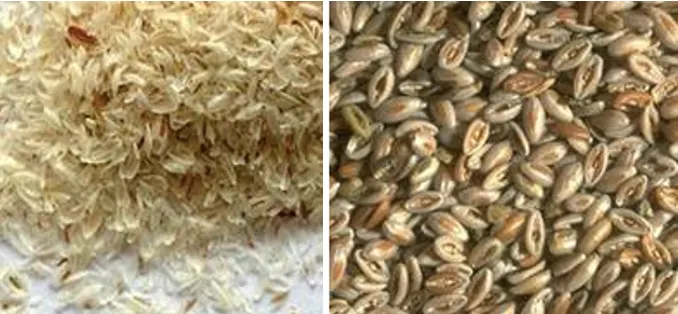
Plant Part Used: Husk, Seed. The outer coating (husk) of the seed is the most commercially valuable part, as it is extremely rich in soluble fiber (mucilage).
-
Varieties
- Gujarat Agricultural University has released two improved varieties viz. Gujarat Isabgol-1 and Isabgol - 2 which have a yield potential of 800-900 kg and 1000 kg/ha respectively. Niharika, GI-I, GI-II. These high-yielding varieties have been developed to boost productivity and meet growing domestic and export demand.
-
Chemical content: Mucilage. Mucilage is a thick, gel-forming polysaccharide that absorbs water and swells to many times its original volume. This property makes Isabgol husk an excellent bulk-forming laxative and a key ingredient in digestive health supplements.
-
Plant Part Used: Husk
-
Use: Laxative, Soothing and cooling agent, used against irritation in gastrointestinal tract. Isabgol husk works by absorbing water in the intestines, forming a soft, bulky mass that promotes smooth bowel movements. It is also prescribed for conditions like irritable bowel syndrome (IBS), diarrhea control, and cholesterol management.
-
It is a stemless annual herb often attaining a height of 30 to 40 cm. The plant is small and compact, with narrow, elongated leaves arranged in a rosette pattern close to the ground. Its short stature and rapid growth cycle make it well-suited for rabi season cultivation.
-
The husk : seed ratio is 25 : 75 by weight. This means that for every 100 grams of Isabgol seed, only 25 grams is husk and the remaining 75 grams is seed. Since the husk is the commercially valuable part, this ratio is important for understanding processing yields and economic returns.
Senna (Sonamukhi)
-
Cassia angustifolia (2n=28). This is the botanical name of Senna, with a diploid chromosome number of 28. It is one of the most important commercially cultivated medicinal plants in India.
-
Family: Leguminaesae. Senna belongs to the legume family, which means the plant has the ability to fix atmospheric nitrogen through root nodule bacteria, making it beneficial for soil fertility improvement.
-
Origin: Europe. While the plant's origins trace back to Europe and the Arabian Peninsula, it is now extensively cultivated in tropical and subtropical regions, with India being a leading producer.
-
Plant Part Used: Leaves. The dried leaves of Senna are the primary commercial product, harvested, dried, and processed for pharmaceutical use.
-
Variety: Soona, ALFT-2 released by Gujarat Agriculture University. These improved varieties have been developed for higher leaf yield and better sennoside content, ensuring consistent pharmaceutical quality.
-
Chemical content: Sennosides A, B, C, D. Sennosides are a group of anthraquinone glycosides — the active compounds responsible for Senna's laxative action. Among these, Sennoside A and B are the most pharmacologically significant, stimulating the muscles of the large intestine to promote bowel movements.
-
Use: Laxative property, Constipation. Senna is one of the most widely used natural laxatives in the world. It is prescribed for the short-term treatment of constipation and is also used to clear the bowels before medical procedures like colonoscopy. Its effectiveness, low cost, and natural origin make it a staple in both traditional and modern medicine.
Summary Cheat Sheet
| Concept / Topic | Key Details / Explanation |
|---|---|
| Medicinal plant cultivation focus | This lesson concentrates on three major medicinal crops of dry and semi-arid agriculture: Aloe vera, Isabgol, and Senna. |
| Aloe vera identity | Aloe vera belongs to the lily group and the lesson highlights three commercial species: A. barbadensis, A. ferox, and A. perryi. |
| Aloe vera product memory point | A. barbadensis is the main source of aloe; the yellow latex contains aloin and acts as a laxative, while the inner gel is used for cosmetics and wound healing. |
| Isabgol identity and value | Isabgol is Plantago ovata, a medicinal crop of West India grown mainly for its mucilage-rich husk used as a bulk laxative and soothing gastrointestinal agent. |
| Isabgol quick facts | The lesson highlights Gujarat Isabgol-1, Isabgol-2, GI-I, GI-II, and Niharika; the key processing memory point is the husk:seed ratio of 25:75 by weight. |
| Senna identity | Senna is Cassia angustifolia (2n = 28) from the legume family, and its commercial part is the dried leaf. |
| Senna active principle and use | The important compounds are Sennosides A, B, C, and D, and the crop is remembered mainly for its laxative use against constipation. |
| Senna variety point | The lesson lists Soona and ALFT-2 as improved varieties released for cultivation. |