👑 Essential Plant Nutrients: Classification, Functions & Interactions
Complete guide to 17 essential plant nutrients — classification, uptake forms, mobility, deficiency symptoms, nutrient interactions, and indicator plants for competitive exams
Why Nutrients Matter: A Farmer's Perspective
A wheat farmer in Punjab applies generous doses of nitrogen and phosphorus every season, yet his yields plateau. Soil testing reveals that potassium and zinc are critically low. No matter how much N and P he adds, yields cannot improve until the limiting nutrients are corrected. This real-world scenario illustrates the most fundamental principle in soil fertility — the Law of Limiting Factors.
Liebig's Law of the Minimum
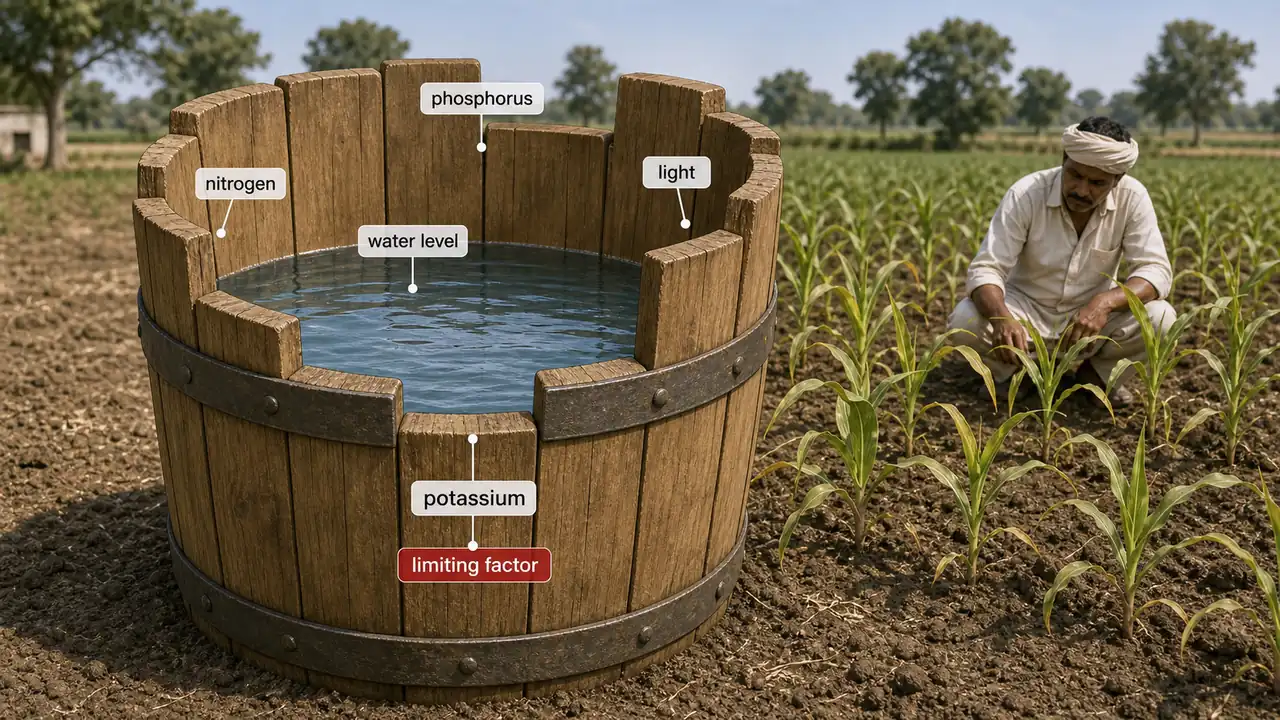
- Proposed by Justus von Liebig (1840): "The growth of plants is limited by the plant nutrient present in the smallest quantity, all others being in adequate amounts."
- Often explained through the barrel analogy — imagine a barrel made of staves of unequal lengths. The water level (crop yield) can only rise to the height of the shortest stave (most deficient nutrient).

| Concept | Details |
|---|---|
| Proposed by | Liebig (1840); stated formally in 1862 |
| Principle | Crop yield is limited by the least available essential growth factor |
| Applies to | All growth factors — nutrients, water, light, temperature |
| Expanded by | Shelford (1913) — Law of Tolerance (both deficiency and excess limit growth) |
| Agricultural example | Excess urea on a K-deficient soil gives no yield increase — you must raise the shortest stave first |
TIP
Pro Content Locked
Upgrade to Pro to access this lesson and all other premium content.
₹99 charged monthly · Cancel anytime
- All Agriculture & Banking Courses
- AI Lesson Questions (100/day)
- AI Doubt Solver (50/day)
- Glows & Grows Feedback (30/day)
- AI Section Quiz (20/day)
- 22-Language Translation (100/day)
- Recall Questions (20/day)
- AI Quiz (15/day)
- AI Quiz Paper Analysis (100/day)
- AI Step-by-Step Explanations (100/day)
- Spaced Repetition Recall (FSRS)
- AI Tutor
- Immersive Text Questions
- Audio Lessons — Hindi & English
- Mock Tests & Previous Year Papers
- Summary & Mind Maps
- XP, Levels, Leaderboard & Badges
- Generate New Classrooms
- Voice AI Teacher (AgriDots Live)
- AI Revision Assistant
- Knowledge Gap Analysis
- Interactive Revision (LangGraph)
🔒 Secure via Razorpay · Cancel anytime · No hidden fees
Why Nutrients Matter: A Farmer's Perspective
A wheat farmer in Punjab applies generous doses of nitrogen and phosphorus every season, yet his yields plateau. Soil testing reveals that potassium and zinc are critically low. No matter how much N and P he adds, yields cannot improve until the limiting nutrients are corrected. This real-world scenario illustrates the most fundamental principle in soil fertility — the Law of Limiting Factors.
Liebig's Law of the Minimum
- Proposed by Justus von Liebig (1840): "The growth of plants is limited by the plant nutrient present in the smallest quantity, all others being in adequate amounts."
- Often explained through the barrel analogy — imagine a barrel made of staves of unequal lengths. The water level (crop yield) can only rise to the height of the shortest stave (most deficient nutrient).
| Concept | Details |
|---|---|
| Proposed by | Liebig (1840); stated formally in 1862 |
| Principle | Crop yield is limited by the least available essential growth factor |
| Applies to | All growth factors — nutrients, water, light, temperature |
| Expanded by | Shelford (1913) — Law of Tolerance (both deficiency and excess limit growth) |
| Agricultural example | Excess urea on a K-deficient soil gives no yield increase — you must raise the shortest stave first |
TIP
Exam Tip: The barrel analogy is a favourite in exams. Remember: "Shortest stave = most deficient factor = yield ceiling."

Soil Fertility vs. Soil Productivity
Before diving into nutrients, understand this critical distinction that appears repeatedly in exams.
| Aspect | Soil Fertility | Soil Productivity |
|---|---|---|
| Definition | Ability of soil to supply adequate nutrients | Economic output (yield per hectare) under a given management system |
| Nature | Chemical and biological property | Economic concept, not an inherent property |
| Assessment | Laboratory analysis | Field performance under specific climate and management |
| Climate effect | Same in all climates | Differs with climate and location |
| Key rule | All fertile soils are not necessarily productive | All productive soils must be fertile |
IMPORTANT
All productive soils are fertile, but not all fertile soils are productive. A waterlogged or saline soil may have abundant nutrients (fertile) but cannot grow crops well (unproductive).

Agricultural example: Black cotton soils of Maharashtra are naturally fertile but become unproductive when waterlogged during heavy monsoon rains.
History of Soil Fertility Science
| Scientist | Contribution |
|---|---|
| Francis Bacon (1561-1624 A.D) | Found the water as nutrient of plants |
| G.R. Glanber (1604-1668 A.D) | Salt peter (KNO₃) as nutrient and not water |
| Jethrotull (1674-1741 A.D) - (Father of Tillage) | Fine soil particle as plant nutrient |
| Priestly (1730-1799 A.D) | Discovered the oxygen |
| Francis Home (1775 A.D) | Water, air, salts, fire and oil form the plant nutrients |
| Thomas Jefferson (1793 AD) | Developed Mould Board Plough |
| Theodore de-Saussure | Found that plants absorb CO₂ from air & release O₂ |
| Justus van Liebig (1804-1873) | Soil supply N₂ |
| Scientist | Period | Key Contribution |
|---|---|---|
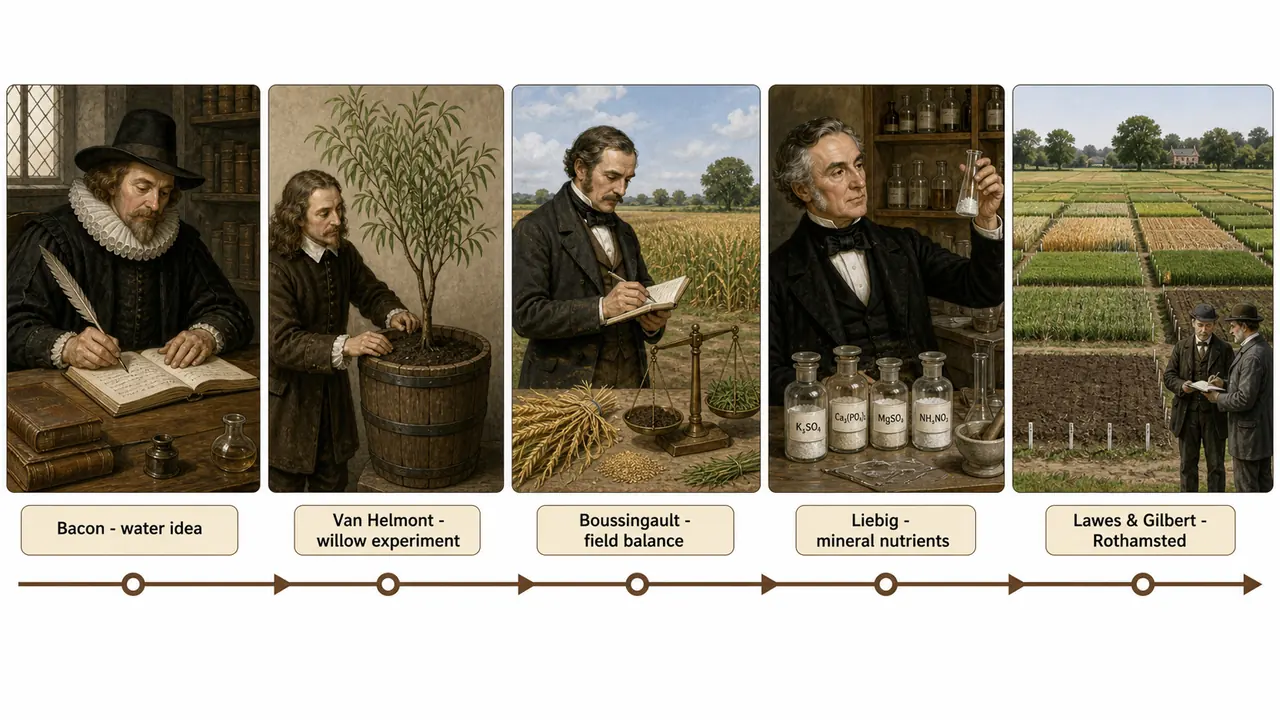
| Francis Bacon | 1591–1624 | Suggested water is the main plant nourishment; soil merely provides support |
| Van Helmont | 1577–1644 | Famous willow tree experiment — concluded water is the sole nutrient |
| Robert Boyle | 1627–1691 | Confirmed Van Helmont's findings |
| Arthur Young | 1741–1820 | Early comparative nutrient studies using pot experiments with barley |
| Priestley | 1800 | Established essentiality of O2 for plant growth |
| Boussingault | 1802–1882 | First field experiments with nutrient balance sheets — Father of Field Experiments |
| Justus von Liebig | 1835 | Proved mineral nutrients from soil are essential; Father of Agricultural Chemistry |
| Lawes & Gilbert | 1843 | Established permanent manurial experiments at Rothamsted, England |
Key findings of Lawes and Gilbert (12 years of trials):
- Crops require both P and K, but plant ash composition does not indicate required amounts
- Non-legume crops require external N — atmospheric ammonium is insufficient
- Soil fertility can be maintained for some years by chemical fertilizers alone
- Fallow benefit comes from increased available N compounds in soil
- Robert Warrington showed nitrification is a two-step biological process (NH3 to NO2- to NO3-)
TIP
Mnemonic for key scientists: "Bacon Van-Helmont Boyle Young Priestley Boussingault Liebig Lawes" — BVB YP BLL (think: "Big Visionary Brains Yielded Productive Brilliant Lasting Legacies")
Mineral Nutrition: Basic Concepts
- Mineral nutrient refers to an inorganic ion obtained from soil, required for plant growth
- The process of absorption, translocation, and assimilation of nutrients is called mineral nutrition
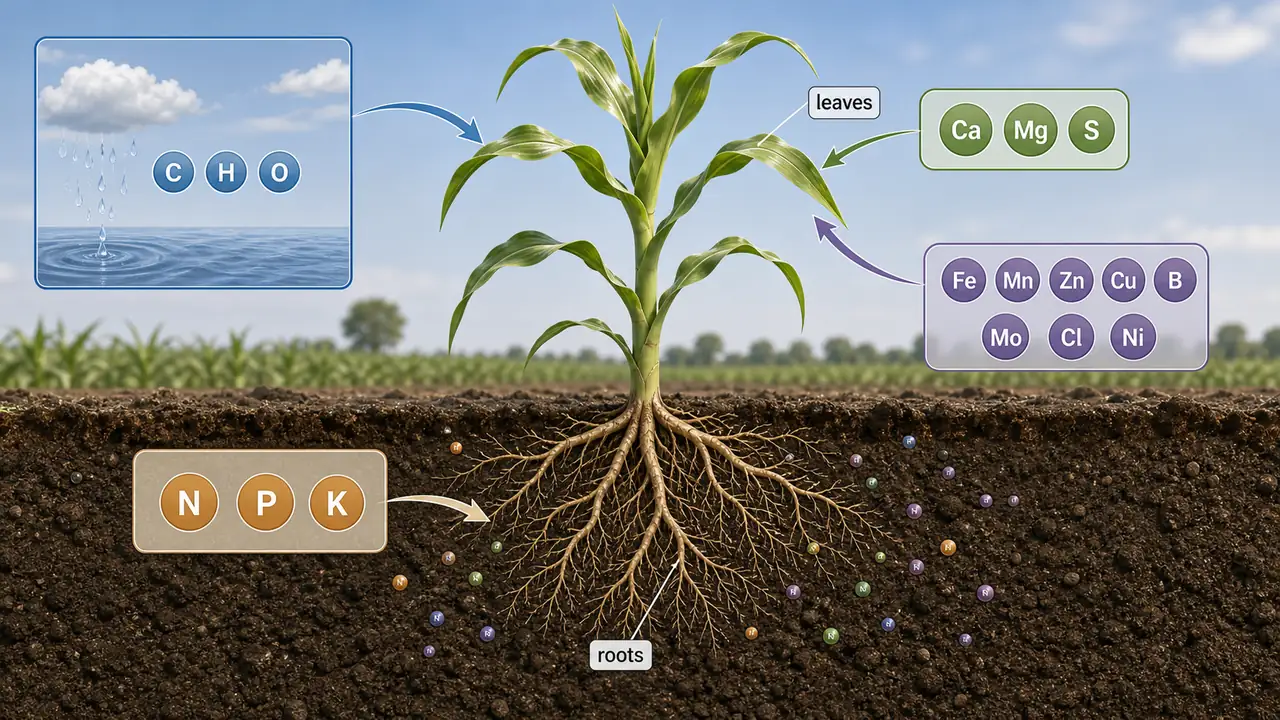
- C, H, and O are not minerals — they come from air and water. The remaining elements absorbed from soil are mineral elements
- Plant body contains about 30 elements (up to 60 elements in some cases)
- Mineral elements are mainly absorbed in ionic form and to some extent in non-ionic form
The 17 Essential Plant Nutrients
Arnon and Stout's Criteria for Essentiality (1939)
IMPORTANT
Three Criteria (Arnon & Stout, 1939; refined by Arnon, 1954):
- Plant must be unable to complete its life cycle without the element
- The function must not be replaceable by another element
- The element must be directly involved in plant nutrition/metabolism
- Originally 16 elements were considered essential. Nickel (Ni) was later added as the 17th essential element
- Exceptions to criterion 2: Mo can be partially substituted by V; Cl by Br; K by Rb; Ca by Sr
Complete List of 17 Essential Elements
| S.No. | Element | Symbol | Category |
|---|---|---|---|
| 1 | Carbon | C | Basic structural |
| 2 | Hydrogen | H | Basic structural |
| 3 | Oxygen | O | Basic structural |
| 4 | Nitrogen | N | Primary macronutrient |
| 5 | Phosphorus | P | Primary macronutrient |
| 6 | Potassium | K | Primary macronutrient |
| 7 | Calcium | Ca | Secondary macronutrient |
| 8 | Magnesium | Mg | Secondary macronutrient |
| 9 | Sulphur | S | Secondary macronutrient |
| 10 | Iron | Fe | Micronutrient |
| 11 | Manganese | Mn | Micronutrient |
| 12 | Copper | Cu | Micronutrient |
| 13 | Zinc | Zn | Micronutrient |
| 14 | Boron | B | Micronutrient |
| 15 | Molybdenum | Mo | Micronutrient |
| 16 | Chlorine | Cl | Micronutrient |
| 17 | Nickel | Ni | Micronutrient |
TIP
Mnemonic for 8 micronutrients: "Fe Mn Cu Zn B Mo Cl Ni" — "Funny Man Can Zip Bags More Clearly at Night"
Classification of Essential Elements
1. Based on Amount Required by Plant
| Category | Elements | Details |
|---|---|---|
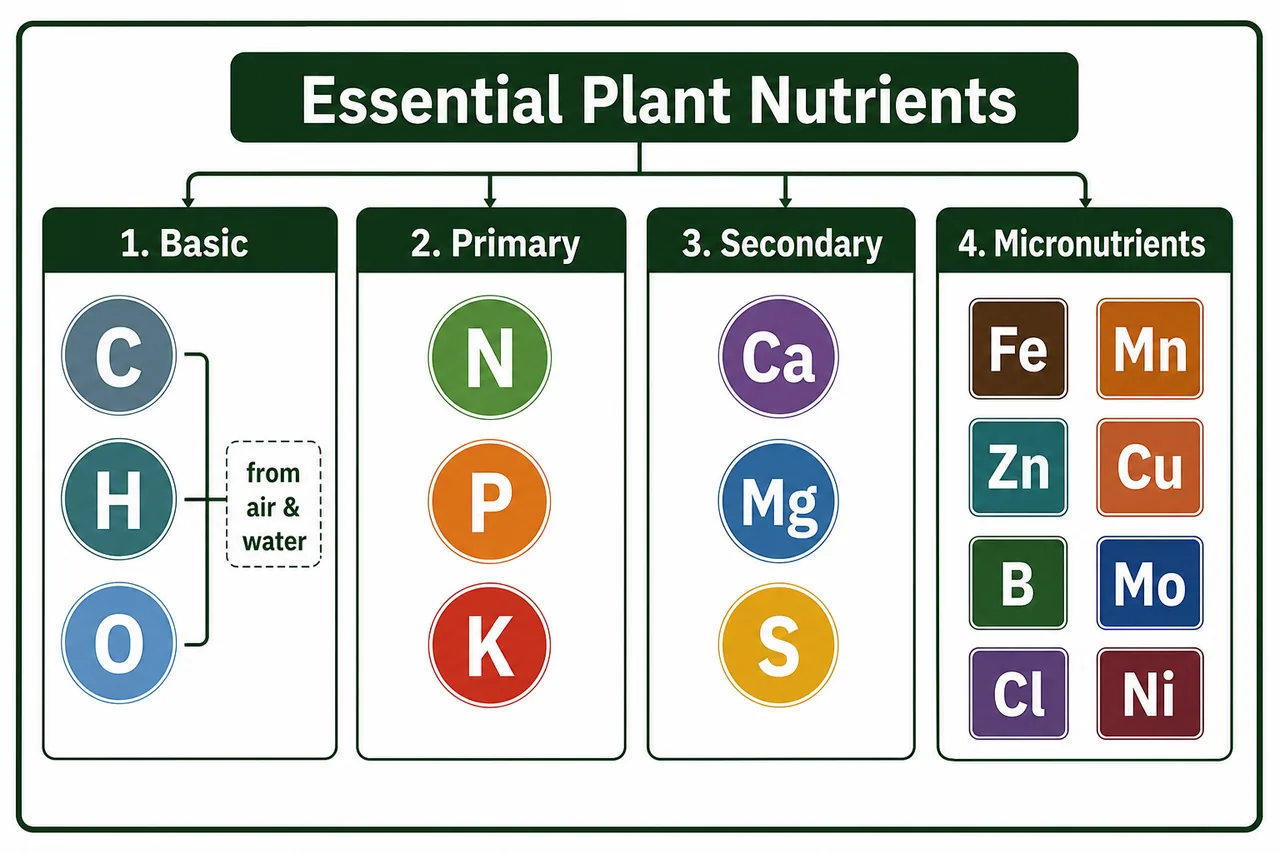
| Basic nutrients | C, H, O | 95% of total dry matter; C and O each 45%; from air and water |
| Primary/Major nutrients | N, P, K | Required in large quantities (>1 ppm); supplied through fertilizers |
| Secondary nutrients | Ca, Mg, S | Required in moderate amounts; often supplied indirectly with NPK fertilizers |
| Micronutrients Exams | Fe, Mn, Zn, Cu, B, Mo, Cl, Ni | Required in very small quantities (<1 ppm); also called trace elements, oligoelements, or spume elements |
Agricultural example: A rice crop removes about 20 kg N, 11 kg P2O5, and 30 kg K2O per tonne of grain produced — these are the primary nutrients. It needs only about 0.05 kg Zn per tonne — a micronutrient.
TIP
A Complete Fertilizer contains all three primary macronutrients: N, P, and K (e.g., NPK 10:26:26). An incomplete fertilizer supplies only one or two (e.g., Urea = 46-0-0, only N). A Top Dressing is fertilizer applied after crop emergence — for example, urea top-dressing in wheat at the CRI stage (Crown Root Initiation).

2. Based on Role in Plant System (Truog, 1954)
| Group | Elements | Role |
|---|---|---|
| Structural | C, H, O (95%) | Backbone of all organic molecules |
| Accessory structural | N, P, S | Incorporated into proteins, nucleic acids, key molecules |
| Regulators & Carriers | K (stomatal), Ca, Mg (cell wall) | Regulate physiological processes, transport substances |
| Catalysts & Activators | Fe, Mn, Zn, Cu, B, Mo, Cl | Function as enzyme cofactors |
3. Based on Biochemical Behaviour and Physiological Functions
| Group | Elements | Biochemical Functions |
|---|---|---|
| Group I | C, H, O, Ca | Major constituents of carbohydrates, proteins, fats. Provide energy via oxidative breakdown |
| Group II | N, P, S | Components of amino acids, proteins, enzymes, nucleic acids, ATP and ADP |
| Group III | K, Ca, Mg | Synthesis and translocation of carbohydrates, ionic charge balance, enzyme activation |
| Group IV | Fe, Mn, Zn, Cu, B, Mo, Cl | Oxidation-reduction reactions, chlorophyll synthesis, organic combinations |
4. Metals and Non-Metals
| Type | Elements |
|---|---|
| Non-Metals | C, H, O, N, P, S, Cl, B |
| Metals | K, Ca, Mg, Fe, Mn, Zn, Cu, Mo, Ni |
5. Cation / Anion Classification
| Category | Nutrients |
|---|---|
| Cation nutrients | Ca, Mg, K, Fe, Mn, Cu, Zn, Ni, N (as NH4+) |
| Anion nutrients | P, B, Cl, S, Mo, N (as NO3-) |
| Both forms | N — absorbed as both NH4+ and NO3- |
| Energy exchange | H and O |
Beneficial Elements
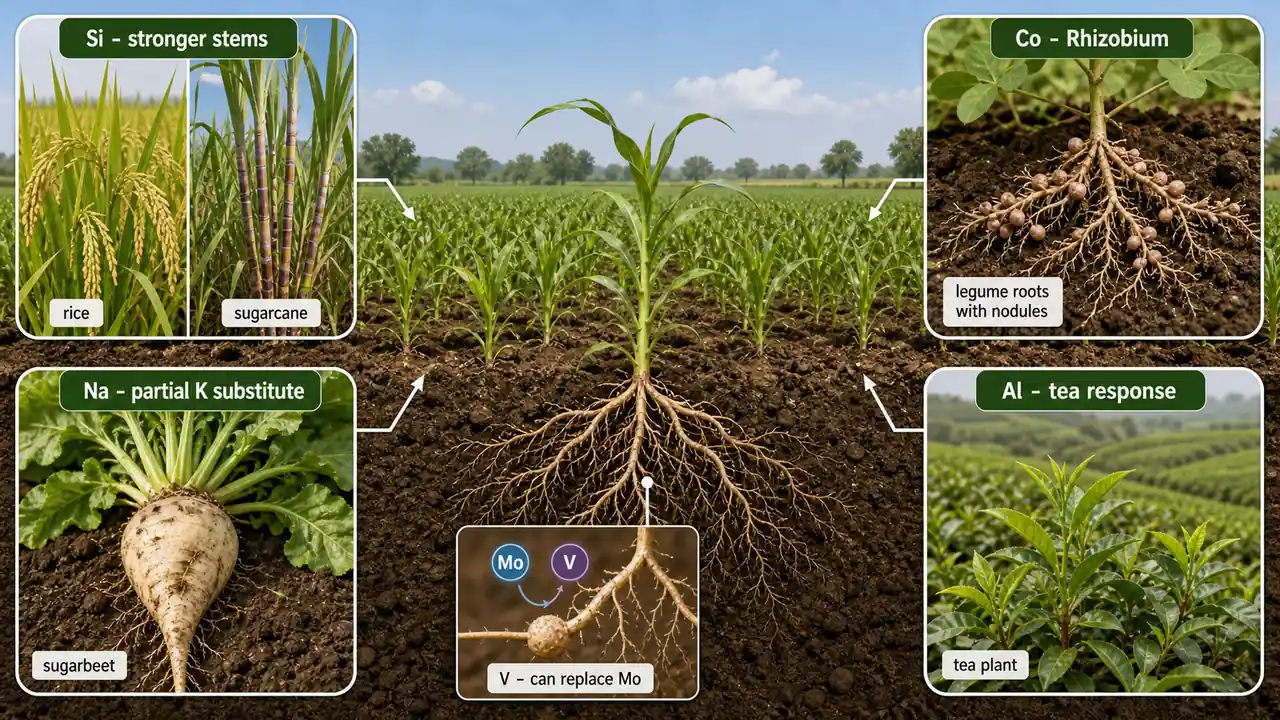
| Element | Symbol | Agricultural Significance |
|---|---|---|
| Silicon | Si | Strengthens cell walls in rice and sugarcane; increases disease and pest resistance |
| Sodium | Na | Partially substitutes K in halophytes; essential for C4/CAM plants (e.g., sugarbeet, turnip) |
| Cobalt | Co | Essential for N2 fixation by Rhizobium in legumes (component of vitamin B12) |
| Vanadium | V | Can partially replace Mo in N2 fixation |
| Selenium | Se | Antioxidant role; improves quality of forage crops for livestock |
| Aluminium | Al | Stimulates growth of tea plant at low concentrations |
Functional Nutrients
- D.J. Nicholas coined the term "functional or metabolic nutrient"
- Summation of essential and beneficial nutrients
- 21 functional nutrients = 17 Essential + 4 Beneficial (Na, V, Co, Si)
Essentiality of Elements — Who Discovered What
| Nutrient | Discovered by | Year |
|---|---|---|
| Carbon | Priestly | 1800 |
| Nitrogen | Theodore De Saussure | 1804 |
| Ca, Mg, K, S | Carl Sprengel | 1839 |
| Phosphorus | Von Liebig | 1844 |
| Iron (Fe) | E. Greiss | 1844 |
| Manganese (Mn) | J.S. Hargue | 1922 |
| Zinc (Zn) | Sommer and Lipman | 1926 |
| Copper (Cu) | Sommer, Lipman and Mc Kenny | 1931 |
| Molybdenum (Mo) | Arnon and Stout | 1939 |
| Sodium (Na) | Brownell and wood | 1957 |
| Cobalt (Co) | Ahamed and Evans | 1959 |
| Boron (B) | Warrington | 1923 |
| Chlorine (Cl) | Broyer | 1954 |
| Nickel (Ni) | Brown et.al. | 1987 |
Forms of Nutrient Uptake by Plants
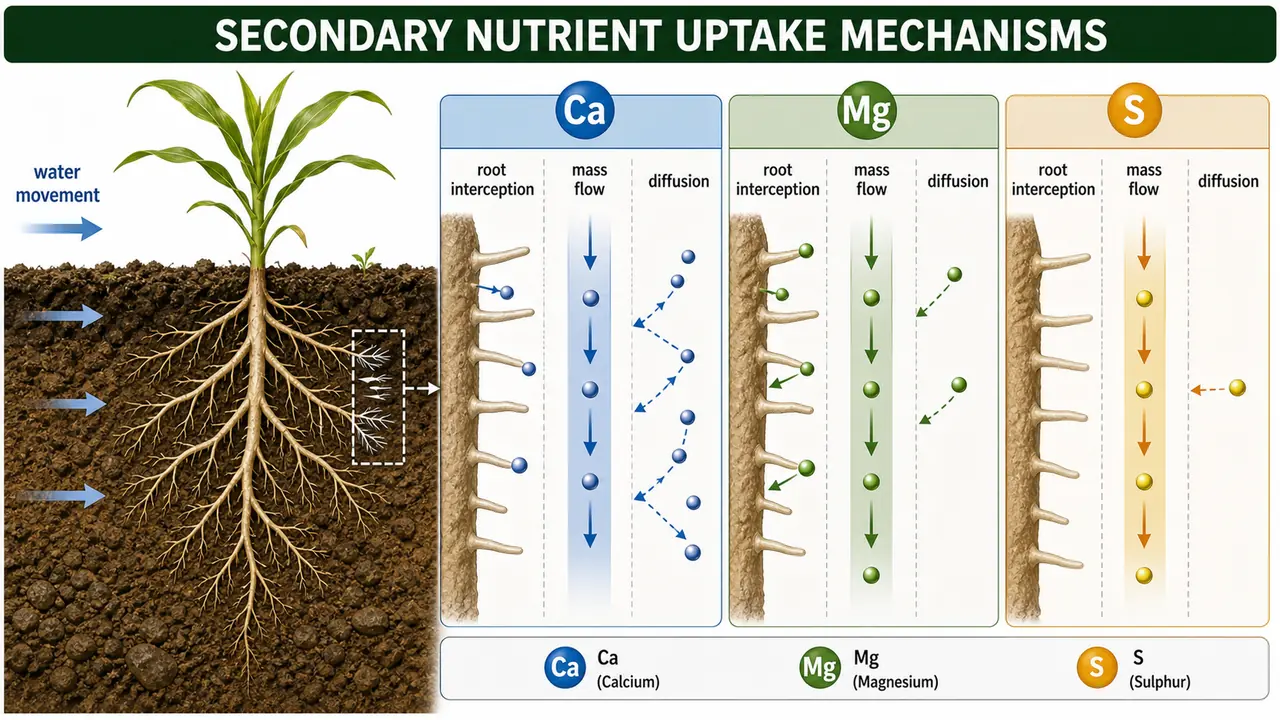
| Element | Form of Uptake | Agricultural Notes |
|---|---|---|
| Nitrogen | NH4+, NO3- | NH4+ preferred by rice, sugarcane, tea (waterlogged soils); NO3- by most other crops |
| Phosphorus | H2PO4-, HPO42-, PO43- | H2PO4- greatest absorption at pH 6.5 or less |
| Potassium | K+ | Simple cation |
| Calcium | Ca2+ | Divalent cation |
| Magnesium | Mg2+ | Divalent cation |
| Sulphur | SO42-, SO32- | Mainly as sulphate anion |
| Iron | Fe2+, Fe3+ | Both ferrous and ferric forms |
| Manganese | Mn2+, Mn4+ | Divalent form most available |
| Boron | BO3-, H3BO3, H2BO3- | Both ionic and molecular forms |
| Zinc | Zn2+ | Divalent cation |
| Copper | Cu2+ | Divalent cation |
| Chlorine | Cl- | Simple anion |
| Molybdenum | MoO42- | Molybdate anion |
| Nickel | Ni2+ | Divalent cation |
| Element | Ionic Form | Non Ionic Form | Source |
|---|---|---|---|
| C | CO₃²⁻, HCO₃⁻ | CO₂ (Mostly through leaves) | Air (Mostly) |
| H | Molecular | H₂O Form | Air and Water |
| O | Molecular | H₂O Form | Air and Water |
| N | NO₃⁻ (Mostly), NH₄⁺ | Organic CO(NH₂) amide | Part of N from air but mostly soil |
| P | H₂PO₄⁻ (Primary), HPO₄²⁻ (Secondary) | Nucleic acid, Phytin | Soil |
| K | K⁺ | - | Soil |
| Ca | Ca²⁺ | - | Soil |
| Mg | Mg²⁺ | - | Soil |
| S | SO₄²⁻ (Sulphate) | SO₂ from air | Soil and air |
| Fe | Fe²⁺ (Ferrous) – Reduced, Fe³⁺ (Ferric) – Oxidized | FeSO₄ with EDTA | Soil |
| Mn | Mn²⁺ (Manganic), Mn⁴⁺ (Manganic) | MnSO₄ with EDTA | Soil |
| Cu | Cu²⁺ (Cuprous) | CuSO₄ with EDTA | Soil |
| B | BO₃⁻ (Borate), H₂BO₃⁻, H₃BO₃ (Boric Acid) | - | Soil |
| Zn | Zn²⁺ | ZnSO₄ with EDTA | Soil |
| Mo | MoO₄⁻ (Molybdate) | - | Soil |
| Cl | Cl⁻ | - | Soil |
| Ni | Ni²⁺ | - | Soil |
| Na | Na⁺ | - | Soil |
| Si | Si(OH)₄, Mon Silic Acid | - | Soil |
Nutrient Mobility
IMPORTANT
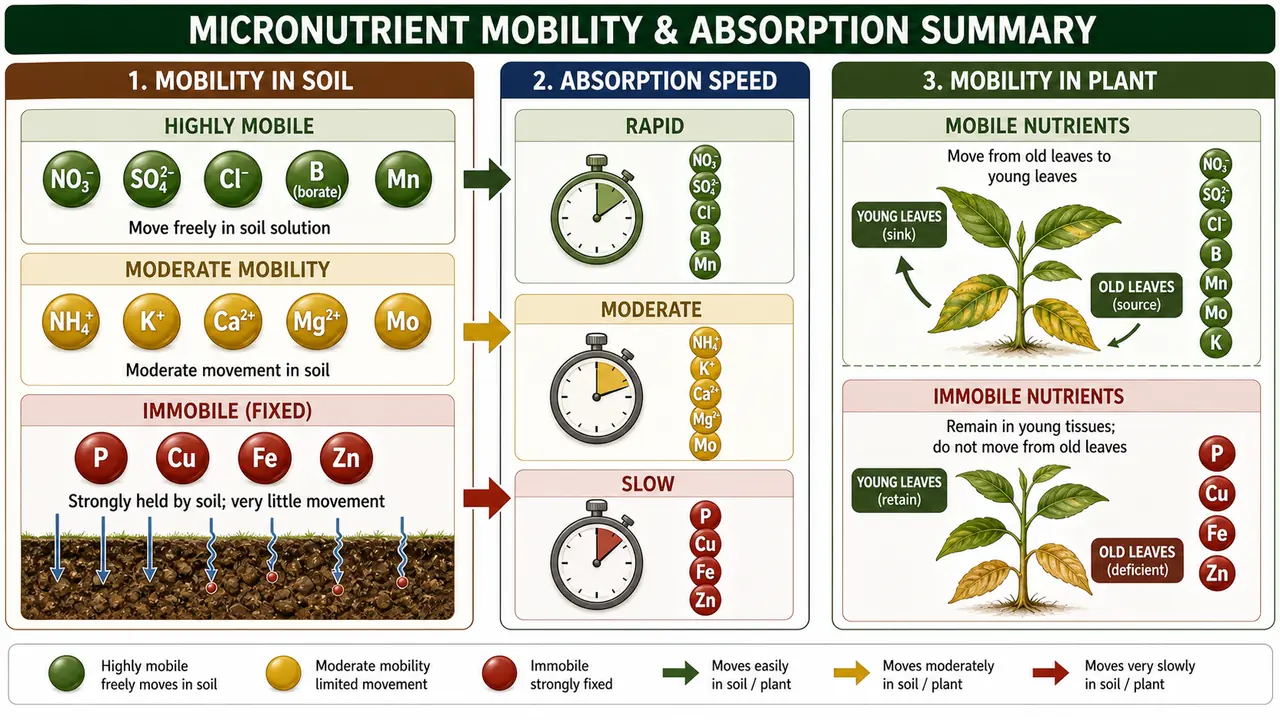
Mobile nutrients show deficiency on older/lower leaves (translocated to young tissues). Immobile nutrients show deficiency on younger/upper leaves and growing points (cannot be redistributed).
| Mobility | Nutrients | Deficiency Appears On |
|---|---|---|
| Mobile | N, P, K, Mg, Cl | Older/lower leaves |
| Partly mobile | Mn, Zn, Mo | Variable |
| Immobile | Ca, S, B, Fe, Cu | Younger/upper leaves and growing tips |
Agricultural example: If a rice farmer sees yellowing on lower leaves, suspect N or K deficiency (mobile nutrients). If young leaves of cauliflower show distortion, suspect Ca or B deficiency (immobile nutrients).
Mobility in the Soil
| Mobility | Nutrients | Implication for Farmers |
|---|---|---|
| Highly mobile | NO3-, Cl-, SO42- | Prone to leaching; use split applications |
| Moderately mobile | K+, Mg2+, Ca2+, NH4+ | Held on CEC sites; reach roots via mass flow and diffusion |
| Immobile (fixed) | H2PO4-, Zn2+, Fe2+, Cu2+, Mn2+, B, Mo | Move only by diffusion; placement near roots is critical |
- Nutrient mobility concepts were given by Bray
- Mobile nutrients reach roots primarily by mass flow; immobile nutrients depend on diffusion
Nutrient Concentration Ranges in Plants
Deficient Range
- Concentration so low that yield is severely reduced and visible symptoms appear
- Extreme deficiencies can cause plant death
- Steenberg effect: When severe deficiency is corrected, rapid growth causes a temporary decrease in nutrient concentration due to dilution — plant grows faster than it can accumulate the nutrient
Critical Range
- The concentration below which a positive yield response to added nutrient occurs
- Represents the transition between deficiency and sufficiency

Sufficient Range (Luxury Consumption)
- Added nutrients will not increase yield but may increase nutrient concentration
- Luxury consumption = nutrient absorption that does not influence yield
Toxic Range
- Concentration high enough to reduce growth and yield
- Example: Excess P induces Zn deficiency; excess K interferes with Mg uptake
Hidden Hunger
- Plant shows no obvious symptoms yet nutrient content is insufficient for top profitable yield
- The most insidious condition — farmer sees no visual cues but crop is underperforming
- Sure rate = a fertilizer dose slightly above the critical limit as insurance against yield loss

Agricultural example: A soybean crop may look green and healthy but have borderline zinc levels. Without soil testing, the farmer misses the 10-15% yield gain that zinc application would provide. This is hidden hunger.
Deficiency Symptoms and Diagnostic Principles


IMPORTANT
Diagnostic rule: Always check whether symptoms appear on old leaves (mobile nutrient deficiency) or young leaves (immobile nutrient deficiency) first. This single observation narrows the diagnosis dramatically.
Indicator Plants for Nutrient Deficiency Exams
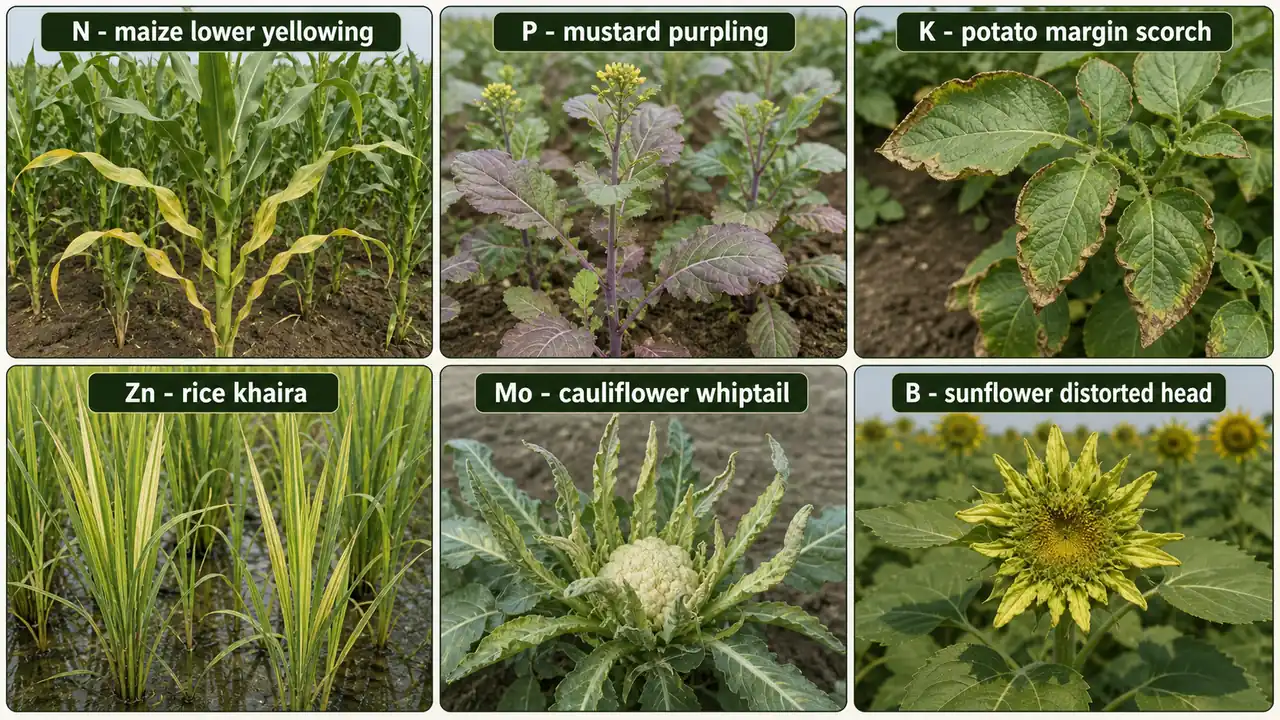
| Nutrient Deficiency | Indicator Plants |
|---|---|
| Nitrogen (N) | Maize, Sorghum, Legumes, Cauliflower, Cabbage |
| Phosphorus (P) | Rapeseed, Mustard, Tomato, Maize, Lucerne, Duranta |
| Potassium (K) | Maize, Lucerne, Cotton, Potato, Banana, Cucurbits |
| Sulphur (S) | Lucerne, Clover, Cereals, Tea |
| Zinc (Zn) | Rice, Wheat, Sorghum, Maize, Tomato, Potato, Citrus |
| Copper (Cu) | Wheat, Citrus Exams |
| Iron (Fe) | Potato, Oat, Cauliflower, Sugarbeet, Sorghum, Ixora |
| Boron (B) | Lucerne, Coconut, Guava, Sunflower, Sugarbeet |
| Manganese (Mn) | Sugarbeet, Potato, Oat, Citrus |
| Molybdenum (Mo) | Cauliflower, Cabbage Exams, Sugarbeet, Lucerne |
| Calcium (Ca) | Cauliflower, Cabbage |
| Sodium (Na) | Sugarbeet, Turnip |
| Magnesium (Mg) | Potato |
| Silicon (Si) | Rice, Sugarcane |
Nutrient Interactions: Antagonism and Synergism
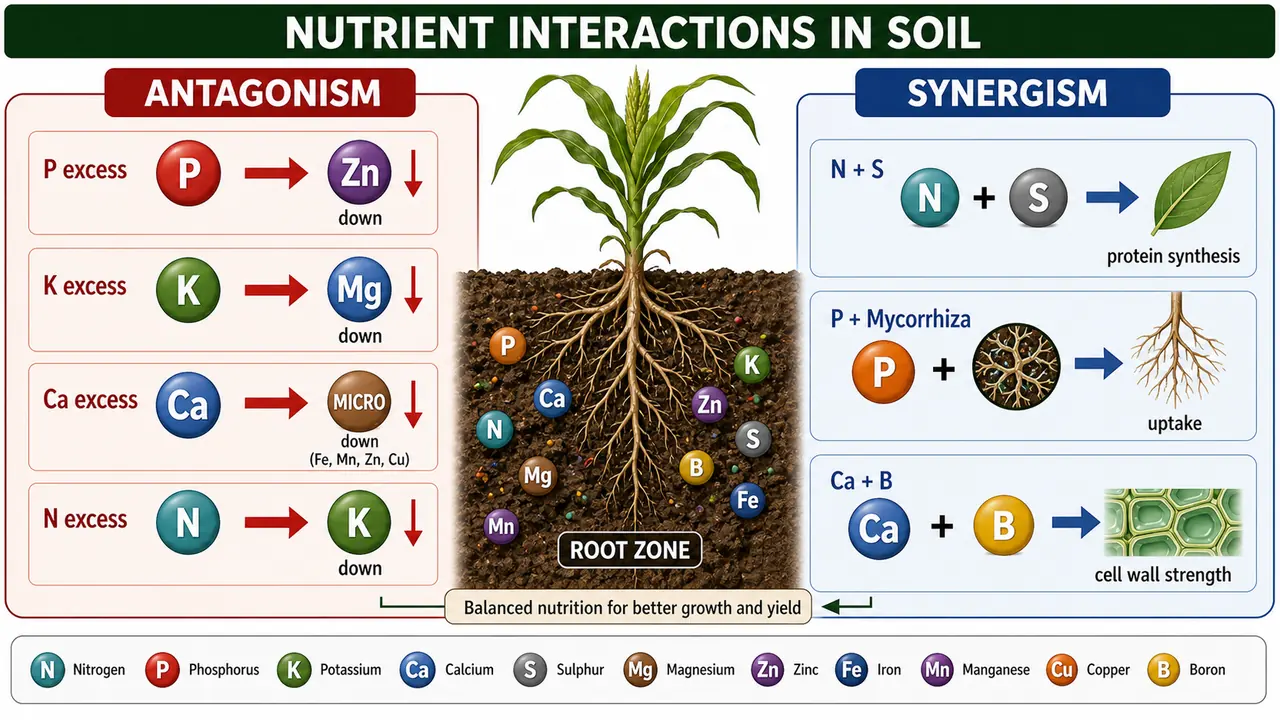
IMPORTANT
Antagonism: Excess of one nutrient reduces uptake of another. Synergism: Presence of one nutrient enhances the uptake of another.
Antagonistic Interactions
| Excess Nutrient | Depresses Uptake of | Agricultural Example |
|---|---|---|
| N (excess) | K | Lush vegetative growth in rice dilutes K, causing lodging |
| P (excess) | Zn, Fe, Cu | Heavy DAP application in wheat induces Zn deficiency |
| K (excess) | Mg, Ca | Over-application of MOP in banana suppresses Mg uptake |
| Ca (excess) | K, Mg, Fe, Mn, Zn, B | Calcareous soils of Indo-Gangetic plains show widespread micronutrient deficiency |
| Fe (excess) | Mn | Waterlogged rice soils — Fe toxicity with Mn depression |
| Zn (excess) | Fe, Cu | Excessive zinc sulphate application can induce Fe chlorosis |
| S (excess) | Mo, Se | Acid-forming S fertilizers reduce Mo availability |
TIP
Most important for exams: P-Zn antagonism (very common in Indian soils), K-Mg antagonism, and Ca-induced micronutrient deficiency in calcareous soils.
Synergistic Interactions
| Nutrient A | Enhances | Agricultural Example |
|---|---|---|
| N | K uptake (at optimal levels) | Balanced N-K nutrition in sugarcane improves juice quality |
| P | Mo | P enhances Mo availability in acid soils of northeast India |
| K | Fe | K improves Fe translocation in groundnut |
| Mo | N (in legumes) | Mo is cofactor for nitrogenase enzyme in soybean nodules |
| S | N | Both needed for amino acid synthesis in mustard — improves oil quality |
| Ca | B | Together strengthen cell wall and pollen tube formation in apple |
Nutrient Requirement of Major Crops
TIP
This table shows kg of N, P2O5, and K2O needed to produce 100 kg of economic produce. Useful for calculating fertilizer doses.
| Crop | N (kg) | P2O5 (kg) | K2O (kg) |
|---|---|---|---|
| Rice | 2.01 | 1.12 | 3.00 |
| Wheat | 2.45 | 0.86 | 3.28 |
| Maize | 2.63 | 1.39 | 3.58 |
| Sorghum | 2.24 | 1.33 | 3.40 |
| Finger millet | 2.98 | 1.13 | 3.90 |
| Chickpea | 4.63 | 0.84 | 4.96 |
| Soybean | 6.68 | 1.77 | 4.44 |
| Groundnut | 5.81 | 1.96 | 3.01 |
| Potato | 0.39 | 0.14 | 0.49 |
| Cotton | 4.45 | 2.83 | 7.47 |
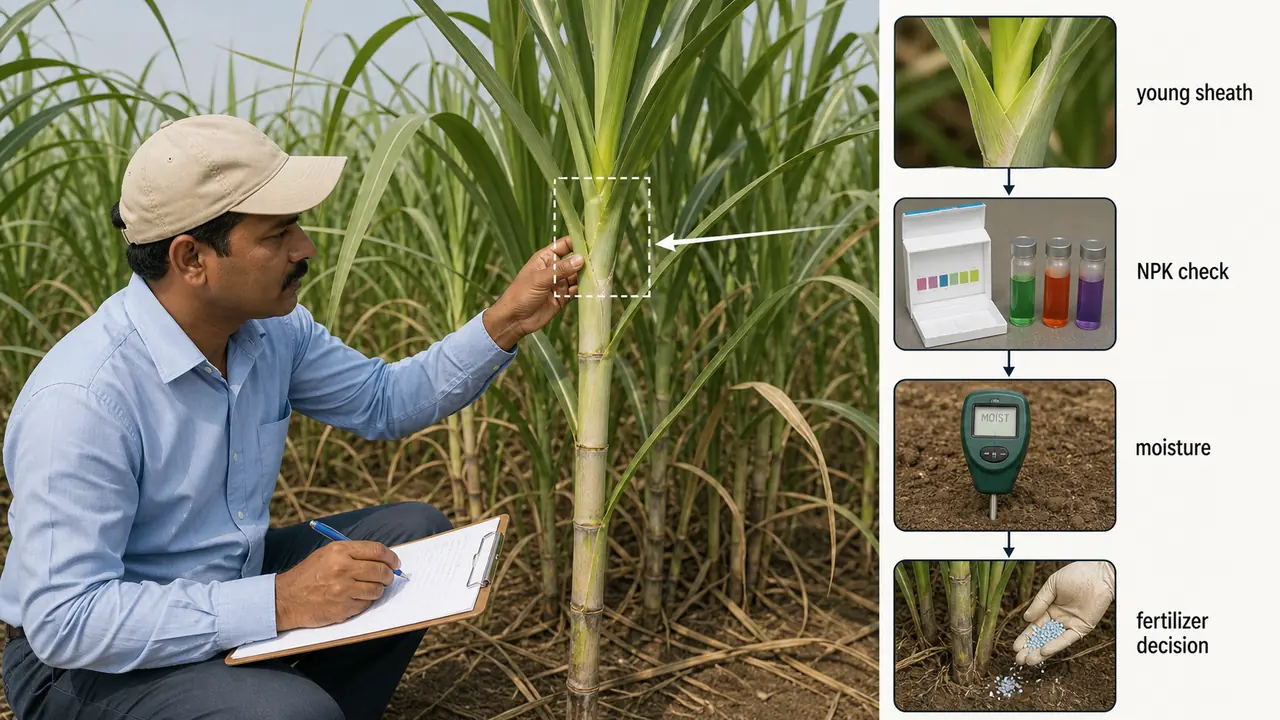
Crop Logging
Available Nutrient Analysis of Soil
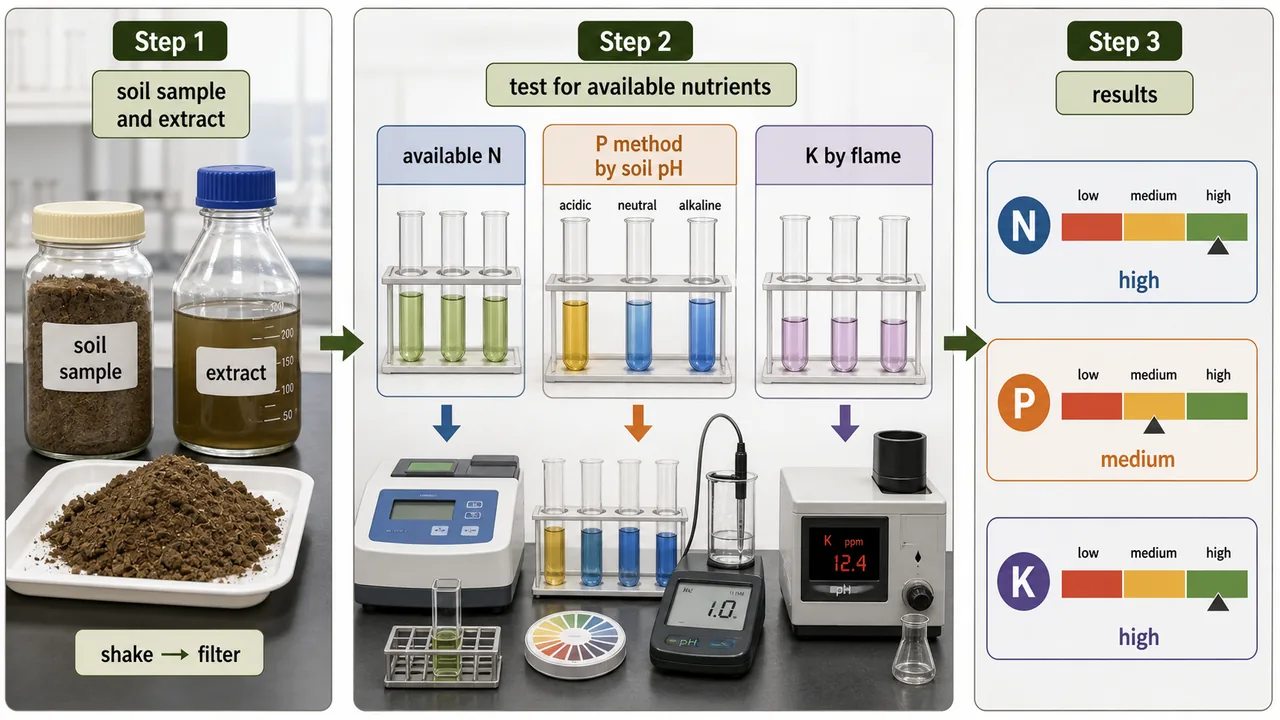
- Available nutrients are extracted using specific extracting reagents, then quantified by colorimetric method
- Based on analysis, soil fertility is classified into low, medium, and high
| Nutrient Determination | Method / Extractant | Key Use or Note |
|---|---|---|
| Total nitrogen in soil | Kjeldahl process | Measures total soil nitrogen |
| Available nitrogen | Alkaline permanganate method | Common exam method for available N |
| Phosphorus in acidic soil | Bray No. 1 method | Used when soil pH is about 5.5 or less |
| Phosphorus in neutral and alkaline soil | Olsen's method | Uses 0.5 N sodium bicarbonate at about pH 8.5 |
| Potassium and sodium | Flame photometer | Used after extraction for K and Na reading |
| Sulphate sulphur (SO4) | Turbidimetric method | Standard sulphate-S determination |
| Organic carbon (OC) | Walkley and Black chromic acid wet oxidation | Indicator used: diphenylamine |
| Available potassium (potash) | 1 N neutral ammonium acetate extract | Commonly paired with flame photometer reading |

| Nutrient | Low | Medium | High |
|---|---|---|---|
| Nitrogen | < 250 kg/ha | 250-500 kg/ha | > 500 kg/ha |
| Phosphorus | < 20 kg/ha | 20-50 kg/ha | > 50 kg/ha |
| Potassium | < 125 kg/ha | 125-300 kg/ha | > 300 kg/ha |
| Zinc and Copper | < 0.5 ppm | 0.5-1.0 ppm | > 1.0 ppm |
| Manganese | < 1 ppm | 1-3 ppm | > 3.0 ppm |
| Boron | < 0.33 ppm | 0.33-0.67 ppm | > 0.67 ppm |
| Organic Carbon | < 0.5% | 0.5-0.75% | > 0.75% |
TIP
Quick revision mnemonics:
- Primary macronutrients: "Never Panic about Knowledge" (N, P, K)
- Secondary macronutrients: "Can Mg and S be secondary?" (Ca, Mg, S)
- Micronutrients: "Funny Man Can Zip Bags More Clearly at Night" (Fe, Mn, Cu, Zn, B, Mo, Cl, Ni)
- Immobile in plant: "Can Some Boys Feel Curious?" (Ca, S, B, Fe, Cu) — deficiency on young leaves
- Mobile in plant: "Never Put Ketchup on Mg Clothes" (N, P, K, Mg, Cl) — deficiency on old leaves
References
- Tisdale, S.L., Nelson, W.L., Beaton, J.D., Havlin, J.L. 1997. Soil Fertility and Fertilizers. 5th ed. Prentice Hall of India, New Delhi.
- Singh, S.S. 1995. Soil Fertility and Nutrient Management. Kalyani Publishers, Ludhiana.
- Maliwal, G.L. and Somani, L.L. 2011. Soil Technology. Agrotech.
- IARI Toppers Soil Science Part-9 (6th Edition 2025).
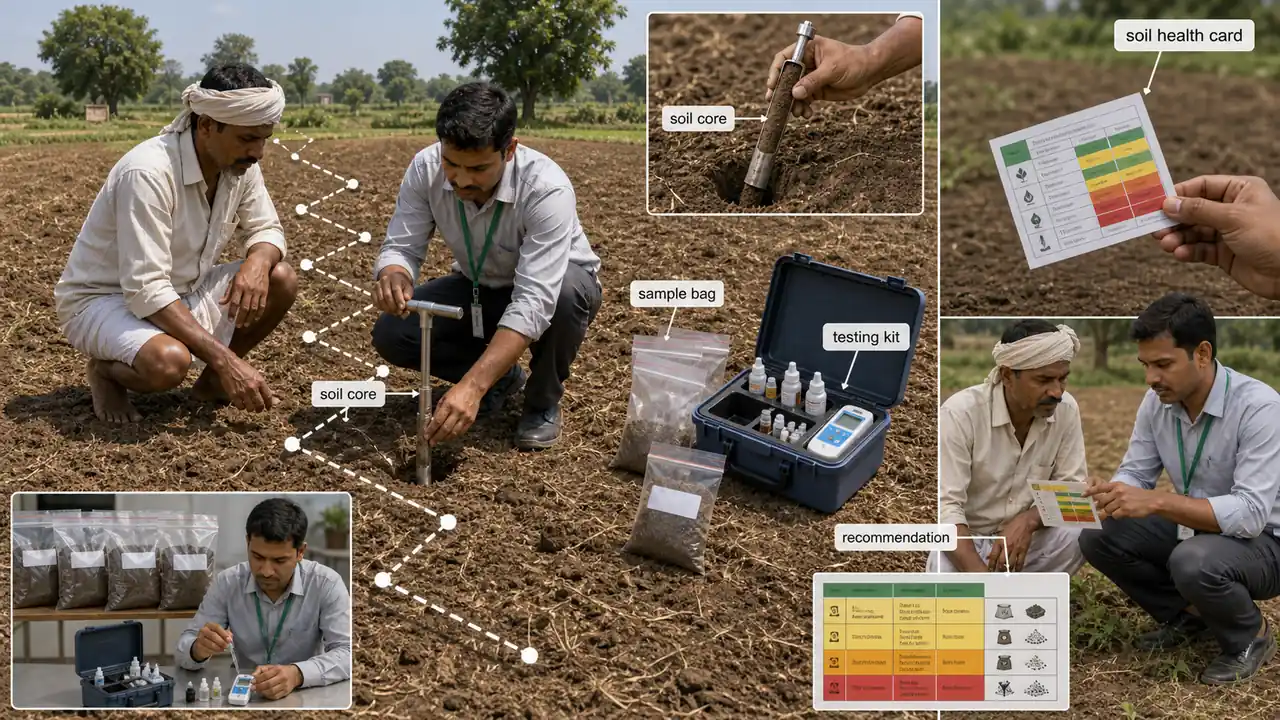
Field Deficiency Diagnosis: What to Look For
| Symptom Location | What You See | Likely Deficiency | Why There | Quick Fix |
|---|---|---|---|---|
| Older (lower) leaves first | General yellowing (chlorosis) | Nitrogen | Mobile nutrient — plant moves N from old leaves to young | Urea foliar spray 2%; top-dress urea |
| Older leaves | Purple/reddish discolouration | Phosphorus | Mobile — translocated to growing points | DAP/SSP basal application |
| Older leaf margins | Scorching/browning of margins ("firing") | Potassium | Mobile — moves to young leaves | MOP (Muriate of Potash) |
| Young (upper) leaves first | Interveinal chlorosis (veins green, lamina yellow) | Iron or Manganese | Immobile — can't move from old to new leaves | FeSO₄ 0.5% foliar spray |
| Young leaves | Distorted, hooked, small new leaves | Calcium or Boron | Immobile — growing points starved | Borax 0.2% spray; gypsum application |
| Young leaves | White/light yellow (whiptail in cauliflower) | Molybdenum | Immobile | Ammonium molybdate 0.1% spray |
| Uniform across plant | Pale green, stunted | Sulphur | Semi-mobile | Gypsum or ammonium sulphate |
| Young leaves | Khaira disease (rice) — rusty brown spots | Zinc | Immobile | ZnSO₄ 25 kg/ha basal; 0.5% foliar |
The golden rule of deficiency diagnosis: If symptoms appear on older leaves first → the nutrient is mobile (N, P, K, Mg). If symptoms appear on young leaves first → the nutrient is immobile (Ca, Fe, Mn, B, Cu, Zn, Mo). This single principle helps you diagnose most deficiencies in the field.
Khaira disease of rice (zinc deficiency) is the most commonly tested deficiency in exams. Symptoms: rusty brown spots on lower leaves → leaves dry up. Treatment: ZnSO₄ 25 kg/ha at transplanting + 0.5% foliar spray.
Summary Cheat Sheet
| Concept / Topic | Key Details |
|---|---|
| Liebig's Law of the Minimum | Yield limited by the least available nutrient; proposed 1840, stated 1862 |
| Barrel analogy | Shortest stave = most deficient factor = yield ceiling |
| Shelford (1913) | Law of Tolerance — both deficiency and excess limit growth |
| Soil Fertility vs Productivity | Fertile ≠ productive; productive soil must be fertile |
| Arnon & Stout (1939) | 3 criteria for essentiality: life cycle, non-replaceable, directly involved |
| 17 essential elements | C, H, O + N, P, K + Ca, Mg, S + Fe, Mn, Cu, Zn, B, Mo, Cl, Ni (17th) |
| C, H, O | 95% of dry matter; from air and water |
| 8 micronutrients | Fe, Mn, Cu, Zn, B, Mo, Cl, Ni |
| Beneficial elements | Si, Na, Co, V, Se, Al — not essential for all plants |
| 21 functional nutrients | 17 essential + 4 beneficial (Na, V, Co, Si); coined by D.J. Nicholas |
| Boussingault | Father of Field Experiments |
| Liebig | Father of Agricultural Chemistry |
| Lawes & Gilbert (1843) | Permanent manurial experiments at Rothamsted, England |
| Mobile in plant | N, P, K, Mg, Cl → deficiency on older leaves |
| Immobile in plant | Ca, S, B, Fe, Cu → deficiency on younger leaves/tips |
| Partly mobile | Mn, Zn, Mo |
| Nutrient mobility concepts | Given by Bray |
| Hidden hunger | No visible symptoms but yield is sub-optimal |
| Steenberg effect | Rapid growth after correcting deficiency → temporary dilution of nutrient |
| Luxury consumption | Nutrient absorption beyond need with no yield increase |
| P-Zn antagonism | Most common antagonistic interaction in Indian soils |
| K-Mg antagonism | Excess K suppresses Mg → risk of Grass Tetany |
| Crop logging | Graphic record of crop progress; first used for sugarcane in Hawaii |
| Si beneficial for | Rice and sugarcane (strengthens cell walls) |
| Co beneficial for | Legumes (component of vitamin B₁₂ for Rhizobium) |
| Complete Fertilizer | Contains all 3 primary nutrients: N, P, K (e.g., NPK 10:26:26) |
| Top Dressing | Fertilizer applied after crop emergence (e.g., urea at CRI stage in wheat) |
| Na beneficial for | Sugarbeet, turnip (C4/CAM plants) |
| Basic | C, H, O; Exam tip: ~95% |
| Primary macro | N, P, K; Exam tip: 0.1–5% |
| Secondary macro | Ca, Mg, S; Exam tip: 0.1–1% |
| Functional (total) | 21 elements; Exam tip: — |