🧪 Fertilizer Policy, ONOF & Soil Health Initiatives
One Nation One Fertiliser (PMBJP), Mridaparikshak minilab, fertilizer statistics, NPK ratio, import dependency, NBS scheme, and budget allocations
The previous lesson covered the Soil Health Card scheme — how farmers get soil-specific nutrient recommendations. This lesson covers the policy side — how the government ensures fertilizer availability, affordability, and balanced use across India.
One Nation One Fertiliser (ONOF) / PMBJP
The One Nation One Fertiliser (ONOF) scheme was launched in August 2022 under the Pradhanmantri Bhartiya Janurvarak Pariyojana (PMBJP).
Under this scheme, all subsidized fertilizers are sold under the single "Bharat" brand across India, ensuring uniform branding nationwide.
Key Features
| Feature | Detail |
|---|---|
| Launch | August 2022 |
| Full form | Pradhanmantri Bhartiya Janurvarak Pariyojana (PMBJP) |
| Brand name | "Bharat" — single brand for all subsidized fertilizers |
| Fertilizers covered | Urea, DAP, MOP, and NPK complexes |
| Bag labelling | Bharat logo on 2/3rd of bag; company name/logo limited to 1/3rd |
| Purpose | Reduce brand-driven demand distortion; ensure uniform availability |
Why ONOF Matters
Before ONOF, popular brands like "IFFCO DAP" or "Coromandel Gromor" caused regional hoarding and shortages — farmers would reject equally good fertilizers from less popular brands. By mandating the Bharat brand, ONOF ensures any subsidized fertilizer is accepted anywhere in India.
Pro Content Locked
Upgrade to Pro to access this lesson and all other premium content.
₹99 charged monthly · Cancel anytime
- All Agriculture & Banking Courses
- AI Lesson Questions (100/day)
- AI Doubt Solver (50/day)
- Glows & Grows Feedback (30/day)
- AI Section Quiz (20/day)
- 22-Language Translation (100/day)
- Recall Questions (20/day)
- AI Quiz (15/day)
- AI Quiz Paper Analysis (100/day)
- AI Step-by-Step Explanations (100/day)
- Spaced Repetition Recall (FSRS)
- AI Tutor
- Immersive Text Questions
- Audio Lessons — Hindi & English
- Mock Tests & Previous Year Papers
- Summary & Mind Maps
- XP, Levels, Leaderboard & Badges
- Generate New Classrooms
- Voice AI Teacher (AgriDots Live)
- AI Revision Assistant
- Knowledge Gap Analysis
- Interactive Revision (LangGraph)
🔒 Secure via Razorpay · Cancel anytime · No hidden fees
The previous lesson covered the Soil Health Card scheme — how farmers get soil-specific nutrient recommendations. This lesson covers the policy side — how the government ensures fertilizer availability, affordability, and balanced use across India.
One Nation One Fertiliser (ONOF) / PMBJP
The One Nation One Fertiliser (ONOF) scheme was launched in August 2022 under the Pradhanmantri Bhartiya Janurvarak Pariyojana (PMBJP).
Under this scheme, all subsidized fertilizers are sold under the single "Bharat" brand across India, ensuring uniform branding nationwide.
Key Features
| Feature | Detail |
|---|---|
| Launch | August 2022 |
| Full form | Pradhanmantri Bhartiya Janurvarak Pariyojana (PMBJP) |
| Brand name | "Bharat" — single brand for all subsidized fertilizers |
| Fertilizers covered | Urea, DAP, MOP, and NPK complexes |
| Bag labelling | Bharat logo on 2/3rd of bag; company name/logo limited to 1/3rd |
| Purpose | Reduce brand-driven demand distortion; ensure uniform availability |
Why ONOF Matters
Before ONOF, popular brands like "IFFCO DAP" or "Coromandel Gromor" caused regional hoarding and shortages — farmers would reject equally good fertilizers from less popular brands. By mandating the Bharat brand, ONOF ensures any subsidized fertilizer is accepted anywhere in India.
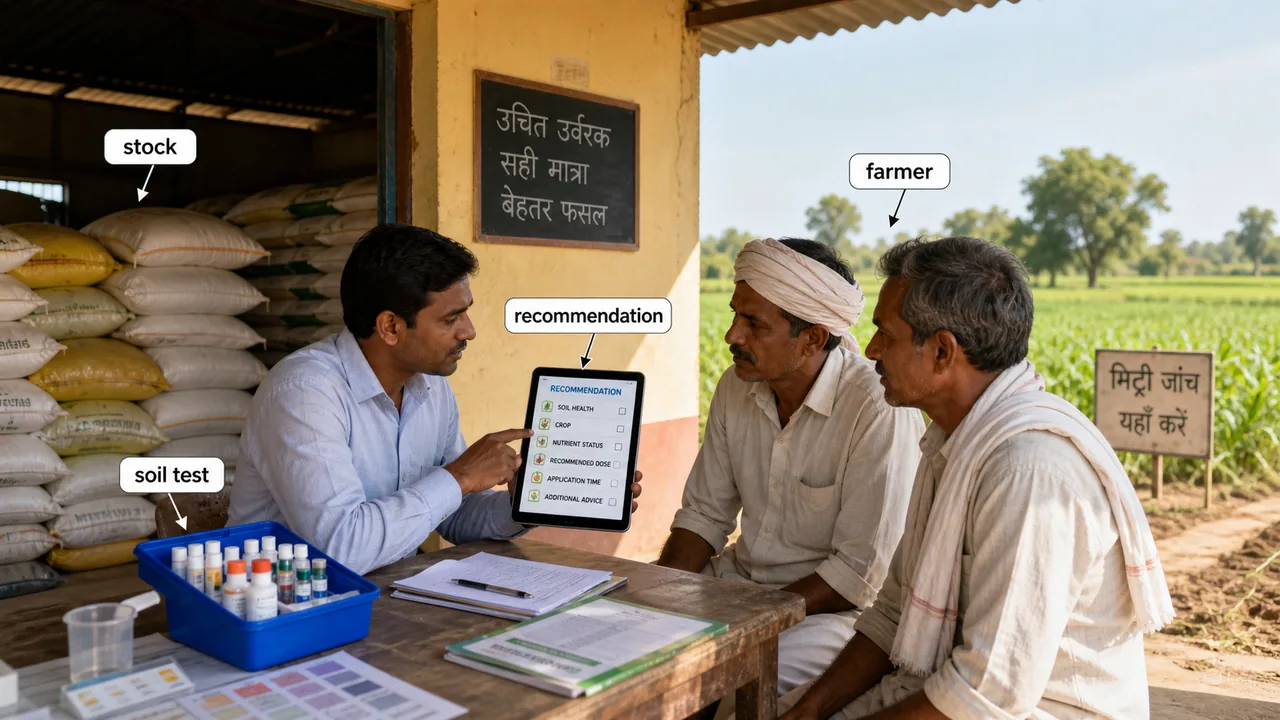
TIP
Exam Tip: ONOF = August 2022 = PMBJP = "Bharat" brand. Remember the 2/3rd rule — Bharat logo must cover at least 2/3rd of the bag.
Mridaparikshak
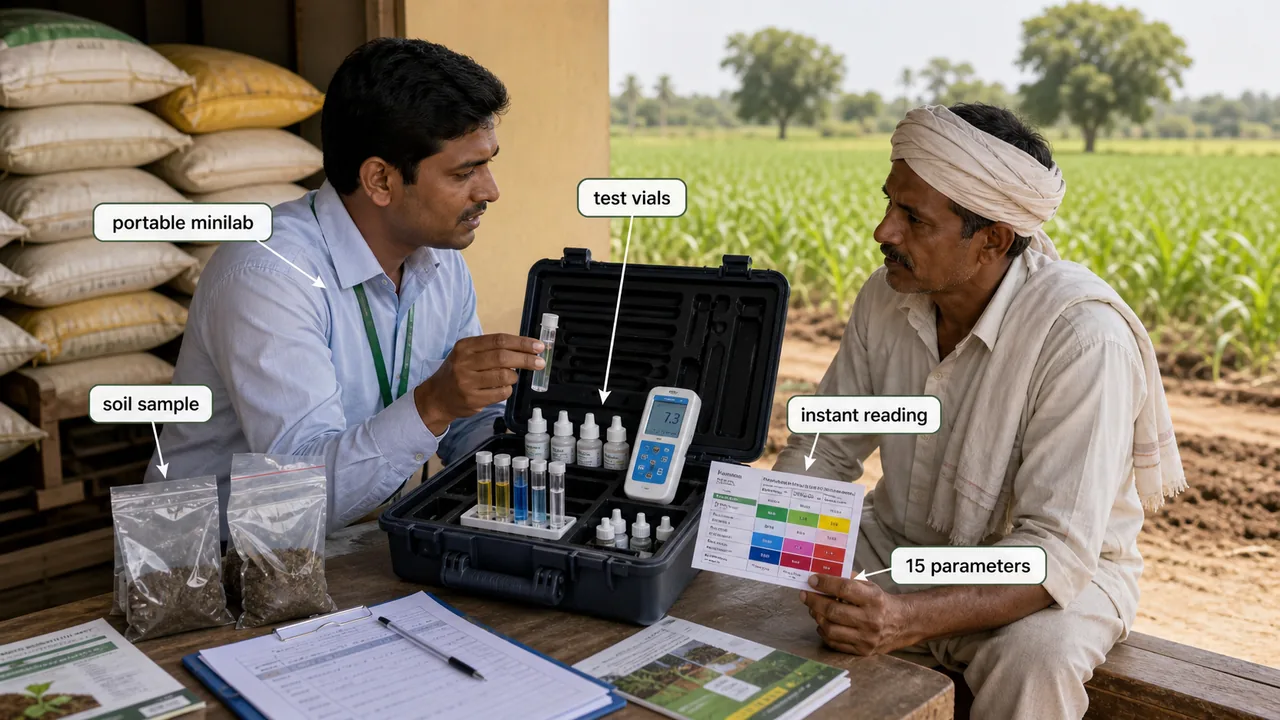
Mridaparikshak is a mobile soil testing minilab developed by ICAR-IISS, Bhopal (Indian Institute of Soil Science).
| Feature | Detail |
|---|---|
| Developed by | ICAR-IISS, Bhopal |
| Parameters tested | 15 parameters (3 more than SHC's 12) |
| Type | Portable, affordable field-level device |
| Purpose | Rapid soil health assessment at the farm gate |
| Supports | Soil Health Card programme by making testing more accessible |
TIP
SHC vs Mridaparikshak: SHC tests 12 parameters (lab-based, 3-year cycle). Mridaparikshak tests 15 parameters (portable minilab, instant results). Both from ICAR ecosystem.
Fertilizer Statistics — India's Position
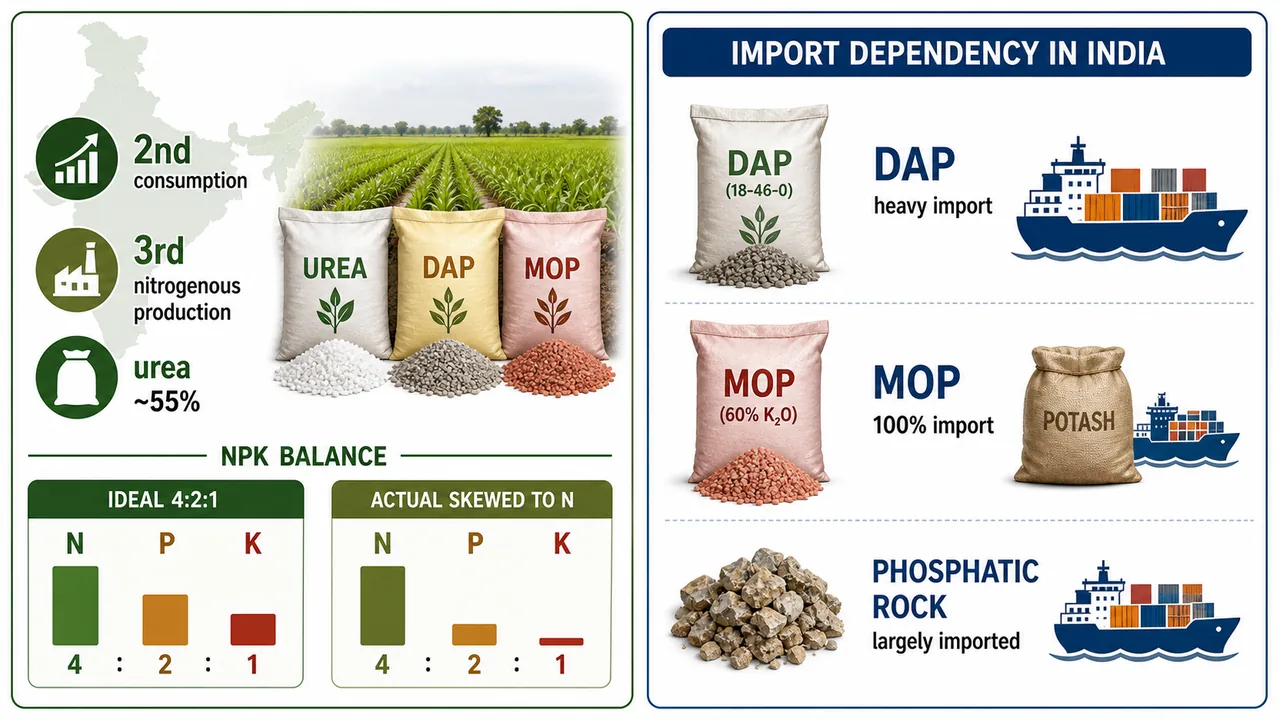
| Parameter | Detail |
|---|---|
| India's rank in consumption | 2nd largest globally (after China) |
| India's rank in production | 3rd largest producer of nitrogenous fertilizers |
| Most consumed fertilizer | Urea — ~55% of total nutrient consumption |
| Ideal NPK ratio | 4:2:1 |
| Actual ratio | Highly skewed towards N (especially in Punjab, Haryana) due to heavy urea subsidies |
Import Dependency
| Fertilizer | Import Status |
|---|---|
| Urea | Partially self-sufficient; some imports |
| DAP | Heavily import-dependent |
| MOP (Potash) | 100% imported — India has no potash reserves |
| Phosphatic rock | Largely imported |
IMPORTANT
India is 100% dependent on imports for potassic fertilizers (MOP) — there are no commercially viable potash deposits in the country. This is one of the most frequently asked facts in NABARD and IBPS AFO, NABARD, and FCI exams.
Nutrient-Based Subsidy (NBS)
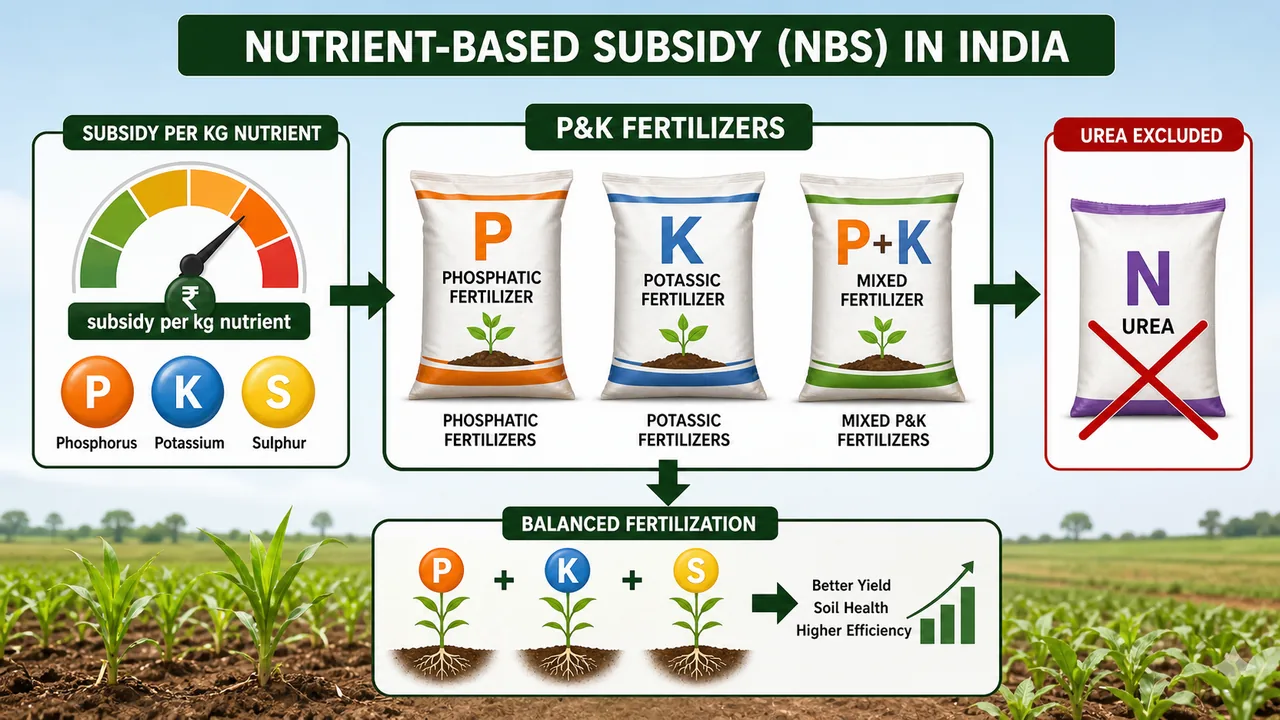
| Feature | Detail |
|---|---|
| Introduced | April 2010 |
| Covers | P&K fertilizers (phosphatic and potassic) |
| How it works | Subsidy fixed per kg of nutrient (N, P, K, S) — not per bag |
| Urea excluded | Urea continues under the statutory pricing regime |
| Purpose | Promote balanced fertilization; reduce over-dependence on urea |
Budget Allocations (2026-27)
| Budget Head | Allocation |
|---|---|
| Urea Subsidy | Rs 1,18,900 crore |
| NBS (P&K fertilizers) | Rs 17,500 crore |
| Combined fertilizer subsidy | ~Rs 1,36,400 crore |
TIP
Exam Tip: Urea subsidy (~Rs 1.19 lakh crore) dwarfs NBS (~Rs 17,500 crore) — this imbalance reflects India's heavy urea dependency. Combined fertilizer subsidy exceeds Rs 1.36 lakh crore. Note: fertilizer subsidy falls under Ministry of Chemicals & Fertilizers, not Agriculture Ministry.
Soil Health Card — Updated Stats
| Parameter | Latest Data |
|---|---|
| Cards issued | Over 25 crore |
| Testing cycle | Every 3 years |
| Current status | Merged into RKVY cafeteria scheme |
| Grassroots infra | VLSTLs (Village Level Soil Testing Labs) established |
NOTE
The SHC scheme has evolved — earlier 2-year cycle changed to 3-year cycle. Over 25 crore cards issued (up from 10.73 crore in 2019). Now integrated into RKVY for continued funding.
Summary Cheat Sheet
| Concept / Topic | Key Details / Explanation |
|---|---|
| ONOF launched | August 2022 under PMBJP |
| ONOF brand | All subsidized fertilizers sold under "Bharat" brand |
| ONOF fertilizers | Urea, DAP, MOP, NPK complexes |
| ONOF bag labelling | Bharat logo on 2/3rd of bag; company logo limited to 1/3rd |
| Mridaparikshak | Mobile soil testing minilab by ICAR-IISS, Bhopal; tests 15 parameters |
| SHC vs Mridaparikshak | SHC = 12 parameters (lab-based); Mridaparikshak = 15 parameters (portable) |
| Ideal NPK ratio | 4:2:1 |
| India fertilizer consumption rank | 2nd largest globally (after China) |
| India nitrogenous production rank | 3rd largest producer |
| Urea consumption share | ~55% of total nutrient consumption |
| MOP import dependency | 100% imported — no potash reserves in India |
| DAP import | Heavily import-dependent |
| NBS introduced | April 2010 for P&K fertilizers |
| NBS — Urea status | Excluded from NBS; under statutory pricing regime |
| Urea subsidy 2026-27 | Rs 1,18,900 crore |
| NBS budget 2026-27 | Rs 17,500 crore |
| Combined fertilizer subsidy | ~Rs 1,36,400 crore (under Ministry of Chemicals & Fertilizers) |
| SHC cards issued | Over 25 crore |
| SHC testing cycle | 3 years |
| SHC current status | Merged into RKVY cafeteria scheme |
| VLSTLs | Village Level Soil Testing Labs — grassroots testing infrastructure |
Lesson Doubts
Ask questions, get expert answers