🎯 Introduction & Venn Diagram Approach
Learn why Venn Diagrams are the fastest method for Syllogism, understand the basic framework of Follow / Doubtful / Definitely False, and master the foundation for all syllogism problems
Introduction to Syllogism
Syllogism is one of the most scoring topics in banking reasoning. It appears in both Prelims and Mains of IBPS PO, SBI PO, RRB, Clerk, RBI Grade B, and NABARD exams. Typically 3-5 questions in Prelims and 5-10 questions in Mains.
What is Syllogism? You are given statements (assumed to be true) and conclusions. You must determine which conclusions logically follow from the statements.
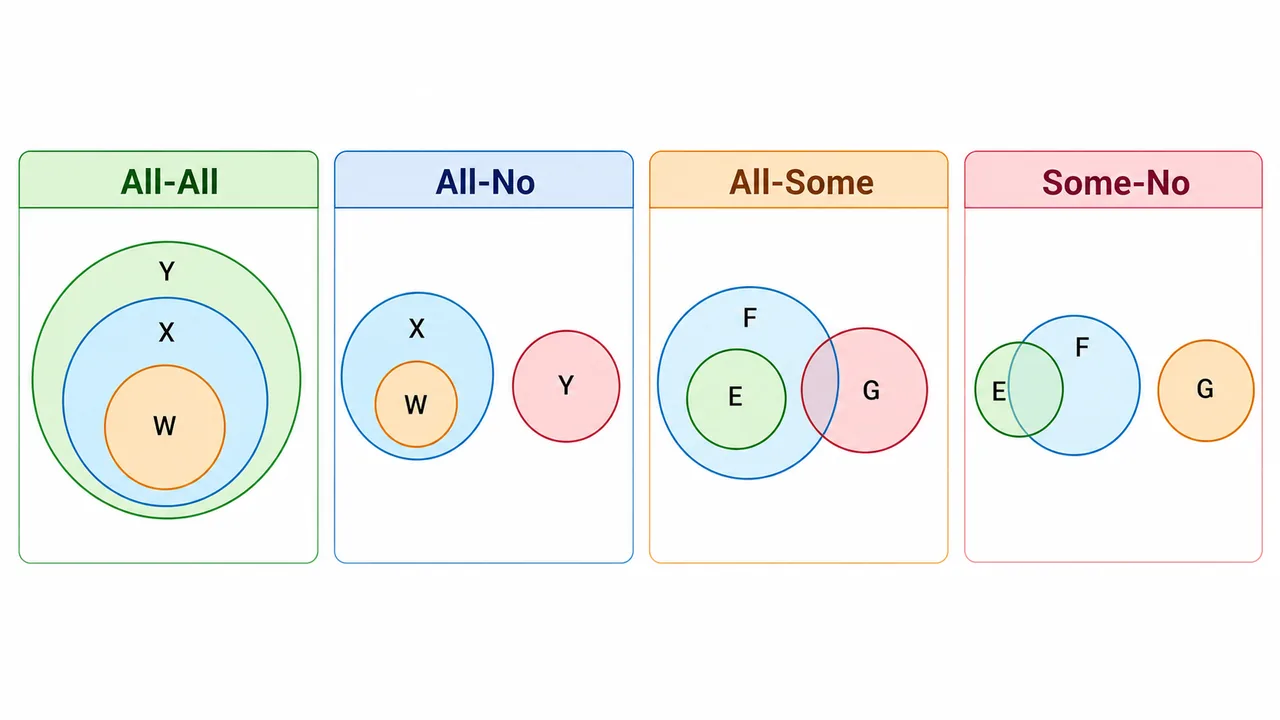
Why Venn Diagrams? (Not AEIO / Binary Method)
Many coaching centers teach the AEIO method or the Binary 0/1 method. These methods are:
- Slower for complex problems
- Confusing when dealing with "Only a few", "Only", and possibility cases
- Prone to errors in multi-statement problems
The Venn Diagram method is:
Pro Content Locked
Upgrade to Pro to access this lesson and all other premium content.
Pay once for one year · Effective ₹99/mo
- All Agriculture & Banking Courses
- AI Lesson Questions (100/day)
- AI Doubt Solver (50/day)
- Glows & Grows Feedback (30/day)
- AI Section Quiz (20/day)
- 22-Language Translation (100/day)
- Recall Questions (20/day)
- AI Quiz (15/day)
- AI Quiz Paper Analysis (100/day)
- AI Step-by-Step Explanations (100/day)
- Spaced Repetition Recall (FSRS)
- AI Tutor
- Immersive Text Questions
- Audio Lessons — Hindi & English
- Mock Tests & Previous Year Papers
- Summary & Mind Maps
- XP, Levels, Leaderboard & Badges
- Generate New Classrooms
- Voice AI Teacher (AgriDots Live)
- AI Revision Assistant
- Knowledge Gap Analysis
- Interactive Revision (LangGraph)
🔒 Secure one-time yearly payment via Razorpay · No hidden fees
Introduction to Syllogism
Syllogism is one of the most scoring topics in banking reasoning. It appears in both Prelims and Mains of IBPS PO, SBI PO, RRB, Clerk, RBI Grade B, and NABARD exams. Typically 3-5 questions in Prelims and 5-10 questions in Mains.
What is Syllogism? You are given statements (assumed to be true) and conclusions. You must determine which conclusions logically follow from the statements.
Why Venn Diagrams? (Not AEIO / Binary Method)
Many coaching centers teach the AEIO method or the Binary 0/1 method. These methods are:
- Slower for complex problems
- Confusing when dealing with "Only a few", "Only", and possibility cases
- Prone to errors in multi-statement problems
The Venn Diagram method is:
- Visual and intuitive
- Works for ALL types including coded, reverse, and new patterns
- Faster once you build the mental model
The Core Framework: Follow / Doubtful / Definitely False
Every conclusion falls into exactly one of three categories:
| Category | Meaning | What to Answer |
|---|---|---|
| Follow (✓) | 100% true in ALL possible Venn diagrams | Conclusion follows |
| Doubtful (?) | True in SOME diagrams, false in others | Does NOT follow (but "possible") |
| Definitely False (✗) | False in ALL possible Venn diagrams | Does NOT follow (and "not possible") |
This is the most important framework. Every single syllogism question reduces to checking which category a conclusion falls into.
Types of Statements
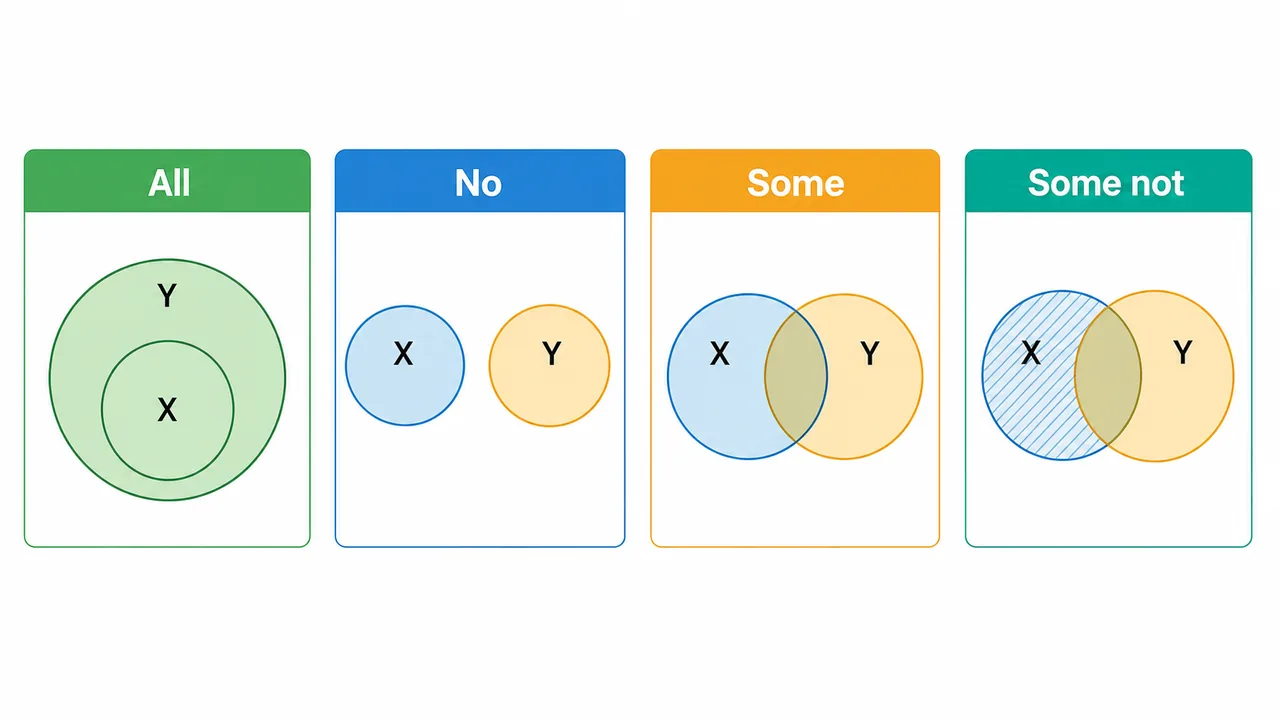
There are 4 basic statement types in syllogism:
| Statement | Venn Diagram | Example |
|---|---|---|
| All X are Y | X circle completely inside Y circle | All sparrows are birds |
| No X is Y | X and Y circles completely separate | No river is a mountain |
| Some X are Y | X and Y circles partially overlap | Some painters are sculptors |
| Some X are not Y | Part of X is outside Y | Some planets are not gas giants |
Key Keywords to Identify Statement Types:
| Type | Keywords |
|---|---|
| All | All, Every, Each, Any, 100% |
| No | No, None, Not a single, 0% |
| Some | Some, A few, At least, Several, Many, Most, 30%, 50%, 75%, 90% |
| Some Not | Some not, Not all, All not (= No) |
Venn Diagram Rules for "All"
Statement: All X are Y
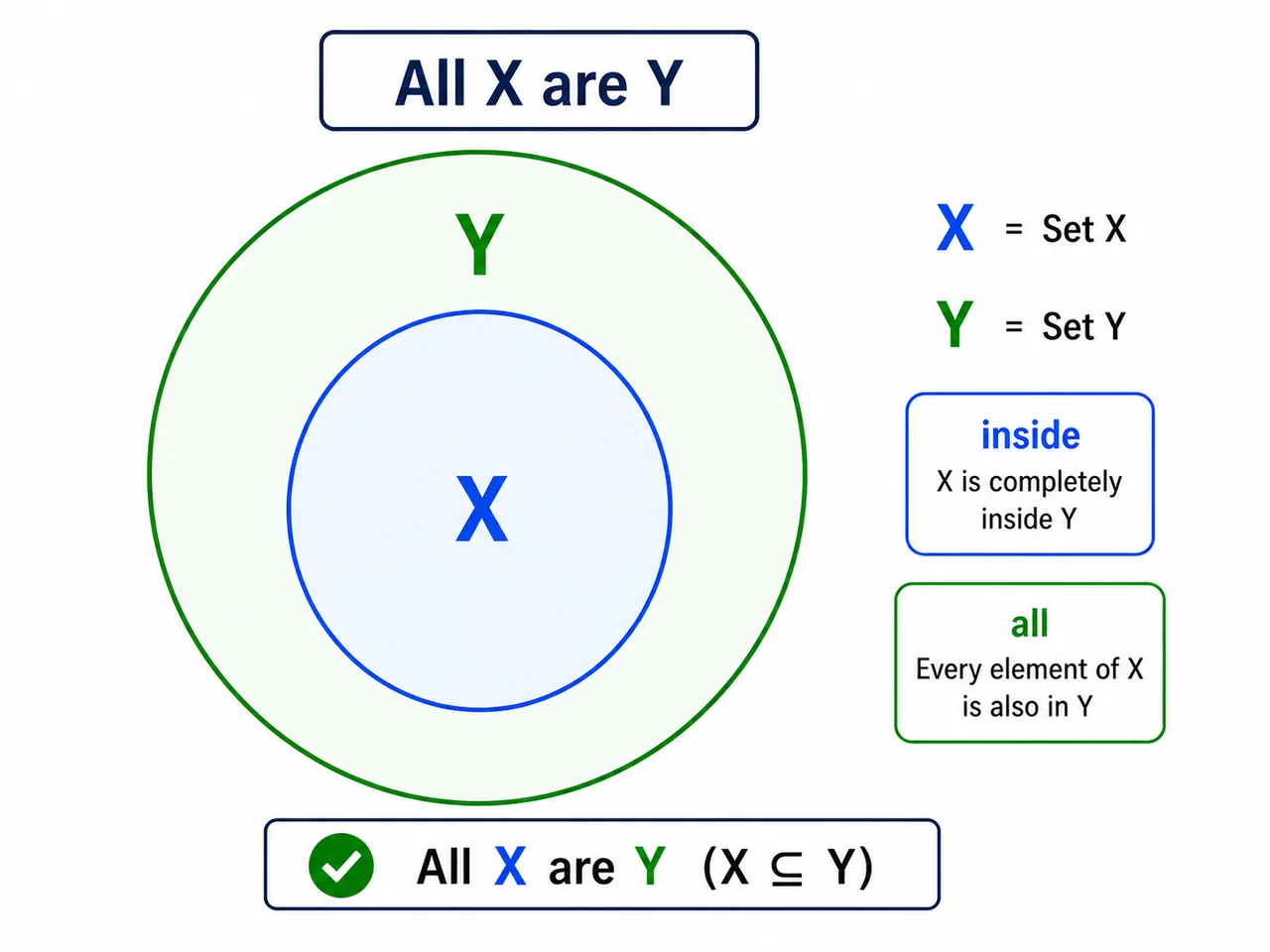
X is completely inside Y. Every member of X is also a member of Y.
What follows from "All X are Y":
| Conclusion | Status | Why |
|---|---|---|
| Some X are Y | ✓ Follow | If all are, then surely some are |
| Some Y are X | ✓ Follow | The overlapping part exists (X is inside Y) |
| All Y are X | ? Doubtful | Y could be bigger than X — we don't know |
| No X is Y | ✗ Definitely False | All are inside, so "no" is impossible |
| Some X are not Y | ✗ Definitely False | All X are inside Y, none is outside |
Critical Rule: "All X are Y" does NOT mean "All Y are X". The circles are not equal — X is inside Y, but Y may extend beyond X.
Venn Diagram Rules for "No"
Statement: No X is Y
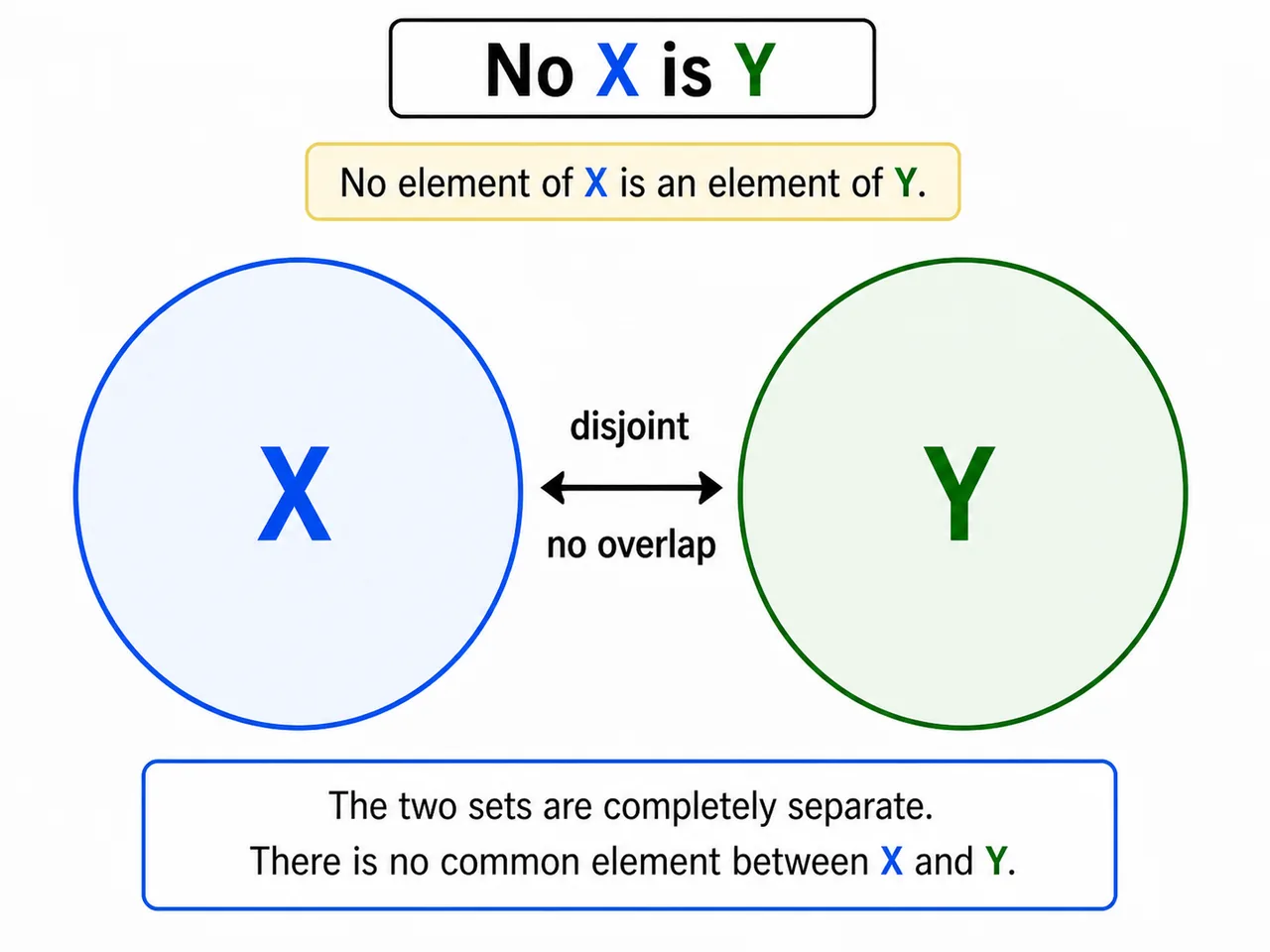
X and Y are completely separate. No member of X is a member of Y.
What follows from "No X is Y":
| Conclusion | Status | Why |
|---|---|---|
| No Y is X | ✓ Follow | If X and Y don't overlap, Y and X don't overlap either |
| Some X are not Y | ✓ Follow | Since none of X is in Y, some (in fact all) X are not Y |
| Some Y are not X | ✓ Follow | Same logic reversed |
| All X are Y | ✗ Definitely False | They are completely separate |
| Some X are Y | ✗ Definitely False | No overlap exists |
Critical Rule: "No X is Y" = "No Y is X". This is the only statement type that is perfectly reversible.
The Golden Rule: Draw the Minimum Diagram
This is the single most important rule for drawing Venn diagrams in syllogism:
Always draw the minimum possible diagram — show ONLY the relationships that are explicitly stated. Do NOT add extra overlaps or connections.
If a statement says "Some M are N", draw just a partial overlap — do not make M fully inside N or N fully inside N. If two elements have no stated relationship, keep them apart by default. If "All M are N" is given, draw M just inside N — do not also overlap M with other circles unless a statement forces it.
Why? The minimum diagram represents the safest base case. Any conclusion that holds true in this minimal arrangement is a definite conclusion. If you add extra overlaps that aren't stated, you'll see relationships that look true but are actually just one possibility — leading to wrong answers.
The principle in action:
| Statement Given | Draw This (Minimum) | Do NOT Draw This |
|---|---|---|
| Some M are N | Partial overlap only | M inside N (that's "All", not "Some") |
| All M are N | M just inside N | M and N as equal/same circle |
| No M is N | Completely separate | Any overlap at all |
| Two unrelated elements | Keep them apart | Overlap them "just in case" |
Think of it this way: Your diagram is a courtroom. Only draw what the statements prove. Anything you assume or add on your own is inadmissible evidence.
Drawing Multiple Statements
When you have 2+ statements, draw them one by one on the same diagram. Add only what each statement demands — nothing more.
Example:
- Statement 1: All M are N
- Statement 2: No N is O
Step 1: Draw M inside N (that's all Statement 1 tells us) Step 2: Draw O completely separate from N (that's all Statement 2 tells us) Step 3: M and O have no direct statement — so we draw them with no assumed connection
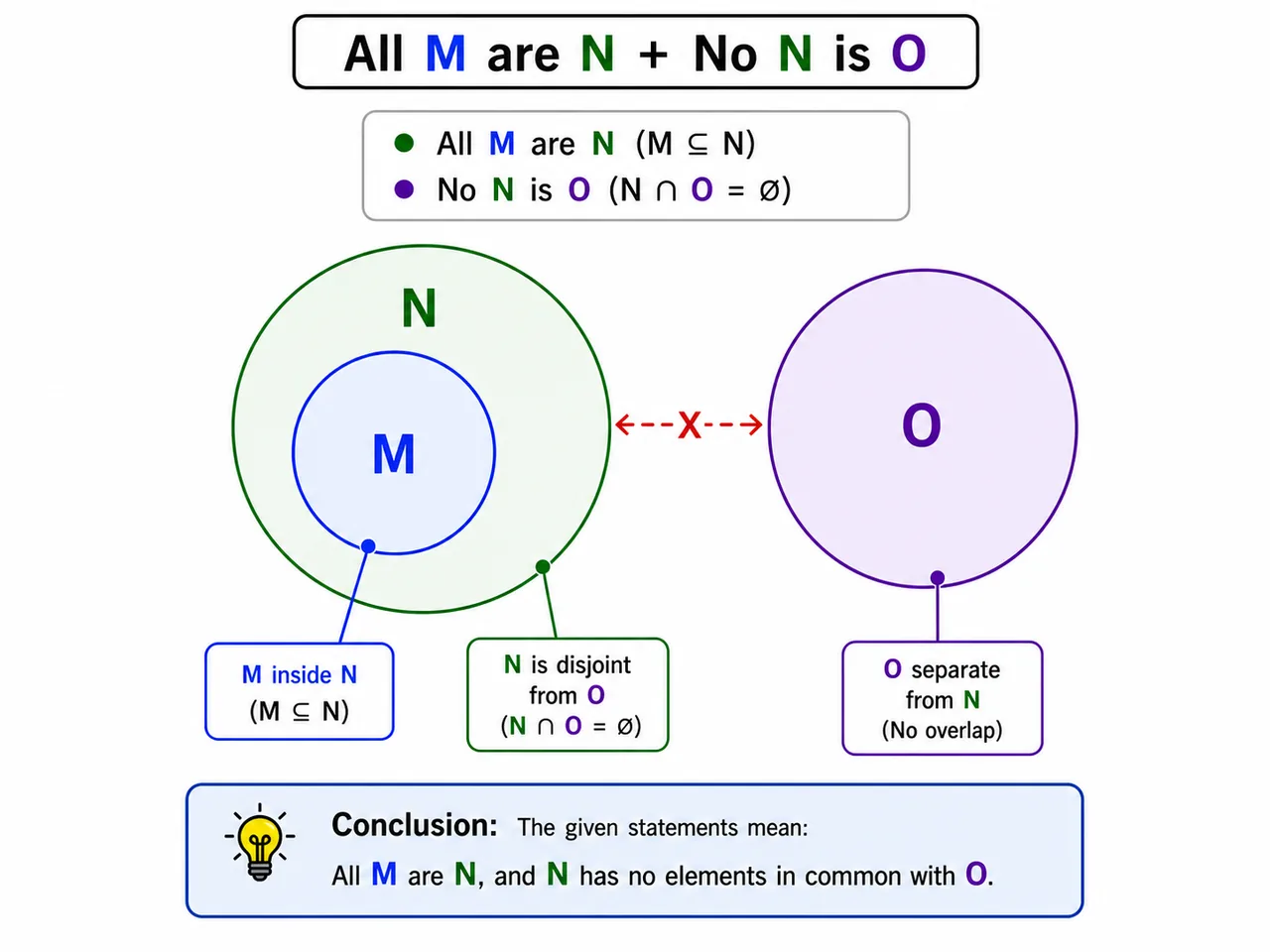
Now check conclusions:
- "No M is O" → ✓ Follow (M is inside N, O is separate from N, so M is also separate from O)
- "Some M are O" → ✗ Definitely False
The Possibility Test
When a conclusion is Doubtful (not definitely true, not definitely false), it means:
- The conclusion might be true
- The conclusion is a "possibility"
Example:
- Statement: Some M are N
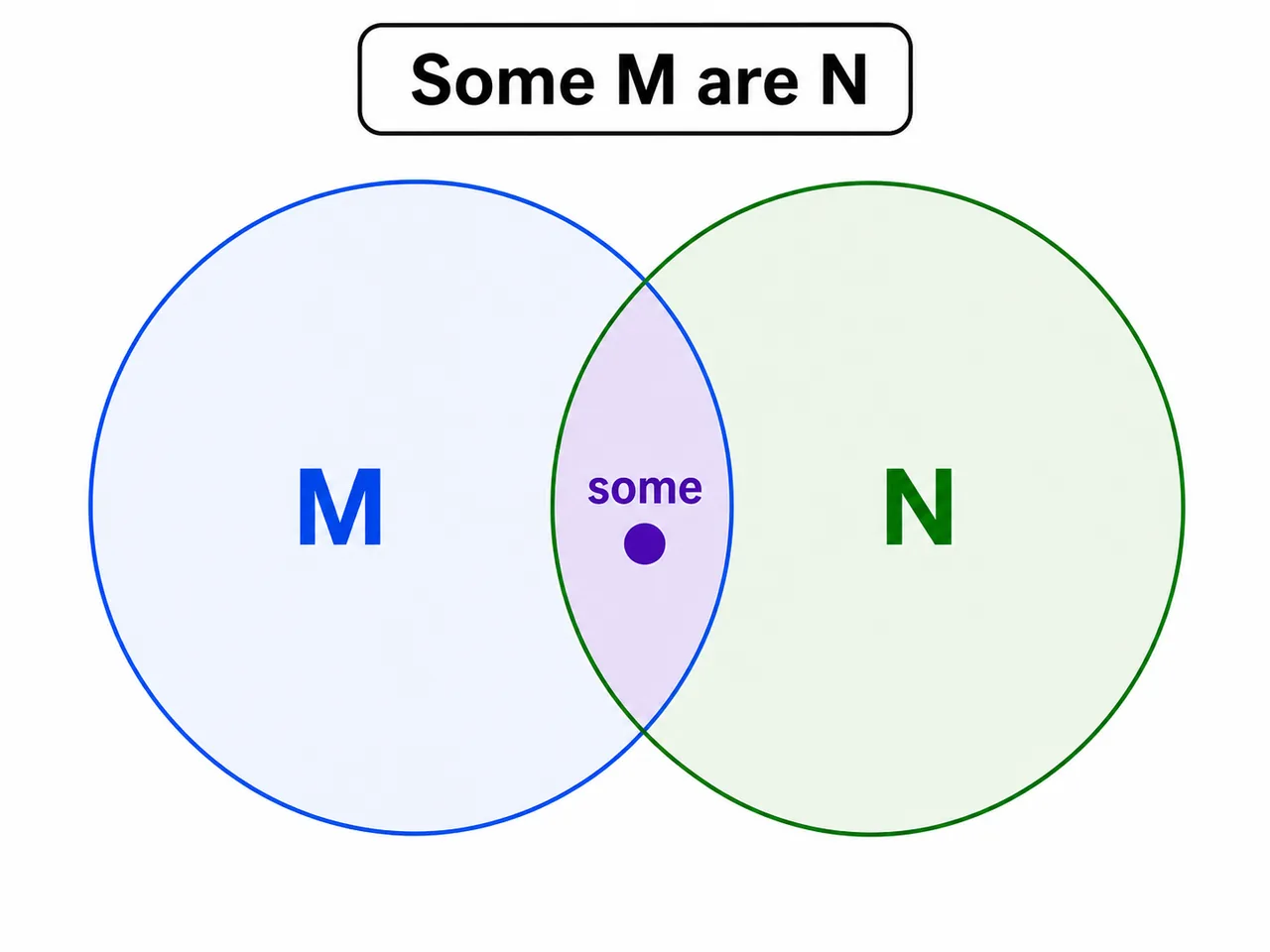
- "All M are N" → ? Doubtful (M could be completely inside N, or could extend outside)
- So: "All M are N is a possibility" → ✓ TRUE
- But: "All M are N" as a definite conclusion → ✗ Does NOT follow
Practice: Basic Level
Statements:
- All markers are brushes
- No brush is a palette
Draw:
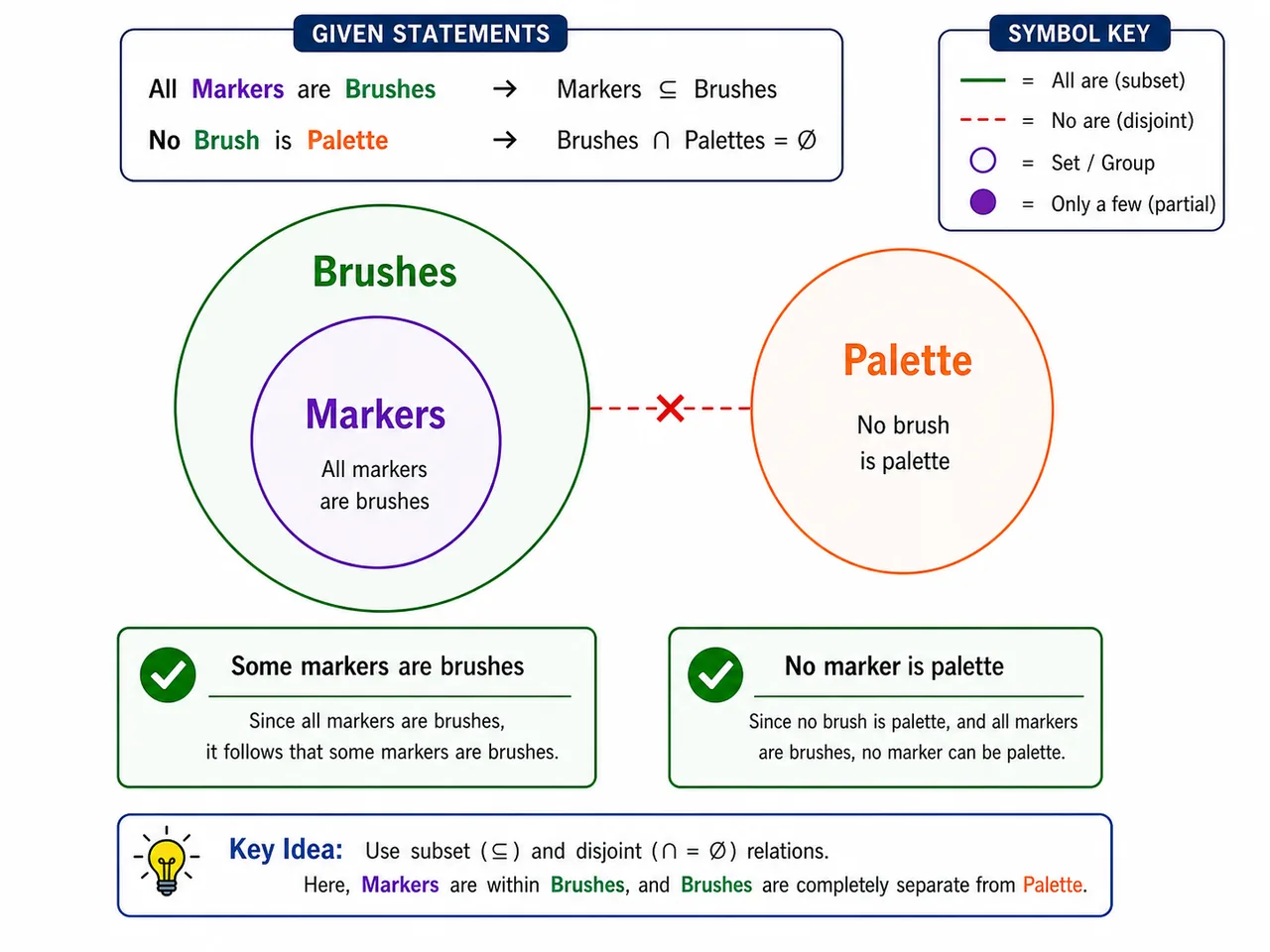
Conclusions — check each:
| Conclusion | Answer |
|---|---|
| Some markers are brushes | ✓ Follow (All markers are brushes → Some markers are brushes) |
| No marker is a palette | ✓ Follow (Markers inside Brushes, Palettes separate from Brushes) |
| All brushes are markers | ? Doubtful / Does not follow |
| Some palettes are markers | ✗ Definitely False |
Practice: Try These
Set 1: Statements: All rivers are lakes. All lakes are waterbodies.
Conclusions:
- All rivers are waterbodies
- All waterbodies are rivers
- Some waterbodies are lakes
Set 2: Statements: No island is a continent. Some continents are peninsulas.
Conclusions:
- Some peninsulas are not islands
- No island is a peninsula
- Some continents are not islands
Answers:
- Set 1: 1 → Follow, 2 → Does not follow (Doubtful), 3 → Follow
- Set 2: 1 → Follow, 2 → Does not follow (Doubtful), 3 → Follow
Key Takeaways
- Always draw Venn diagrams — even for simple problems
- Draw the MINIMUM diagram — only show relationships that are explicitly stated, never add extra overlaps
- Three categories only: Follow / Doubtful / Definitely False
- "All X are Y" ≠ "All Y are X" — the most common trap
- "No X is Y" = "No Y is X" — the only reversible statement
- Doubtful conclusions are "possible" but do NOT "follow"
- Practice drawing — speed comes from fast, clean diagrams on rough paper
Summary Cheat Sheet
| Concept / Topic | Key Details / Explanation |
|---|---|
| What is Syllogism? | Given statements (assumed true) → determine which conclusions logically follow. Appears in IBPS PO, SBI PO, RRB, RBI Grade B, NABARD — 3-10 questions per exam. |
| Why Venn Diagrams? | Faster than AEIO/Binary method; works for ALL types including coded, reverse, "Only a few", and new patterns; visual and intuitive. |
| Three Categories | Every conclusion is exactly one of: Follow (✓) = 100% true in all diagrams; Doubtful (?) = true in some diagrams; Definitely False (✗) = false in all diagrams. |
| Statement: All X are Y | X circle completely inside Y. Gives: Some X are Y ✓, Some Y are X ✓. Does NOT give: All Y are X (doubtful). |
| Statement: No X is Y | X and Y completely separate. Gives: No Y is X ✓, Some X are not Y ✓, Some Y are not X ✓. The only fully reversible statement. |
| Statement: Some X are Y | Partial overlap (draw minimum). Gives only: Some Y are X ✓. Everything else doubtful. "No X is Y" is the only impossible conclusion. |
| Statement: Some X are not Y | Part of X is outside Y. Gives no definite conclusions. "All X are Y" is the only impossible conclusion. NOT reversible. |
| Keywords for All | All, Every, Each, Any, 100% |
| Keywords for No | No, None, Not a single, 0% |
| Keywords for Some | Some, A few, Several, Many, Most, 30%, 50%, 75%, 90% — any 1–99% |
| Keywords for Some Not | Some not, Not all |
| Draw Minimum Diagram rule | Only show relationships explicitly stated. Never add extra overlaps. Minimum = safest base case. Conclusion true in minimum = definite. |
| "All X are Y" ≠ "All Y are X" | Most common exam trap. X inside Y, but Y can extend beyond X. Reversing "All" is always wrong. |
| "No X is Y" = "No Y is X" | "No" is the only statement that is perfectly reversible in both directions. |
| Doubtful = Possible | A Doubtful conclusion does NOT follow, but it IS a possibility. These are two different question types. |
| Multi-statement drawing | Draw statements one by one on the SAME diagram; add only what each statement demands, nothing more. |
| Possibility Test | Ask: "Can I redraw without breaking any given statement so this conclusion becomes true?" If YES → it's a possibility. If NO → definitely false. |