📝 Problems, Caselets and Elimination Strategy
Caselet questions feel difficult only when all options are read as equal. In reality, most decision-making caselets can be solved by a disciplined elimination process: first understand the problem, then reject clearly weak options, and finally choose the most balanced, lawful, and practical answer.
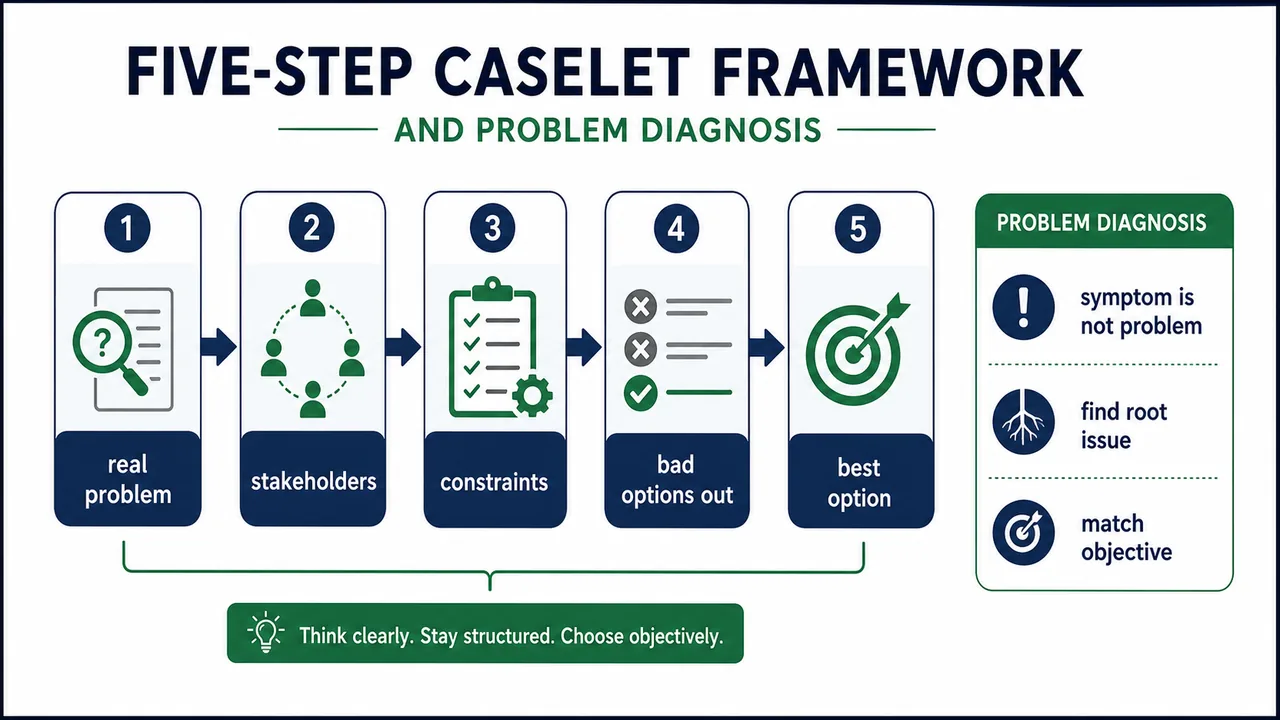
A Reliable 5-Step Caselet Framework
Use the following sequence whenever you face a decision-making problem or caselet:
- identify the real problem
- identify stakeholders and constraints
- eliminate clearly bad options
- compare the remaining options on ethics and practicality
- choose the most balanced response
Step 1: Identify the Real Problem
Many students start comparing options before understanding what the question is actually asking. That creates confusion.
Pro Content Locked
Upgrade to Pro to access this lesson and all other premium content.
₹99 charged monthly · Cancel anytime
- All Agriculture & Banking Courses
- AI Lesson Questions (100/day)
- AI Doubt Solver (50/day)
- Glows & Grows Feedback (30/day)
- AI Section Quiz (20/day)
- 22-Language Translation (100/day)
- Recall Questions (20/day)
- AI Quiz (15/day)
- AI Quiz Paper Analysis (100/day)
- AI Step-by-Step Explanations (100/day)
- Spaced Repetition Recall (FSRS)
- AI Tutor
- Immersive Text Questions
- Audio Lessons — Hindi & English
- Mock Tests & Previous Year Papers
- Summary & Mind Maps
- XP, Levels, Leaderboard & Badges
- Generate New Classrooms
- Voice AI Teacher (AgriDots Live)
- AI Revision Assistant
- Knowledge Gap Analysis
- Interactive Revision (LangGraph)
🔒 Secure via Razorpay · Cancel anytime · No hidden fees
Caselet questions feel difficult only when all options are read as equal. In reality, most decision-making caselets can be solved by a disciplined elimination process: first understand the problem, then reject clearly weak options, and finally choose the most balanced, lawful, and practical answer.
A Reliable 5-Step Caselet Framework
Use the following sequence whenever you face a decision-making problem or caselet:
- identify the real problem
- identify stakeholders and constraints
- eliminate clearly bad options
- compare the remaining options on ethics and practicality
- choose the most balanced response
Step 1: Identify the Real Problem
Many students start comparing options before understanding what the question is actually asking. That creates confusion.
First ask:
- what exactly has gone wrong?
- is the issue ethical, administrative, interpersonal, legal, operational, or strategic?
- what outcome is required?
If the problem is misread, the best option may be rejected for the wrong reason.
Step 2: Identify Stakeholders and Constraints
A strong answer usually respects both people and process. So identify:
- who is affected
- which rules or procedures matter
- whether time is limited
- whether consultation is required
- whether resources are constrained
In public or institutional decision making, the answer should usually protect fairness, accountability, and feasibility together.
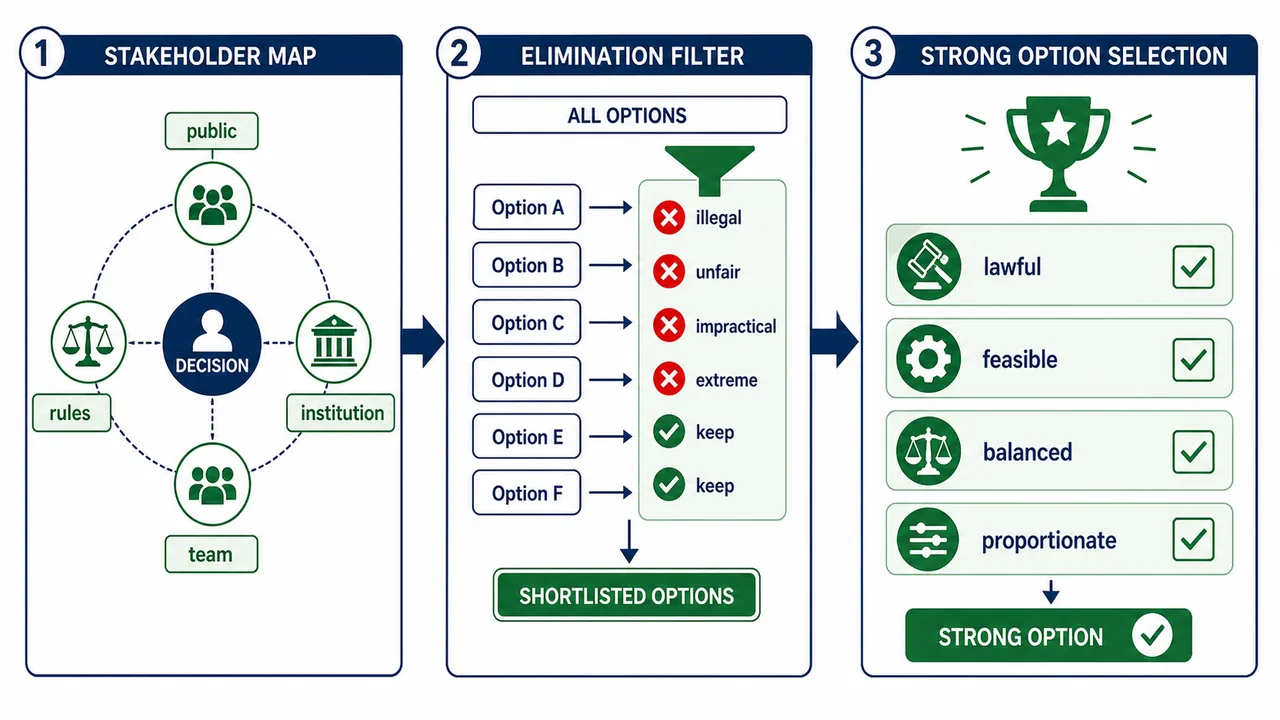
Step 3: Eliminate Clearly Bad Options
This is the biggest score booster in decision-making questions. Many options look different on the surface but can be rejected immediately because they show bad patterns.
Weak options often contain:
- illegality
- dishonesty
- coercion
- revenge
- emotional overreaction
- total inaction without reason
- blind favouritism
- unrealistic promises
If an option says "use force," "ignore the rule," "punish without due process," or "do nothing" in a serious situation, it is usually weak.
The Ethical but Practical Rule
The best answer in management caselets is often neither harsh idealism nor convenient shortcut. It is usually the option that is:
- ethical
- lawful
- humane
- practical
- proportionate to the issue
This rule helps because many distractor options are designed to look attractive by being:
- too aggressive
- too passive
- too emotional
- too unrealistic
Balanced action is usually stronger than dramatic action.
Selection Rules for Strong Options
After eliminating weak choices, compare the remaining options using the following checks:
- does it solve the stated problem?
- is it within rules and authority?
- is it fair to the affected parties?
- is it practically implementable?
- does it reduce future harm?
- does it preserve trust and accountability?
Common Bad Patterns in Options
Train yourself to spot these quickly:
| Bad Pattern | Why It Is Weak |
|---|---|
| Illegal shortcut | Violates rules and creates larger risk |
| Aggressive retaliation | Escalates conflict instead of solving it |
| Total inaction | Avoids responsibility |
| Blind sympathy | Ignores standards and fairness |
| Blind rigidity | Ignores human context when flexibility is allowed |
| Empty committee answer | Looks safe but delays needed action |
| Overpromising | Not feasible in real conditions |
This table is powerful because many caselet options can be removed in seconds once you identify the pattern rather than getting distracted by wording.
Worked Examples
Example 1: Rule-breaking request by a relative
A close relative asks you to approve a benefit beyond the official rule.
Best response:
- explain the rule clearly
- avoid personal favour
- follow the prescribed process
Why it is best: It is lawful, fair, and resistant to conflict of interest.
Example 2: Angry customer confrontation
A dissatisfied beneficiary creates tension in the office.
Best response:
- hear the complaint calmly
- verify facts
- explain procedure
- take corrective action if justified
Why it is best: It avoids aggression while still addressing the real issue.
Example 3: Staff negligence
A staff member makes a repeated operational mistake.
Best response:
- verify the facts
- take proportionate corrective action
- document and guide improvement
Why it is best: Neither blind sympathy nor excessive punishment is ideal.
Fast Checklist for the Final Choice
Before marking the answer, ask:
- does this option directly address the problem?
- is it lawful and honest?
- is it practical in the given context?
- does it treat stakeholders fairly?
- does it avoid creating a bigger future problem?
If one option clears these checks better than the others, it is usually the answer.
Summary Cheat Sheet
| Concept / Topic | Key Details / Explanation |
|---|---|
| 5-step caselet framework | Use this order: identify the problem -> identify stakeholders and constraints -> eliminate weak options -> compare strong options -> choose the most balanced response. |
| First task in caselets | Never start with options blindly. First determine the real problem, the type of issue, and the outcome required. |
| Stakeholders and constraints | Good decisions respect rules, authority, fairness, time limits, and affected people together. |
| Common weak option patterns | Quickly reject options involving illegality, coercion, favouritism, revenge, unrealistic promises, or total inaction without reason. |
| Ethical but practical rule | The strongest answer is usually ethical, lawful, humane, practical, and proportionate, not dramatic or emotionally flashy. |
| Strong-option selection rule | Good choices solve the stated problem, stay within rules, are fair to stakeholders, and do not create a bigger future problem. |
| Fairness and rules | Institutional decisions must not sacrifice fairness, accountability, or procedure for personal pressure or emotional bias. |
| Exam solving rule | Elimination is disciplined thinking: remove clearly bad options first, then compare the remaining balanced options. |
Mini Practice
Which option is usually weak in a management caselet: lawful action or illegal shortcut?
illegal shortcut. It may look quick, but it fails the legality and accountability test.
Why is "do nothing" often a poor answer?
because it avoids responsibility without solving the problem. Inaction is justified only when action would clearly worsen the situation, and the question usually signals that explicitly.
What is the first step in solving a caselet?
identify the real problem. Option comparison becomes unreliable if the situation itself is misunderstood.
Why is a balanced answer stronger than a dramatic one?
because balanced action is more likely to be lawful, feasible, and sustainable. Exams usually reward responsible judgment, not emotional theatre.
What should be done before punishing in a staff-related caselet?
verify facts and choose proportionate action. Good decisions combine fairness with accountability. ---
Lesson Doubts
Ask questions, get expert answers