Protected Cultivation 🏠
Protected cultivation under agricultural engineering — greenhouse types, polyhouse, shade net house, mulching, and controlled environment techniques for competitive exams.
Frequently Asked Questions
What is protected cultivation in agriculture?
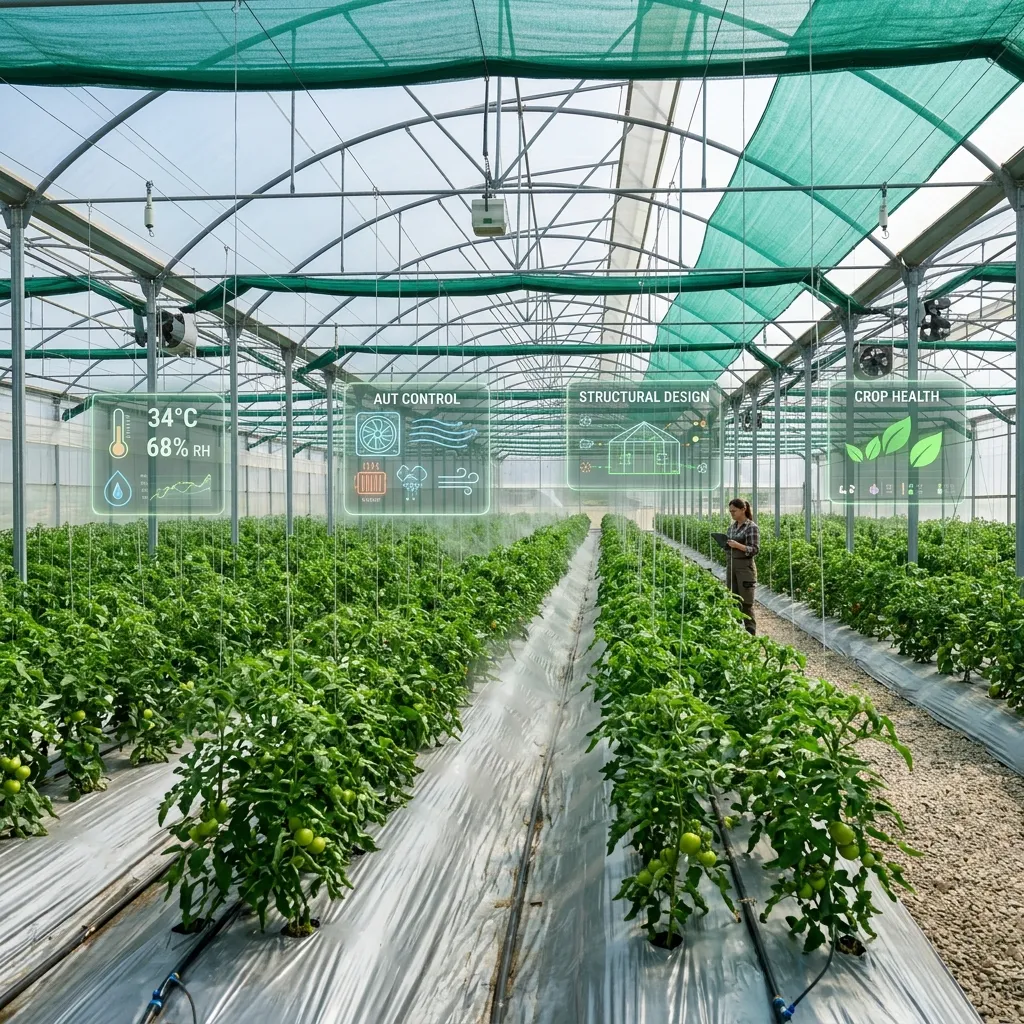
Protected cultivation means growing crops inside structures such as polyhouses, greenhouses, shade-net houses, or tunnels where temperature, humidity, light, irrigation, and pest exposure can be managed better than in open fields.
What is the difference between a greenhouse and a polyhouse?
A polyhouse is a type of greenhouse that uses polyethylene covering. In exam language, greenhouse is the broader term, while polyhouse usually refers to plastic-covered protected structures used for vegetables, flowers, and nursery raising.
Why is protected cultivation important for exam preparation?
It is a regular topic because it links agricultural engineering with horticulture, water-use efficiency, high-value crop production, micro-irrigation, and off-season cultivation. Questions often ask about structure types, environmental control, and crop suitability.
Which crops are commonly grown under protected cultivation?
Tomato, capsicum, cucumber, leafy vegetables, strawberry, nursery seedlings, and many floriculture crops are commonly studied under protected cultivation because they respond well to controlled environments and fetch better market value.