Agronomy 🌾
Crop production systems, cropping patterns, tillage, weed management, irrigation, organic farming, soil health. Covers Principles of Agronomy, Crop Production, Water Management, Mushroom Cultivation, Weed Science & Meteorology.

Course Structure
What's Inside

Principles of Agronomy
Agronomy basics, agro-climatic zones, tillage, cropping systems, sustainable farming, and natural farming in 8 lessons.
Meteorology 🌦️
Atmospheric layers, monsoons, solar radiation, temperature, humidity, wind, clouds, drought, agro-climatic zones, and climate classification for competitive exams.
Water Management
Irrigation methods (surface, drip, sprinkler), water use efficiency, drainage systems, watershed management, water harvesting structures, command area development — high-scoring topic for all agriculture exams.
Weed Science
Comprehensive course on Weed Science covering classification, control methods, herbicides, allelopathy, weed indices, and integrated weed management.
Crop Production
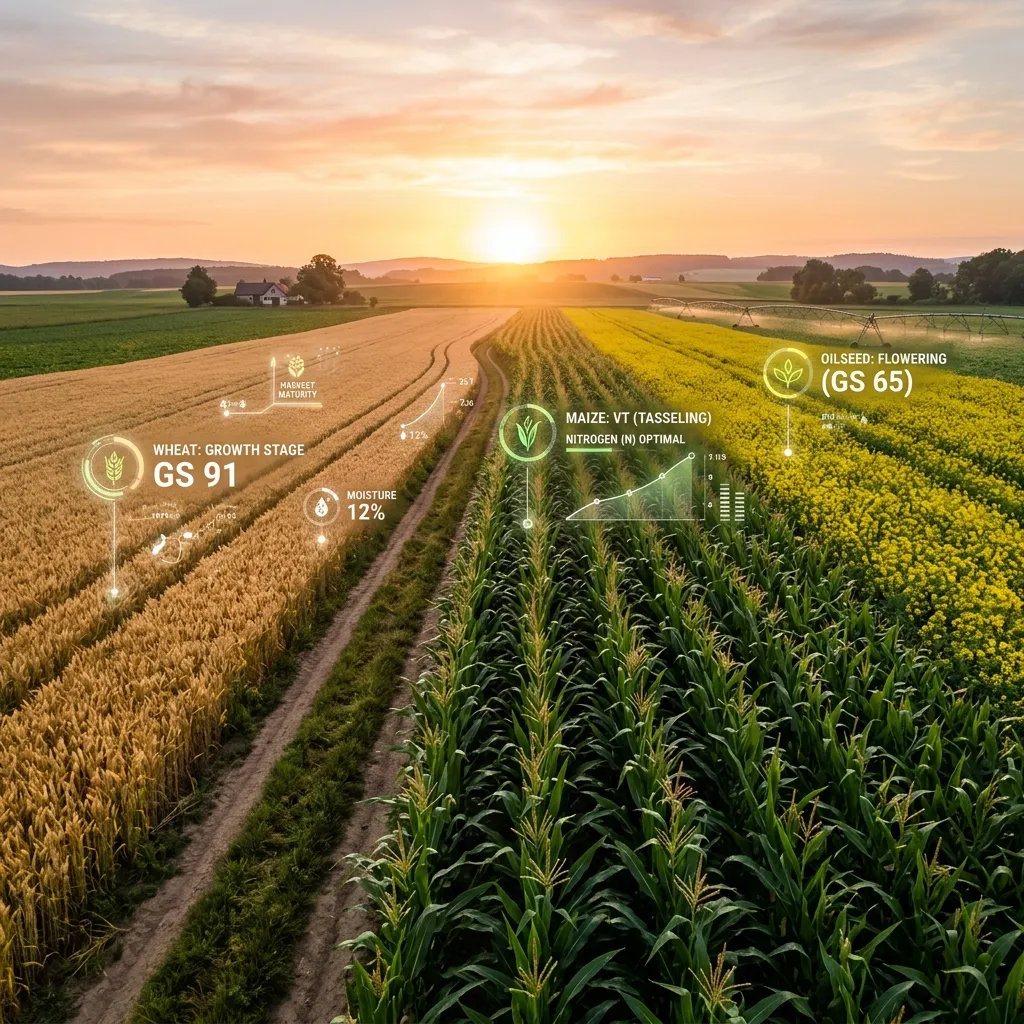
Kharif and rabi crop production — paddy, wheat, maize, cotton, sugarcane, pulses, oilseeds. Covers tillage, sowing methods, seed rate, fertilizer schedules, irrigation, harvesting and threshing. 36 lessons.
Mushroom Cultivation 🍄
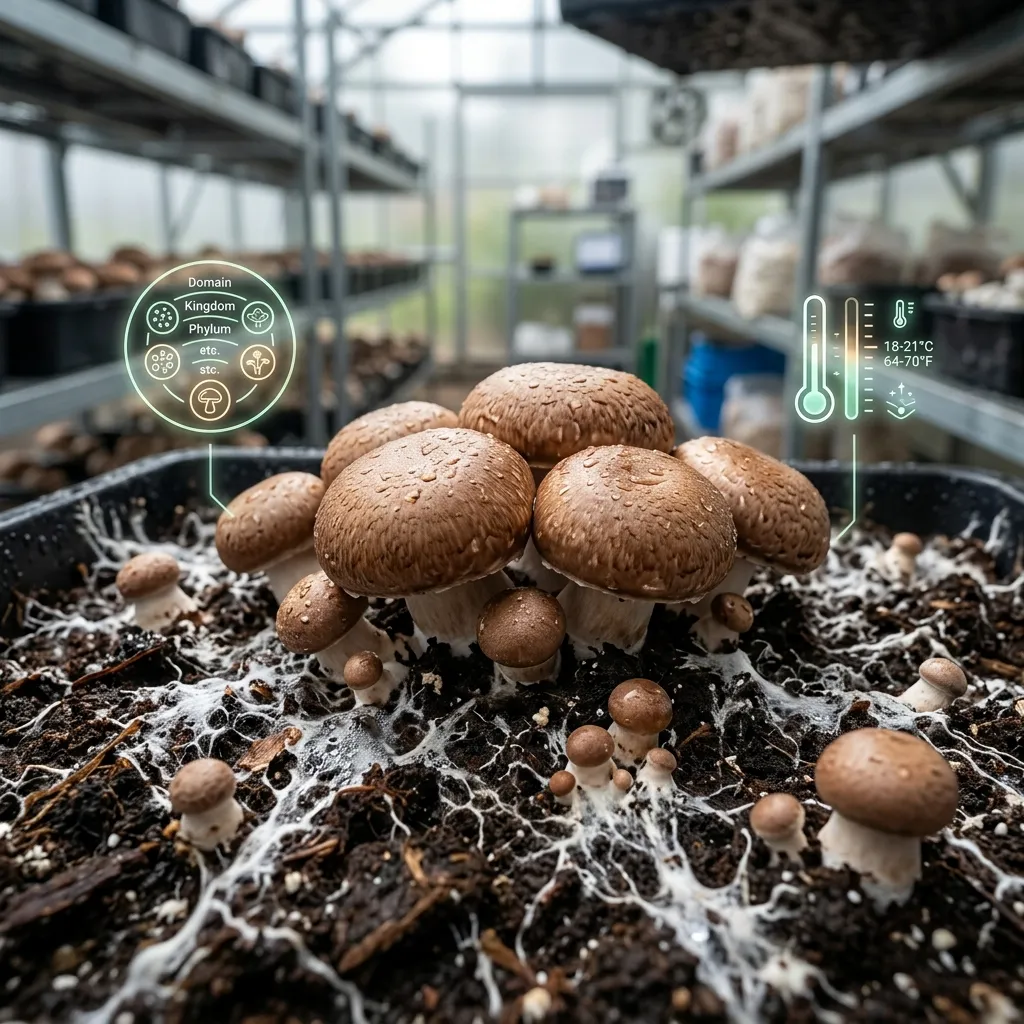
Pedagogically arranged mushroom cultivation course from fungal basics to spawn, substrate science, button mushroom production, tropical mushrooms, IPM, post-harvest and enterprise.
What is Agronomy?
Agronomy is the science and technology of producing and using plants for food, feed, fibre, and fuel — integrating knowledge from soil science, plant physiology, meteorology, and ecology to maximise crop productivity within sustainable limits. India's agricultural system, which feeds 1.4 billion people across wildly diverse agro-climatic conditions, rests on agronomic principles developed over decades of research at ICAR institutes, State Agricultural Universities, and farmer fields.
For exam aspirants, Agronomy consistently forms the largest single section of IBPS AFO Professional Knowledge and is a major component of NABARD, ICAR, CUET Agriculture, state agriculture officer, and Pre-PG agriculture papers. Unlike theoretical subjects, Agronomy demands precision — exact seed rates, specific fertilizer doses, irrigation schedules tied to crop growth stages, herbicide names, and numerical indices that appear directly as MCQ options.
The AgriDots Agronomy course is organised into six focused sub-courses, each covering a distinct domain: Principles of Agronomy, Crop Production, Water Management, Weed Science, Meteorology, and Mushroom Cultivation. Together they span every topic tested in major agriculture competitive exams.
Course Structure
| Sub-Course | Topics | Lessons |
|---|---|---|
| Principles of Agronomy | Foundations, agro-climatic zones, India's production scenario, tillage, cropping systems (LER, relay, intercrop), organic farming (NPOP, PGS), precision agriculture | 9 |
| Crop Production | Crop classification, cereals (rice, wheat, maize, barley), millets, pulses, oilseeds, fiber crops, sugarcane, potato, forage/commercial crops, 4 practice tests | 40 |
| Water Management | Irrigation types, scheduling (IW/CPE), water requirement, surface/drip/sprinkler methods, water quality (SAR, EC), drainage, dry-land agriculture, watershed management (PMKSY, IWMP) | 12 |
| Weed Science | Weed classification, crop associations, control methods (biological, chemical), herbicides (2,4-D, glyphosate, pendimethalin, atrazine), IWM, allelopathy, weed indices, 2 practice tests | 13 |
| Meteorology | Atmospheric layers, monsoon, solar radiation, temperature (GDD, lapse rate), humidity, wind, clouds, drought, 15 agro-climatic zones, Koppen/Thornthwaite, 2 practice tests | 9 |
| Mushroom Cultivation | Basics and species, spawn/substrate science, button mushroom production, casing/IPM, oyster-paddy straw-milky mushrooms, enterprise/post-harvest, 2 practice tests | 8 |
Key Numbers to Know
| Topic | Key Figure |
|---|---|
| Paddy — transplanted seed rate | 50–60 kg/ha |
| Wheat seed rate | 100–125 kg/ha |
| Drip irrigation efficiency | 90% |
| Sprinkler irrigation efficiency | 75% |
| Surface irrigation efficiency | 40–50% |
| Agro-climatic zones (Planning Commission) | 15 |
| ICAR agro-ecological sub-zones | 127 |
| Critical period of weed competition — wheat | 30–45 DAS |
| SW monsoon onset — Kerala | ~June 1 |
| DALR | 9.8°C / 1,000 m |
| Button mushroom composting (Phase I) peak temp | 70–80°C |
| Organic farming certification — NPOP body | APEDA |
| LER threshold for intercropping advantage | > 1.0 |
| Urea nitrogen content | 46% |
Who Should Study This Course?
- IBPS AFO — Agronomy is the highest-weightage Professional Knowledge subject
- NABARD Grade A Agriculture — Agronomy, water management, dryland farming, and crop production overlap strongly
- ICAR JRF/SRF — Agronomy discipline and allied crop-production topics
- CUET Agriculture — Crop production, irrigation, weed management, and agricultural meteorology
- State PSC Agriculture Officer — All states
- Pre-PG Entrance — IARI, BHU, ANGRAU, TNAU, OUAT, PDKV
Frequently Asked Questions
What does the full Agronomy course cover?
The broader Agronomy course covers six sub-courses: Principles of Agronomy, Crop Production, Water Management, Weed Science, Meteorology, and Mushroom Cultivation. Together they cover crop classification, tillage, cropping systems, crop production packages, irrigation scheduling, dryland farming, watershed management, herbicides, weed indices, monsoon and drought concepts, climate classification, spawn, composting, and mushroom enterprise basics.
How many lessons and practice tests are included in Agronomy?
The Agronomy course currently has 91 lesson files across six sub-courses: 77 study lessons and 14 practice tests. Crop Production is the largest block with 36 study lessons and 4 practice tests, followed by Weed Science, Water Management, Principles of Agronomy, Meteorology, and Mushroom Cultivation.
Which Agronomy sub-course should I study first?
Start with Principles of Agronomy because it explains the base language of the subject: tillage, cropping systems, LER, agro-climatic zones, organic farming, precision agriculture, and natural farming. After that, move to Crop Production for crop-wise seed rate, fertilizer dose, spacing, irrigation stage, and harvesting facts.
Why is Crop Production the most important part of Agronomy?
Crop Production carries the most direct exam value because questions often ask factual crop packages: seed rate, sowing season, varieties, fertilizer schedule, critical irrigation stages, oil content, fibre quality, and special crop terms. The course covers cereals, millets, pulses, oilseeds, fibre crops, sugarcane, potato, tobacco, forage crops, bamboo, castor, niger, horse gram, lathyrus, and clusterbean.
What should I remember from Water Management?
Focus on irrigation scheduling, IW/CPE ratio, crop water requirement, duty, delta, base period, irrigation efficiencies, drip, sprinkler, surface irrigation, SAR, RSC, EC, water measurement devices, drainage, dryland agriculture, PMKSY, IWMP, and watershed treatment measures such as contour bunds, check dams, farm ponds, and mulching.
What does Weed Science include in this Agronomy course?
Weed Science covers weed classification, parasitic and aquatic weeds, crop-weed associations, preventive, cultural, mechanical, biological and chemical control, herbicide trade names and formulations, integrated weed management, allelopathy, annidation, weed dispersal, Weed Index, WCE, WSE, and the critical period of crop-weed competition.
How many agro-climatic zones are there in India?
The Planning Commission of India defined 15 agro-climatic zones. ICAR further divided these into 127 agro-ecological sub-zones for more precise crop planning. The zones range from the Western Himalayan Region (Zone I) to the Islands of Andaman, Nicobar, and Lakshadweep (Zone XV).
What is the role of Meteorology in Agronomy?
Meteorology connects weather and crop planning. The course covers weather versus climate, atmospheric layers, monsoon systems, rainfall types, solar radiation, temperature, GDD, lapse rates, humidity, wind, evapotranspiration, clouds, cloud seeding, drought types, agro-climatic zones, and Koppen/Thornthwaite climate classification.
Why is Mushroom Cultivation included under Agronomy?
Mushroom Cultivation is included because it is a practical crop-production enterprise topic. The course covers mushroom biology, species selection, spawn, substrate, compost, casing, button mushroom production, oyster, paddy straw and milky mushroom cultivation, IPM, post-harvest handling, value addition, spent substrate, and enterprise planning.
Which exams test Agronomy heavily?
Agronomy is a high-weightage subject for IBPS AFO Mains, NABARD agriculture preparation, ICAR JRF/SRF Agronomy, state agriculture officer exams, CUET Agriculture, BSc Agriculture exams, and Pre-PG entrance exams. For IBPS AFO specifically, the local syllabus analysis places Agronomy at about 12-15 questions in the 60-question Mains agriculture paper.