Fisheries
Freshwater and marine fisheries, aquaculture systems (cage, pond, RAS), fish nutrition, hatchery management, common fish diseases, fishing gear types, government fisheries schemes and policies.
Frequently Asked Questions
What are the major Indian carps used in composite fish culture and what is the stocking ratio?
The major Indian carps (IMC) are: Catla (Catla catla) — surface feeder, fastest growth rate; Rohu (Labeo rohita) — column feeder, most preferred for taste; Mrigal (Cirrhinus mrigala) — bottom feeder. Composite fish culture (polyculture) combines these three with exotic carps — Silver carp (Hypophthalmichthys molitrix) for surface, Grass carp (Ctenopharyngodon idella) for vegetation, Common carp (Cyprinus carpio) for bottom. Typical stocking ratio: Catla 30%, Rohu 30%, Mrigal 20%, Silver carp 10%, Grass carp 10%. Stocking density: 5,000–10,000 fingerlings/ha.
What is the Pradhan Mantri Matsya Sampada Yojana (PMMSY) and what is its budget?
PMMSY (2020–25) is India's flagship fisheries development scheme with a total outlay of ₹20,050 crore — the largest-ever investment in the fisheries sector. It aims to increase fish production from 13.75 million tonnes (2018–19) to 22 million tonnes by 2024–25, double fishers' incomes, create 55 lakh employment opportunities, and double fisheries exports. It covers aquaculture, infrastructure, post-harvest management, and fishers' welfare including insurance.
What is the difference between capture fisheries and culture fisheries (aquaculture)?
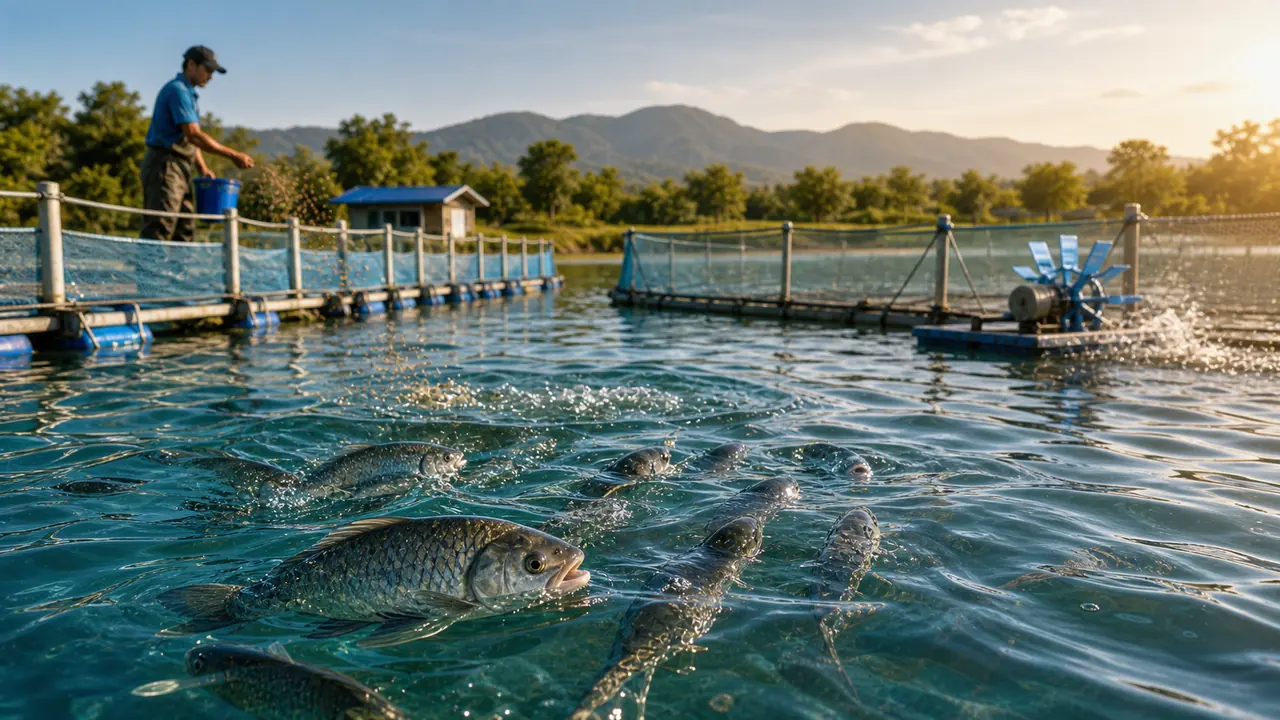
Capture fisheries involves catching wild fish from natural water bodies (rivers, lakes, seas) using nets, traps, and other gear — it is dependent on natural fish populations. Culture fisheries (aquaculture) involves rearing fish under controlled conditions in ponds, tanks, cages, or raceways — production is managed and predictable. India's inland capture fisheries contribute ~7.5 million tonnes; aquaculture produces ~8 million tonnes. Aquaculture is growing faster due to declining wild stocks.
What is composite fish culture and why is it more productive than monoculture?
Composite fish culture (polyculture) stocks multiple fish species that occupy different ecological niches (surface, column, bottom feeders) in the same pond simultaneously. This maximizes utilization of all food resources — algae, zooplankton, aquatic weeds, benthos, and detritus — that would be underutilized in monoculture. Productivity: 3,000–5,000 kg/ha/year in polyculture vs 1,000–1,500 kg/ha/year in monoculture. This is the most tested aquaculture concept in exams.
What are the major fish diseases and how are they classified?
Fish diseases are classified by causative agent: Bacterial — Aeromonas hydrophila causes Motile Aeromonad Septicemia (MAS), hemorrhagic septicemia; Edwardsiella tarda causes Edwardsiellosis. Viral — Epizootic Ulcerative Syndrome (EUS) caused by Aphanomyces invadans (oomycete). Parasitic — Argulus (fish louse, external), Lernaea (anchor worm), Gyrodactylus (monogenean). Nutritional — fatty liver from imbalanced feed. Bacterial diseases are most common in intensive aquaculture; prevention relies on good water quality management.
What is induced breeding (hypophysation) and which hormones are used?
Induced breeding (hypophysation) is the technique of injecting pituitary gland extract (PGE) or synthetic hormones to stimulate spawning in captive broodstock that do not breed naturally in confined conditions. Hormones used: Pituitary gland extract (from mature donor carp), HCG (Human Chorionic Gonadotropin), Ovaprim (sGnRH + domperidone — most popular synthetic option). The female receives 2 injections (primer + resolving dose); the male receives a single dose equal to the primer dose of the female.