🎪 Regional Fairs & Melas of UP
Bateshwar cattle fair, Deva Sharif urus, Garh Mukteshwar, Dadri, Shakumbhari Devi and other major regional fairs of Uttar Pradesh for Uttar Pradesh GK.
The Mela Tradition of UP
Fairs (melas) are the lifeblood of rural Uttar Pradesh. They serve a triple function — religious pilgrimage, economic marketplace, and social gathering. Long before modern markets and media, melas were the primary space where communities traded goods, arranged marriages, settled disputes, and celebrated together.
UP hosts hundreds of fairs annually, ranging from tiny village gatherings to massive events drawing millions. Several have histories stretching back centuries.
Bateshwar Mela — The Great Cattle Fair
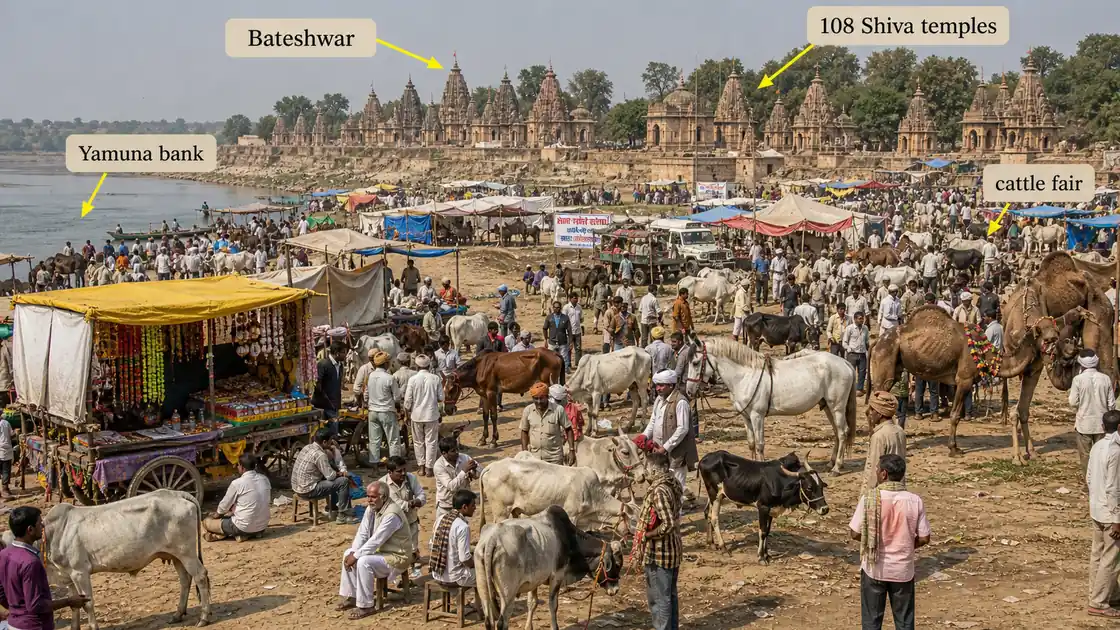
Bateshwar Mela is one of the largest cattle and animal fairs in North India, held at the town of Bateshwar in Agra district.
| Aspect | Detail |
|---|---|
| Location | Bateshwar, Agra district (on the Yamuna bank) |
| Duration | Approximately one month (October-November) |
| Primary trade | Cattle, horses, camels, donkeys |
| Religious significance | 108 Shiva temples along the Yamuna ghat |
| Historical note | Historic pilgrimage and trade centre on the Yamuna |
| Unique feature | Traders come from Rajasthan, MP, Haryana, and Punjab |
The fair is a remarkable scene — thousands of animals are traded alongside traditional handicrafts, food stalls, and religious activities. The horse trading at Bateshwar is particularly famous, with buyers assessing breeds and lineages in an age-old tradition.
Exam Tip: Bateshwar = Agra + Cattle/Animal fair + Yamuna bank + One month duration.
Deva Sharif — The Sufi Gathering
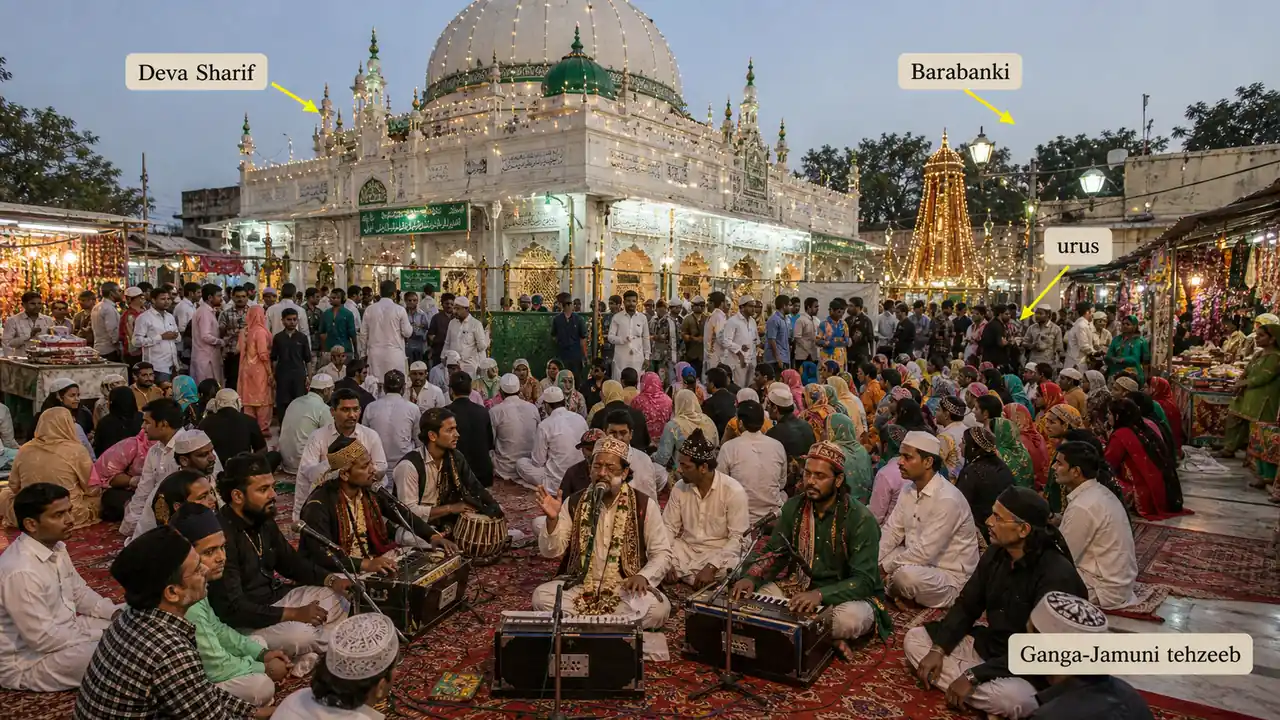
Deva Sharif is the annual urus (death anniversary gathering) at the dargah of Haji Waris Ali Shah in Barabanki district.
| Aspect | Detail |
|---|---|
| Location | Deva, Barabanki district |
| Saint | Haji Waris Ali Shah (1819–1905) |
| Occasion | Annual urus (death anniversary) |
| Duration | Several days |
| Attendance | Lakhs of devotees — Hindus and Muslims both |
| Special feature | Symbol of Ganga-Jamuni tehzeeb (syncretic culture) |
| Activities | Qawwali, langar (community kitchen), prayer, trading |
Haji Waris Ali Shah was a Sufi saint known for his message of universal brotherhood. The Deva Sharif dargah is one of the most visited Sufi shrines in UP, and the urus exemplifies the Hindu-Muslim cultural harmony (Ganga-Jamuni tehzeeb) that defines Awadh.
Garh Mukteshwar Mela
Garh Mukteshwar Mela is a religious fair held at the ancient pilgrimage site of Garhmukteshwar on the banks of the Ganga.
| Aspect | Detail |
|---|---|
| Location | Garhmukteshwar, Hapur district |
| River | Ganga |
| Occasion | Kartik Purnima (November) and other bathing festivals |
| Significance | Ancient Shiva temple (Mukteshwar Mahadev) |
| Activities | Ritual bathing, temple worship, trading |
| Historical | One of the oldest pilgrimage sites in western UP |
The Ganga at Garhmukteshwar is believed to have special purifying power. The name itself means "fort of the lord who grants liberation (mukti)".
Dadri Mela — Ballia's Grand Fair
Dadri Mela is one of the oldest and largest fairs of eastern UP, held annually at Dadri in Ballia district.
| Aspect | Detail |
|---|---|
| Location | Dadri, Ballia district |
| Duration | Several weeks (October-November) |
| Trade | Cattle, agricultural produce, handicrafts |
| Historical significance | Existed for centuries — mentioned in Mughal-era records |
| Scale | One of the largest trade fairs of Purvanchal |
| Occasion | Starts around Kartik month |
Dadri Mela was historically an important trading point where goods from eastern UP and neighboring regions converged. The cattle trade remains significant, alongside modern consumer goods.
Exam Tip: Dadri Mela = Ballia + major eastern UP trade fair + cattle trade.
Shakumbhari Devi Mela
Shakumbhari Devi Mela is a religious fair held at the ancient Shakti Peeth of Shakumbhari Devi.
| Aspect | Detail |
|---|---|
| Location | Saharanpur district (Shivalik foothills) |
| Temple | Shakumbhari Devi Shakti Peeth |
| Occasion | Navratri (twice yearly — Chaitra and Sharad) |
| Deity | Shakumbhari — form of Goddess Durga who nourishes with vegetables/herbs |
| Significance | Revered Shakti shrine of western UP |
| Nearby temples | Bhoora Devi, Bhura Dev temple in the same complex |
The name Shakumbhari means "she who nourishes with herbs and vegetables (shak)" — the goddess is associated with agricultural abundance, making this an important pilgrimage for farming communities.
Other Important Fairs of UP
Baldev Mela
| Aspect | Detail |
|---|---|
| Location | Baldeo (Dauji), Mathura district |
| Deity | Dauji (Balram, Krishna's elder brother) |
| Occasion | Day after Holi — Huranga (women tear men's clothes) |
| Unique | One of the most boisterous post-Holi celebrations |
Nakkataiyya Tradition
| Aspect | Detail |
|---|---|
| Location | Especially associated with parts of eastern and central UP |
| Tradition | Processional / dramatic folk celebration linked with Ramayan-based local performance culture |
| Significance | Popular local mela-theatre tradition rather than a simple trade fair |
Jhoolnalal Mela
| Aspect | Detail |
|---|---|
| Location | Prayagraj |
| Community | Sindhi community |
| Occasion | Cheti Chand — Sindhi new year |
| Deity | Jhulelal — patron deity of Sindhis |
Parikrama Mela
| Aspect | Detail |
|---|---|
| Location | Mathura-Vrindavan |
| Tradition | Devotees walk the sacred circuit (parikrama) of Braj |
| Duration | Multi-day circumambulation covering 84 kos (about 252 km) |
Master Reference Table — Major Fairs of UP
| Fair/Mela | Location (District) | Time | Primary Feature |
|---|---|---|---|
| Bateshwar | Agra | Oct-Nov | Cattle/animal fair |
| Deva Sharif Urus | Barabanki | Annual | Sufi pilgrimage |
| Garh Mukteshwar | Hapur | Kartik Purnima | Ganga bathing |
| Dadri | Ballia | Oct-Nov | Major eastern UP trade fair |
| Shakumbhari Devi | Saharanpur | Navratri | Shakti Peeth pilgrimage |
| Baldev (Huranga) | Mathura | Day after Holi | Boisterous Holi celebration |
| Magh Mela | Prayagraj | January | Annual religious bathing |
| Jhoolnalal | Prayagraj | Cheti Chand | Sindhi new year |
| Parikrama | Mathura-Vrindavan | Various | Braj circumambulation |
Fairs as Social Institutions
Fairs in rural UP serve functions far beyond commerce and religion:
- Marriage networking — families historically built social ties at large melas
- Community meeting ground — local disputes, news, and group decisions often circulated through fair gatherings
- Cultural exchange — folk performances, wrestling matches, storytelling
- Economic lifeline — seasonal trade for artisans, farmers, and small traders
- Social leveling — people of all castes and communities mingle freely
The UP government has been promoting major fairs as cultural tourism destinations, with improved infrastructure, lighting, and publicity for events like Bateshwar, Deva Sharif, and the Braj fairs.
Summary Cheat Sheet
| Fact | Answer |
|---|---|
| Bateshwar fair location | Agra district |
| Bateshwar primary trade | Cattle, horses, camels |
| Deva Sharif saint | Haji Waris Ali Shah |
| Deva Sharif district | Barabanki |
| Garh Mukteshwar river | Ganga |
| Garh Mukteshwar district | Hapur |
| Dadri Mela district | Ballia |
| Shakumbhari Devi district | Saharanpur |
| Shakumbhari significance | Revered Shakti shrine of western UP |
| Baldev Mela tradition | Huranga (post-Holi) |
Lesson Doubts
Ask questions, get expert answers