Tharu, Kol, Buksa, Agariya, Chero, Gond, and other Scheduled Tribes of Uttar Pradesh — location, customs, welfare schemes for Uttar Pradesh GK.
Mind Map: Tribal Communities of Uttar Pradesh
Tribal Population in UP — An Overview
Uttar Pradesh has one of the lowest Scheduled Tribe (ST) population shares among major Indian states, yet its tribal communities carry rich cultural traditions.
Statistic
Figure
ST population
~0.6% of UP's total population
Approximate number
~11–12 lakh (Census 2011)
Recognized STs
Multiple notified tribal communities under the Constitution
Concentration areas
Sonbhadra, Mirzapur (Vindhyan belt) and Terai (northern border)
The Scheduled Tribe list in UP took its present shape through later amendments as well, especially the Constitution (Scheduled Tribes) Order (Amendment) Act, 2003, which is often mentioned in UP GK.
Geographical Distribution
UP's tribal communities cluster in two distinct zones:
Zone
Region
Key Tribes
Terrain
Southern/Vindhyan
Sonbhadra, Mirzapur, Lalitpur, Chitrakoot
Kol, Gond, Agariya, Chero, Korwa, Baiga, Parahiya
Hilly, forested Vindhyan plateau
Northern/Terai
Lakhimpur Kheri, Pilibhit, Bahraich, Shravasti
Tharu, Buksa/Bhoksa
Sub-Himalayan marshy Terai belt
Major Tribes of UP
Tharu — The Largest Tribe
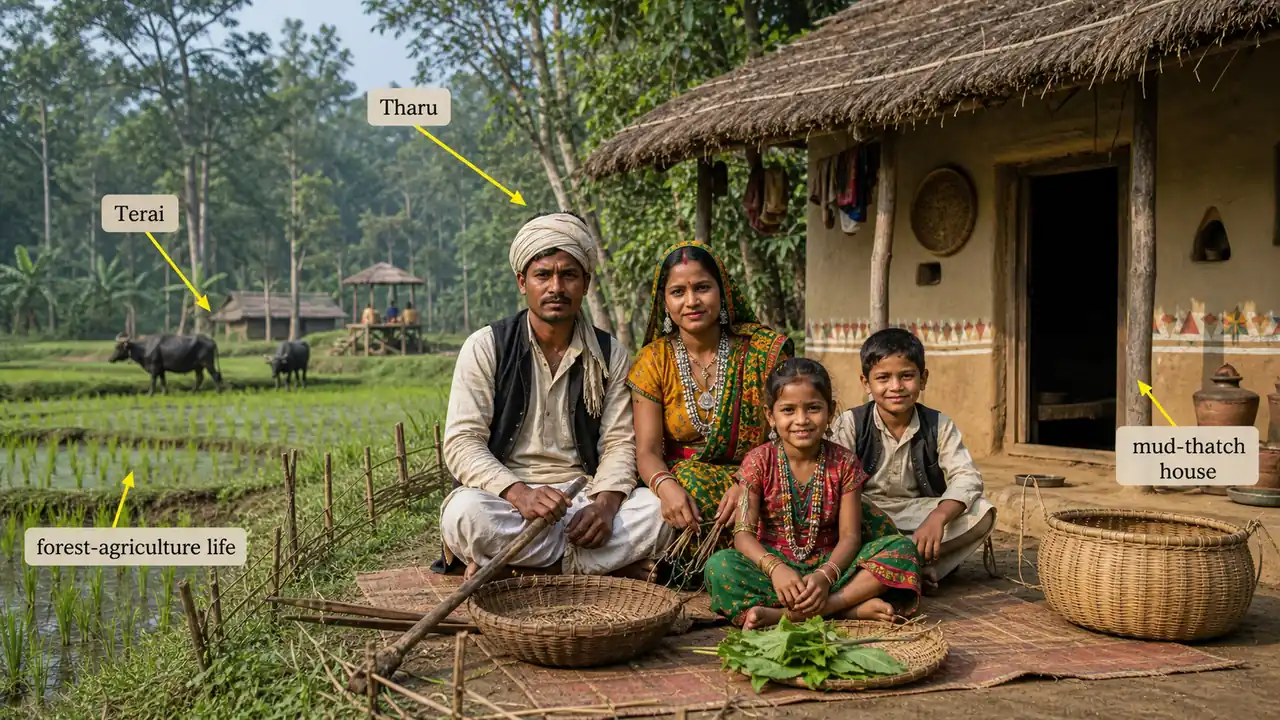
Tharu is the largest tribal group in northern UP, inhabiting the Terai region along the Indo-Nepal border.
Often described as having long historical adaptation to the Terai environment
Religion
Hindu with strong animistic traditions, worship of local deities
Festivals
Maghi (Magh month new year), Holi, Diwali
Dance
Jhumar, Sakhiyan
Housing
Mud-and-thatch houses with distinctive architecture
Connection
Dudhwa National Park falls in Tharu homeland
Some Tharu oral traditions link their ancestry with Rajput lineages, but for exam purposes the safer memory point is their long association with the Terai environment and its forest-agricultural life.
Exam Tip: Tharu = Terai + largest northern UP tribe + long association with the forest-agricultural life of the Terai.
Tharu identity is easiest to remember through Terai life: forest-edge agriculture, mud-thatch homes, and long adaptation to the wet northern border environment.
Kol — The Vindhyan People
Kol is the largest tribal group in the Vindhyan region of UP, concentrated in Sonbhadra and Mirzapur.
Aspect
Detail
Region
Sonbhadra, Mirzapur, Prayagraj (southern fringe)
Population rank
Largest tribe in southern UP
Language
Local Hindi varieties and community speech traditions
Occupation
Agriculture, stone quarrying, forest produce collection
History
Kol identity is often discussed alongside early tribal resistance traditions in eastern-central India
Religion
Hindu with animistic practices
Social structure
Clan-based, strong community bonds
Gond
Gond is one of India's largest tribal communities, with a presence in the Sonbhadra-Mirzapur belt of UP.
Aspect
Detail
Region
Sonbhadra, Mirzapur
Language
Gondi (Dravidian family) and local Hindi
History
Once ruled Gondwana kingdoms in central India
Occupation
Agriculture, forest produce, labor
Art
Gond painting tradition is associated with the wider Gond cultural world
Festival
Karma, Navakhani (new grain celebration)
Agariya — The Iron Smelters
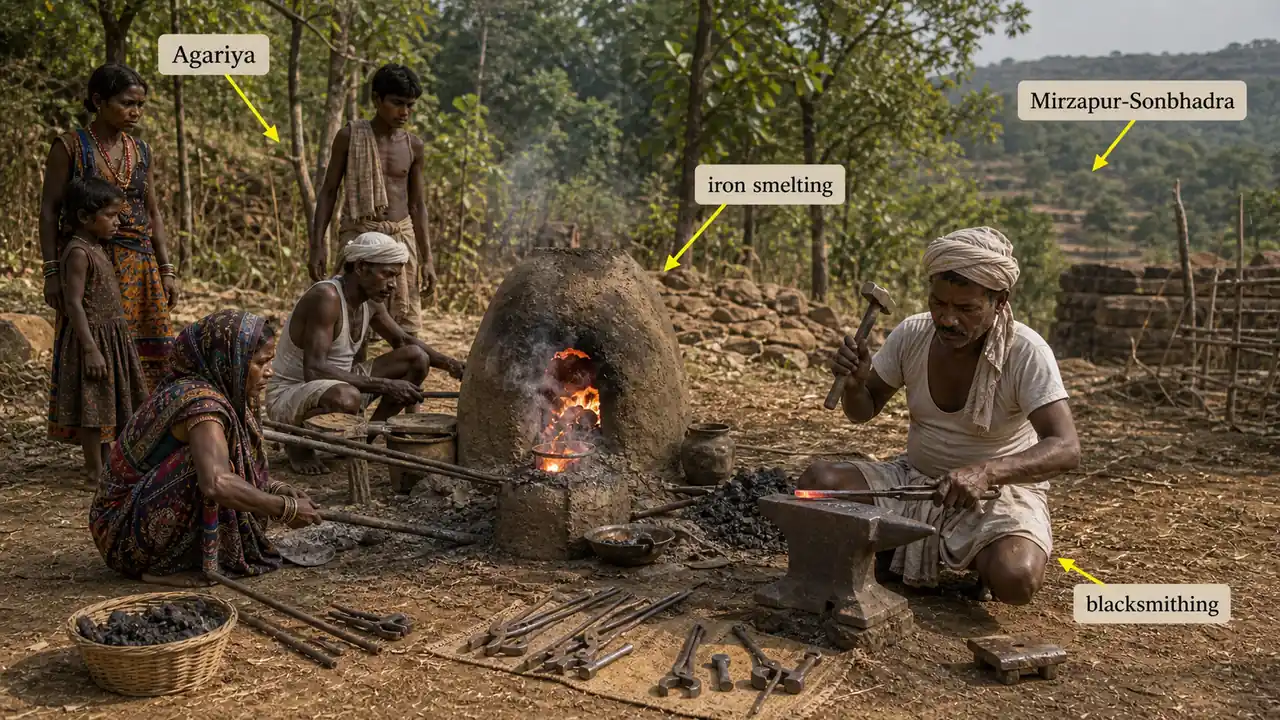
Agariya is a small but culturally significant tribe known for their traditional iron-smelting skills.
Aspect
Detail
Region
Mirzapur, Sonbhadra
Traditional occupation
Iron smelting and blacksmithing
Mythology
Oral traditions often connect them with fire and metal-working
Current status
Traditional smelting nearly extinct due to modern industry
Livelihood shift
Moved to agriculture and daily wage labor
Documented by
Ethnographer Verrier Elwin studied Agariya in detail