Agricultural Economics 📊
Agricultural Economics study material for BSc Agriculture students, covering economics, finance, marketing, agribusiness, and farm management.
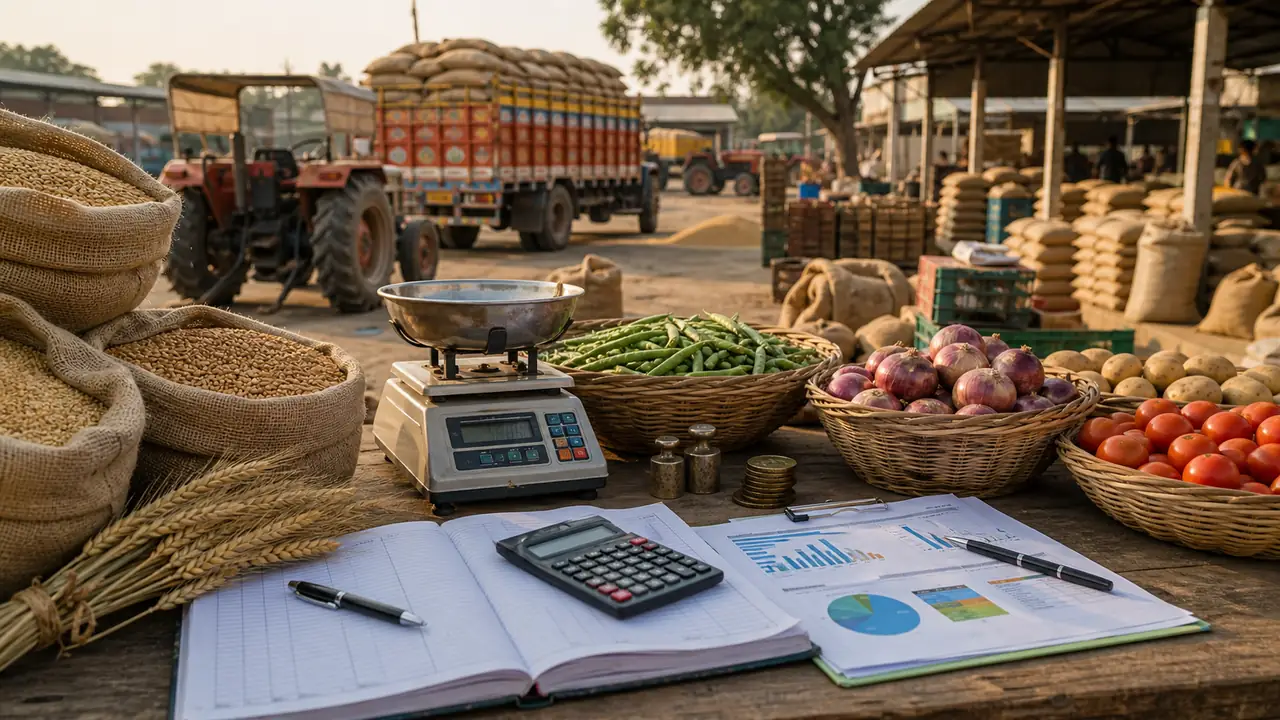
Course Structure
What's Inside


Fundamentals of Agricultural Economics
Lecture notes covering Fundamentals of Agricultural Economics as per ICAR 5th Dean Committee syllabus. Course Code: AECO 141 | Credits: 2(2+0).

Agricultural Finance and Co-Operation
Lecture notes covering Agricultural Finance and Co-Operation as per ICAR 5th Dean Committee syllabus. Course Code: AECO 241 | Credits: 3(2+1).

Agricultural Marketing, Trade and Prices
Lecture notes covering Agricultural Marketing, Trade and Prices as per ICAR 5th Dean Committee syllabus. Course Code: AECO 242 | Credits: 3(2+1).
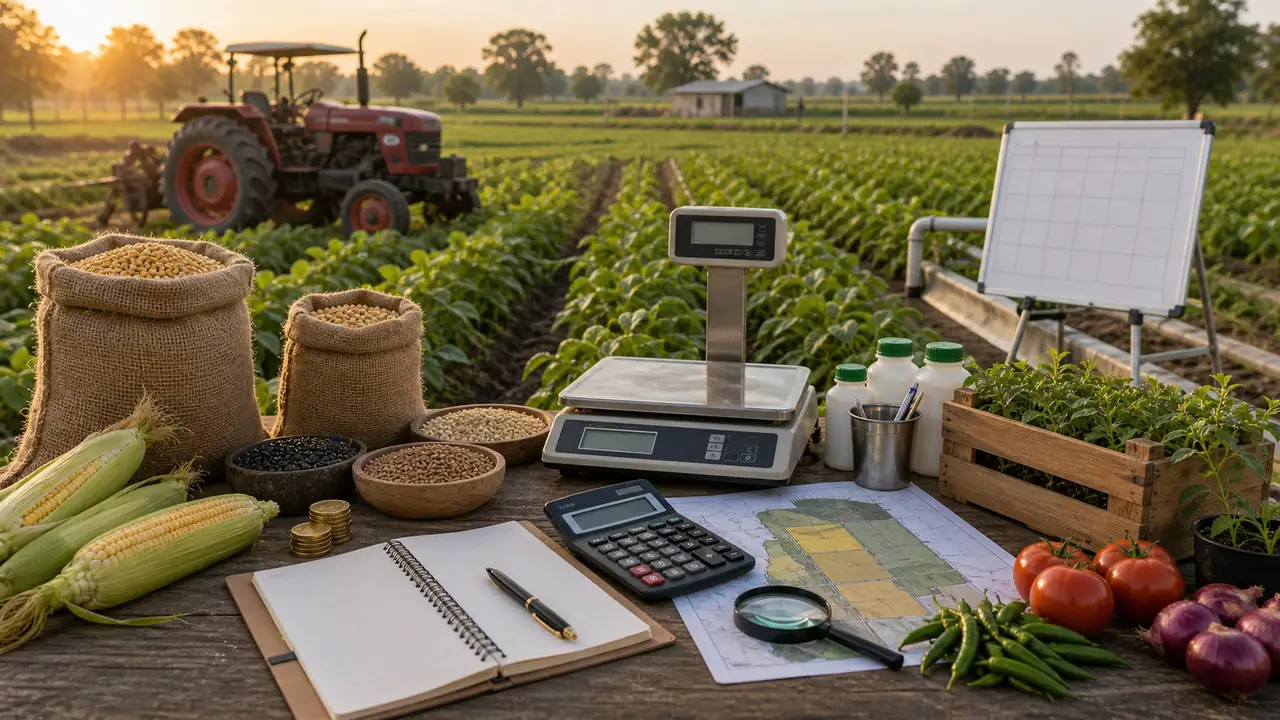
Farm Management, Production and Resource Economics
Lecture notes covering Farm Management, Production and Resource Economics as per ICAR 5th Dean Committee syllabus. Course Code: AECO 342 | Credits: 2(1+1).

Fundamentals of Agribusiness Management
Lecture notes covering Fundamentals of Agribusiness Management. Course Code: AECO 341 | Credits: 3(2+1).
Core Lessons
Direct Chapters In This Course
Agricultural Economics
Agricultural Economics explains how agriculture works as an economic system. It connects production with choice, scarcity, cost, price, credit, markets, risk, and profitability. For B.Sc. Agriculture students, this subject area is essential because farming decisions are never biological alone; they are also economic decisions.
Courses included in this section
This section currently includes the following course areas:
- Principles of Agricultural Economics
- Agricultural Finance and Cooperation
- Agricultural Marketing, Trade and Prices
- Fundamentals of Agribusiness Management
- Production Economics and Farm Management
Together, these courses take students from basic economic ideas to farm-level planning, credit systems, market structure, agribusiness, and enterprise management.
Why Agricultural Economics matters
Agriculture always operates under constraints.
- A farmer has limited land, labour, and capital.
- Inputs have a cost.
- Output prices fluctuate.
- Credit may be available, delayed, or expensive.
- Market access changes profitability.
Agricultural Economics teaches students how to reason under those constraints. It helps answer questions such as:
- Which crop combination is more profitable?
- When is additional input use no longer economical?
- How should farm records be interpreted?
- How do marketing channels affect farmer income?
- Why are credit, insurance, and cooperatives so important in agriculture?
Main learning themes
Students studying this section should expect to build understanding in:
- basic economic principles applied to agriculture
- production relationships and input-use decisions
- cost, revenue, and farm planning
- agricultural credit and institutional finance
- market systems, price policy, and trade
- agribusiness organization and management
How to study this section well
- Do not memorize definitions without examples.
- Convert every economic concept into a farm situation.
- Practice simple numerical interpretation where relevant: cost, return, budgeting, and price spread.
- Link theory with current agricultural institutions such as NABARD, PACS, APMC, FPOs, MSP, and e-NAM.
Who benefits most from this section
This subject area is especially important for students preparing for:
- NABARD and banking-related agriculture exams
- agribusiness and agri-finance careers
- agricultural extension and development roles
- MBA Agribusiness
- farm planning, consultancy, and enterprise management
Core takeaway
Agricultural Economics teaches students to understand agriculture not just as production, but as a system of resource allocation, incentives, institutions, and market outcomes.
Frequently Asked Questions
What is Agricultural Economics in BSc Agriculture?
Agricultural Economics is the part of BSc Agriculture that studies farming as an economic system involving cost, price, credit, markets, risk, and profit. It helps students understand how agricultural decisions are made when resources are limited and market conditions change.
Why is Agricultural Economics important for agriculture students?
It is important because agriculture is not only about production but also about income, efficiency, finance, and market outcomes. This subject teaches students how to evaluate profitability, compare alternatives, and understand institutions such as credit agencies, cooperatives, MSP, and agricultural markets.
What topics are included in Agricultural Economics?
This section commonly covers basic economic principles, farm management, production economics, cost and return analysis, agricultural finance, cooperation, marketing, price policy, trade, and agribusiness management. Together these topics show how farms and agricultural businesses work in real decision-making settings.
Is Agricultural Economics difficult in BSc Agriculture?
Many students find it manageable once they connect the concepts to farm examples instead of trying to memorize definitions alone. The subject feels easier when ideas like cost, returns, credit, price spread, and resource allocation are understood through practical agricultural situations.
Does Agricultural Economics include numericals?
Yes. Students usually come across simple numerical interpretation in areas such as cost concepts, budgeting, returns, price spread, farm planning, and production relationships. The focus is usually on understanding the logic behind the numbers rather than solving highly advanced mathematics.
What is the difference between farm management and agricultural finance?
Farm management deals with how farm resources and enterprises are organized for better decisions and profits, while agricultural finance focuses on credit, capital needs, borrowing, repayment, and financial institutions. Both are linked because good planning often depends on access to the right kind of finance.
Is Agricultural Economics useful for NABARD, banking, and agribusiness careers?
Yes. Agricultural Economics is highly useful for NABARD, agriculture banking, agribusiness, marketing, rural development, and agri-finance roles because those paths often require an understanding of credit, institutions, price policy, farm economics, and market systems.
How should I study Agricultural Economics for exams?
Study it by linking every concept to a real farm or market situation, practicing key definitions with examples, and revising important institutions such as NABARD, APMC, MSP, cooperatives, and e-NAM. Students usually remember this subject better when theory and application are studied together.