Agricultural Extension 📢
Agricultural Extension study material for BSc Agriculture students, covering communication, rural development, extension methods, and entrepreneurship.
Course Structure
What's Inside

Fundamentals of Agricultural Extension Education
Lecture notes covering Fundamentals of Agricultural Extension Education as per ICAR 5th Dean Committee syllabus. Course Code: AEXT 191 | Credits: 3(2+1).
Rural Sociology and Educational Psychology
Lecture notes covering Rural Sociology and Educational Psychology as per ICAR 5th Dean Committee syllabus. Course Code: AEXT 391 | Credits: 2(2+0).
Entrepreneurship Development and Business Communication
Lecture notes covering Entrepreneurship Development and Business Communication as per ICAR 5th Dean Committee syllabus. Course Code: AEXT 393 | Credits: 2(1+1).
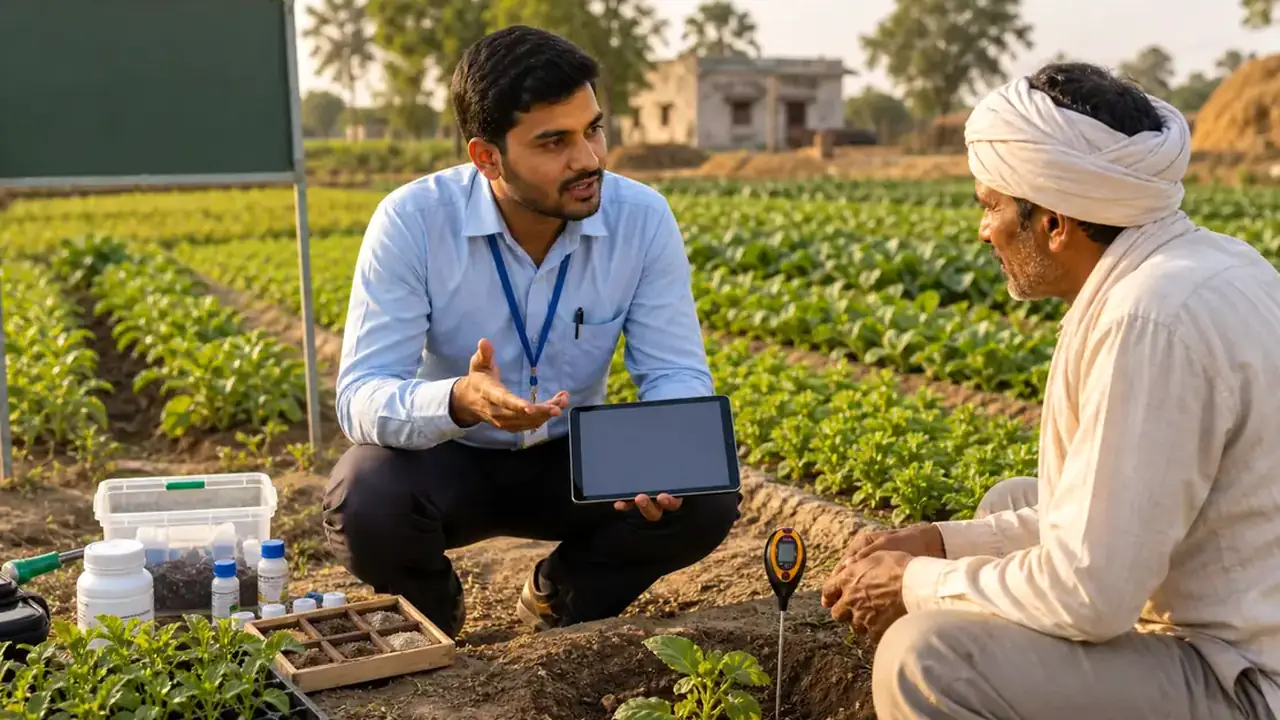
Communication Skills and Personality Development
Lecture notes covering Communication Skills and Personality Development as per ICAR 5th Dean Committee syllabus. Course Code: AEXT 194 | Credits: 2(1+1).
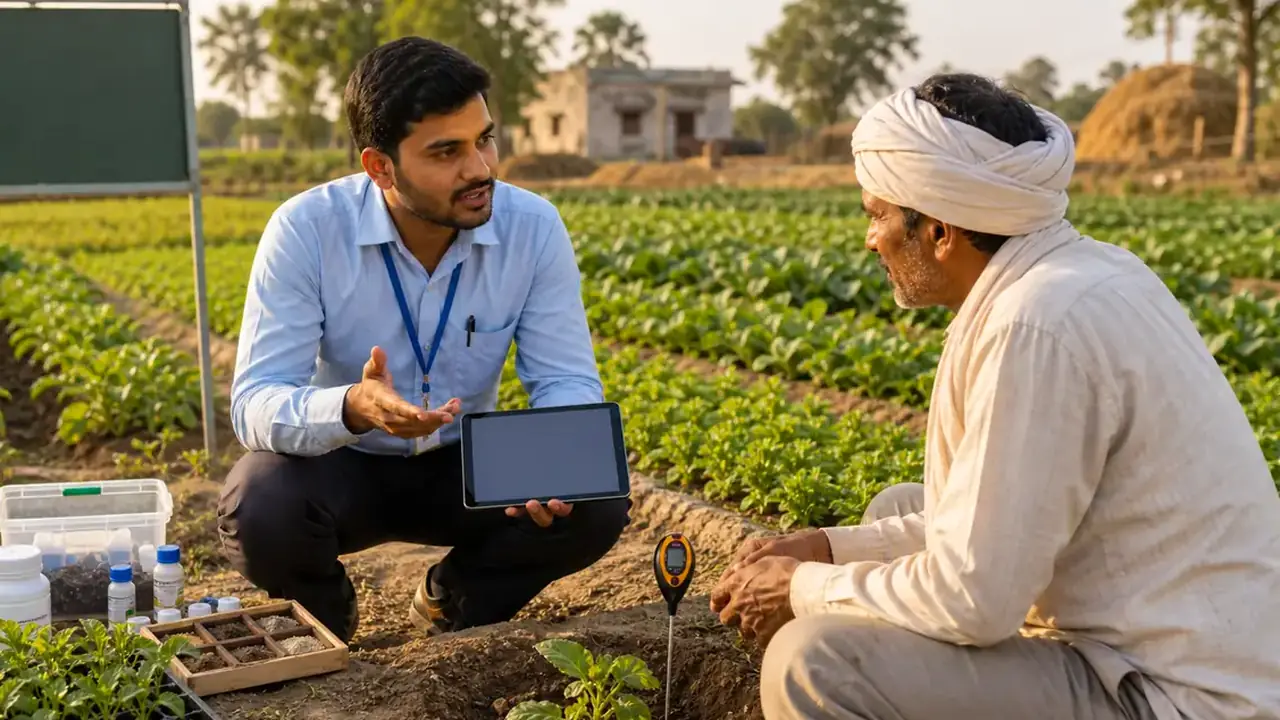
Extension Methodologies for Transfer of Agricultural Technology
Lecture notes covering Extension Methodologies for Transfer of Agricultural Technology. Course Code: AEXT 392 | Credits: 3(2+1).
Agricultural Extension
Agricultural Extension explains how agricultural knowledge reaches people. It is the discipline that connects research, universities, institutions, and technology with farmers, rural communities, and agricultural learners.
Courses included in this section
This section currently includes course areas such as:
- Dimensions of Agricultural Extension
- Communication Skills and Personality Development
- Fundamentals of Rural Sociology and Educational Psychology
- Extension Methodologies for Transfer of Agricultural Technology
- Entrepreneurship Development and Business Communication
Together, these courses explain not only what agricultural technology is, but also how people learn it, accept it, use it, and build livelihoods around it.
Why Agricultural Extension matters
Agricultural progress depends on more than good science. It also depends on whether farmers can:
- understand a recommendation
- trust it
- adapt it to local conditions
- adopt it at the right time
- sustain it economically and socially
This is why extension is central to agriculture. A technically excellent practice has little effect if communication and adoption fail.
Main learning themes
Students studying this section should expect to build understanding in:
- extension philosophy and methods
- communication skills and media use
- rural society, leadership, and behaviour
- adoption and diffusion of innovations
- technology transfer systems and institutions
- entrepreneurship and business communication
How to study this section well
- Treat extension as an applied human-science subject.
- Link each concept to real field situations: farmer meetings, demonstrations, advisories, group discussions, media messages, and rural institutions.
- Focus on how people respond to information, not just how information is delivered.
- Use examples from KVKs, ATMA, FPOs, SHGs, community radio, and digital advisory platforms.
Who benefits most from this section
This subject area is especially useful for students interested in:
- agricultural extension services
- rural development
- agri-advisory and field-officer roles
- communication and training
- entrepreneurship support systems
- competitive exams with rural-development or extension components
Core takeaway
Agricultural Extension teaches students that agriculture improves through communication, behaviour change, participation, and institutional support, not through technology alone.
Frequently Asked Questions
What is Agricultural Extension in BSc Agriculture?
Agricultural Extension is the BSc Agriculture subject area that explains how agricultural knowledge, practices, and innovations reach farmers and rural communities through education, communication, participation, and advisory systems. It helps students understand how technology adoption actually happens in real life.
Why is Agricultural Extension important in agriculture?
Agricultural Extension is important because good technology has little impact if people do not understand it, trust it, adapt it, or adopt it at the right time. This subject shows how communication, behaviour change, local participation, and institutional support influence agricultural progress.
What topics are included in Agricultural Extension?
This section commonly covers extension education, communication methods, rural sociology, educational psychology, diffusion and adoption of innovations, technology transfer, leadership, entrepreneurship, and advisory systems. Together these topics explain how agricultural information moves from institutions to people.
What is the difference between extension and technology transfer?
Technology transfer focuses on moving a technology or recommendation from one source to users, while extension is broader and includes education, feedback, participation, communication, and behaviour change around that process. In other words, extension is not only about sending information, but about helping people use it effectively.
What is diffusion of innovation in Agricultural Extension?
Diffusion of innovation is the process through which a new idea or practice spreads through communication channels over time among members of a social system. It is important in extension because it helps explain why some farmers adopt innovations early while others adopt them slowly or not at all.
What is the role of communication in Agricultural Extension?
Communication is central to Agricultural Extension because recommendations must be understood clearly before they can be accepted and used. This includes individual, group, mass-media, and increasingly digital forms of communication, each suited to different extension situations.
Is Agricultural Extension useful for jobs and competitive exams?
Yes. It is useful for careers in extension services, rural development, agri-advisory work, KVK and field-officer roles, communication-based agriculture positions, and entrepreneurship support. It is also relevant for competitive exams that include rural development, extension, or farmer-advisory topics.
How should I study Agricultural Extension for exams?
Study Agricultural Extension by linking every concept to real field situations such as demonstrations, farmer meetings, group discussions, media advisories, or digital outreach. Students usually remember this subject better when they understand how people respond to information, not just the textbook definitions.