🧬 Concepts of Plant Biotechnology
Core meaning, evolution, major branches, and agricultural applications of plant biotechnology.
Plant biotechnology makes more sense when it is studied as a progression: first, humans learned to use living organisms; later, they learned to control cells and DNA with precision. This lesson builds that progression so the later lectures on tissue culture, transgenics, QTLs, and MAS feel connected rather than isolated.
Concepts of Biotechnology
The term biotechnology was coined in 1919 by Karl Ereky. In a practical sense, it means making useful products from raw materials with the help of living organisms or their biological systems.
The idea itself is much older than the term. Human societies have long used living organisms to solve real problems:
- farmers selected better plants and animals generation after generation
- microorganisms were used in fermentation for bread, beverages, and dairy products
- cropping practices such as legume-based rotations improved soil fertility and productivity
As science advanced, biotechnology moved from observation to controlled experimentation. The discoveries of microorganisms, Mendelian genetics, and fermentation science laid the groundwork. Later, DNA research and molecular biology made it possible to work directly with genes, cells, proteins, and tissues.
Today biotechnology is used in agriculture, medicine, food processing, environmental management, and industry. In agriculture, its importance is especially clear in tissue culture, disease diagnostics, molecular breeding, and genetic engineering for resistance and quality improvement.
Definition
The word can be understood simply:
- Bio means life
- Technology means application of knowledge for practical use
So, biotechnology is the use of living organisms, cells, or biomolecules to make or improve a product, process, or service.
Other definitions for the term Biotechnology
Biotechnology is often defined from different angles:
- use of living organisms to solve problems or make useful products
- use of cells and biomolecules such as DNA, RNA, and proteins for practical outcomes
- deliberate manipulation of biological systems for commercial, medical, or agricultural use
Biotechnology is sometimes described as Janus-faced, meaning it has two sides. One side highlights powerful benefits such as higher productivity, better quality, and improved resistance. The other side reminds us that these technologies require ethical judgment, biosafety, and regulation.
Stages of Biotechnology Development
Biotechnology developed in recognizable stages:
| Stage | Broad period | Main contribution |
|---|---|---|
| Ancient biotechnology | 8000-4000 BC | Domestication, food preservation, early fermentation |
| Classical biotechnology | 2000 BC to 1800-1900 AD | Organized fermentation and wider biological use in food and medicine |
| Genetics phase | 1900-1953 | Heredity and breeding principles gained scientific foundation |
| DNA research phase | 1953-1976 | Molecular biology expanded rapidly after the discovery of DNA structure |
| Modern biotechnology | 1977 onward | Genetic engineering, tissue culture, molecular markers, genomics |
This is why biotechnology is best viewed as a collection of related technologies that improve crop yield, food quality, stress tolerance, and industrial productivity.
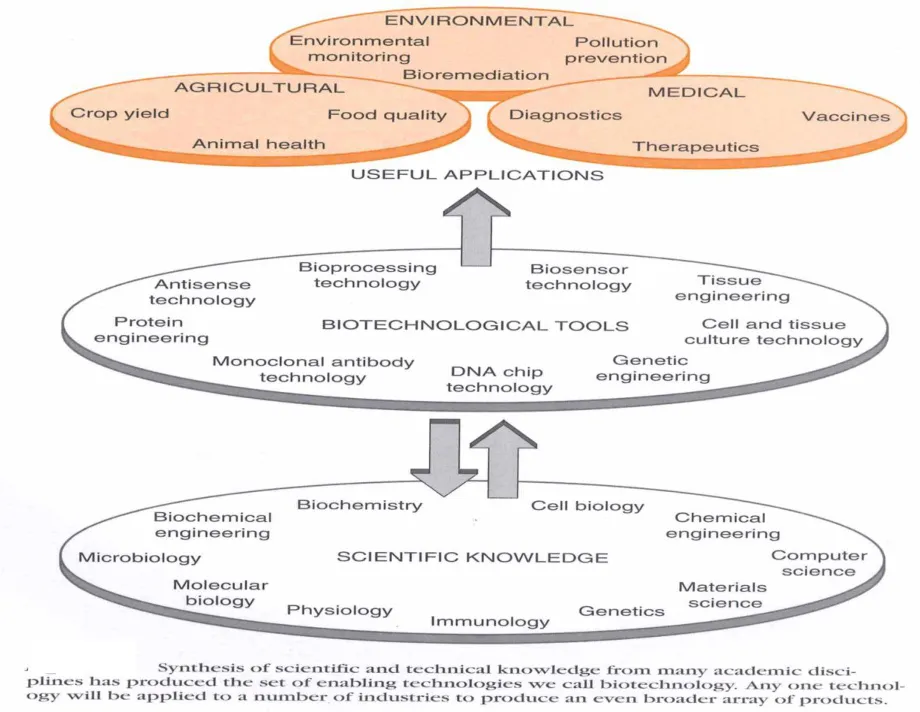
Various Technologies and Their Uses
- Genetic Engineering (Recombinant DNA) Technology
The use of cellular enzymes to manipulate DNA
Transferring DNA between unrelated organisms
- Protein Engineering Technology
Improve existing/create novel proteins to make useful products
- Antisense or RNAi Technology
Block or decrease the production of certain proteins
- Cell and Tissue Culture Technology
Grow cells/tissues under laboratory conditions to produce an entire
organism, or to produce new products
- Bioinformatics Technology
Computational analysis of biological data, e.g., sequence analysis macromolecular
structures, high-throughput profiling data analysis
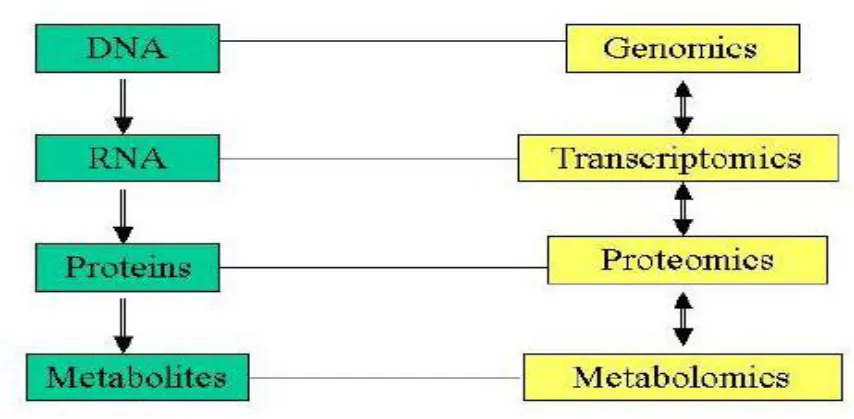
- Functional Genomics (the -omics)
The use of genome-wide, high-throughput approaches to determine the biological
function of all of the genes and their products
High-Throughput Technologies: The Omics Era
-
Transcriptomics (e.g. microarray expression profiling)
-
Proteomics (e.g. structures/modifications/interactions of proteins)
Proteins are responsible for an endless number of tasks within the cell. The
complete set of proteins in a cell can be referred to as its proteome and the study of
protein structure and function and what every protein in the cell is doing is known as
proteomics . The proteome is highly dynamic and it changes from time to time in
response to different environmental stimuli. The goal of proteomics is to understand
how the structure and function of proteins allow them to do what they do, what they
interact with and how they contribute to life processes.
- Metabolomics (e.g. metabolite profiling, chemical fingerprinting, flux analysis)
Metabolomics is one of the newest ‘omics’ sciences. The metabolome refers to the
complete set of low molecular weight compounds in a sample. These compounds
are the substrates and by products of enzymatic reactions and have a direct effect
on the phenotype of the cell. Thus, metabolomics aims at determining a sample’s
profile of these compounds at a specified time under specific environmental
conditions
-
Transgenomics (e.g. knock-out, knock-in, gene tagging, mutagenesis)
-
Translational genomics
Applications of biotechnology & genomics
Environmental biotechnology
A. Environmental monitoring
- Diagnosis of environmental problems via biotechnology
B. Waste management
- Bioremediation: the use of microbes to break down organic molecules or
environmental pollutants.
- Phyto remediation: the use of plants to remove pollutants (e.g. heavy metals) from
the environment.
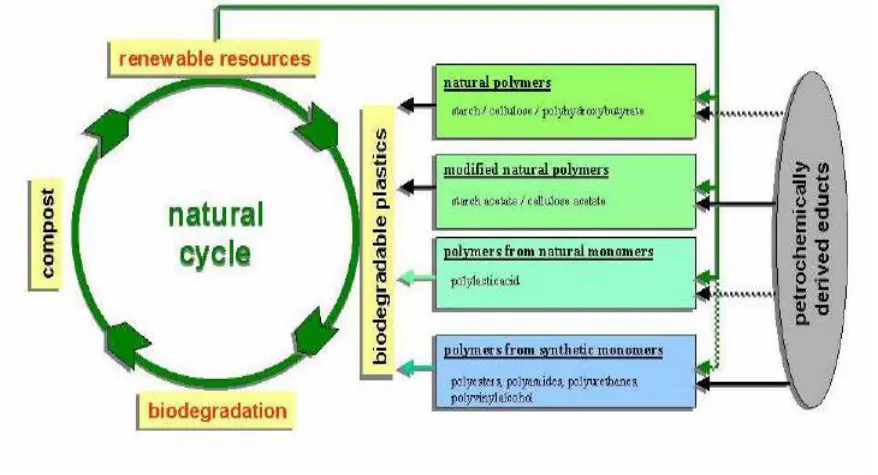
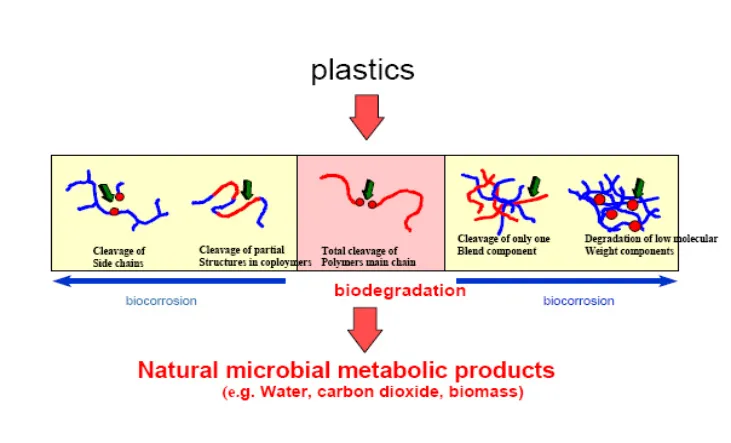
C. Pollution prevention
- Renewable resources

- Biodegradable products

- Alternative energy sources
Medical biotechnology
A. Diagnostics
B. Therapeutics
C. Vaccines
D. Medical research tools
E. Human Genome Research
Agricultural biotechnology
A. Animal Biotechnology
B. Crop Biotechnology
C. Horticultural Biotechnology
D. Tree Biotechnology
E. Food processing
Evolutionary and ecological genomics
Finding genes associated with ecological traits and evolutionary diversification.
Common goals: health, productivity
Plant biotechnology /Agricultural biotechnology
A process to produce a genetically modified plant by removing genetic information
from an organism, manipulating it in the laboratory and then transferring it into a plant to
change certain of its characteristics . In Nutshell it’s the manipulation of plants for the
benefit of mankind
The plants are mainly manipulated for two major objectives
A. Crop improvement
- Herbicide tolerance (in use)

- Pest resistance (in use)

- Drought tolerance

- Nitrogen fixing ability

- Acidity and Salinity tolerance
B. Nutritional value of crops
- Improving food quality and safety

- Healthier cooking oils by decreasing the conc. of saturated fatty acids in
vegetable oils
- Functional foods: foods containing significant levels of biologically active
components that impart health benefits
Various technologies applied in plant biotechnology includes
- Genetic engineering/ recombinant DNA technology

- Tissue culture

- Molecular breeding – MAS
Traditional plant breeding involves cross-breeding of similar plants to produce new
varieties with different traits. But it takes many generations to achieve desired result. By
using various biotechnological tools, crop improvement can be achieved faster and it even
facilitates to transfer genes from unrelated species
Genetic engineering
Manipulation of genes is called genetic engineering or recombinant DNA technology. It
removes gene(s) from one organism and either
- Transfers them to another

- Puts them back in the original with a different combination
Various gene transfer techniques used in genetic engineering includes
- Agrobacterium mediated gene transfer: Desired trait is isolated from DNA of
original organism, inserted into Agrobacterium, target plant is infected. Cells that
accept the DNA are grown into plants with the new trait.
- Gene gun: DNA that codes for the desired trait is coated onto tiny particles of
tungsten and fired into a group of plant cells. Cells that accept the DNA are grown
into plants with the desired trait.
Tissue culture
Tissue culture manipulates cells, anthers, pollen grains, or other tissues; so they live
for extended periods under laboratory conditions or become whole, living, growing
organisms; genetically engineered cells may be converted into genetically engineered
organisms through tissue culture.
Marker Assisted Selection
Marker-aided genetic analysis studies DNA sequences to identify genes, QTLs
(quantitative trait loci), and other molecular markers and to associate them with
organism functions, i.e., gene identification. Marker-aided selection is the identification
and inheritance tracing of previously identified DNA fragments through a series of
generations.
Applications of biotechnology in agriculture (plants)
A. Crop Improvement
 - Plants with built in resistance to pest and Diseases.

 - Plants with built in tolerance to environmental conditions

 - Improved color and quality
B. Pharmaceuticals
- Plants that produce edible vaccines
C. Food
 - Improved taste and nutrition

 - Improved handling qualities
D. Industrial
 - plants that produce plastics, fuels, and other products

 - plants for environmental cleanup
E. Other
- pesticides made from naturally-occurring microorganisms and insects
Applications of biotechnology in agriculture (animals)
A. Food
- Increased milk production
 - leaner meat in pork
- growth hormones in farm-raised fish that result in earlier market-ready fish
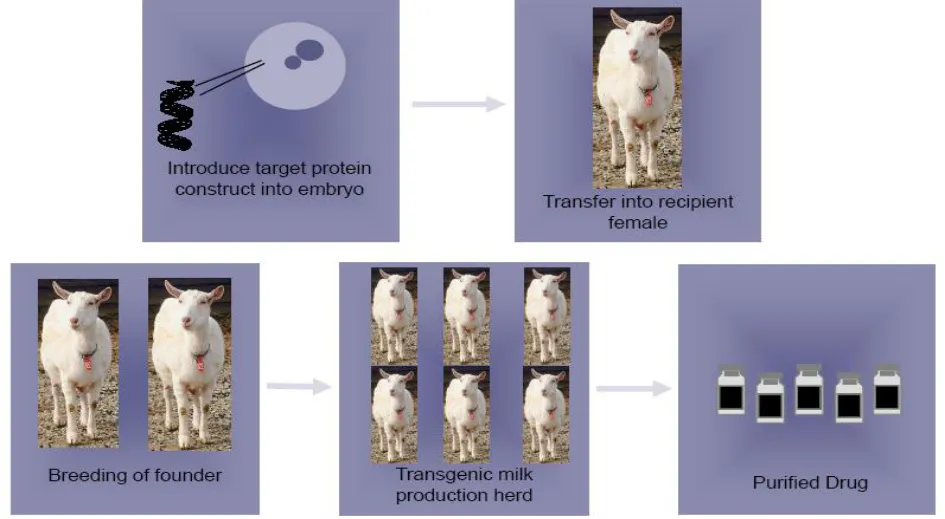
B. Pharmaceuticals
- Animals engineered to produce human proteins for drugs, including insulin
and vaccines
C. Breeding
  - Disease tolerance

  - Exact copies of desired stock

  - Increased yields
D. Health
  - Microorganisms introduced into feed for beneficial purposes

  - Diagnostics for disease and pregnancy detection

  - Animals engineered to produce organs suitable for transplantation into
humans
History of biotechnology
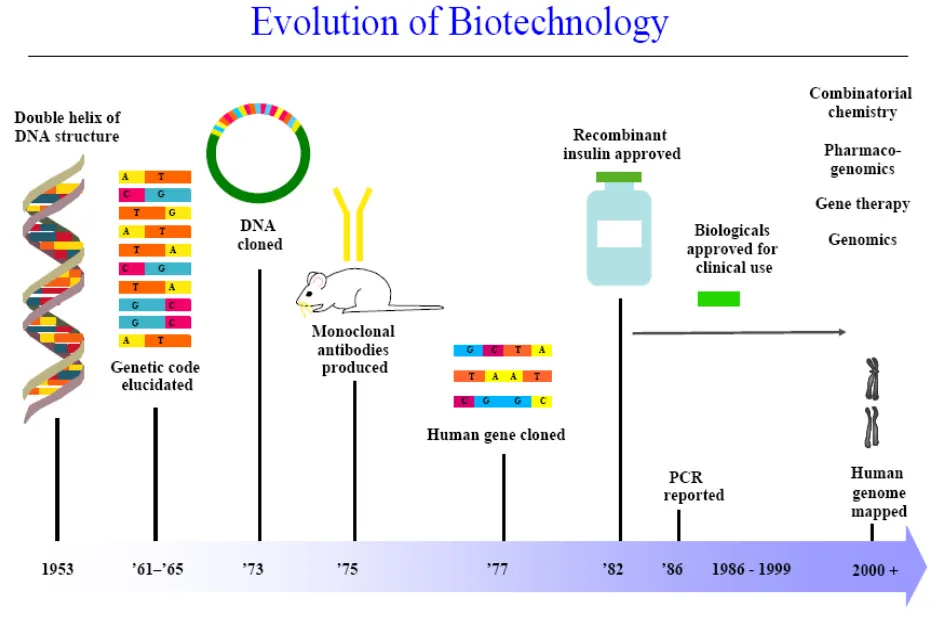 1797: First vaccination. Edward Jenner takes pus from a cowpox lesion, inserts it into an
incision on a boy's arm.
1830: Proteins are discovered.
1833: First enzyme is discovered and isolated
1865: Gregor Mendel discovers the laws of inheritance by studying flowers in his garden.
The science of genetics begins.
1915: Phages — viruses that only infect bacteria — are discovered
1927: Herman Muller discovers that radiation causes defects in chromosomes.
1944: DNA is proven to carry genetic information by Oswald Avery, Colin MacLeod and
Maclyn McCarty.
1953: James Watson and Francis Crick describe the double helical structure of DNA. They
shared the 1962 Nobel Prize in Medicine or Physiology with Maurice Wilkins.
1955: The amino acid sequence of insulin is discovered by Frederick Sanger.
1958: DNA is made in a test tube for the first time. Sickle cell disease is shown to occur due
to a change in one amino acid
1971: The first complete synthesis of a gene occurs. Discovery of restriction enzymes that
cut and splice genetic material very specifically occurs. This opens the way for gene
cloning.
1973: Stanley Cohen and Herbert Boyer perfect genetic engineering techniques to cut and
paste DNA using restriction enzymes.
1975: Georges Kohler and Cesar Milstein develop the technology to produce monoclonal
antibodies — highly specific, purified antibodies derived from only one clone of cells that
recognize only one antigen. They shared the
1984: Nobel Prize in Physiology or Medicine with Neils Jerne.
1981: The first transgenic animals are produced by transferring genes from other animals
into mice.
1983: The polymerase chain reaction (PCR) technique, which makes unlimited copies of
genes and gene fragments, is conceived. Kary Mullis, who was born in Lenoir, N.C., wins
the 1993 Nobel Prize in Chemistry for the discovery.
1986: First recombinant vaccine is approved for human use: hepatitis B. First anti-cancer
drug is produced through biotech: interferon.
1987: First approval for field tests of a genetically modified food plant: virus-resistant
tomatoes.
1994: Genetically modified tomatoes are sold in the U.S. for the first time.
1990: The Human Genome Project — an international effort to maps all of the genes in the
human genome — is launched.
2002: The draft version of the human genome is published.
1997: Scientists report the birth of Dolly, the first animal cloned from an adult cell.
1998: Human embryonic stem cell lines are established. They offer hope to many because
they may be able to replace diseased or dysfunctional cells.
2003: The SARS (severe acute respiratory syndrome) virus is sequenced three weeks after
its discovery.
2004: The first cloned pet — a kitten — is delivered to its owner. She is called CopyCat (or
Cc for short).
2006: A recombinant vaccine against human papillomavirus (HPV) receives FDA approval.
The virus causes genital warts and can cause cervical cancer.
Source:
http://www.woodrow.org/teachers/bi/1993/intro.html
http://www.biotechno.netfirms.com/Biotechnology.htm
http://en.wikipedia.org/wiki/Genetic_engineering
http://en.wikipedia.org/wiki/Marker_assisted_selection
Questions
- The term “ Biotechnology" was first coined in ……………
a) 1919 b) 1916 c) 1991 d) 1961
- The term “ Biotechnology" was first coined by …………….
a) Neuberg b) Lipmann c) Frederick Sanger’s d) Karl Ereky
- Biotechnology is used in areas including ……………………..
a) Agriculture b) Bioremediation c) Food processing d) All the above
- In agriculture, genetic engineering is being used to produce plants that are resistant to
……………….
a) insects b) weeds c) plant diseases d) All the above
- Immunoassays are used for ………………
a) drug level testing b) detection of unsafe levels of pesticides, herbicides and
toxins on crops and in animal products
c) both a anb b d) None of the above
- Genetic engineering is ………..
a) use of cellular enzymes to
manipulate DNA
c) Block or decrease the production of
certain proteins
- Protein engineering is ………..
a) use of cellular enzymes to manipulate
DNA
c) Block or decrease the production of
certain proteins
- Antisense or RNAi technology is ………..
b) Improve existing/create novel proteins to
make useful products
d) Grow cells/tissues under laboratory
conditions to produce an entire
organism, or to produce new products
b) Improve existing/create novel
proteins to make useful products
d) Grow cells/tissues under laboratory
conditions to produce an entire
organism, or to produce new products
a) use of cellular enzymes to manipulate
DNA
c) Block or decrease the production of
certain proteins
b) Improve existing/create novel proteins to
make useful products
d) Grow cells/tissues under laboratory
conditions to produce an entire
organism, or to produce new products
- Cell and tissue culture technology is ………..
a) use of cellular enzymes to manipulate
DNA
c) Block or decrease the production of
certain proteins
b) Improve existing/create novel proteins to
make useful products
d ) Grow cells/tissues under laboratory
conditions to produce an entire
organism, or to produce new products
- Bioinformatics technology is …………..
a) use of cellular enzymes to manipulate
DNA
c) Block or decrease the production of
certain proteins
- Functional Genomics
a) High-throughput approaches to
determine the biological function of all
of the genes and their products
c) Block or decrease the production of
certain proteins
b) Improve existing/create novel proteins to
make useful products
d) Computational analysis of biological
data
b) Improve existing/create novel proteins to
make useful products
d) Computational analysis of biological data
- Translational genomics include(s)……………
a) Transcriptomics alone b) Proteomics alone
c) Metabolomics and Transgenomics d) All the above
- Metabolomics include(s) …………
a) Metabolite profiling b) Chemical fingerprinting
c) Flux analysis d) All the above
- Various technologies applied in plant biotechnology includes ……………….
a) Genetic engineering/ recombinant
DNA technology
b) Tissue culture
c) Molecular breeding - MAS d) All the above
- Vaccination was first attempted by ……………………
a) Gregor Mendel b) Oswald Avery
c) Colin MacLeod d) Edward Jenner
- Vaccination was first attempted in the year……………………
a) 1797 b) 1777
c) 1787 d) 1767
- Laws of inheritance was discovered by ……………………
a) Gregor Mendel b) Oswald Avery
c) Colin MacLeod d) Edward Jenner
- The science of genetics was born in the year……………………
a) 1865 b) 1856
c) 1855 d) 1846
- Phages infect ……………………
a) Only bacteria b) Only viruse
c) Both a & b d) None of the above
- Name the scientist who discovered that radiation causes defects in chromosomes
……………………
a) Gregor Mendel b) Oswald Avery
c) Colin MacLeod d) Herman Muller
- DNA is proven to carry genetic information by……………………
a) Oswald Avery b) Colin MacLeod
c) Maclyn McCarty d) All the above
- DNA is proven to carry genetic information in the year ……………………
a) 1944 b) 1946
c) 1948 d) None of the above
- Double helical structure of DNA is described by …………………
a) James Watson b) Francis Crick
c) Both d) None of the above
- The amino acid sequence of insulin is discovered by …………………
a) James Watson b) Francis Crick
c) Frederick Sanger d) None of the above
- Sickle cell disease occurs due to a change in ……………….amino acid(s).
a) One b) Two
c) Three d) None of the above
- The first complete synthesis of a gene occurred in the …………...
a) 1917 b) 1971
c) 1791 d) None of the above
- Genetic engineering technique, to cut and paste DNA using restriction enzymes is
perfected by …………..
a) Stanley Cohen b) Herbert Boyer
c) Both d) None of the above
- The technology to produce monoclonal antibodies is developed by …….....
a) Georges Kohler b) Cesar Milstein
c) Both d) None of the above
- ……………… developed the polymerase chain reaction (PCR) technique.
a) Kary Mullis b) Georges Kohler
c) Cesar Milstein d) None of the above
- First recombinant vaccine approved for human use is …………...
a) hepatitis B b) polio
c) hepatitis C d) None of the above
- ………………. is the first genetically modified plant approved for field tests.
a) virus-resistant tomatoes b) virus-resistant brinjal
c) virus-resistant cotton d) None of the above
- Genetically modified tomatoes are sold in the U.S. for the first time in the year
…………...
a) 1994 b) 1971
c) 1991 d) None of the above
- The Human Genome Project is launched in ………………. .
a) 1990 b) 1991
c) 2000 d) None of the above
- The draft version of the human genome is published in ……..
a) 1990 b) 2000
c) 2002 d) 2004
Summary Cheat Sheet
Quick Recall Points
- Biotechnology means the practical use of living organisms, cells, or biomolecules.
- Karl Ereky (1919) coined the term biotechnology.
- The field developed from domestication and fermentation to DNA technology, genomics, and tissue culture.
- Major branches include genetic engineering, tissue culture, bioinformatics, and omics-based analysis.
Exam Traps
- Do not reduce biotechnology to only genetic engineering; the field is much broader.
- Keep the distinction clear between traditional biotechnology and modern biotechnology.
- Remember that biotechnology supports agriculture through both biological principles and laboratory tools.
References
1 source • [1]
References
Standard BSc Agriculture Plant Biotechnology notes
BookLesson Doubts
Ask questions, get expert answers