🧬 History of plant tissue
History of plant tissue.
This lesson explains the core ideas, methods, and exam-relevant applications for this topic in plant biotechnology. Focus on definitions, process steps, and practical uses for revision.
Tissue culture and its history
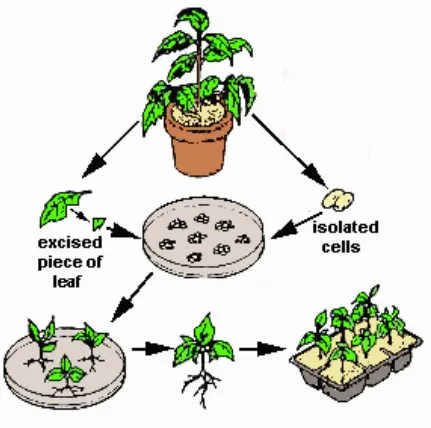
Plant tissue culture broadly refers to the cultivation in vitro of all plant parts, whether a
single cell, a tissue or organ under aseptic conditions. Recent progress in the field of plant
tissue culture made this area as one of the most dynamic and promising experimental
biology.
Overview of tissue culture process
This new technique has enabled us to increase the knowledge in the following field of
studies.
- Totipotency, nutrition, metabolism, division, differentiation and preservation of plant
cells.
- Morphogenesis and plant regeneration from individual cells or tissues through the
process namely organogenesis or somatic embryogenesis.
-
Variations generated through in vitro culture.
-
Evolution of haploids through anther and pollen culture including ovule culture.
-
Wide hybridization programmes through ovule, ovary and embryo cultures to
overcome both pre zygotic and post zygotic sterility mechanisms
-
Micropropagation of plant materials
-
In vitro selection of mutants tolerant to biotic and abiotic stresses.
-
In vitro culture and secondary metabolite biosynthesis.
-
Plant genetic engineering through in vitro culture methods and DNA transfer
technique.
 Thus plant cell, tissue and organ culture permeates plant biotechnology and cements
together its various aspects like Physiology, Biochemistry, Genetics and Cell Biology.
Like other subjects, plant cell and tissue culture has its own origin and development. The
chronology of major events in this field is presented for the benefit of the new entrants into
this field.
1756- Duharmel du Monceau H. L discovered callus formation from the decorticated elm
tree. This very old work was foreword for the discovery of plant tissue culture.
1839- Schwann, T.H expressed the view that each living cell of a multicellular organism
would be capable of developing independently if provided with proper external conditions.
1853- Trecul. A performed experiment on callus formation by decorticated trees such as
Robinia, Pawlonia and Ulmus .
1878- Vochting. H obtained very luxuriant callus from Brassica rapa and proposed the
polarity in development of buds from the upper portion and roots or callus and from the
lower portion of a stem piece.
1885- Roux, W.Z made the first experimental step in tissue culture when he removed a
fragment of the neural plate of a chick embryo and cultivated in warm salt solution.
1893- Rechinger, C described callus formation on isolated stem fragments and root slices.
1901- Morgan, T.H coined the term totipotency to describe the capability of a cell to form
an individual plant.
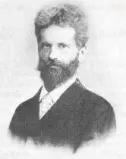
1902- Haberlandt, G - Father of plant tissue culture published a paper on "Experiments
on the culture of isolated plant cells: In that he says "I should like to point out the fact that,
in my cultures, despite the conspicuous growth of the cells which frequently occurred, cell
division was never observed. It will be the problem of future culture experiments to discover
the condition under which isolated cells undergo division". He clearly set forth the purposes
and potentialities of cell culture after having attempted and failed in the culture of isolated
plant cells. The reasons for his failure may be (i) use of three monocotyledonous genera for
much of his work, (ii) culture of mature differentiated green mesophyll and pallisade tissues,
(iii) contamination during culture growth.
Haberlandt, G - Father of plant tissue culture
 1907- Harrison, R.G devised methods of cultivating fragments of living nerve.
1910- Carrel, A was the first scientist who demonstrated the culture of living cells outside
the body of an organism.
1922- Kotte, W succeeded in cultivating small root tips of pea and maize in various
nutrients. The roots developed well and their growth was maintained for long periods but no
subculture was attempted.
1922- Robbins, W.J started cultivation of excised root tips and stem tips of maize under
sterile conditions; however, the cultures did not survive independently.
1925- Liabach, F demonstrated the most important application of the embryo culture by
crossing Linum perenae with L. austriacum to get hybrid plants from shriveled seeds.
1934- Gautheret, R.J made preliminary attempts with liquid medium for cultivating plant
tissues but failed completely. Later he cultured the explants on medium solidified with agar,
and got healthy calli from the explants.
1934- White, P.R obtained indefinite survival of cultured tomato roots on sub culturing in
liquid medium.
1939- White, P.R., Gautheret, R.J. and Nobecourt, P simultaneously announced the
possibility of cultivating plant tissues for unlimited periods.
194l- Van Overbeek, J., Conklin, M.E. and Blackeslee, A.F established importance of
coconut milk for growth and development of very young Datura embryos.
1942- White, P.R. and Braun, A.C initiated studies on crown gall and tumour formation in
plants.
1944- Skoog, F started his work on organogenesis in tobacco callus.
1946- Ball, E.A showed development of plantlets from sterile cultures of stem tips in
Tropaeolum and Lupinus. He is considered as father of micropropagation.
1947- La Rue C.D initiated endosperm cultures of Zea mays and obtained subcultures.
1948- Skoog, F. and Tsui, C studied the chemical control of growth and bud formation in
tobacco stem segments and callus cultured in vitro and suggested that callus induction and
shoot initiation can be regulated by making manipulations in the culture medium.
1949- Street, H.E. and Dormer, K.J initiated work on root culture and its nutrient
requirements.
1951- Morel, G. and Wetmore, R.H got successful culture from monocots, once
considered as recalcitrants to the cultural conditions.
1952- Steward, F.C., Caplin, S.M. and Miller, F. K discovered the synergistic action of 2,
4-D and coconut milk in a culture of potato tissue.
1952- Morel, G. and Martin, C were the first to demonstrate that virus free plants can be
recovered from infected plants through shoot meristem culture.
1953- Muir, W.H found out the cultural conditions favouring the isolation and growth of
single cells from higher plants in vitro and established nurse culture technique.
1954- Muir, W.H. Hildebrandt A.C. and Riker. A.J obtained the first suspension cultures
by transferring callus fragments to agitated liquid medium
1955- Miller, C.O., Skoog, F., Von Saltza, M. and Strong, F.M identified a cell division
factor viz ., 6-furfualamino purine commonly called kinetin.
1957- Skoog, F. and Miller, C.O advanced the hypothesis that shoot and root initiation in
cultured callus can be regulated by particular ratios of auxins and cytokinin.
1957- Skoog, F. and Miller, C.O discovered and introduced the idea of synergistic effects
of auxins and cytokinins in promoting cell division in tobacco.
1958- Steward, F.C., Mapes, M.O. and Mears, K observed the phenomenon of somatic
embryogenesis in suspension culture of carrot. They also reported that cells in suspension
derived from explanted roots of cultivated carrots were capable of forming unorganised cell
clusters, which in turn could yield first roots, then shoots and ultimately whole plants.
1959- Reinert, J observed the somatic embryo formation from callus cultures of carrot
grown on an agarified medium.
1959- Melchers, G. and Bergmann L were first to culture haploid tissues other than pollen.
1960- Cocking, E.C discovered the technique of isolation and culture of protoplasts after
digesting the cell walls enzymatically and demonstrated new cell wall regeneration on
protoplasts from tomato fruit locule tissue.
1960- Bergmann L was first to obtain callus by plating cells from suspension cultures on to
solid medium. This plating involved mixing cells with warm sugar medium just prior to
gelation in petridish (Bergmann plating technique)
1960- Morel, G discovered a technique to produce virus free progenies by meristem culture
in Cymbidium.
1964- Guha, S. and Maheshwari, S.C cultured mature anthers of Datura innoxia to study
the physiology of meiosis and accidentally noticed the development of embryoids from the
anthers plated on basal medium supplemented with kinetin and coconut milk.
1965- Vasil, V. and Hildebrandt, A.C described rearing of a mature tobacco plant from a
single cell grown initially in microculture.
1966- Torrey, J.G advanced the hypothesis that organogenesis in callus is initiated with the
formation of clusters of meristematic cells called meristemoids.
1966- Stroun, M. Anker, P., Charles, P. and Le Doux L made DNA transfer in tomato
under in vitro conditions.
1970- Kasha, K. J and Kao, K.N produced haploid plants of Hordeum vulgare by in vitro
culturing of embryos obtained by cross Hordeum vulgare with Hordeum bulbosum in which
elimination of bulbosum chromosome occurred.
1971- Takebe, I., Labib, G. and Melchers, G regenerated whole plants from isolated
mesophyll protoplasts of tobacco.
1971- Bendich, A.J. and Filner, P used the cells and tissues in culture for transformation
studies.
1972- Withers, L. and Cocking, E.C laid foundation for the protoplast fusion technique.
1973- Potrykus, I made the first attempt on chloroplast and nucleus transfer from Petunia
hybrida into albino protoplasts of the same species.
1974- Melchers, G. and Labib, G proposed hybrids resembling the sexual hybrids by
fusing protoplasts of two varieties of Nicotiana tabacum
1974- Murashige, T developed the concept of developmental stages in cultures in vitro :
Stage I: Explant establishment; Stage II: Multiplication of propagule and Stage III: Rooting
and hardening for planting into soil.
1975- Morel, G established cold storage of regenerated plants for a year.
1976- Mullin, R.H. and Schlegal, D.E successfully employed cold storage to maintain in
vitro virus free plantlets of strawberry.
1976- Seibert, M established shoot initiation from carnation shoot apices frozen to -196xC.
1978- Zelcer, A., Aviv, D. and Galun E developed a protoplast fusion procedure called
Donor - Recipient protoplast fusion to favour organelle transfer among plants.
1979- Polacco, J.C. Sparks, R.B. and Havir, E.A described the cloning of soyabean
urease structural gene by the vector mediated transfer system.
1980- Gleba Y. Y. and Hoffmann F synthesized a new plant " Arabidobrassica by fusing
the protoplasts Arabidopsis and Brassica .
1981- Larkin, P.J. and Scowcroft, W.R developed the concept of somaclonal variation: A
noval source of variability from cell cultures for plant improvement.
1981- Patnaik, G., Wilson, D. and Cocking, E.C regenerated a whole plant from a single
free cultured tobacco protoplast.
1982- Krens, F.A., Molondijk, L. Williams G. J. and Schilperoort, R.A developed poly
ethylene glycol method for the direct delivery of DNA into protoplasts.
1983- Zambryski, P. Joos, H., Genetello, C., Leemans, J. Van Montagu M. and Schell
Constructed Ti plasmid vector for the introduction of DNA into plant cells without alteration
of their normal regeneration capacity.
l984- Watts , J. W. and King, J. M developed a simple method for large scale electrofusion
of protoplasts.
l984- Brisson, N. Paszkowski, J. Penswick, J. R. Gronenborn, B. Potrykus, I. and
Hohn, T Achieved transformation in which part of the cauliflower mosaic virus genome was
replaced by selectable marker.
1985- Gheysen, G. Dahese, P., Van Montaque, M. and Schell, J developed very efficient
gene transfer system using natural gene transfer mechanism of Agrobacterium tumifaciens.
1985- Cocking E. C exposed plasma membrane in the tips of root hairs of wide range of
crop plants. The procedure enabled whole seedlings to have the plasma membrane at the
tips of their root hairs exposed to foreign DNA and other microorganisms.
1985- Tabata, M. and Fujita, Y developed the technique of elucidation of the physical and
chemical factors controlling the biosynthesis of the red napthoquinone pigments by
Lythospermum erythrorhizon .
1986- Crossway, A. Oakes, J.V., Irvine , J.M., Ward B. Knauf, V.C. and Shewmaker,
C.K developed a direct way of transferring cloned genes into protoplasts by microinjection
of DNA directly into the nucleus of tobacco mesophyll protoplasts.
1986-Hamill, J. D. Parr, A. J., Robins, R. J. and Rhodes, M.J.C established hairy root
cultures of Beta vulgaris and Nicotinna rustica following infection with Agrobacterium
rhizogenes and the transformed cultures synthesized their characteristic secondary
products at levels comparable with those of in vitro roots from the same variety.
1986- Abdullah, R., Cocking, E.C., and Thompson, J.A demonstrated that normal green
rice plants can be regenerated efficiently and reproducibly from rice protoplasts via Somatic
embryogenesis.
1986- Pirrie, A. and Power, J.B produced fertile, interspecific gametosomatic triploid
hybrids of tobacco by fusing protoplasts of leaf (2n) and pollen tetrad (n).
1986- Kinsara A., Patnaik, S.N., Cocking, E.C. and Power, J.B produced somatic hybrids
between Lycopersicon esculentum and L. peruvianum .
1987- Terada, R., Kyozuka, J., Nishibayashi, S., and Shimamoto, K regenerated
plantlets form somatic hybrid cells of Oryza sativa, and Echinochloa oryzicola .
1987- Ethlenfelt, N.K. and Helgeson, J.P produced tetroploid and hexaploid somatic
hybrids from protoplast fusions between Solanum bravidens (2x, non tuber bearing species)
and 2x and 4x S. tuberosum .
1987- Neuhaus, G., Spangenberg, G. Mittelsten Sheid, O and Schweiger, H.G effected
gene transfer by microinjecting the DNA into the cells of microspore derived proembryos.
1987- De la Pe$a, A., Lornz, H., Schell, J developed transgenic rye plants obtained by
injecting DNA into young floral tillers.
1988- Nomoru, K. and Komamine, A used single cells of carrot from a cell suspension
instead of protoplasts, for microinjection and the microinjected carrot cells could divide and
differentiated to embryos at a frequency of about 50 percent.
1988- Rhodes, C.A., Pierce, D.A., Mettler, I. J.. Mascarenhas, D. and Detmer J.J
produced transgenic maize plant by electroporation.
1988- Toriyama, K., Arimoto, Y. Uchimiya, H, and Hinata K produced transgenic rice
plant by electroporation.
1989- Shimamoto, K., Terada, R., Izawa, T. and Fujimoto, H produced fertile transgenic
rice plants regenerated from transformed protoplasts.
1989- Prioli, L. M. and Sondahl, M. R recovered fertile plants from protoplasts of maize.
1990- Milanova, V. and Zagorska, N. A succeeded in overcoming hybrid incompatibility
between Nicotiana africana and N. tabacum and produced cytoplasmic male sterile plants
by embryo culture.
1990- Iida, A., Seki, M. Kamada, M. YHamada Y. and Morikawa delivered genes into
cultured plant cells by DNA-coated gold particles accelerated by a pneumatic particle gun.
1991- Kyozuka, J. Fujimoto, H., Izawa, T. and Shimamoto- K succeeded in getting tissue
specific expression of maize alcohol dehydrogenase l gene in transgenie rice plants and
their progenies.
1991- Spangenberg, G., Fredyl, E., Osusky, M. Nagel, J. and Potrykus, I developed a
method for the predictable transfer of partial genomes predictable transfer of partial
genomes by using sub protoplasts (cytoplasts and karyoplasts).
1991- Sautter, C., Waldner, H. Neuhaus, G., Galli, A. Neuhaus, G. and Potrykus
developed a novel method for the acceleration of micro projectiles. The method is called as
micro targeting.
The history of plant tissue culture had its real beginning in 1934 when Gautheret tried to
cultivate isolated cells and root tips on organised medium. The momentum from this
pioneering work, a new turn in this ongoing research occurred, because of World War II.
After the Second World War, American plant pathologists became interested in plant tissue
culture.
As Steward (1970) pointed out, the plant tissue culture technique is another " Silent
Revolution in Agriculture " having very good potentials to supplement conventional
breeding approaches. Its potentials and prospects are discussed in subsequent chapters.
The techniques' theoretical aspects and their applicabilities are simplified and presented.
Genetic engineering
Manipulation of genes is called genetic engineering or recombinant DNA technology. It
removes gene(s) from one organism and either
-
Transfers them to another
-
Puts them back in the original with a different combination
Current interest in genetic engineering centres on its various applications, such as:
-
Isolation of a particular gene, part of a gene, or region of a genome
-
Production of particular RNA and protein molecules in quantities formerly thought to
be unobtainable
- Improvement in the production of biochemicals (such as enzymes and drugs) and
commercially important organic chemicals
- Production of varieties of plants having particular desirable characteristics (for
example, requiring less fertilizer or being resistant to disease)
-
Correction of genetic defects in higher organisms
-
Creation of organisms with economically important features (for example, plants
capable of maturing faster or having greater yield).
The basic requirements for successful genetic engineering are
-
Restriction enzymes
-
Cloning vehicles (vectors) to carry the genes of interest
-
Detection and selection of cloned genes.
Various gene transfer techniques used in genetic engineering includes
- Agrobacterium mediated gene transfer : Desired trait is isolated from DNA of
original organism, inserted into Agrobacterium, target plant is infected. Cells that
accept the DNA are grown into plants with the new trait.
- Gene gun : DNA that codes for the desired trait is coated onto tiny particles of
tungsten and fired into a group of plant cells. Cells that accept the DNA are grown
into plants with the desired trait.
A model genetic engineering of a plant comprises the following general steps:
- Selection of a plant gene whose introduction in other plants would be of positive
agricultural value;
-
Identification and isolation of such genes;
-
Transference of isolated genes to the plant cell;
-
Regeneration of complete plants from transferred cells or tissues.
Some of the goals of plant genetic engineers include production of plants that are
-
Resistant to herbicide, insect, fungal and viral pathogens
-
Improved protein quality and amino acid composition
-
Improved photosynthetic efficiency,
-
Improved post harvest handling.
This technology could provide an additional tool for the plant breeder who is trying to
improve crops by traditional methods. In addition, plants can be viewed as a genetic
resource, genes being cloned into, and expressed in bacteria. These bacteria may then be
used to produce desirable plant products on an industrial scale using fermenter. The first
transgenic plants expressing engineered foreign genes were recovered in 1984.
Dramatic progress has been made in the last few years in the development of a gene
transfer system for higher plants. About 20 crops can be genetically engineered at present.
Rapid progress is being made in the genetic manipulation of many species and almost
every month another successful plant transformation is reported.
Questions
- Callus formation in the decorticated elm tree was discovered by ……..
a) Duharmel du Monceau b) Morgan, T.H
c) Haberlandt d) Rechinger
- Who’s work was foreword for the discovery of plant tissue culture?.
a) Duharmel du Monceau b) Morgan, T.H
c) Haberlandt d) Rechinger
- Name the scientist who expressed the view that each living cell of a multicellular
organism would be capable of developing independently if provided with proper external
conditions.
a) Duharmel du Monceau b) Schwann
c) Haberlandt d) Rechinger
- Name the scientist who proposed the polarity in development of buds from the upper
portion and roots or callus and from the lower portion of a stem piece.
a) Duharmel du Monceau b) Morgan, T.H
c) Haberlandt d) Vochting
5. Callus formation on isolated stem fragments and root slices is described by ……….
a) Duharmel du Monceau b) Morgan, T.H
c) Haberlandt d) Rechinger
- The term totipotency was coined by ……..
a) Duharmel du Monceau b) Morgan, T.H
c) Haberlandt d) Rechinger
- The term totipotency means ……..
a) the capability of a cell to form an
individual plant
b) the capability of a cell to form an
individual cell
c) both a & b d) None of the above
- Father of plant tissue culture is ……..
a) Duharmel du Monceau b) Morgan, T.H
c) Haberlandt d) Rechinger
- The embryo culture was first demonstrated by ……..
a) Robbins b) Harrison
c) Liabach d) Kotte
- Father of micropropagation is ……..
a) Ball b) Harrison
c) Robbins d) Kotte
- The work on organogenesis in tobacco callus is first started by……..
a) Ball b) Skoog
c) Robbins d) White
- ………………. initiated studies on crown gall and tumour formation in plants
a) White b) Braun
c) Both a & b d) None of the above
- Who demonstrated that virus free plants can be recovered from infected plants through
shoot meristem culture
a) Morel b) Martin
c) Both a & b d) None of the above
- The nurse culture technique was established by ……………….
a) White b) Braun
c) Muir d) None of the above
- The first suspension culture by transferring callus fragments to agitated liquid medium
was obtained by ……………….
a) Hildebrandt b) Riker
c) Muir d) All the above
- Kinetin was identified by ……………….
a) Miller b) Skoog
c) Von Saltza and Strong d) All the above
- The phenomenon of somatic embryogenesis in suspension culture of carrot was
observed by ……………….
a) Steward b) Mapes
c) Mears d) All the above
- The first suspension culture by transferring callus fragments to agitated liquid medium
was obtained by ……………….
a) Hildebrandt b) Riker
c) Muir d) All the above
- The somatic embryo formation from callus cultures of carrot grown on an agarified
medium was observed by ……………..
a) Hildebrandt b) Reinert
c) Muir d) All the above
- the technique of isolation and culture of protoplasts after digesting the cell walls
enzymatically was discovered by ……………….
a) Hildebrandt b) Cocking
c) Muir d) All the above
- The plating technique was invented by ……………….
a) Bergmann b) Riker
c) Muir d) All the above
- Meristem culture was discovered by ……………….
a) Bergmann b) Riker
c) Morel d) All the above
- Anther culture was discovered by ……………….
a) Guha b) Maheshwari
c) Both a & b d) None of the above
- The concept of developmental stages in cultures in vitro culture was developed by
……………….
a) Murashige b) Skoog
c) Both a & b d) None of the above
- The concept of developmental stages in cultures in vitro culture was developed by
……………….
a) Murashige b) Skoog
c) Both a & b d) None of the above
- The poly ethylene glycol method for the direct delivery of DNA into protoplasts was
developed ……………….
a) Krens b) Molondijk
c) Williams d) All the above
- A simple method for large scale electrofusion of protoplasts was developed by
……………….
a) Watts b) King
c) Both a & b d) None of the above
- The basic requirements for successful genetic engineering are ……………….
a) Restriction enzymes b) Cloning vehicles (vectors)
c) Detection and selection of cloned genes d) All the above
Summary Cheat Sheet
Quick Recall Points
- Define key terms in one line and revise their use in plant biotechnology.
- Memorize major steps, methods, and applications covered in this lesson.
- Practice exam-style distinctions between related concepts and techniques.
Exam Traps
- Do not confuse similar terms without checking context and biological level.
- Revise process order carefully; sequence-based questions are common.
- Link each method with its most likely application question.
References
1 source • [1]
References
Standard BSc Agriculture Plant Biotechnology notes
BookLesson Doubts
Ask questions, get expert answers