Horticulture
A practical BSc Agriculture horticulture gateway covering core crop production, propagation, floriculture, plantation crops, and post-harvest topics.
Course Structure
What's Inside
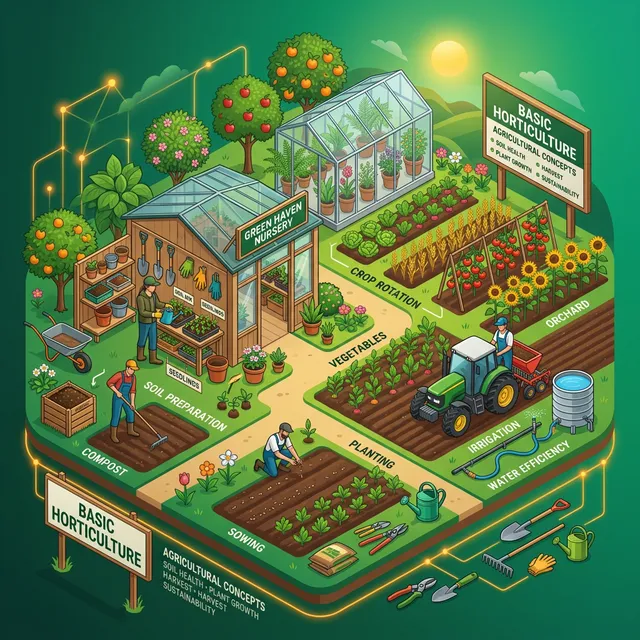

Fundamentals of Horticulture
Lecture notes covering Fundamentals of Horticulture as per ICAR 5th Dean Committee syllabus. Course Code: HORT 180 | Credits: 2(1+1).
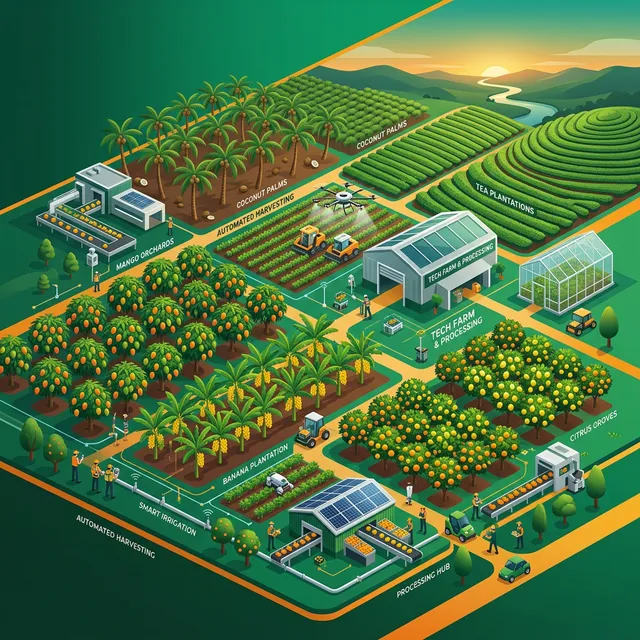
Production Technology for Fruit and Plantation Crops
Lecture notes covering Production Technology for Fruit and Plantation Crops as per ICAR 5th Dean Committee syllabus. Course Code: HORT 181 | Credits: 2(1+1).
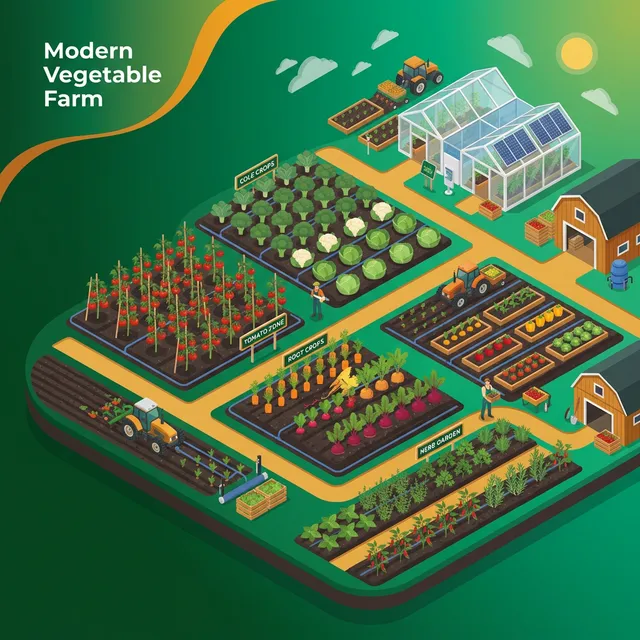
Production Technology of Vegetables and Flowers
Lecture notes covering Production Technology of Vegetables and Flowers. Course Code: HORT 281 | Credits: 2(1+1).
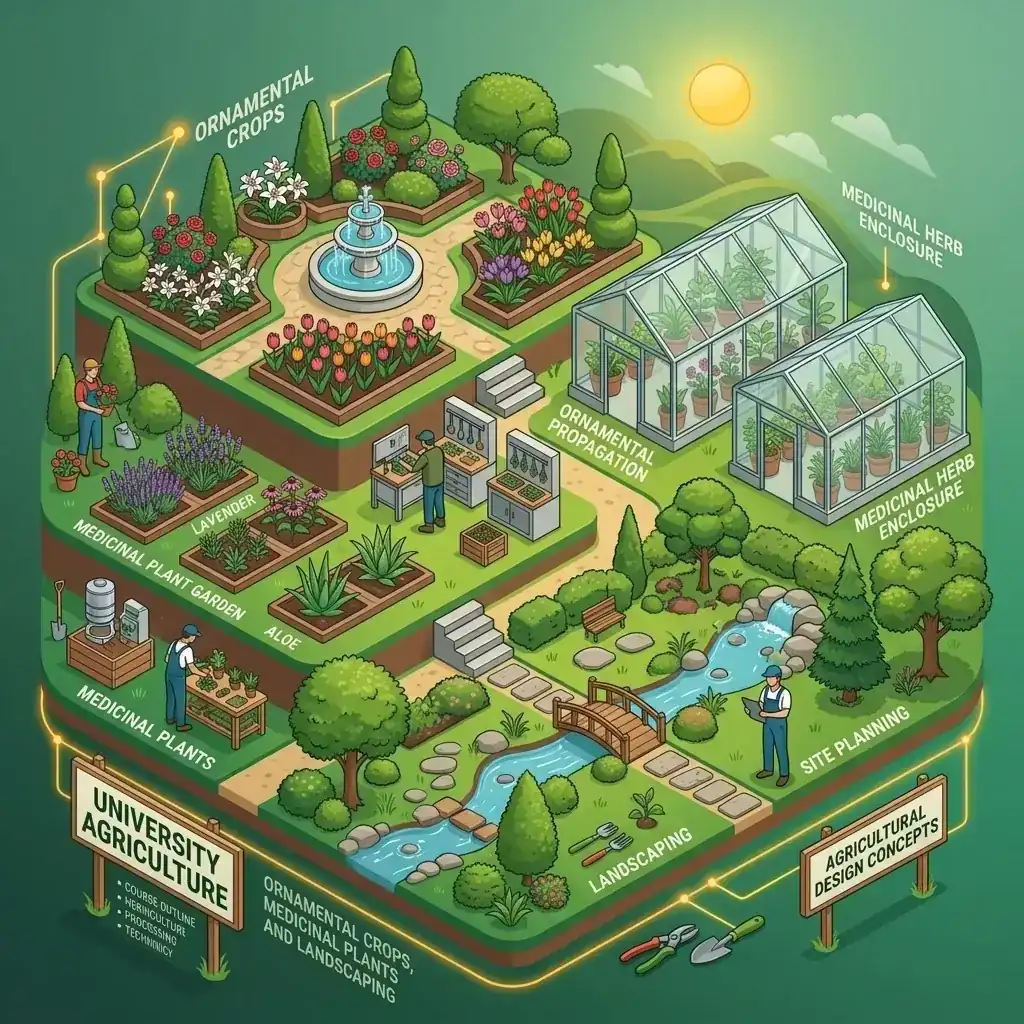
Production Technology for Ornamental Crops, MAPs and Landscaping
Lecture notes covering Production Technology for Ornamental Crops, MAPs and Landscaping as per ICAR 5th Dean Committee syllabus. Course Code: HORT 284 | Credits: 2(1+1).
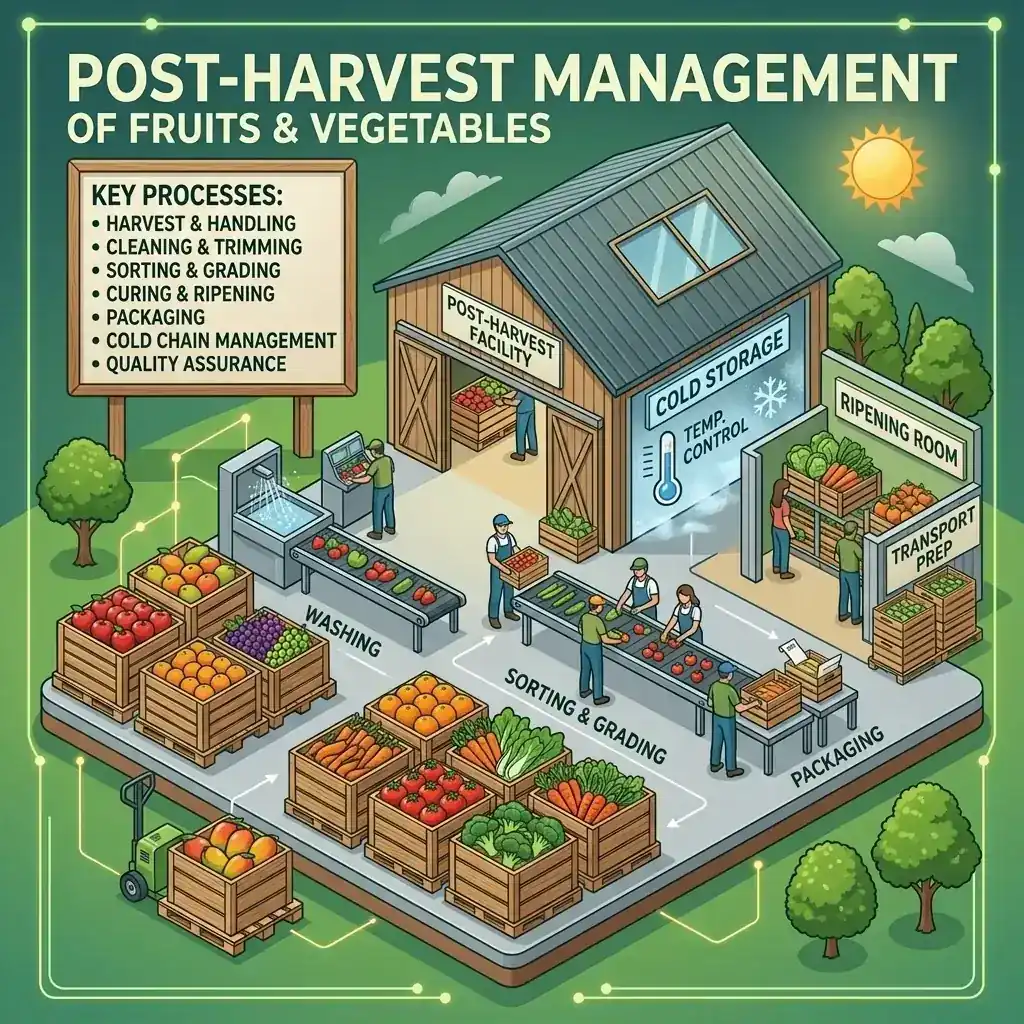
Post-harvest Management and Value Addition of Fruits and Vegetables
Lecture notes covering Post-harvest Management and Value Addition of Fruits and Vegetables as per ICAR 5th Dean Committee syllabus. Course Code: HORT 381 | Credits: 2(1+1).
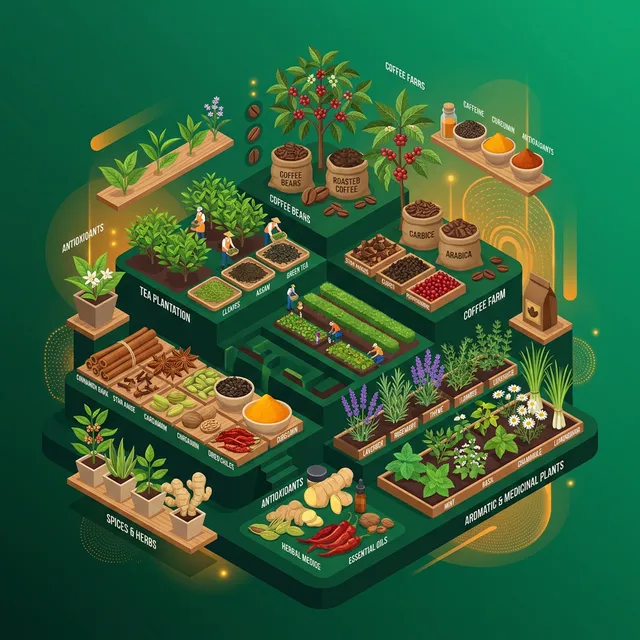
Production Technology of Spices, Aromatic, Medicinal and Plantation Crops
Lecture notes covering Production Technology of Spices, Aromatic, Medicinal and Plantation Crops. Course Code: HORT 282 | Credits: 2(1+1).
Horticulture
Horticulture is the branch of agriculture focused on the science and management of fruits, vegetables, flowers, plantation crops, spices, and high-value plant products. In BSc Agriculture, it connects plant biology with practical crop production, nursery work, quality improvement, and value addition.
Courses included in this section
- Fundamentals of Horticulture
- Production Technology of Fruit Crops
- Production Technology of Vegetables and Flowers
- Production Technology of Spices, Aromatic, Medicinal and Plantation Crops
- Production Technology of Ornamental Crops, MAPs and Landscaping
- Post-Harvest Management and Value Addition of Fruits and Vegetables
Why Horticulture matters
Horticulture matters because it deals with some of the most nutrition-rich and high-value crops in agriculture. It supports farm income, diet quality, export potential, nursery business, protected cultivation, processing industries, and employment across production, handling, and marketing.
Main learning themes
Students using this section will study plant propagation, nursery management, orchard establishment, crop-wise production technology, flowering and fruiting behaviour, protected cultivation, ornamental horticulture, medicinal and aromatic plants, and post-harvest handling. The subject also trains students to compare crops through a common framework: climate, soil, varieties, planting material, crop management, harvest, and value addition.
How to study this section well
Start with fundamentals before moving into crop-specific courses. For each crop, make short notes under the same headings: importance, climate, soil, varieties, propagation, planting, interculture, irrigation, nutrition, pests and diseases, harvesting, and yield. Revise by comparing fruit, vegetable, flower, spice, and plantation crops side by side instead of memorizing them in isolation.
Who benefits most from this section
This section is especially useful for BSc Agriculture students building semester-wise subject clarity, exam aspirants who need direct recall of crop-production practices, and learners interested in nursery management, floriculture, fruit production, vegetable cultivation, protected farming, or post-harvest enterprises.
Core takeaway
Horticulture teaches how to grow, manage, protect, harvest, and add value to diverse high-value crops. If students understand the common production logic and then apply it crop by crop, this subject becomes far easier to study and revise.
Frequently Asked Questions
Why is horticulture important in BSc Agriculture?
Horticulture is important because it covers high-value, nutrition-rich crops such as fruits, vegetables, flowers, spices, and plantation crops, which play a major role in farm income, diet quality, and value-added agriculture.
What are the main branches of horticulture?
The main branches of horticulture commonly include pomology for fruit crops, olericulture for vegetable crops, floriculture for flowers, plantation crops, spices and medicinal plants, nursery management, and landscaping or ornamental horticulture.
How is horticulture different from field agriculture?
Horticulture usually focuses on intensive management of high-value garden crops with more emphasis on propagation, quality, pruning, harvesting, and post-harvest handling, while field agriculture often centers on broad-acre staples and larger production systems.
Why do agriculture students study horticulture?
They study horticulture because it builds practical understanding of propagation, nursery work, orchard management, crop-wise production, protected cultivation, and post-harvest value addition across many commercially important crops.
How should students study horticulture effectively?
Students should use the same revision structure for each crop, such as importance, climate, soil, varieties, propagation, planting, interculture, irrigation, nutrition, harvest, and yield, so crop-wise comparison becomes easier.
What careers or opportunities connect with horticulture?
Horticulture supports careers and enterprises in fruit and vegetable production, nursery management, floriculture, landscaping, protected cultivation, post-harvest handling, processing, and high-value crop advisory work.