🧫 Soil formation factors
Covers CLORPT soil-formation factors and their influence on soil properties and distribution.
Soil develops through weathering and pedogenic processes governed by interacting formation factors. This lesson covers foundational models and major parent-material and relief effects.
Soil formation factors and processes
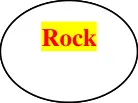
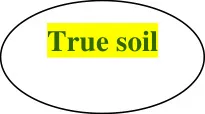
The soil formation is the process of two consecutive stages .
-
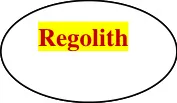
The weathering of rock (R) into Regolith
-
The formation of true soil from Regolith
The evolution of true soil from regolith takes place by the combined action of soil forming factors and processes.
The first step is accomplished by weathering (disintegration & decomposition)
The second step is associated with the action of Soil Forming Factors
Weathering
Factors
2
Dokuchaiev (1889) established that the soils develop as a result of the action of soil forming factors
S = f (P, Cl, O)
Further, Jenny (1941) formulated the following equation
S = f (Cl, O, R, P, T, …)
Where,
Cl – environmental climate O – Organisms and vegetation (biosphere) R – Relief or topography P – Parent material T- Time … - additional unspecified factors
The five soil forming factors, acting simultaneously at any point on the surface of the earth, to produce soil.
Two groups
Passive : i) Parent material, ii) Relief, iii) Time
Active : iv) Climate, v) Vegetation & organism
Passive Soil forming factors
The passive soil forming factors are those which represent the source of soil forming mass and conditions affecting it. These provide a base on which the active soil forming factors work or act for the development of soil.
Parent Material
It is that mass (consolidated material) from which the soil has formed.
Two groups of parent material
Sedentary
Formed in original place. It is the residual parent material. The parent material differ as widely as the rocks
Transported
The parent material transported from their place of origin. They are named according to the main force responsible for the transport and redeposition.
a) by gravity - Colluvial b) by water - Alluvial, Marine, Locustrine c) by ice - Glacial d) by wind - Eolian
Colluvium
It is the poorly sorted materials near the base of strong slopes transported by the action of gravity.
Alluvium
The material transported and deposited by water is, found along major stream courses at
the bottom of slopes of mountains and along small streams flowing out of drainage basins.
Lacustrine
Consists of materials that have settled out of the quiet water of lakes.
Moraine
Consists of all the materials picked up, mixed, disintegrated, transported and deposited
through the action of glacial ice or of water resulting primarily from melting of glaciers.
Loess or Aeolian
These are the wind blown materials. When the texture is silty - loss; when it is sand.
Eolian
The soils developed on such transported parent materials bear the name of the parent
material; viz. Alluvial soils from alluvium, colluvial soils from colluvium etc. In the initial
stages, however, the soil properties are mainly determined by the kind of parent material.
Endodynamomorphic soils
With advanced development and excessive leaching, the influence of parent material on
soil characteristics gradually diminishes. There are soils wherein the composition of parent
material subdues the effects of climate and vegetation. These soils are temporary and persist only
until the chemical decomposition becomes active under the influence of climate and vegetation.
Ectodynamomorphic soils
Development of normal profile under the influence of climate and vegetation.
Soil properties as influenced by parent material: Different parent materials affect profile
development and produce different soils, especially in the initial stages.
Acid igneous rocks (like granite, rhyolite) produce light-textured soils (Alfisols).
Basic igneous rocks (basalt), alluvium or colluvium derived from limestone or basalt,
produce fine-textured cracking-clay soils (Vertisols).
Basic alluvium or aeolian materials produce fine to coarse-textured soils (Entisols or
Inceptisols).
The nature of the elements released during the decaying of rocks has a specific role in
soil formation. (e.g.) Si and Al forms the skeleton for the production of secondary clay
minerals.
Iron and manganese are important for imparting red colour to soils and for oxidation and
reduction phenomena.
Sodium and potassium are important dispersing agents for day and humus colloids.
Calcium and magnesium have a flocculating effect and result in favorable and stable soil
structure for plant growth.
Relief or Topography
The relief and topography sometimes are used as synonymous terms. They denote the
configuration of the land surface. The topography refers to the differences in elevation of the
land surface on a broad scale.
The prominent types of topography designations, as given in FAO Guidelines (1990) are:
Land surface with slopes of
1 Flat to Almost flat 0 – 2 % 2 Gently undulating 2 - 5 % 3 Undulating 5 – 10 % 4 Rolling 10 – 15 % 5 Hilly 15 –3 0 % 6 Steeply dissect > 30 % with moderate range of elevation ( <300 m) 7 Mountainous > 30% with great range of
elevation (>300 m)
Soil formation on flat to almost flat position
On level topographic positions, almost the entire water received through rain percolates
through the soil. Under such conditions, the soils formed may be considered as representative of
the regional climate. They have normal solum with distinct horizons. But vast and monotonous
level land with little gradient often has impaired drainage conditions.
Soil formation on undulating topography
The soils on steep slopes are generally shallow, stony and have weakly- developed
profiles with less distinct horizonation. It is due to accelerated erosion, which removes surface
material before it has the time to develop. Reduced percolation of water through soil is because
of surface runoff, and lack of water for the growth of plants, which are responsible for checking
of erosion and promote soil formation.
Soil formation in depression
The depression areas in semi-arid and sub humid regions reflect more moist conditions
than actually observed on level topographic positions due to the additional water received as
runoff. Such conditions (as in the Tarai region of the Uttar Pradesh) favour more vegetative
growth and slower rate of decay of organic remains. This results in the formation of
comparatively dark- coloured soils rich in organic matter (Mollisols).
Soil formation and Exposure/ Aspect
Topography affects soil formation by affecting temperature and vegetative growth
through slope exposures (aspect). The southern exposures (facing the sun) are warmer and
subject to marked fluctuations in temperature and moisture. The northern exposures, on the other
hand are cooler and more humid. The eastern and western exposures occupy intermediate
position in this respect.
Time
Soil formation is a very slow process requiring thousands of years to develop a mature
pedon. The period taken by a given soil from the stage of weathered rock (i.e. regolith) up to the
stage of maturity is considered as time. The matured soils mean the soils with fully developed
horizons (A, B, C). It takes hundreds of years to develop an inch of soil. The time that nature
devotes to the formation of soils is termed as Pedologic Time.
It has been observed that rocks and minerals disintegrate and/or decompose at different
rates; the coarse particles of limestone are more resistant to disintegration than those of
sandstone. However, in general, limestone decomposes more readily than sandstone (by
chemical weathering).
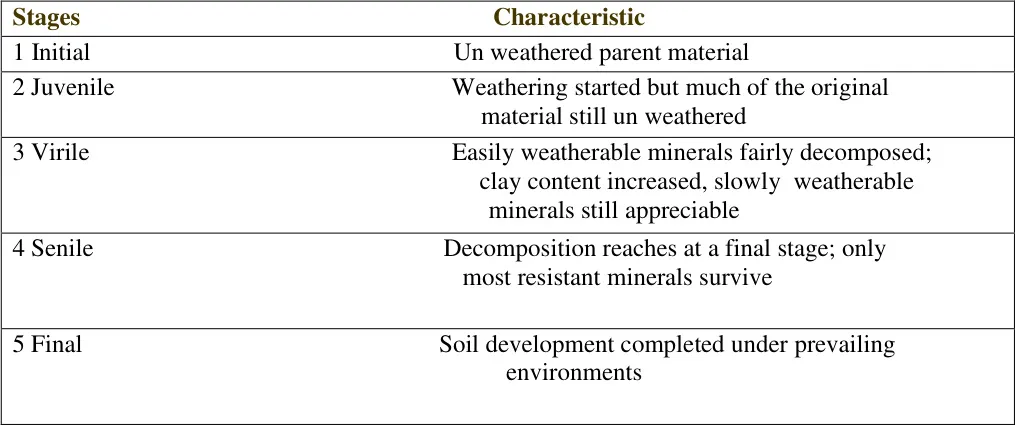
Weathering stages in soil formation
The soil properties also change with time, for instance nitrogen and organic matter
contents increase with time provided the soil temperature is not high.
 CaCO
CaCO
3 [content may decrease or even lost with time provided the climatic conditions are ]
not arid
concentration increases with time because of chemical
In humid regions, the H
weathering.
B. Active Soil Forming Factors
The active soil forming factors are those which supply energy that acts on the mass for the
purpose of soil formation. These factors are climate and vegetation (biosphere).
Climate
Climate is the most significant factor controlling the type and rate of soil formation. The
dominant climates recognized are:
Arid climate: The precipitation here is far less than the water-need. Hence the soils
remain dry for most of the time in a year.
Humid climate: The precipitation here is much more than the water need. The excess
water results in leaching of salt and bases followed by translocation of clay colloids.
Oceanic climate: Moderate seasonal variation of rainfall and temperature.
Mediterranean climate: The moderate precipitation. Winters and summers are dry and
hot.
Continental climate: Warm summers and extremely cool or cold winters.
Temperate climate: Cold humid conditions with warm summers.
Tropical and subtropical climate: Warm to hot humid with isothermal conditions in the
tropical zone.
Climate affects the soil formation directly and indirectly.
Directly, climate affects the soil formation by supplying water and heat to react with parent
material.
Indirectly, it determines the fauna and flora activities which furnish a source of energy in the
form of organic matter. This energy acts on the rocks and minerals in the form of acids, and salts
are released. The indirect effects of climate on soil formation are most clearly seen in the
relationship of soils to vegetation.
Precipitation and temperature are the two major climatic elements which contribute most to soil
formation.
Precipitation
Precipitation is the most important among the climatic factors. As it percolates and
moves from one part of the parent material to another. It carries with it substances in solution as
well as in suspension. The substances so carried are re deposited in another part or completely
removed from the material through percolation when the soil moisture at the surface evaporates
causing an upward movement of water. The soluble substances move with it and are translocated
to the upper layer. Thus rainfall brings about a redistribution of substances both soluble as well
as in suspension in soil body.
Temperature
Temperature is another climatic agent influencing the process of soil formation.
High temperature hinders the process of leaching and causes an upward movement of
soluble salts.
High temperature favors rapid decomposition of organic matter and increase microbial
activities in soil while low temperatures induce leaching by reducing evaporation and
there by favour the accumulation of organic matter by slowing down the process of
decomposition. Temperature thus controls the rate of chemical and biological reactions
taking place in the parent material.
Jenney (1941) computed that in the tropical regions the rate of weathering proceeds three times
faster than in temperate regions and nine times faster than in arctic .
Organism & Vegetation
Organism
The active components of soil ecosystem are plants, animals, microorganisms and man.
The role of microorganisms in soil formation is related to the humification and
mineralization of vegetation
The action of animals especially burrowing animals to dig and mix-up the soil mass and
thus disturb the parent material
Man influences the soil formation through his manipulation of natural vegetation,
agricultural practices etc.
Compaction by traffic of man and animals decrease the rate of water infiltration into the
soil and thereby increase the rate of runoff and erosion.
Vegetation
The roots of the plants penetrate into the parent material and act both mechanically and
chemically.
They facilitate percolation and drainage and bring about greater dissolution of minerals
through the action of CO
2 [and acidic substances secreted by them. ]
The decomposition and humification of the materials further adds to the solubilization of
minerals
Forests – reduces temperature, increases humidity, reduce evaporation and increases
precipitation.
Grasses reduce runoff and result greater penetration of water in to the parent material.
Soil Forming Processes
The pedogenic processes, although slow in terms of human life, yet work faster than the
geological processes in changing lifeless parent material into true soil full of life.
- The pedogenic processes are extremely complex and dynamic involving many chemical
and biological reactions, and usually operate simultaneously in a given area.
- One process may counteract another, or two different processes may work
simultaneously to achieve the same result.
- Different processes or combination of processes operate under varying natural
environment.
The collective interaction of various soil forming factors under different environmental
conditions set a course to certain recognized soil forming processes.
The basic process involved in soil formation (Simonson, 1959) includes the following.
Gains or Additions of water, mostly as rainfall, organic and mineral matter to the soil.
Losses of the above materials from the soil.
Transformation of mineral and organic substances within the soil.
Translocation or the movement of soil materials from one point to another within the
soil. It is usually divided into
 - movement of solution (leaching) and

 - movement in suspension (eluviation) of clay, organic matter and hydrous oxides
A. Fundamental Soil forming Processes
Humification
Humification is the process of transformation of raw organic matter into humus. It is
extremely a complex process involving various organisms.
First, simple compounds such as sugars and starches are attacked followed by proteins and
cellulose and finally very resistant compounds, such as tannins, are decomposed and the dark
coloured substance, known as humus, is formed.
Eluviation
It is the mobilization and translocation of certain constituent’s viz. Clay, Fe
2 [O] 3 [, Al]
2 [O] 3 [, ]
SiO
2 [, humus, CaCO]
3 [, other salts etc. from one point of soil body to another. Eluviation means ]
washing out. It is the process of removal of constituents in suspension or solution by the
percolating water from the upper to lower layers. The eluviation encompasses mobilization and
translocation of mobile constituents resulting in textural differences. The horizon formed by the
process of eluviation is termed as eluvial horizon (A
2 [or E horizon). ]
Translocation depends upon relative mobility of elements and depth of percolation.
Illuviation
The process of deposition of soil materials (removed from the eluvial horizon) in the
lower layer (or horizon of gains having the property of stabilizing translocated clay materials) is
termed as Illuviation. The horizons formed by this process are
termed as illuvial horizons (B-horizons, especially Bt) The process leads to textural contrast
between E and Bt horizons, and higher fine: total clay ratio in the Bt horizon.
Horizonation
It is the process of differentiation of soil in different horizons along the depth of the soil
body. The differentiation is due to the fundamental processes, humification, eluviation and
illuviation.
B. Specific Soil Forming Processes
The basic pedologic processes provide a framework for later operation of more specific
processes
Calcification
It is the process of precipitation and accumulation of calcium carbonate (CaCO
3 [) in some ]
part of the profile. The accumulation of CaCO
3 [may result in the development of a calcic ]
horizon. Calcium is readily soluble in acid soil water and/or when CO
root zone as:
2 [concentration is high in ]
CO
2 [+ H]
2 [O → H]
2 [CO]
H
2 [CO]
3 [+ Ca → Ca (HCO]
3 [)] 2 [(soluble) ]
Temp.
Ca (HCO
3 [)]
2 [→ CaCO]
3 [+ H]
2 [O + CO]
2 [(precipitates) ]
CO
The process of precipitation after mobilization under these conditions is called calcification and
the resulting illuviated horizon of carbonates is designated as Bk horizon (Bca).
Decalcification
It is the reverse of calcification that is the process of removal of CaCO3 or calcium ions
from the soil by leaching
Temp.
CaCO
3 [+ CO]
2 [+ H]
2 [O → Ca (HCO]
3 [)] 2 [(soluble) ]
(insoluble) CO
Podzolization
2
It is a process of soil formation resulting in the formation of Podzols and Podzolic soils.
In many respects, podzolization is the negative of calcification. The calcification process tends to
concentrate calcium in the lower part of the B horizon, whereas podzolization leaches the entire
solum of calcium carbonates.
Apart from calcium, the other bases are also removed and the whole soil becomes distinctly
acidic. In fact, the process is essentially one of acid leaching.
The process operates under favorable combination of the following environments.
i) Climate: A cold and humid climate is most favorable for podzolization.
ii) Parent material: Siliceous (Sandy) material, having poor reserves of weatherable minerals,
favor the operation of podzolization as it helps in easy percolation of water.
iii) Vegetation: Acid producing vegetation such as coniferous pines is essential
iv) Leaching and Translocation of Sesquioxide: In the process of decomposition of organic
matter various organic acids are produced. The organic acids thus formed act with Sesquioxide
and the remaining clay minerals, forming organic- Sesquioxide and organic clay complexes,
which are soluble and move with the percolating water to the lower horizons (Bh, Bs).
Aluminium ions in a water solution hydrolyze and make the soil solution very acidic.
2Al +6H
2 [O 2 Al (OH)] 3 [+ 6H]
+
As iron and aluminium move about, the A horizon gives a bleached grey or ashy
appearance. The Russians used the term Podzols (pod means under, the zola means ash like i.e.
ash-like horizon appearing beneath the surface horizon) for such soils.
To conclude, the Podzolization is a soil forming process which prevails in a cold and humid
climate where coniferous and acid forming vegetations dominate. The humus and Sesquioxide
become mobile and leached out from the upper horizon s and deposited in the lower horizon.
Laterization
The term laterite is derived from the word later meaning brick or tile and was originally
applied to a group of high clay Indian soils found in Malabar hills of Kerala, Tamil Nadu,
Karnataka and Maharashtra.
It refers specifically to a particular cemented horizon in certain soils which when dried,
become very hard, like a brick. Such soils (in tropics) when massively impregnated with
sesquioxides (iron and aluminium oxides) to extent of 70 to 80 per cent of the total mass, are
called laterites or latosols (Oxisols). The soil forming process is called Laterization or
Latozation.
Laterization is the process that removes silica, instead of sesquioxides from the upper layers and
thereby leaving sesquioxides to concentrate in the solum. The process operates under the
following conditions.
i) Climate
Unlike podzolization, the process of laterization operates most favorable in warm and
humid (tropical) climate with 2000 to 2500 mm rainfall and continuous high temperature (
25°C) throughout the year.
ii ) Natural vegetation
The rain forests of tropical areas are favorable for the process.
iii) Parent Material
Basic parent materials, having sufficient iron bearing ferromagnesian minerals
(Pyroxene, amphiboles, biotite and chlorite), which on weathering release iron, are congenial for
the development of laterites.
Gleization
The term glei is of Russian origin means blue, grey or green clay. The Gleization is a
process of soil formation resulting in the development of a glei (or gley horizon) in the lower
part of the soil profile above the parent material due to poor drainage condition (lack of oxygen)
and where waterlogged conditions prevail. Such soils are called hydro orphic soils.
The process is not particularly dependent on climate (high rainfall as in humid regions) but often
on drainage conditions.
The poor drainage conditions result from:
Lower topographic position, such as depression land, where water stands continuously at
or close to the surface.
Impervious soil parent material, and.
Lack of aeration.
Under such conditions, iron compounds are reduced to soluble ferrous forms. The reduction of
iron is primarily biological and requires both organic matter and microorganisms capable of
respiring anaerobically. The solubility of Ca, Mg, Fe, and Mn is increased and most of the iron
++
exists as Fe
hydroxides.
organo - complexes in solution or as mixed precipitate of ferric and ferrous
This is responsible for the production of typical bluish to grayish horizon with mottling of yellow
and or reddish brown colors.
Salinization
It is the process of accumulation of salts, such as sulphates and chlorides of calcium,
magnesium, sodium and potassium, in soils in the form of a salty (salic) horizon. It is quite
common in arid and semi arid regions. It may also take place through capillary rise of saline
ground water and by inundation with seawater in marine and coastal soils. Salt accumulation
may also result from irrigation or seepage in areas of impeded drainage.
Desalinization
It is the removal by leaching of excess soluble salts from horizons or soil profile (that
contained enough soluble salts to impair the plant growth) by ponding water and improving the
drainage conditions by installing artificial drainage network.
Solonization or Alkalization
The process involves the accumulation of sodium ions on the exchange complex of the
clay, resulting in the formation of sodic soils (Solonetz).
All cations in solution are engaged in a reversible reaction with the exchange sites on the clay
and organic matter particles.
The reaction can be represented as
++
Ca.Mg.2NaX Ca
++
+Mg
+
+2Na
-6
+ x
+3CO
2 [CO]
2-
3
Na
3 [+ MgCO]
3 [+CaCO]
3
(Where X represents clay or organic matter exchange sites)
Solodization or dealkalization
The process refers to the removal of Na
from the exchange sites. This process involves
dispersion of clay. Dispersion occurs when Na
ions become hydrated.
++
ions are concentrated in the water,
Much of the dispersion can be eliminated if Ca
and or Mg
++
which is used to leach the soonest. These Ca and Mg ion can replace the Na on exchange
complex, and the salts of sodium are leached out as :
2NaX + CaSO
4 [ Na]
2 [SO]
4 [+ CaX ]
(leachable)
Pedoturbation
Another process that may be operative in soils is pedoturbation. It is the process of
mixing of the soil.
Mixing to a certain extent takes place in all soils. The most common types of pedoturbation are:
Faunal pedoturbation: It is the mixing of soil by animals such as ants, earthworms,
moles, rodents, and man himself
Floral pedoturbation : It is the mixing of soil by plants as in tree tipping that forms pits
and mounds
Argillic pedoturbation: It is the mixing of materials in the solum by the churning
process caused by swell shrink clays as observed in deep Black Cotton Soils.
Summary Cheat Sheet
Quick Recall Points
- CLORPT = climate, organisms, relief, parent material, and time.
- Pedogenesis reflects the interaction of all five factors, not a single factor.
- Factor intensity and duration determine final soil characteristics.
Exam Traps
- Do not treat CLORPT factors as independent; they interact continuously.
- Similar parent material can still form different soils under different climate and relief.
References
2 sources • [1] [2]
References
Lesson Doubts
Ask questions, get expert answers