Statistics & Computer 📐
Core BSc Agriculture modules covering data analysis, agri-informatics, applied mathematics, and intellectual property rights for academic and competitive-exam preparation.
Course Structure
What's Inside

Statistical Methods
Lecture notes covering Statistical Methods as per ICAR 5th Dean Committee syllabus. Course Code: STAM 101 | Credits: 2(1+1).
Agri-Informatics
Lecture notes covering Agri-Informatics as per ICAR 5th Dean Committee syllabus. Course Code: STAM 102 | Credits: 2(1+1).
Intellectual Property Rights
Lecture notes covering Intellectual Property Rights as per ICAR 5th Dean Committee syllabus. Course Code: STAM 104 | Credits: 1(1+0).
Applied Mathematics
Lecture notes covering Applied Mathematics. Course Code: STAM 103 | Credits: 2(2+0).
Statistics & Computer
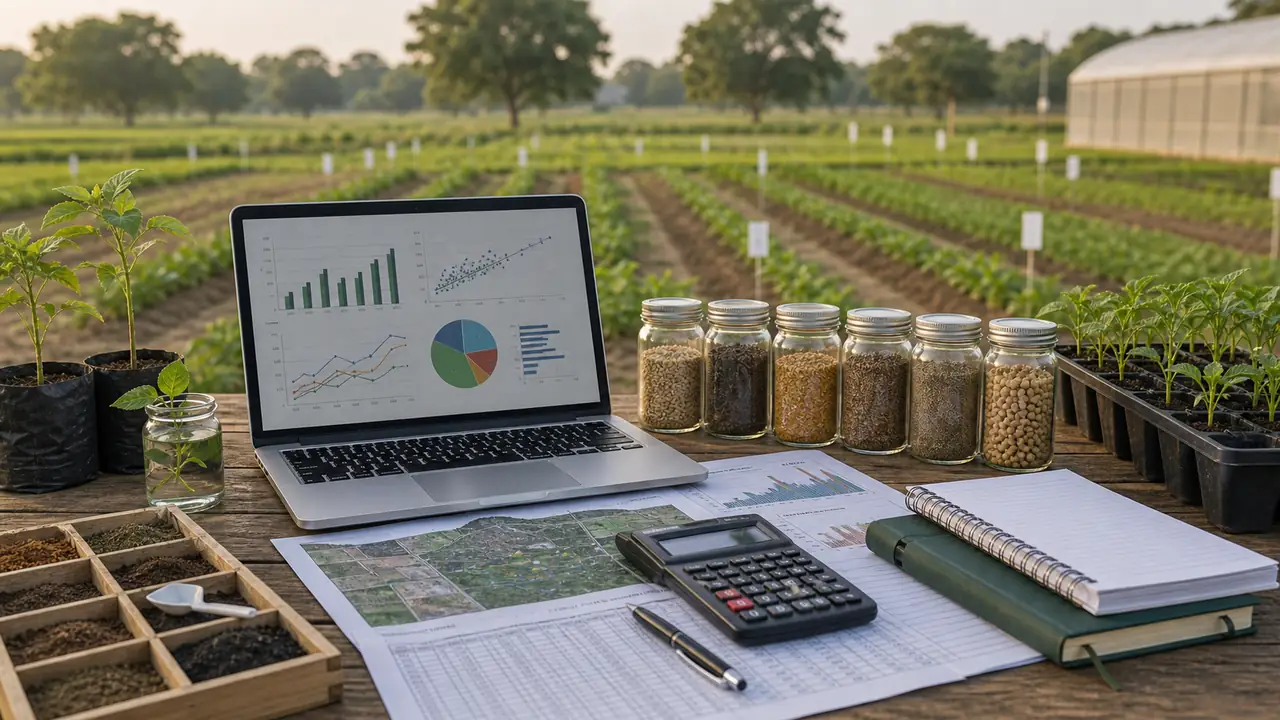
Statistics and computer studies give agriculture students the tools to measure field results, organize information, solve quantitative problems, and use digital systems in real farm and research work. This section brings together the subjects that support evidence-based decision-making across crop production, experiments, extension, and agribusiness.
Courses included in this section
Why Statistics & Computer matters
Agriculture is full of variation: yield changes, rainfall shifts, input costs move, and pest pressure differs from field to field. Statistics helps students interpret that variation instead of guessing. Computer applications help them record data, analyze it faster, present findings clearly, and use modern agricultural tools such as spreadsheets, databases, decision-support systems, and digital advisory platforms. Intellectual property adds the legal side of innovation, which matters when agriculture connects with breeding, technology, and protected knowledge.
Main learning themes
- describing and presenting agricultural data through tables, graphs, and summary measures
- using probability, correlation, regression, sampling, and significance tests to study field and lab observations
- building comfort with applied mathematics used in agricultural sciences
- learning practical computer use for documents, spreadsheets, presentations, databases, and digital agriculture tools
- understanding how ICT, models, geospatial tools, and decision systems support farming decisions
- knowing the basics of patents, plant variety protection, and agricultural innovation rights
How to study this section well
Start with the basic language of data: classification, tables, graphs, averages, and dispersion. Then move to probability, correlation, regression, and tests step by step, solving small examples by hand before using software. In computer topics, do the practical work directly instead of only reading theory. Build simple spreadsheets, create graphs, and practice organizing agricultural data. For IPR, focus on definitions, categories, laws, and agriculture-based examples so the concepts stay concrete.
Who benefits most from this section
This section is especially useful for BSc Agriculture students who want stronger research basics, better practical record handling, and confidence in analytical questions for university exams, ICAR-aligned study, NABARD, IBPS AFO, and other agriculture-related competitive pathways.
Core takeaway
If students can collect data properly, analyze it correctly, use digital tools confidently, and understand the value of agricultural innovation, they become much more effective as learners, researchers, extension workers, and future agri-professionals.
Frequently Asked Questions
Why are statistics and computer studies important in agriculture?
They are important because agriculture depends on data, measurement, analysis, digital tools, and clear decision making in research, production, extension, and agribusiness.
What topics are covered in the statistics and computer section?
This section covers statistical methods, agri-informatics, applied mathematics, and intellectual property rights for agricultural learning and practice.
How does statistics help agriculture students?
Statistics helps agriculture students interpret variation, analyze experiments, compare treatments, understand relationships in data, and draw conclusions more reliably.
Why do agriculture students study computer applications?
They study computer applications because spreadsheets, databases, graphs, models, ICT tools, and digital advisory systems are now part of modern agricultural work.
Why is intellectual property included with statistics and computer subjects?
It is included because agricultural innovation, breeding, software, databases, and technology-based work all connect with ownership, protection, and legal rights.
How should students study statistics and computer subjects effectively?
Students should solve statistics examples by hand, practice spreadsheets and digital tools directly, and learn IPR through definitions and agricultural examples rather than memorization alone.