01. Advance Crop Production
The foundation unit for Class 12th Agriculture: crop production starts with soil, water, nutrients, and plant protection.
Frequently Asked Questions
What topics are covered in Advance Crop Production in Class 12 Agriculture?
This unit usually covers food production and horticulture, soil fertility and productivity, nutrient management, irrigation, and insect-pest or crop-protection basics. It builds the foundation for understanding how crops are grown efficiently and sustainably.
Why is horticulture important in the Advance Crop Production unit?
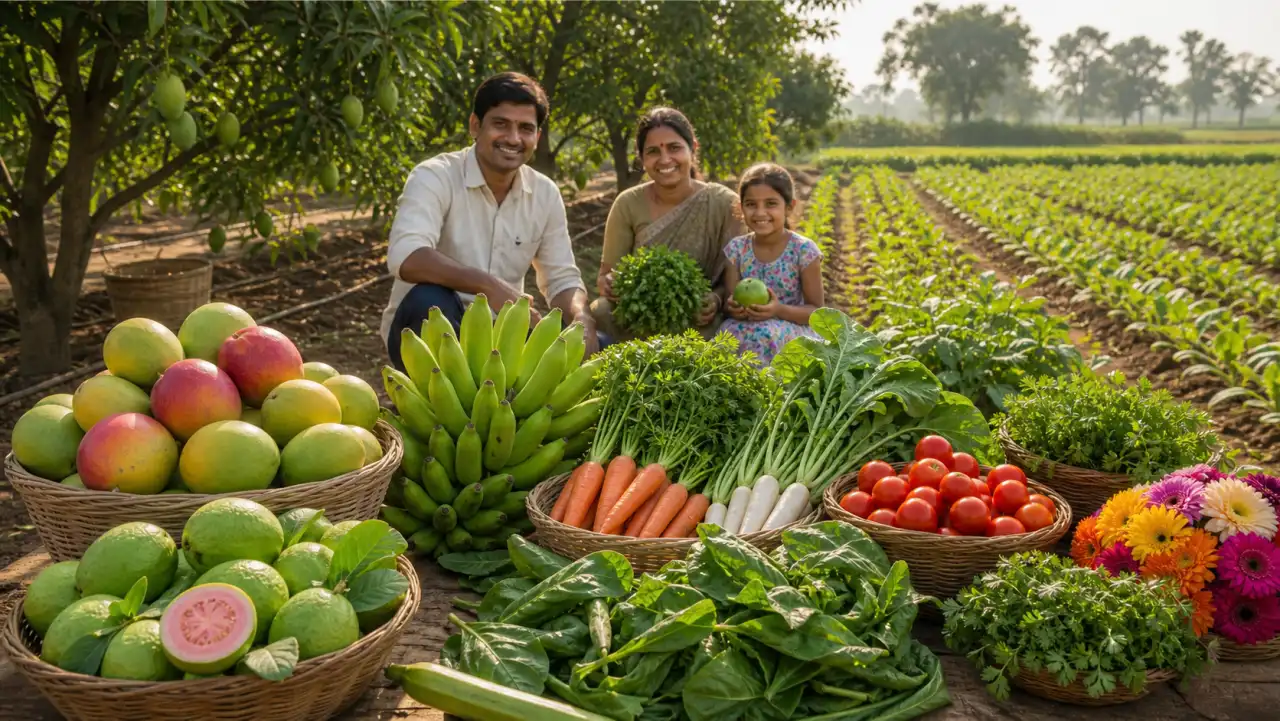
Horticulture is important because it connects crop production with nutrition, income, employment, and diversification. Students are often expected to understand why fruits, vegetables, flowers, and related crops matter beyond simple field-crop yield.
Is soil fertility an important topic in Class 12 Agriculture?
Yes. Soil fertility is one of the most important foundations in this unit because it explains how nutrient availability, soil condition, and management practices affect healthy crop growth.
What is the difference between soil fertility and soil productivity?
Soil fertility refers to the soil's ability to supply essential nutrients, while soil productivity is the broader ability of soil to support crop yield under real growing conditions. Productivity depends on fertility plus water, climate, management, and crop choice.
Are nutrient management and fertilizers important for board preparation?
Yes. Students are often expected to understand nutrient sources, balanced application, timing, and the difference between organic inputs and chemical fertilizers. These ideas are central to both theory answers and practical understanding.
What should I study first in Advance Crop Production?
A strong order is food production and horticulture first, then soil fertility and productivity, then nutrient management, then irrigation, and finally insect-pest control. That sequence matches the way the unit builds from foundation to field management.
Is irrigation a scoring topic in Class 12 Agriculture?
Usually yes. Irrigation is easier to revise when students focus on purpose, methods, timing, and the role of water management in maintaining stable crop growth.
Why is insect-pest control included in crop production?
It is included because crop production is not only about sowing and nutrients. Students also need to understand how pests reduce yield and how preventive and control measures protect crop health.
How can I revise Advance Crop Production quickly before exams?
Most students revise fastest by using short definition lists, topic-wise comparisons like fertility versus productivity, and one-line summaries for irrigation, nutrients, and pest-management concepts.