02. Organic Farming
A student-friendly section on why organic farming matters, how it works, certification, schemes, and where it stands in India.
Frequently Asked Questions
What is organic farming in Class 12 Agriculture?
Organic farming is a production system that avoids or minimizes synthetic chemical inputs and instead relies on soil health, ecological balance, biological processes, and locally available organic resources.
What topics are included in the Organic Farming unit?
This unit usually covers the concept, history, importance, present status, certification, government-promotion schemes, organic food products, and kitchen gardening.
What is the difference between organic farming and conventional farming?
Organic farming focuses on natural nutrient cycling, biological pest management, and long-term soil health, while conventional farming relies more heavily on synthetic fertilizers, pesticides, and external chemical inputs.
Why is organic farming important in India?
It is important because it connects agriculture with soil health, environmental protection, safer food systems, lower chemical load, and sustainable long-term farming practices.
Is certification important in organic farming?
Yes. Certification matters because it helps verify that farming practices follow recognized organic standards and it is often discussed in board preparation as the bridge between organic production and market trust.
Are government schemes part of the Organic Farming syllabus?
Yes. Board-oriented preparation often expects students to know that organic farming is supported through government-promotion efforts and schemes, along with awareness of its growing role in Indian agriculture.
Is kitchen gardening included in this unit?
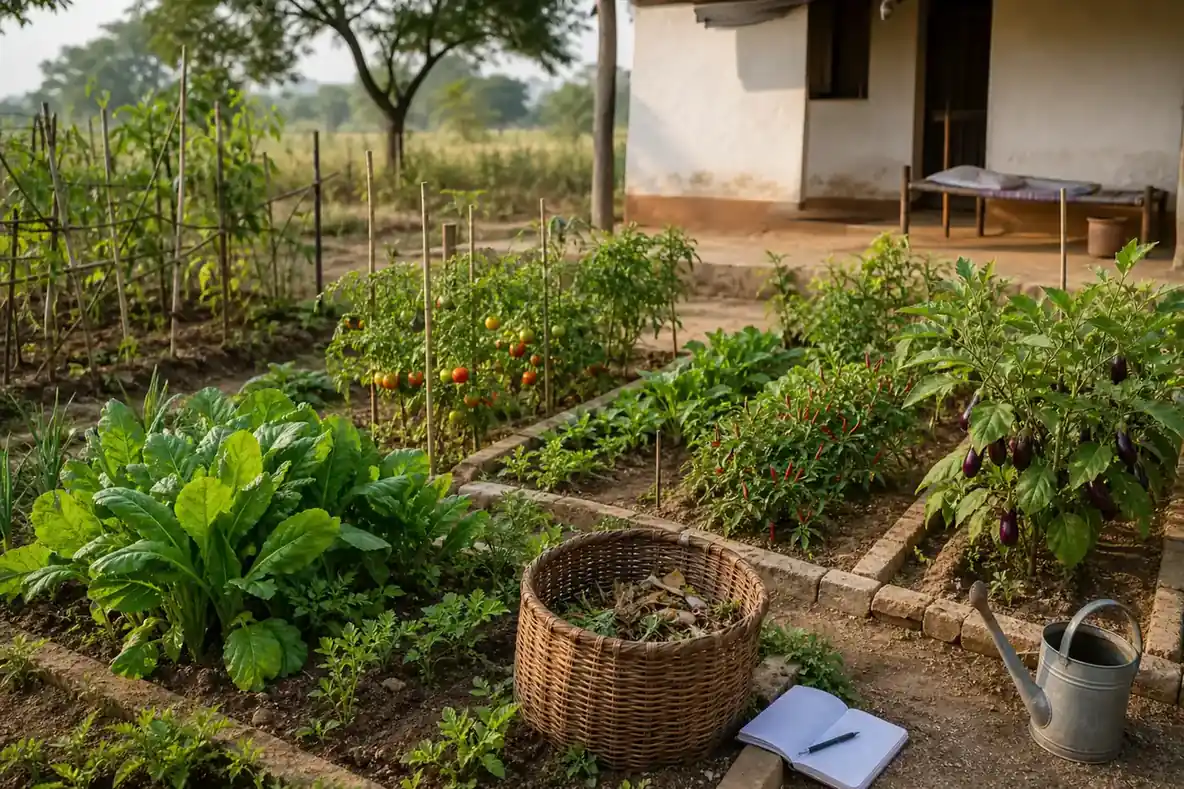
Yes. Kitchen gardening is commonly included because it shows how organic principles can be applied at home or school level through small-scale, practical food production.
What should I study first in the Organic Farming chapter?
A strong order is concept and history first, then principles and importance, then present status and products, and finally certification, schemes, and kitchen gardening.
How can I revise Organic Farming quickly before exams?
Most students revise this chapter fastest by learning short definitions, comparing organic and conventional farming, and keeping brief notes on certification, schemes, and kitchen-garden concepts.