03. Post-Harvest Management
A practical section on what happens after harvest, how losses are reduced, and how produce quality is protected.
Frequently Asked Questions
What is post-harvest management in Class 12 Agriculture?
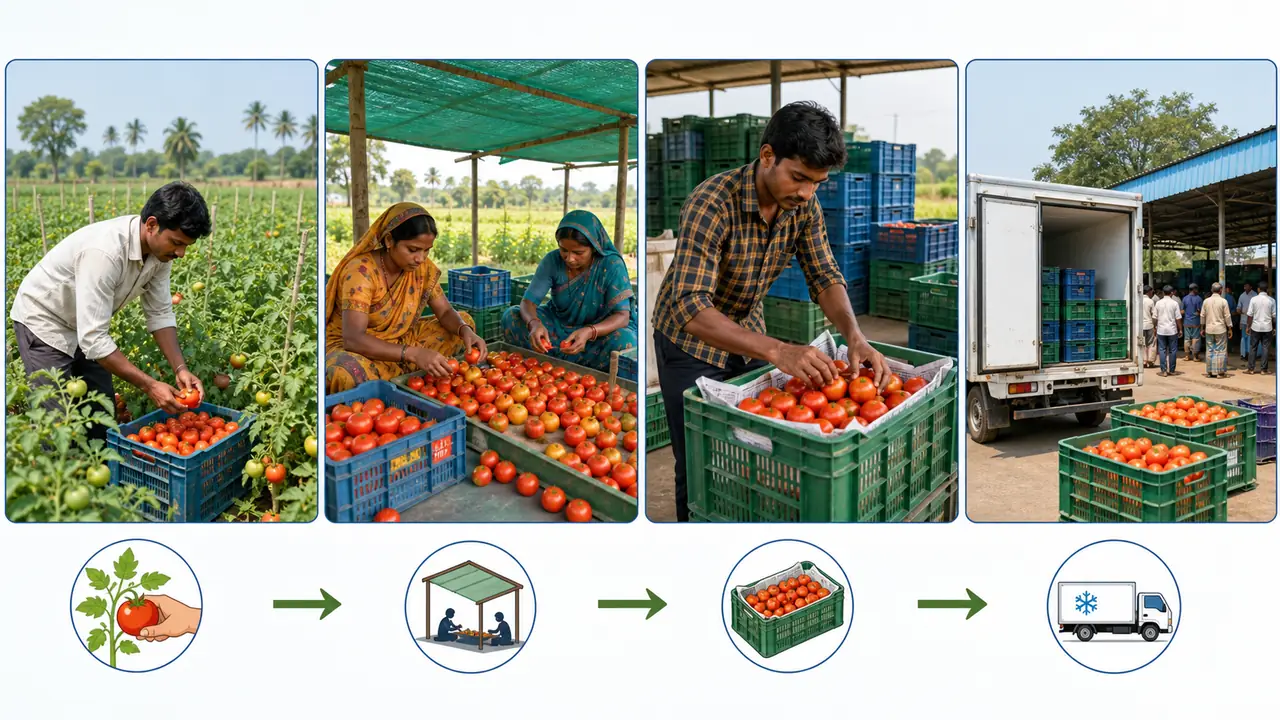
Post-harvest management refers to the handling, cleaning, grading, storage, transport, and protection of produce after harvest so that quality is maintained and losses are reduced before it reaches the consumer or market.
Why is post-harvest management important?
It is important because a large share of agricultural loss can happen after harvest through spoilage, mechanical injury, moisture loss, microbial attack, and poor storage or transport. Good post-harvest care protects both quality and value.
What topics are covered in the Post-Harvest Management unit?
This unit usually covers post-harvest handling of fruits, vegetables, flowers, cereals, pulses, and related produce along with grading, packaging, storage, transport, shelf-life protection, and loss reduction.
What is the difference between sorting and grading?
Sorting separates produce based on visible differences such as damaged versus healthy material, while grading classifies produce into quality groups based on size, maturity, appearance, or market standards.
Is storage an important topic in post-harvest management?
Yes. Storage is one of the most important parts of this unit because it directly affects freshness, shelf life, safety, and the ability to reduce losses after harvest.
How can shelf life of agricultural produce be increased?
Shelf life can be improved by harvesting at proper maturity, careful handling, timely sorting and grading, suitable packaging, proper temperature and moisture management, and appropriate storage or transport conditions.
Why are transport and packaging included in this chapter?
They are included because produce can lose quality quickly during movement from field to market. Safe packaging and proper transport reduce bruising, compression, contamination, and spoilage.
What should I study first in Post-Harvest Management?
A strong order is definition and importance first, then causes of losses, then sorting, grading, storage, and transport, and finally crop-specific examples from fruits, vegetables, flowers, cereals, and pulses.
How can I revise Post-Harvest Management quickly before exams?
Most students revise this chapter fastest by memorizing the post-harvest sequence from harvest to market and keeping short notes on grading, storage, packaging, transport, and shelf-life protection.