04. Food Processing and Value Addition
This section shows how raw produce becomes stable, useful, safer, and more marketable food products.
Frequently Asked Questions
What is food processing in Class 12 Agriculture?
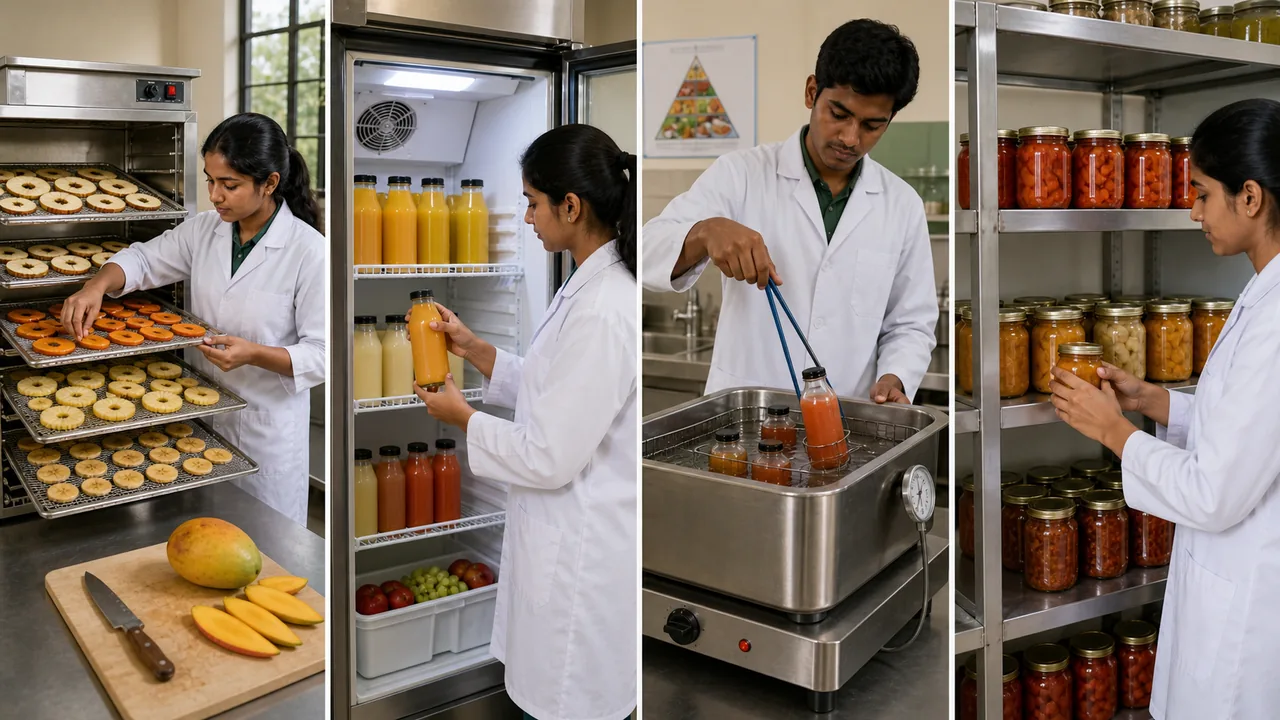
Food processing means converting raw agricultural produce into safer, more stable, more convenient, or more useful food products through methods such as cleaning, drying, heating, preserving, packaging, and related handling.
What is value addition in agriculture?
Value addition means increasing the usefulness, shelf life, convenience, quality, or market value of produce. It can range from simple grading and packaging to making products like jam, jelly, pickle, ketchup, flour, or dried foods.
Why is food processing important for farmers and agriculture?
It is important because it reduces waste, improves shelf life, helps create marketable products, supports better price realization, and can create more rural income and employment opportunities.
What topics are covered in Food Processing and Value Addition?
This unit usually covers principles and methods of food preservation, important value-added products, packaging, quality standards, food safety, and marketing-related basics.
What are the main methods of food preservation?
Students commonly revise methods such as drying, heating, pickling, sugar or salt preservation, canning, cooling, and other basic approaches used to slow spoilage and extend shelf life.
Is packaging important in food processing?
Yes. Packaging is important because it protects food from damage, contamination, moisture loss or gain, and helps maintain quality during storage and transport.
Why are quality standards and food safety included in this chapter?
They are included because food processing is not only about making products; it is also about making them safe, acceptable, and suitable for sale or consumption.
What should I study first in Food Processing and Value Addition?
A strong order is processing meaning and importance first, then preservation principles and methods, then value-added products, and finally packaging, quality, and marketing basics.
How can I revise Food Processing and Value Addition quickly before exams?
Most students revise this chapter fastest by making short lists of preservation methods, examples of value-added products, and one-line notes on packaging, quality, and food safety.