05. Subsidiary Enterprises of Agriculture
A section on agriculture-linked enterprises that add income, skills, diversification, and entrepreneurship opportunities.
Frequently Asked Questions
What are subsidiary enterprises of agriculture?
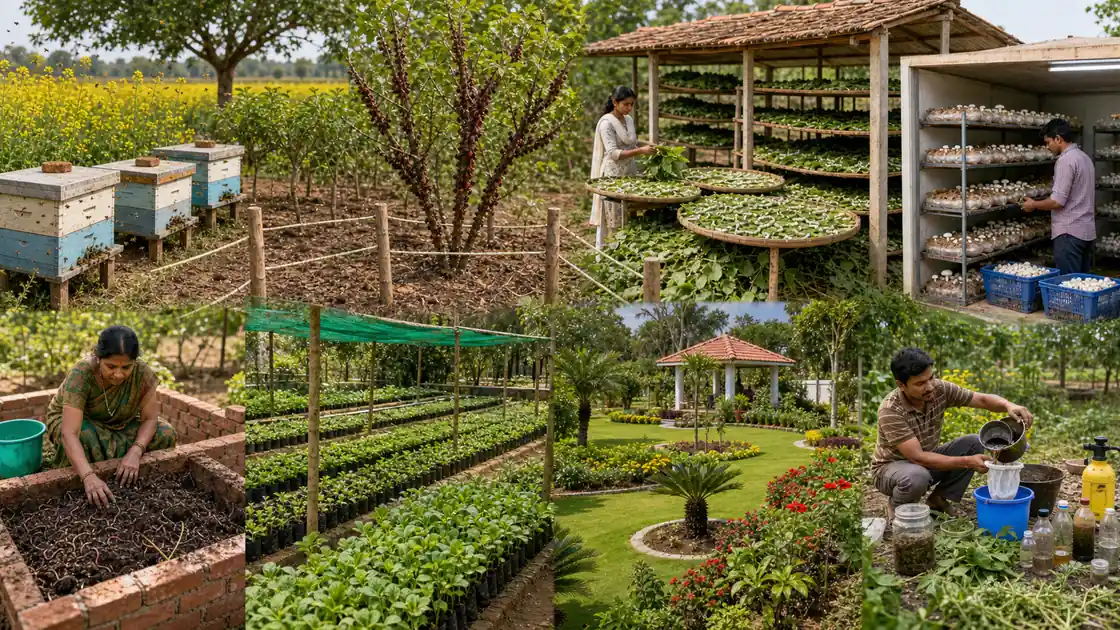
Subsidiary enterprises of agriculture are allied income-generating activities linked to farming, such as apiculture, sericulture, mushroom production, nursery raising, vermicompost preparation, lac culture, landscaping, and biopesticide-related work.
Why are subsidiary enterprises important in agriculture?
They are important because they help diversify income, create employment, use local resources better, and reduce complete dependence on a single crop-based income source.
Which subsidiary enterprises are included in Class 12 Agriculture?
This unit commonly includes apiculture, lac culture, sericulture, mushroom cultivation, principles of landscape design, vermicompost, bio-pesticides, and nursery planning or management.
Is mushroom cultivation important in this chapter?
Yes. Mushroom cultivation is important because it is often taught as a practical, small-scale enterprise with nutritional value, income potential, and relatively low space requirements.
What is apiculture and why is it important?
Apiculture is the scientific rearing and management of honey bees. It is important because it supports honey and wax production and also helps crop pollination, which benefits agricultural productivity.
Why are vermicompost and biopesticides included in subsidiary enterprises?
They are included because they show how farm-linked enterprises can support sustainable agriculture while also creating useful products from local biological resources.
Is nursery management part of subsidiary enterprises?
Yes. Nursery management is commonly included because raising healthy seedlings and saplings is both an agricultural skill and a potential enterprise opportunity.
What should I study first in Subsidiary Enterprises of Agriculture?
A strong order is enterprise meaning and importance first, then major enterprise types like apiculture, mushrooms, and sericulture, and finally vermicompost, biopesticides, nursery management, and landscaping basics.
How can I revise Subsidiary Enterprises quickly before exams?
Most students revise this chapter fastest by making one-line notes for each enterprise, focusing on meaning, importance, products, and income or utility value.