Biotechnology
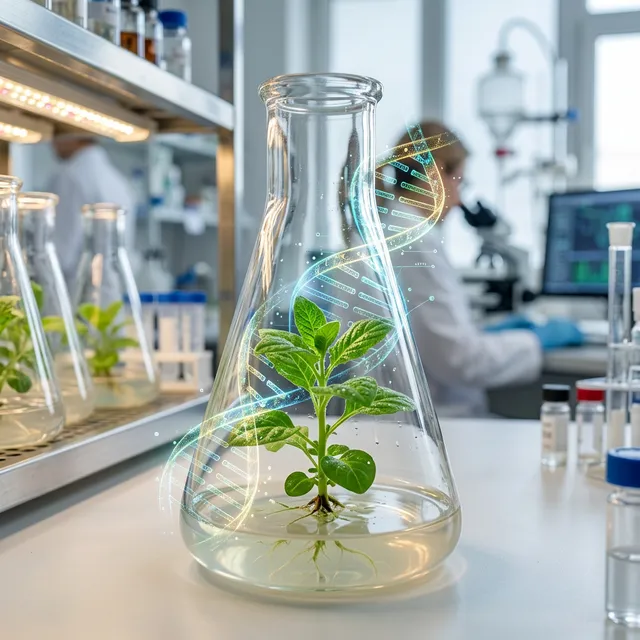
DNA/RNA structure, tissue culture, genetic engineering, transgenic crops, and biotechnology in crop production.
Frequently Asked Questions
What topics are covered in Biotechnology for CUET Agriculture?
This section usually covers DNA and RNA structure, replication, transcription, translation, the central dogma, tissue culture, micropropagation, genetic engineering, recombinant DNA technology, vectors, restriction enzymes, and transgenic crops.
What is the difference between DNA and RNA?
DNA and RNA are both nucleic acids, but they differ in sugar type, nitrogen-base composition, structure, and biological role. CUET questions often test these differences directly because they are foundational to biotechnology.
What is the central dogma in biotechnology?
The central dogma describes the flow of genetic information from DNA to RNA to protein. It is one of the most basic and repeatedly tested ideas in molecular biology sections.
Why is tissue culture important in CUET Agriculture biotechnology?
Tissue culture is important because it connects biotechnology with plant multiplication, disease-free planting material, conservation, and practical agricultural applications. It is one of the highest-yield topics in this section.
What is totipotency in plant tissue culture?
Totipotency is the ability of a single plant cell to regenerate into a complete plant under suitable conditions. It is a core concept behind plant tissue culture and micropropagation.
What is micropropagation?
Micropropagation is the rapid clonal multiplication of plants under in vitro conditions through tissue-culture techniques. Students often revise it together with totipotency and disease-free plant production.
Why are Bt cotton and Golden Rice important examples in biotechnology?
They are important because they are classic transgenic-crop examples that help students connect genetic engineering with pest resistance, nutritional improvement, and biotechnology applications in agriculture.
What should I study first in Biotechnology for CUET Agriculture?
A strong order is DNA and RNA basics first, then replication, transcription, and translation, then tissue culture and totipotency, and finally genetic engineering, transgenic crops, and biosafety concepts.
How can I revise Biotechnology quickly before the CUET exam?
Most students revise this topic fastest with comparison tables for DNA versus RNA, flow charts for the central dogma, short notes on tissue-culture terms, and a few classic transgenic-crop examples.