🏸 Shuttlecock Manufacturing from Poultry Feathers — NABARD Model
NABARD model for a shuttlecock micro-enterprise using layer hen feathers with total cost of ₹2.29 lakh, 10% margin, 6-year repayment, BCR 1.13, and IRR ~2% noted with caution. Covers forward integration of poultry units, feather utilisation, and cluster-based manufacturing for exams.
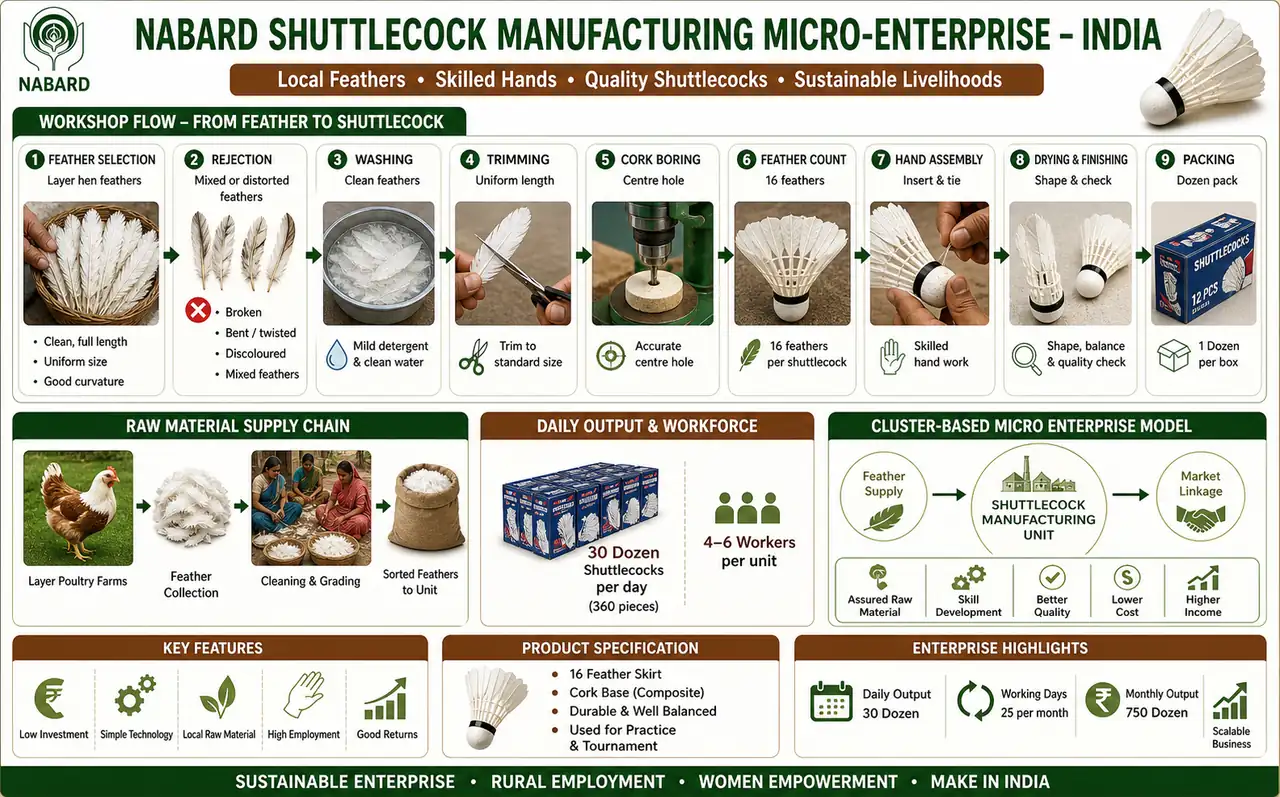
Shuttlecock manufacturing represents forward integration of the poultry industry — converting otherwise discarded layer hen feathers into sports goods. Each shuttlecock requires 16 hen feathers specifically from the wing and tail. This niche enterprise is viable only in established clusters with supply chain linkages.
- Shuttlecock clusters: Jalandhar (Punjab), Meerut (UP), Kolkata (WB), Bangalore (Karnataka), Hyderabad (AP)
- World market uses duck feathers for high-end cocks; hen (layer) feathers for low-end/outdoor use
- One shuttlecock requires: 16 hen feathers
Project Overview
The model is for a micro-enterprise producing 30 dozen shuttlecocks per day (240 days in Year 1, 300 days from Year 2). The unit operates in rented space of 200–250 sq ft. The manufacturing process involves feather washing, cutting, threading, cork boring, gluing with Fevicol, and applying Eurocol polish — largely manual operations.
Pro Content Locked
Upgrade to Pro to access this lesson and all other premium content.
₹99 charged monthly · Cancel anytime
- All Agriculture & Banking Courses
- AI Lesson Questions (100/day)
- AI Doubt Solver (50/day)
- Glows & Grows Feedback (30/day)
- AI Section Quiz (20/day)
- 22-Language Translation (100/day)
- Recall Questions (20/day)
- AI Quiz (15/day)
- AI Quiz Paper Analysis (100/day)
- AI Step-by-Step Explanations (100/day)
- Spaced Repetition Recall (FSRS)
- AI Tutor
- Immersive Text Questions
- Audio Lessons — Hindi & English
- Mock Tests & Previous Year Papers
- Summary & Mind Maps
- XP, Levels, Leaderboard & Badges
- Generate New Classrooms
- Voice AI Teacher (AgriDots Live)
- AI Revision Assistant
- Knowledge Gap Analysis
- Interactive Revision (LangGraph)
🔒 Secure via Razorpay · Cancel anytime · No hidden fees
Shuttlecock manufacturing represents forward integration of the poultry industry — converting otherwise discarded layer hen feathers into sports goods. Each shuttlecock requires 16 hen feathers specifically from the wing and tail. This niche enterprise is viable only in established clusters with supply chain linkages.
- Shuttlecock clusters: Jalandhar (Punjab), Meerut (UP), Kolkata (WB), Bangalore (Karnataka), Hyderabad (AP)
- World market uses duck feathers for high-end cocks; hen (layer) feathers for low-end/outdoor use
- One shuttlecock requires: 16 hen feathers
Project Overview
The model is for a micro-enterprise producing 30 dozen shuttlecocks per day (240 days in Year 1, 300 days from Year 2). The unit operates in rented space of 200–250 sq ft. The manufacturing process involves feather washing, cutting, threading, cork boring, gluing with Fevicol, and applying Eurocol polish — largely manual operations.
Key risk: plastic shuttlecocks are cheaper and more durable, competing directly with hen-feather cocks and limiting market growth.
Financial Structure
| Component | Amount (Rs.) |
|---|---|
| Cork boring machine (0.5 HP) | 7,500 |
| Feather cutting machine | 5,000 |
| Washing tub + misc items | 3,000 |
| Weighing balance + furniture | 30,000 |
| Capitalised recurring cost (60 days) | 1,83,720 |
| Total Project Cost | 2,29,220 |
| Margin Money (10%) | 29,220 |
| Bank Loan (90%) | 2,00,000 |
Technical & Cost Parameters
| Parameter | Value |
|---|---|
| Daily output | 30 dozen shuttlecocks |
| Feathers per shuttlecock | 16 hen feathers |
| Feather consumption/day | 3 kg @ ₹200/kg |
| Cork (imported) | 30 dozen @ ₹18/dozen |
| Wholesale price | ₹120/dozen |
| Labour | 3 workers @ ₹300/day = ₹900 |
| Lease rent | ₹200/day |
| Total daily expenditure | ₹3,062 |
| Daily gross surplus | ₹538 |
| Feather rejection rate | 20–30% for mixed lots |
| Interest rate | 12% per annum |
| Repayment period | 6 years |
NOTE
Feather quality is a critical variable — hen feathers mixed with broiler feathers cause 20–30% wastage as broiler feathers are unsuitable. Duck feathers (for premium cocks) cost ₹450/1,000 feathers with only 10% rejection. This quality control issue directly impacts profitability.
Raw Material Supply Chain
| Material | Source | Cost |
|---|---|---|
| Hen feathers | Traders from AP, TN, Punjab | ₹120–200/kg |
| Imported corks (Spain/Portugal) | Wholesalers | ₹18/dozen |
| Fevicol | Local | ₹200/kg |
| Eurocol + polish | Local | ₹200/kg |
| Packing boxes | Local | ₹6/box |
| Labels | Local | ₹3.50/box |
Income & Repayment
| Year | Days | Income (Rs.) | Recurring Cost (Rs.) | Gross Surplus (Rs.) |
|---|---|---|---|---|
| 1 | 240 | 8,64,000 | 7,34,880 | -1,00,100 (Year 1 loss) |
| 2 | 300 | 10,80,000 | 9,18,600 | 1,61,400 |
| 3–6 | 300 | 10,80,000 | 9,18,600 | 1,61,400 |
- BCR: 1.13:1 at 15% discount factor
- NPW: ₹3,83,424
- IRR: Reported as approximately 2% in NABARD model — reflecting very thin margins
NOTE
The NABARD document itself cautions: "plastic shuttles are available at cheaper price and are more durable... cost of production becomes high which hampers profitability." This honest disclaimer makes this project unique — and is a direct exam fact. The project is viable only in developed cluster areas with established supply chains.
Sources & References
Primary source for this lesson is NABARD's official Model Bankable Projects portal.[1] Lesson-specific report copy used for this topic.[2]
References
2 sources • [1] [2]
References
Used for: Official NABARD portal for model bankable project documents and updates.
Used for: Reference copy used in this lesson for project parameters and worked figures.
The figures in this lesson reflect the cost norms and technical parameters as published in the NABARD document. Actual costs may vary by state, season, and year of implementation. Always refer to the latest NABARD circular for current norms.
Summary Cheat Sheet
| Concept / Topic | Key Details / Explanation |
|---|---|
| Enterprise type | Forward integration of poultry — feather-based micro-enterprise |
| Unit output | 30 dozen shuttlecocks/day (240 days Year 1; 300 days Year 2+) |
| Total Project Cost | ₹2,29,220 |
| Margin Money | 10% = ₹29,220 |
| Bank Loan | 90% = ₹2,00,000 |
| Feathers per shuttlecock | 16 hen feathers (wing/tail only) |
| Feather consumption/day | 3 kg @ ₹200/kg |
| Feather rejection rate | 20–30% for mixed lots; only 10% for duck feathers |
| Cork (imported) | 30 dozen @ ₹18/dozen (imported from Spain/Portugal) |
| Wholesale price | ₹120/dozen |
| Labour | 3 workers @ ₹300/day = ₹900/day |
| Total daily expenditure | ₹3,062 |
| Daily gross surplus | ₹538 |
| Interest rate | 12% per annum |
| Repayment period | 6 years |
| BCR | 1.13:1 at 15% discount factor |
| NPW | ₹3,83,424 |
| IRR | ~2% — very thin margins (NABARD itself cautions on viability) |
| Key risk | Plastic shuttlecocks cheaper and more durable — direct competition |
| Viability condition | Only viable in developed cluster areas with established supply chains |
| Clusters in India | Jalandhar (Punjab), Meerut (UP), Kolkata (WB), Bengaluru (Karnataka), Hyderabad (AP) |
| Year 1 result | Loss of ₹1,00,100 (240 operating days only) |
Lesson Doubts
Ask questions, get expert answers