🐟 Pangassius (Striped Catfish) Culture — 1 Ha
NABARD model bankable project for Pangassius hypophthalamus monoculture in 1 hectare pond. Covers air-breathing fish biology, 20 tonnes/crop potential, capital cost of ₹8.97 lakh, and financial indicators for exams.
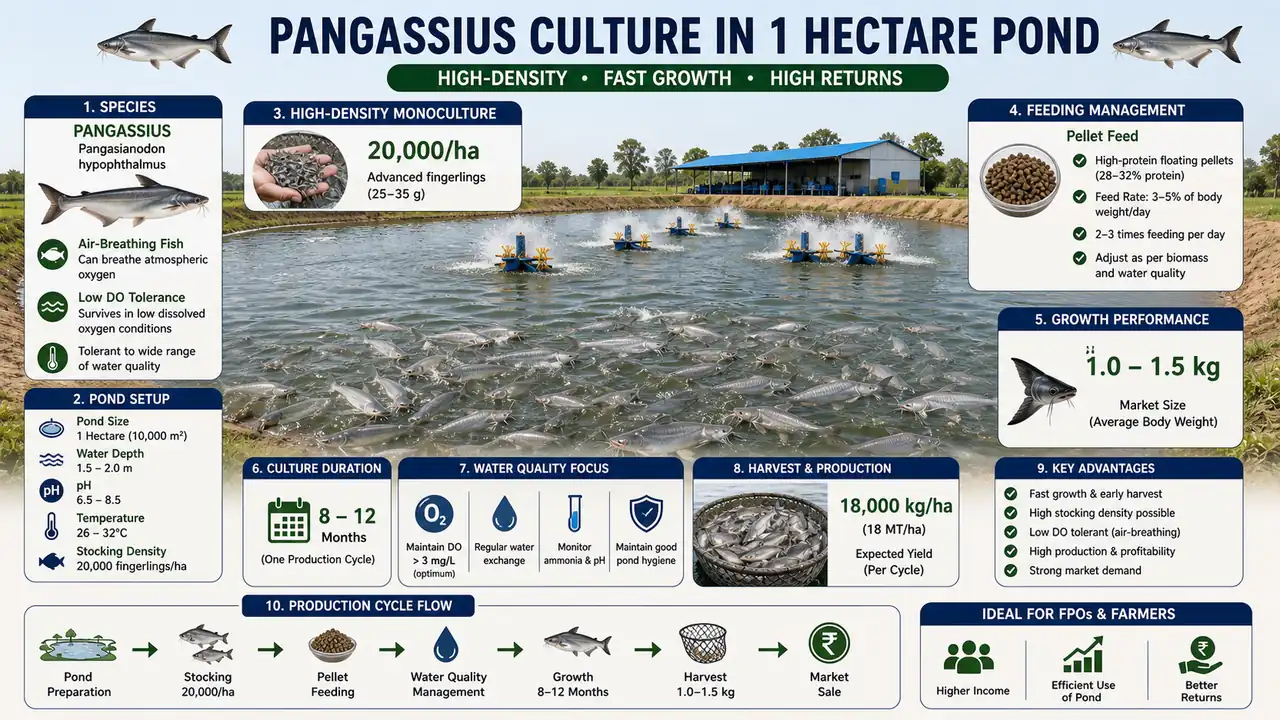
Pangassius hypophthalamus (Striped catfish / Swai / Siamese shark) is an exotic freshwater catfish from the Mekong basin, first introduced to India in 1997 from Thailand via West Bengal. By 2008 it was farmed across ~40,000 ha in India with production of 1.80–2.20 lakh tonnes.
- An air-breathing fish — tolerates very low dissolved oxygen levels (DO as low as 0.1 mg/l)
- Can be cultured in ponds, concrete tanks, cages, pens, and abandoned shrimp farms
- No intramuscular bones — flesh is easily filleted, excellent for domestic and export processing
Key Advantages for Culture
| Feature | Detail |
|---|---|
| Growth rate | Attains 1.0–1.5 kg in 8–10 months |
| Air-breathing | Tolerates low DO; does not require aeration |
| High stocking density | Up to 20,000/ha (monoculture semi-intensive) |
| Omnivore → herbivore | First year omnivorous, subsequent years herbivorous |
| FCR | 2.35 : 1 (use floating pellets for better FCR) |
| Saline tolerance | Can grow in low-salinity brackish water (abandoned shrimp ponds) |
NOTE
Pro Content Locked
Upgrade to Pro to access this lesson and all other premium content.
₹99 charged monthly · Cancel anytime
- All Agriculture & Banking Courses
- AI Lesson Questions (100/day)
- AI Doubt Solver (50/day)
- Glows & Grows Feedback (30/day)
- AI Section Quiz (20/day)
- 22-Language Translation (100/day)
- Recall Questions (20/day)
- AI Quiz (15/day)
- AI Quiz Paper Analysis (100/day)
- AI Step-by-Step Explanations (100/day)
- Spaced Repetition Recall (FSRS)
- AI Tutor
- Immersive Text Questions
- Audio Lessons — Hindi & English
- Mock Tests & Previous Year Papers
- Summary & Mind Maps
- XP, Levels, Leaderboard & Badges
- Generate New Classrooms
- Voice AI Teacher (AgriDots Live)
- AI Revision Assistant
- Knowledge Gap Analysis
- Interactive Revision (LangGraph)
🔒 Secure via Razorpay · Cancel anytime · No hidden fees
Pangassius hypophthalamus (Striped catfish / Swai / Siamese shark) is an exotic freshwater catfish from the Mekong basin, first introduced to India in 1997 from Thailand via West Bengal. By 2008 it was farmed across ~40,000 ha in India with production of 1.80–2.20 lakh tonnes.
- An air-breathing fish — tolerates very low dissolved oxygen levels (DO as low as 0.1 mg/l)
- Can be cultured in ponds, concrete tanks, cages, pens, and abandoned shrimp farms
- No intramuscular bones — flesh is easily filleted, excellent for domestic and export processing
Key Advantages for Culture
| Feature | Detail |
|---|---|
| Growth rate | Attains 1.0–1.5 kg in 8–10 months |
| Air-breathing | Tolerates low DO; does not require aeration |
| High stocking density | Up to 20,000/ha (monoculture semi-intensive) |
| Omnivore → herbivore | First year omnivorous, subsequent years herbivorous |
| FCR | 2.35 : 1 (use floating pellets for better FCR) |
| Saline tolerance | Can grow in low-salinity brackish water (abandoned shrimp ponds) |
NOTE
Exam trap: Pangassius is an air-breathing fish (family Pangassidae). It can survive in oxygen-depleted water that would kill carps. This is frequently tested alongside the DO tolerance of < 0.1 mg/l.
Technical Parameters
| Parameter | Value |
|---|---|
| Pond size | 1 ha; water depth 1.5–2 m |
| Monoculture stocking | 20,000 advanced fingerlings (15–20 g)/ha |
| Polyculture stocking | ≤ 10,000/ha with carps |
| Survival rate | 80–90% (model: 90%) |
| Culture period | 8–12 months (ponds); 6 months (cage) |
| Average harvest weight | 1.0–1.5 kg |
| Production (monoculture) | 18,000 kg/ha/crop (model) |
| Farm gate price | ₹85/kg |
| Feed rate | 2.5–3% of ABW; adjusted bi-weekly |
Capital Cost (1 Ha)
| Component | Cost (₹) |
|---|---|
| Site clearance | 10,000 |
| Pond construction (800 hrs × ₹1,000) | 8,00,000 |
| 5 HP pump set (solar + electric) | 60,000 |
| Inlet/outlet sluices | 7,000 |
| Nets and implements | 10,000 |
| Miscellaneous | 10,000 |
| Total Capital Cost (A) | ₹8,97,000 |
Operational cost per crop:
| Item | Cost (₹) |
|---|---|
| Lime (5,000 kg @ ₹5) | 25,000 |
| Fish seed — 20,000 @ ₹3 | 60,000 |
| Fish feed — 30,000 kg @ ₹30/kg (FCR 2:1) | 9,00,000 |
| Pumping charges (12 months × ₹10,000) | 1,20,000 |
| Watch and ward (12 months × ₹5,000) | 60,000 |
| Probiotics & minerals (12 months × ₹5,000) | 60,000 |
| Miscellaneous + harvesting (20,000 kg × ₹2) | 40,000 |
| Total Operational Cost (B) | ₹12,70,000 |
Total project cost (A+B): ₹21,67,000
Production & Income
| Year | Gross Benefit | Total Cost | Net Benefit |
|---|---|---|---|
| Year 1 | ₹15.30 lakh | ₹21.67 lakh | −₹6.37 lakh |
| Year 2–8 | ₹16.15 lakh | ₹12.70 lakh | +₹3.45 lakh |
Income Year 2 onwards: 18,000 kg × ₹85/kg = ₹15,30,000 (Year 1); ₹16,15,000 (Year 2+ at higher yield)
Financial Analysis
| Indicator | Value |
|---|---|
| Total Financial Outlay | ₹21.67 lakh |
| Margin (15%) | ₹3.25 lakh |
| Bank Loan | ₹18.42 lakh |
| Rate of Interest | 12% |
| Repayment Period | 8–10 years (1 year grace) |
| NPW @ 15% | ₹8.60 lakh |
| BCR | 1.12 : 1 |
| IRR | 52.8% (> 50%) |
NOTE
Pangassius has the highest capital cost (₹8.97 lakh) among NABARD freshwater pond fish models due to intensive pond construction (800 machine-hours). Its high feed cost (₹9 lakh/crop) reflects the FCR of 2.35:1 — higher than carps or tilapia.
Sources & References
Primary source for this lesson is NABARD's official Model Bankable Projects portal.[1] Lesson-specific report copy used for this topic.[2]
References
2 sources • [1] [2]
References
Used for: Official NABARD portal for model bankable project documents and updates.
Used for: Reference copy used in this lesson for project parameters and worked figures.
The figures in this lesson reflect the cost norms and technical parameters as published in the NABARD document. Actual costs may vary by state, season, and year of implementation. Always refer to the latest NABARD circular for current norms.
Summary Cheat Sheet
| Concept / Topic | Key Details / Explanation |
|---|---|
| Species | Pangassius hypophthalmus (Striped catfish / Swai / Basa / Siamese shark) |
| Origin | Mekong basin; introduced to India in 1997 from Thailand via West Bengal |
| India area farmed (2008) | ~40,000 ha; production 1.80–2.20 lakh tonnes |
| Key feature | Air-breathing fish — tolerates DO as low as 0.1 mg/l; no aeration required |
| Pond size | 1 ha; water depth 1.5–2 m |
| Stocking density (monoculture) | 20,000 advanced fingerlings (15–20 g)/ha |
| Survival rate | 80–90% (model: 90%) |
| Culture period | 8–12 months (ponds); 6 months (cage) |
| Average harvest weight | 1.0–1.5 kg |
| Production per crop | 18,000 kg/ha |
| FCR | 2.35:1 (floating pellets improve FCR) |
| Farm gate price | ₹85/kg |
| Feed type | Omnivore in Year 1 → herbivore in subsequent years |
| Feed cost | 30,000 kg @ ₹30/kg = ₹9,00,000/crop (largest recurring cost) |
| Seed cost | 20,000 @ ₹3 = ₹60,000 |
| Total Capital Cost (A) | ₹8,97,000 (pond construction 800 hrs × ₹1,000 = ₹8 lakh is major item) |
| Total Operational Cost/crop (B) | ₹12,70,000 |
| Total Project Cost (A+B) | ₹21,67,000 |
| Margin Money | 15% = ₹3.25 lakh |
| Bank Loan | ₹18.42 lakh |
| Interest rate | 12% |
| Repayment period | 8–10 years with 1-year grace |
| NPW @ 15% | ₹8.60 lakh |
| BCR | 1.12:1 |
| IRR | 52.8% (>50%) |
| Year 1 net benefit | −₹6.37 lakh (loss in first crop year due to high capital cost) |
| Year 2+ net benefit | +₹3.45 lakh/year |
| Culture media | Ponds, concrete tanks, cages, pens, and abandoned shrimp farms |
| Bone structure | No intramuscular bones — easily filleted for processing |
Lesson Doubts
Ask questions, get expert answers