🐟 Integrated Fish Farming with Dairy — Bihar Model
NABARD model scheme for integrating 1 ha fish pond with 5 cross-bred dairy cows in Bihar. Covers cow dung as organic manure, dual income streams, total capital of ₹6.53 lakh, BCR of 2.07, and subsidy details for exams.
Integrated fish-dairy farming is based on the principle that outputs of one system become inputs of another. Cow dung from dairy enriches fish pond productivity; grass from pond embankments feeds cows; pond water is used for bathing animals. This circular system nearly eliminates the need for external fertilisers.
- Cow dung contains: 14% organic matter, 0.3% N, 0.2% P, 0.1% K
- Cow dung BOD is lower than other livestock manures — already decomposed by rumen microorganisms
- Cattle dung and urine are especially beneficial for Catla and Silver Carp (surface/plankton feeders)
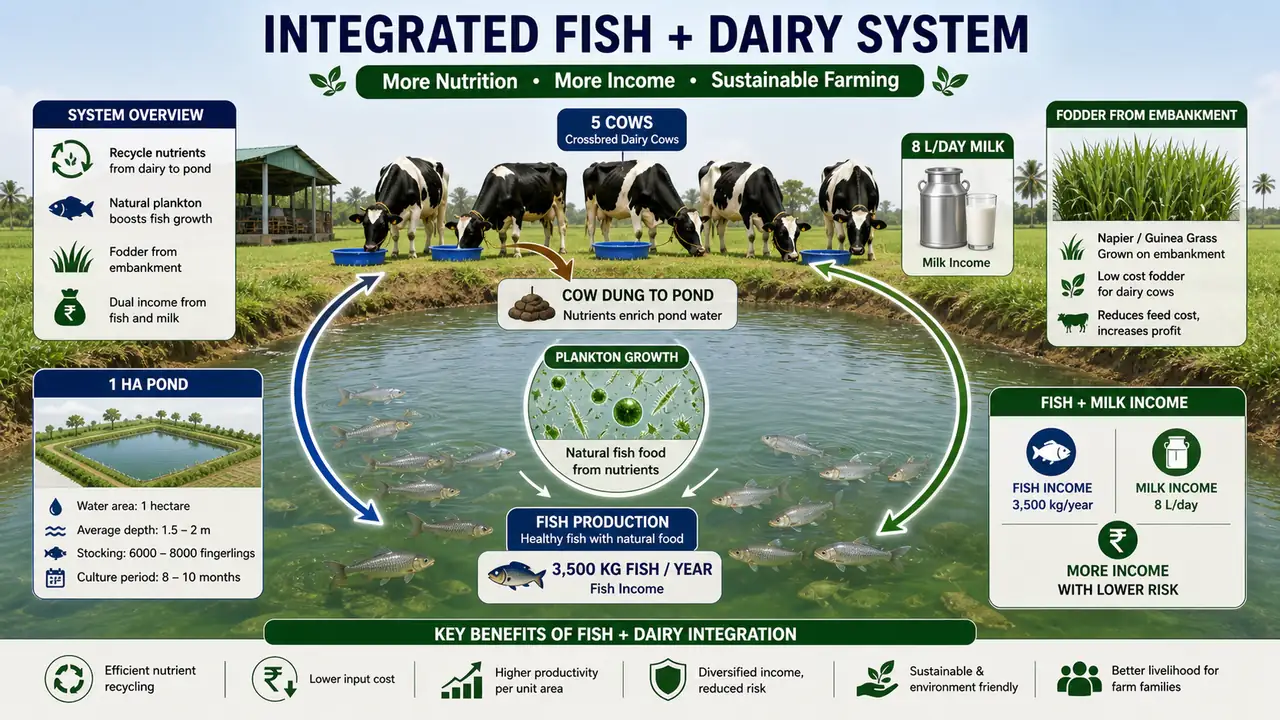
System Design
| Component | Detail |
|---|---|
| Fish pond | 1 ha; depth min 1.2 m; culture period 11 months |
| Fish species | IMC (Catla, Rohu, Mrigal) + exotic carps; 5,000 nos./ha |
| Dairy animals | 5 cross-bred (CB) cows — Jersey or HF breed |
| Purchase strategy | 2–3 cows in Phase 1; remaining 2–3 after 5–6 months |
| Milk yield per cow | 8 litres/day |
| Cow shed location | On pond embankment — dung flushed directly into pond |
| Green fodder | Grown on embankment slopes; fed to Grass Carp |
NOTE
Pro Content Locked
Upgrade to Pro to access this lesson and all other premium content.
₹99 charged monthly · Cancel anytime
- All Agriculture & Banking Courses
- AI Lesson Questions (100/day)
- AI Doubt Solver (50/day)
- Glows & Grows Feedback (30/day)
- AI Section Quiz (20/day)
- 22-Language Translation (100/day)
- Recall Questions (20/day)
- AI Quiz (15/day)
- AI Quiz Paper Analysis (100/day)
- AI Step-by-Step Explanations (100/day)
- Spaced Repetition Recall (FSRS)
- AI Tutor
- Immersive Text Questions
- Audio Lessons — Hindi & English
- Mock Tests & Previous Year Papers
- Summary & Mind Maps
- XP, Levels, Leaderboard & Badges
- Generate New Classrooms
- Voice AI Teacher (AgriDots Live)
- AI Revision Assistant
- Knowledge Gap Analysis
- Interactive Revision (LangGraph)
🔒 Secure via Razorpay · Cancel anytime · No hidden fees
Integrated fish-dairy farming is based on the principle that outputs of one system become inputs of another. Cow dung from dairy enriches fish pond productivity; grass from pond embankments feeds cows; pond water is used for bathing animals. This circular system nearly eliminates the need for external fertilisers.
- Cow dung contains: 14% organic matter, 0.3% N, 0.2% P, 0.1% K
- Cow dung BOD is lower than other livestock manures — already decomposed by rumen microorganisms
- Cattle dung and urine are especially beneficial for Catla and Silver Carp (surface/plankton feeders)
System Design
| Component | Detail |
|---|---|
| Fish pond | 1 ha; depth min 1.2 m; culture period 11 months |
| Fish species | IMC (Catla, Rohu, Mrigal) + exotic carps; 5,000 nos./ha |
| Dairy animals | 5 cross-bred (CB) cows — Jersey or HF breed |
| Purchase strategy | 2–3 cows in Phase 1; remaining 2–3 after 5–6 months |
| Milk yield per cow | 8 litres/day |
| Cow shed location | On pond embankment — dung flushed directly into pond |
| Green fodder | Grown on embankment slopes; fed to Grass Carp |
NOTE
Exam trap: Cows should be freshly calved (first or second lactation), selecting animals with yield of 8–10 litres/day. Purchasing dry/low-yield cows is a common failed-project scenario tested in exams.
Technical Parameters — Fish
| Parameter | Value |
|---|---|
| Stocking size | 50–60 g (stunted yearlings) |
| Culture period | 11 months |
| Expected growth | 700–800 g at harvest |
| Production Year 1 | 3,000 kg/ha |
| Production Year 2+ | 3,500 kg/ha |
| Farm gate price — fish | ₹125/kg |
Financial Outlay
| Component | Cost (₹) |
|---|---|
| Pond development (1 ha) + infrastructure | included in capital |
| 5 CB cows (freshly calved) | major capital item |
| Cow shed (low-cost thatched, on embankment) | included |
| Total Capital Cost | ₹6.53 lakh |
| Operational Cost (one cycle — capitalised) | ₹1.87 lakh |
Income Projections
| Source | Annual Income |
|---|---|
| Fish (Year 1): 3,000 kg × ₹125 | ₹3,75,000 |
| Fish (Year 2+): 3,500 kg × ₹125 | ₹4,37,500 |
| Milk: 5 cows × 8 L/day × 300 days × ₹25 | ₹3,00,000/year |
| Combined annual income (Year 2+) | ~₹7,37,500 |
Financial Analysis
| Indicator | Value |
|---|---|
| Total Capital + Operational Outlay | ₹6.53 + ₹1.87 lakh |
| Margin (25% assumed) | Per RBI guidelines |
| BCR | 2.07 |
| NPW @ 15% DF | ₹13,66,717 |
| IRR | > 15% |
| Repayment Period | 6 years (1 year grace; 5 equal annual instalments) |
Subsidies Available
| Scheme | Benefit |
|---|---|
| Blue Revolution (GoI) — new pond development | 40% general; 60% SC/ST/women/cooperatives |
| Dairy Entrepreneurship Development Scheme (DEDS) via NABARD | 25% general; 33.33% SC/ST (for 2–10 milch animals) |
| LTRCF (NABARD) | Concessional refinance to cooperative banks & RRBs |
NOTE
DEDS (Dairy Entrepreneurship Development Scheme) is implemented through NABARD with back-ended capital subsidy for purchase of milch animals. This linkage between NABARD, dairy, and fisheries integration is a high-frequency exam topic.
Why Integrated Farming Outperforms Monoculture
- BCR of 2.07 is the highest among all Bihar NABARD fish models
- Application of feed and chemical fertiliser is nearly nil — promotes organic farming
- Diversified income from fish + milk reduces risk from market/climate shocks
- Pond embankment utilised for fodder production — maximises returns per unit land
Sources & References
Primary source for this lesson is NABARD's official Model Bankable Projects portal.[1] Lesson-specific report copy used for this topic.[2]
References
2 sources • [1] [2]
References
Used for: Official NABARD portal for model bankable project documents and updates.
Used for: Reference copy used in this lesson for project parameters and worked figures.
The figures in this lesson reflect the cost norms and technical parameters as published in the NABARD document. Actual costs may vary by state, season, and year of implementation. Always refer to the latest NABARD circular for current norms.
Summary Cheat Sheet
| Concept / Topic | Key Details / Explanation |
|---|---|
| Integration principle | Outputs of one system = inputs of another; cow dung fertilises fish pond, embankment grass feeds cows |
| Fish pond | 1 ha; depth min 1.2 m; culture period 11 months |
| Fish species | IMC (Catla, Rohu, Mrigal) + exotic carps; 5,000/ha at 50–60 g |
| Dairy component | 5 cross-bred (CB) cows — Jersey or HF, freshly calved |
| Milk yield per cow | 8 litres/day |
| Milk income | 5 cows × 8 L × 300 days × ₹25 = ₹3,00,000/year |
| Fish production Year 1 | 3,000 kg/ha |
| Fish production Year 2+ | 3,500 kg/ha |
| Farm gate price — fish | ₹125/kg |
| Combined annual income (Year 2+) | ~₹7,37,500 (fish ₹4,37,500 + milk ₹3,00,000) |
| Total Capital Cost | ₹6.53 lakh |
| Operational Cost (capitalised) | ₹1.87 lakh |
| Margin Money | 25% (per RBI guidelines) |
| Repayment period | 6 years with 1-year grace |
| BCR | 2.07 — highest among all Bihar NABARD fish models |
| NPW @ 15% | ₹13,66,717 |
| IRR | >15% |
| Cow dung nutrient content | 14% organic matter, 0.3% N, 0.2% P, 0.1% K |
| Best beneficiary fish | Catla and Silver Carp (surface/plankton feeders benefit most from cow dung) |
| Cow shed location | On pond embankment — dung flushed directly into pond |
| Subsidy — fish component | Blue Revolution: 40% (general); 60% (SC/ST/women) on pond development |
| Subsidy — dairy component | DEDS via NABARD: 25% (general); 33.33% (SC/ST) for 2–10 milch animals |
| Why integrated > monoculture | BCR 2.07, chemical fertiliser eliminated, diversified income, embankment utilised for fodder |
Lesson Doubts
Ask questions, get expert answers