🏜 Experimental Design — Basic Concepts
Blocks, treatments, replication, randomisation, local control, experimental error, and shape of plots — the foundations of agricultural field experimentation
An agronomist wants to compare five fertiliser doses on rice yield. She cannot simply apply dose A to a fertile corner and dose E to a barren patch — that would confound treatment effects with soil differences. How should she arrange the experiment to draw fair, reliable conclusions? The answer lies in the principles of experimental design, pioneered by R.A. Fisher for exactly this kind of agricultural problem.
Data Collection: Survey vs Experiment
| Approach | Researcher's Role | Outcome | Example |
|---|---|---|---|
| Sample survey | Observes existing population without interference | Describes population | Recording yields of varieties farmers already grow |
| Experimentation | Controls or manipulates the environment | Establishes cause-and-effect | Applying specific fertiliser doses to selected plots |
The ability to establish cause-and-effect relationships is what makes experimentation so powerful compared to observational studies.
Pioneer of Experimental Design
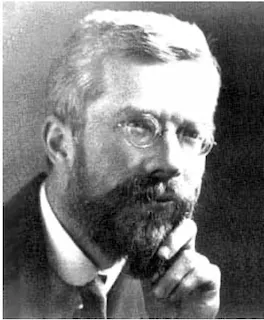
- Modern experimental design concepts are due primarily to R.A. Fisher, developed during the 1920s-1930s at Rothamsted Experimental Station, England, for planning agricultural field experiments.
Basic Concepts
Blocks
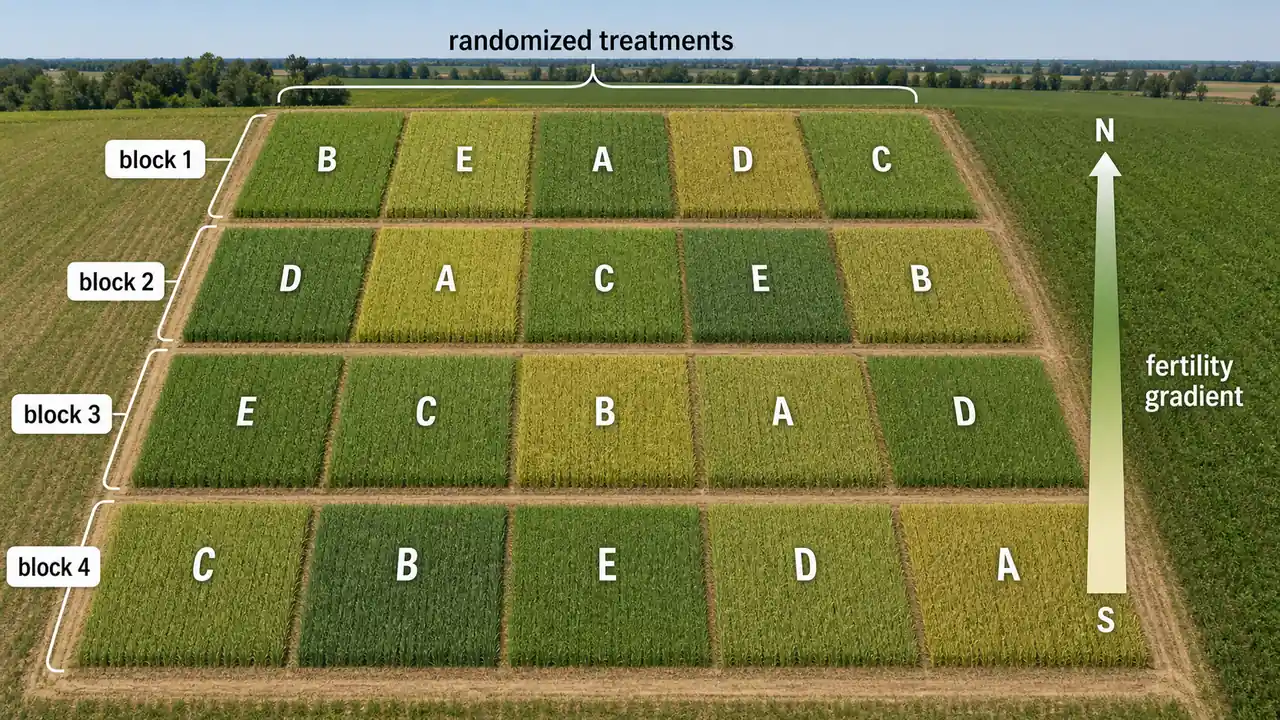
- In agricultural experiments, the entire field is divided into relatively homogeneous sub-groups called blocks.
- Plots within the same block are similar in soil fertility, moisture, and other characteristics, so observed differences between treatments can be more confidently attributed to the treatments themselves.
Simple picture:
If one side of a field is naturally more fertile than the other, we should compare treatments within similar strips, not across the whole uneven field. That similar strip is the block.
Pro Content Locked
Upgrade to Pro to access this lesson and all other premium content.
Charged once for one year · ₹1188 total
Save ₹100/month vs ₹2388/year launch price
- All Agriculture & Banking Courses
- AI Lesson Questions (100/day)
- AI Doubt Solver (50/day)
- Glows & Grows Feedback (30/day)
- AI Section Quiz (20/day)
- 22-Language Translation (100/day)
- Recall Questions (20/day)
- AI Quiz (15/day)
- AI Quiz Paper Analysis (100/day)
- AI Step-by-Step Explanations (100/day)
- Spaced Repetition Recall (FSRS)
- AI Tutor
- Immersive Text Questions
- Audio Lessons — Hindi & English
- Mock Tests & Previous Year Papers
- Summary & Mind Maps
- XP, Levels, Leaderboard & Badges
- Generate New Classrooms
- Voice AI Teacher (AgriDots Live)
- AI Revision Assistant
- Knowledge Gap Analysis
- Interactive Revision (LangGraph)
🔒 Secure one-time yearly payment via Razorpay · No hidden fees
An agronomist wants to compare five fertiliser doses on rice yield. She cannot simply apply dose A to a fertile corner and dose E to a barren patch — that would confound treatment effects with soil differences. How should she arrange the experiment to draw fair, reliable conclusions? The answer lies in the principles of experimental design, pioneered by R.A. Fisher for exactly this kind of agricultural problem.
Data Collection: Survey vs Experiment
| Approach | Researcher's Role | Outcome | Example |
|---|---|---|---|
| Sample survey | Observes existing population without interference | Describes population | Recording yields of varieties farmers already grow |
| Experimentation | Controls or manipulates the environment | Establishes cause-and-effect | Applying specific fertiliser doses to selected plots |
The ability to establish cause-and-effect relationships is what makes experimentation so powerful compared to observational studies.
Pioneer of Experimental Design
- Modern experimental design concepts are due primarily to R.A. Fisher, developed during the 1920s-1930s at Rothamsted Experimental Station, England, for planning agricultural field experiments.
Basic Concepts
Blocks
- In agricultural experiments, the entire field is divided into relatively homogeneous sub-groups called blocks.
- Plots within the same block are similar in soil fertility, moisture, and other characteristics, so observed differences between treatments can be more confidently attributed to the treatments themselves.
Simple picture:
If one side of a field is naturally more fertile than the other, we should compare treatments within similar strips, not across the whole uneven field. That similar strip is the block.
Treatments
- The objects of comparison in an experiment. Each specific condition or factor level being evaluated is a treatment.
- Examples:
- Different spacings tested for yield effect → each spacing is a treatment
- Different fertiliser doses → each dose is a treatment
- Different teaching methods → each method is a treatment
- Different skin creams → each cream is a treatment
Experimental Unit
- The object to which a treatment is applied to record observations — the smallest unit receiving a treatment independently.
- Examples:
- Groups of insects receiving different insecticides → each group is an experimental unit
- Plots receiving different varieties → each plot is an experimental unit
Easy memory rule:
The experimental unit is the smallest thing that can independently receive a treatment.
Three Basic Principles of Experimental Design
IMPORTANT
The three pillars: Replication (estimates error), Randomisation (eliminates bias), Local Control (reduces error through blocking). This trio is frequently tested in exams.
1. Replication
- Repetition of a treatment across different experimental units.
- Without replication, we cannot distinguish treatment effects from random variation.
Why replicate?
- To secure a more accurate estimate of experimental error
- To reduce experimental error and increase precision
- Standard error of treatment mean = σ/√r (as r increases, S.E. decreases)
TIP
Doubling replications reduces the standard error by a factor of √2 (about 1.41). Replication also provides the error estimate needed for the F-test in ANOVA.
2. Randomisation
- Random allocation of treatments to experimental units — every treatment has an equal chance of being allotted to any unit.
- Done using random number tables or computer-generated random numbers.
Purpose:
- Removes bias and uncontrollable extraneous variation
- Forms the basis of any valid statistical test (along with replication)
- Controls variance in field experiments
Example:
If a researcher knowingly places the "best" treatment in the best-looking plots, the result becomes biased. Randomisation prevents this human preference from distorting the experiment.
3. Local Control
- Grouping of homogeneous experimental units into blocks to isolate and remove known sources of variation from the error term.
- Reduces experimental error by ensuring that variation between blocks is accounted for separately.
Experimental Error
- Variation due to uncontrolled factors — everything not accounted for by treatments or blocks.
- Smaller error = more precise comparisons. The goal of good design is to minimise this error.
Examples include slight soil differences, uneven moisture, insect attack, and small measurement mistakes.
Shape and Arrangement of Plots and Blocks
- Plot shape and block arrangement directly affect precision.
- For maximum precision: plots should be rectangular with their long sides parallel to the fertility gradient.
- Blocks should be arranged one after another along the fertility gradient.
The reasoning: rectangular plots running along the gradient capture more soil variability within each block, reducing within-block variation.
What Is an Experimental Design?
A plan specifying:
- Arrangement of treatments
- Grouping of experimental units
- Method of randomisation
All aimed at obtaining valid and efficient results.
Comparison of Experimental Designs
| Feature | CRD | RBD | LSD |
|---|---|---|---|
| Classification | One-way | Two-way | Three-way |
| Error control | None | One-way (blocks) | Two-way (rows + columns) |
| Principles used | Replication + Randomisation | All three | All three |
| Best for | Lab / homogeneous material | Field (1-direction gradient) | Field (2-direction gradient) |
| Treatments | Any number | Up to 20 | 5 to 12 |
| Error d.f. | N - k | (r-1)(k-1) | (n-1)(n-2) |
Summary Table
| Concept | Definition | Exam Tip |
|---|---|---|
| Block | Homogeneous sub-group of experimental units | More uniform within, variable between blocks |
| Treatment | Object of comparison (fertiliser dose, variety, etc.) | Each level is one treatment |
| Experimental unit | Smallest unit receiving a treatment | Plot, pot, or animal group |
| Replication | Repeating treatments across units | Estimates error; S.E. = σ/√r |
| Randomisation | Random allocation of treatments | Eliminates bias; basis of valid tests |
| Local control | Grouping into homogeneous blocks | Reduces error; not used in CRD |
| Experimental error | Uncontrolled variation | Goal: minimise it |
| Pioneer | R.A. Fisher at Rothamsted | Father of experimental design |
TIP
Mnemonic for the three principles: "RRL" — Replication, Randomisation, Local control. Think of it as the "Rural Research Lab" where all agricultural experiments begin.
Which Experimental Design to Use? — Decision Guide
The most tested decision in agricultural statistics:
| Situation | Design | Why | Principles Used |
|---|---|---|---|
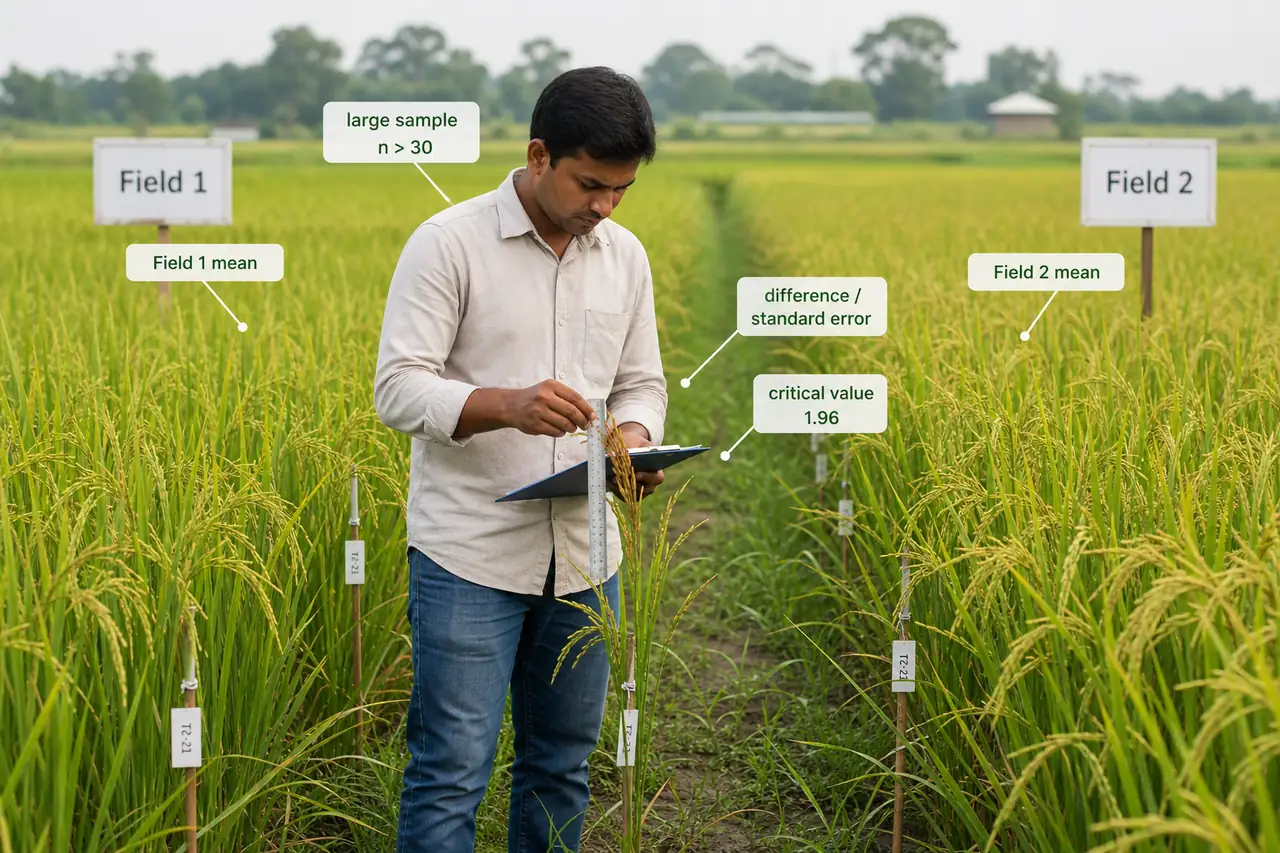
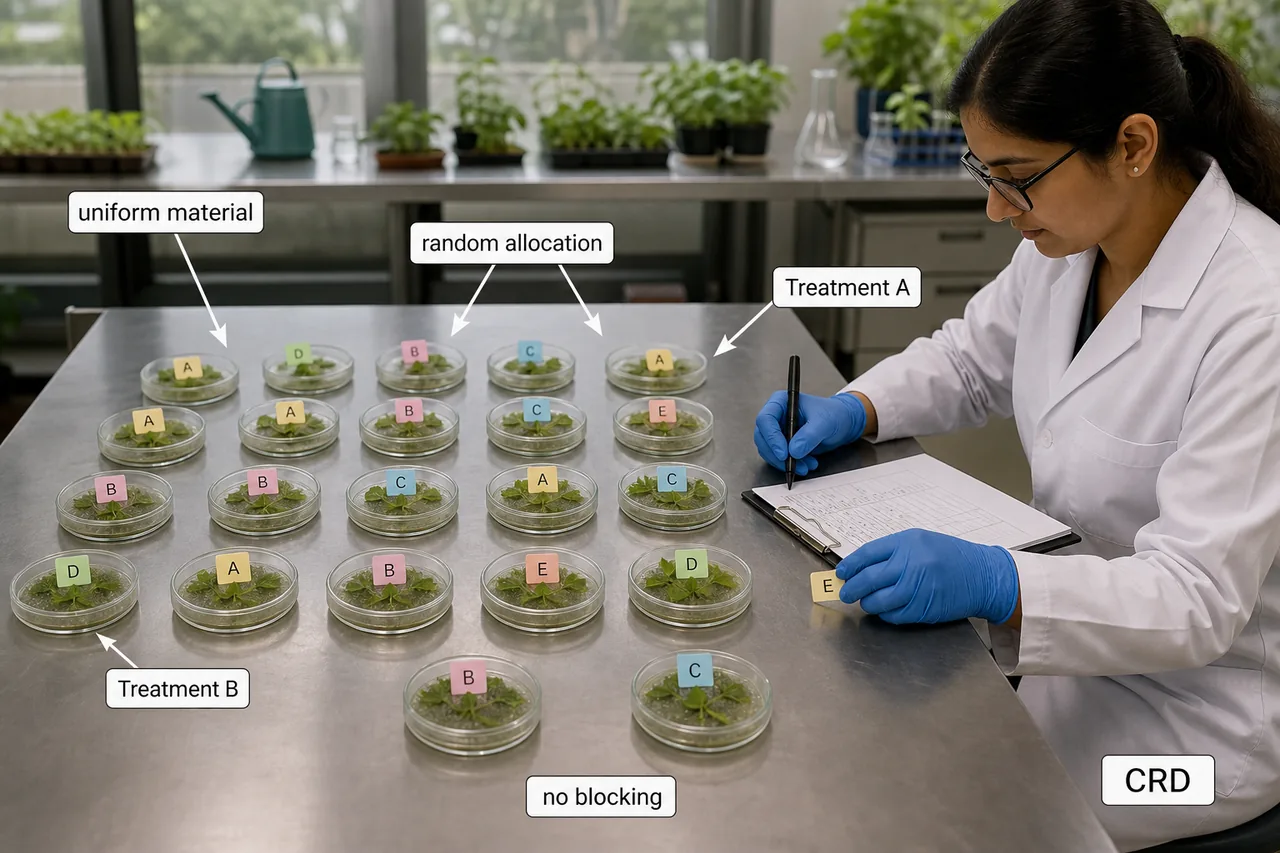
| Uniform field (greenhouse, lab, pots); few treatments (<6) | CRD (Completely Randomised Design) | No soil variation to control; simplest design | Replication + Randomisation only (NO local control) |
| Field with fertility gradient in ONE direction | RBD (Randomised Block Design) | Blocks placed perpendicular to gradient; most common design | All three: Replication + Randomisation + Local control |
| Field with fertility gradient in TWO directions (rows AND columns) | LSD (Latin Square Design) | Controls variation in both directions; treatments = rows = columns | All three + double blocking |
| Two factors to test simultaneously (e.g., variety × fertiliser dose) | Factorial (in RBD or CRD) | Tests main effects AND interactions; most informative | Depends on base design |
| Many treatments (>20) making full replication impractical | Incomplete Block Designs (lattice, BIBD) | Smaller blocks = more homogeneous | Specialised blocking |
Decision flowchart for exams:
- Is the experimental area uniform? → CRD
- Is there one-directional variation? → RBD (most commonly used in agriculture)
- Is there two-directional variation AND treatments ≤ 12? → LSD (constraint: treatments = replications)
- Testing two or more factors? → Factorial experiment (laid out in RBD or LSD)
Key constraints to remember:
- CRD: Unequal replication allowed (only design where this is OK)
- RBD: Each treatment appears exactly once per block
- LSD: Number of treatments = number of rows = number of columns (so max ~12 treatments practical)
- LSD has maximum error df when treatments = 5 (error df = 12)
Summary Cheat Sheet
| Concept / Topic | Key Details |
|---|---|
| Pioneer | R.A. Fisher at Rothamsted Experimental Station (1920s-30s) |
| Experiment vs Survey | Experiment establishes cause-and-effect; survey only describes |
| Block | Homogeneous sub-group of experimental units |
| Treatment | Object of comparison — fertiliser dose, variety, spacing |
| Experimental unit | Smallest unit receiving a treatment (plot, pot, animal group) |
| Replication | Repetition of treatment; estimates experimental error |
| S.E. of treatment mean | σ/√r — more replications → lower S.E. |
| Randomisation | Random allocation of treatments; eliminates bias |
| Local control | Grouping into homogeneous blocks; reduces error |
| Experimental error | Variation due to uncontrolled factors |
| Plot shape | Rectangular, long sides parallel to fertility gradient |
| CRD | One-way classification, no-way control; best for lab/homogeneous |
| RBD | Two-way classification, one-way control; most used in field |
| LSD | Three-way classification, two-way control; 5-12 treatments |
| CRD principles | Replication + Randomisation only |
| RBD/LSD principles | All three — replication, randomisation, local control |
| CRD treatments | Any number |
| RBD treatments | Up to 20 |
| LSD treatments | 5 to 12 |
| CRD error d.f. | N - k |
| RBD error d.f. | (r-1)(k-1) |
| LSD error d.f. | (n-1)(n-2) |