🎹 Forest Classification -- Age, Composition, Ownership, and Types
Classification of forests by age, composition, regeneration, management, ownership, growing stock, and Champion & Seth's 16 forest types of India
One Forest, Many Ways to Classify It
In the previous lesson, we defined what a forest is and explored its productive and protective functions. Now we go deeper: not all forests are the same, and foresters classify them using multiple criteria to manage this diversity effectively.
Walk through a Sal forest in Madhya Pradesh and a mangrove in the Sundarbans -- both are "forests," yet they differ in every possible way: species composition, age structure, legal status, and management purpose. Understanding these classifications is essential for forest management, policy making, and competitive exams.
This lesson covers:
- Classification by age, composition, and regeneration -- structural criteria
- Classification by management, ownership, and growing stock -- administrative criteria
- National Forest Policy classifications -- 1952 and NCA 1976
- Champion and Seth's 16 forest types -- the government-adopted system
Classification at a Glance
| Basis | Categories |
|---|---|
| Age | Even-aged, Uneven-aged |
| Composition | Pure, Mixed |
| Regeneration | High forest (seed), Coppice (vegetative), Natural, Man-made |
| Management | Protection, Production, Farm, Fuel, Recreational |
| Ownership | Reserved, Protected, Village, Communal, Panchayat, Private, Unclassed |
| Growing Stock | Normal, Abnormal |
| Function (1952 Policy) | Protection, National, Village, Tree Land |
| Function (NCA 1976) | Protection, Production, Social |
| Forest Types (Champion & Seth 1967) | 5 major groups, 16 type groups |
1. Based on Age
| Type | Description | Key Feature |
|---|---|---|
| Even-aged (Regular) | Trees broadly of the same generation | Age difference within 25% of rotation allowed |
| Uneven-aged (Irregular) | Trees vary widely in age (>25% of rotation) | All age classes present -- seedlings to mature trees |
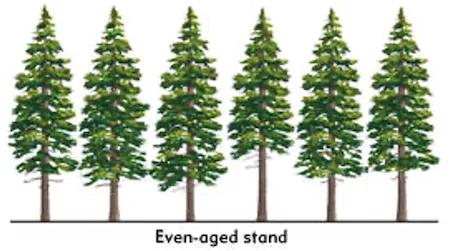
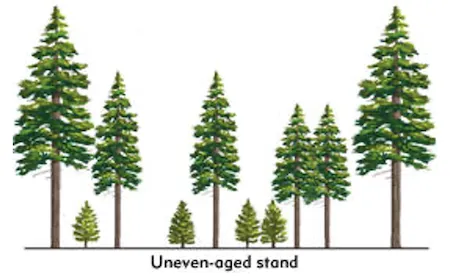
- True even-aged forests can only be man-made (plantations). In nature, seeds germinate over different periods.
- For a forest with a 100-year rotation, trees differing by up to 25 years are still considered even-aged.
- Uneven-aged forests are more common in natural forests and are valued for their biodiversity and ecological resilience.
TIP
Pro Content Locked
Upgrade to Pro to access this lesson and all other premium content.
₹99 charged monthly · Cancel anytime
- All Agriculture & Banking Courses
- AI Lesson Questions (100/day)
- AI Doubt Solver (50/day)
- Glows & Grows Feedback (30/day)
- AI Section Quiz (20/day)
- 22-Language Translation (100/day)
- Recall Questions (20/day)
- AI Quiz (15/day)
- AI Quiz Paper Analysis (100/day)
- AI Step-by-Step Explanations (100/day)
- Spaced Repetition Recall (FSRS)
- AI Tutor
- Immersive Text Questions
- Audio Lessons — Hindi & English
- Mock Tests & Previous Year Papers
- Summary & Mind Maps
- XP, Levels, Leaderboard & Badges
- Generate New Classrooms
- Voice AI Teacher (AgriDots Live)
- AI Revision Assistant
- Knowledge Gap Analysis
- Interactive Revision (LangGraph)
🔒 Secure via Razorpay · Cancel anytime · No hidden fees
One Forest, Many Ways to Classify It
In the previous lesson, we defined what a forest is and explored its productive and protective functions. Now we go deeper: not all forests are the same, and foresters classify them using multiple criteria to manage this diversity effectively.
Walk through a Sal forest in Madhya Pradesh and a mangrove in the Sundarbans -- both are "forests," yet they differ in every possible way: species composition, age structure, legal status, and management purpose. Understanding these classifications is essential for forest management, policy making, and competitive exams.
This lesson covers:
- Classification by age, composition, and regeneration -- structural criteria
- Classification by management, ownership, and growing stock -- administrative criteria
- National Forest Policy classifications -- 1952 and NCA 1976
- Champion and Seth's 16 forest types -- the government-adopted system
Classification at a Glance
| Basis | Categories |
|---|---|
| Age | Even-aged, Uneven-aged |
| Composition | Pure, Mixed |
| Regeneration | High forest (seed), Coppice (vegetative), Natural, Man-made |
| Management | Protection, Production, Farm, Fuel, Recreational |
| Ownership | Reserved, Protected, Village, Communal, Panchayat, Private, Unclassed |
| Growing Stock | Normal, Abnormal |
| Function (1952 Policy) | Protection, National, Village, Tree Land |
| Function (NCA 1976) | Protection, Production, Social |
| Forest Types (Champion & Seth 1967) | 5 major groups, 16 type groups |
1. Based on Age
| Type | Description | Key Feature |
|---|---|---|
| Even-aged (Regular) | Trees broadly of the same generation | Age difference within 25% of rotation allowed |
| Uneven-aged (Irregular) | Trees vary widely in age (>25% of rotation) | All age classes present -- seedlings to mature trees |
- True even-aged forests can only be man-made (plantations). In nature, seeds germinate over different periods.
- For a forest with a 100-year rotation, trees differing by up to 25 years are still considered even-aged.
- Uneven-aged forests are more common in natural forests and are valued for their biodiversity and ecological resilience.
TIP
Exam shortcut: Even-aged = age difference within 25% of rotation. Anything beyond 25% = uneven-aged.
2. Based on Composition
| Type | Definition | Example | Risk |
|---|---|---|---|
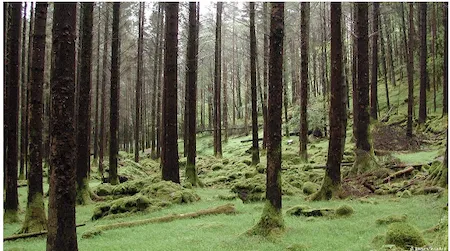
| Pure forest | One species comprises at least 80% | Pure Teak forest, Pure Sal forest | Vulnerable to pests and disease |
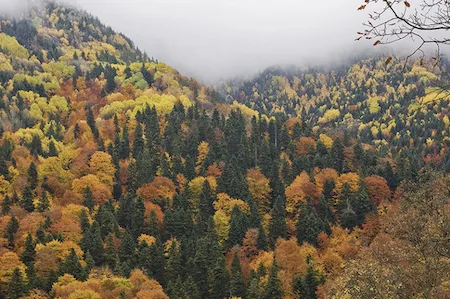
| Mixed forest | Two or more species in the same canopy | Tropical deciduous forests | More ecologically stable |
NOTE
Pure forests are easier to manage commercially but carry higher risk. Mixed forests support greater wildlife diversity and are more resistant to outbreaks.
3. Based on Regeneration
| Type | Regeneration Method | Also Called | Root System | Height |
|---|---|---|---|---|
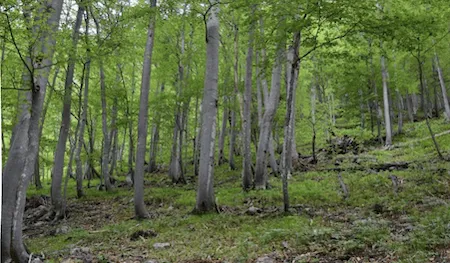
| High forest | From seed | -- | Strong tap root | Tall |
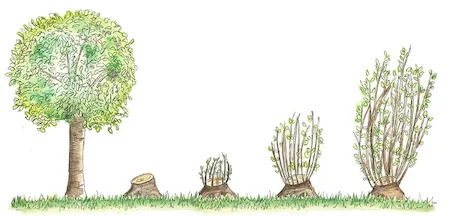
| Coppice forest | From vegetative methods (coppice, root suckers, ratoons) | Low forest | Uses existing root system | Shorter |
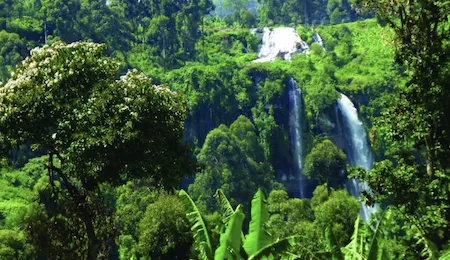
| Natural forest | Natural seed dispersal | -- | Variable | Variable |
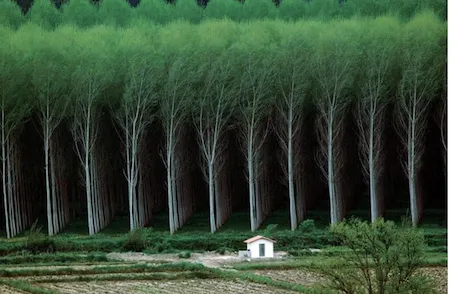
| Man-made forest | Artificial planting or seeding | Plantation | Depends on species | Uniform |

TIP
Memory aid: High forest = seed (think: seeds fall from a high point). Low (coppice) forest = vegetative (regrows from stumps close to ground).
4. Based on Management Purpose
| Type | Primary Purpose | Location/Context |
|---|---|---|
| Protection forest | Soil/water conservation, climate amelioration, erosion control | Steep slopes, riverbanks, fragile ecosystems |
| Production forest | Sustainable harvesting of timber, fuelwood, forest products | Also called national forest |
| Farm forest | Meet farmer's fuel, fodder needs; benefit agriculture | On farms and adjoining areas |
| Fuel forest | Supply fuel, small timber, fodder to villages | Village wastelands, far from government forests |
| Recreational forest | Ecotourism, nature walks, outdoor recreation | Urban and peri-urban areas |
5. Based on Ownership and Legal Status
Government/State Forests
| Category | Legal Basis | Protection Level | Key Rule |
|---|---|---|---|
| Reserved forest | Chapter II, Indian Forest Act 1927 | Highest | Nothing allowed unless specifically permitted |
| Protected forest | Chapter IV, Indian Forest Act 1927 | Moderate | Everything allowed unless specifically prohibited |
| Village forest | Chapter III, Indian Forest Act 1927 | Community use | Usage rights to village; ownership with state |
| Communal forest | Community ownership | Community managed | Members share produce |
| Panchayat forest | Managed by village panchayat | Decentralized | Elected body manages forest |

IMPORTANT
Reserved vs Protected -- the key distinction:
- Reserved forest: Everything is prohibited unless specifically permitted (strictest protection)
- Protected forest: Everything is permitted unless specifically prohibited (moderate protection)
- Think of it like this: Reserved = "locked by default." Protected = "open by default."
Other Categories
- Private forests -- owned by corporations, panchayats, societies
- Unclassed forests -- government-owned but not legally constituted as any category; most vulnerable to encroachment
6. Based on Growing Stock
| Type | Definition | Real-world Status |
|---|---|---|
| Normal forest | Ideal forest where annual removal = annual increment; can continue indefinitely | Theoretical benchmark |
| Abnormal forest | Growing stock, age distribution, or increment is in excess or deficit | Most real forests |
NOTE
The normal forest is a theoretical ideal used in forest management planning. It represents perfect sustainability. The goal of management is to bring abnormal forests closer to the normal state.
7. National Forest Policy Classifications
National Forest Policy, 1952
Classified forests by function into:
- Protection Forests
- National Forests
- Village Forests
- Tree Lands
NOTE
This classification is no longer in use. The current forest policy is of 1988.
National Commission of Agriculture (NCA), 1976
| Category | Purpose | Focus |
|---|---|---|
| Protection forests | Conserve flora, fauna, soil, water; reduce floods | Ecological stability over economic returns |
| Production forests | Maximum timber, fuelwood, forest produce | Economic output through sustained yield |
| Social forests | Meet rural and urban needs (fuel, fodder, timber, recreation) | Forests for and by the people |
TIP
NCA 1976 = three P's: Protection, Production, (and Social -- which serves the People).
8. Forest Types of India (Champion and Seth, 1967)
Champion and Seth (1967) classified Indian forests into 5 major groups and 16 type groups. This is the most widely accepted classification, adopted by the Government of India.
| Major Group | Number of Type Groups | Examples |
|---|---|---|
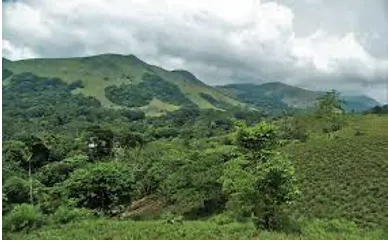
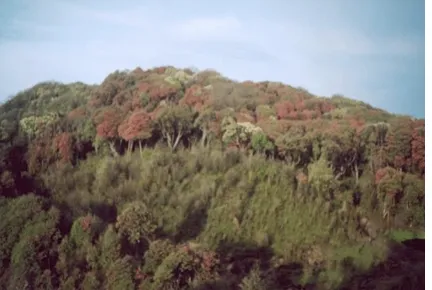
| 1. Tropical Forests | 7 | Wet Evergreen, Semi-evergreen, Moist Deciduous, Dry Deciduous, Thorn, Littoral/Swamp, Dry Evergreen |
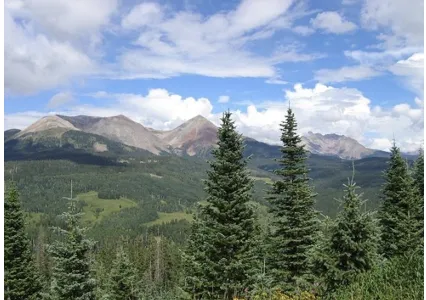
| 2. Montane Subtropical | 3 | Broad-leaved Hill, Pine, Dry Evergreen |
| 3. Montane Temperate | 3 | Wet Temperate, Himalayan Temperate, Himalayan Dry Temperate |
| 4. Sub-alpine | 1 | Sub-alpine Forest |
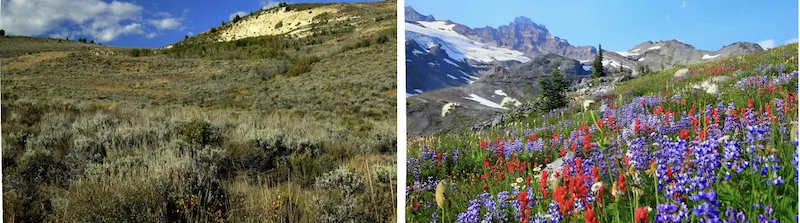
| 5. Alpine Scrub | 2 | Moist Alpine Scrub, Dry Alpine Scrub |
All 16 Forest Type Groups
Tropical (7 types):
- Wet Evergreen Forest
- Semi-evergreen Forest
- Moist Deciduous Forest
- Littoral and Swamp Forest
- Dry Deciduous Forest
- Thorn Forest
- Dry Evergreen Forest
Montane Subtropical (3 types): 8. Broad-leaved Hill Forest 9. Pine Forest 10. Dry Evergreen Forest
Montane Temperate (3 types): 11. Montane Wet Temperate Forest 12. Himalayan Temperate Forest 13. Himalayan Dry Temperate Forest
Sub-alpine (1 type): 14. Sub-alpine Forest
Alpine Scrub (2 types): 15. Moist Alpine Scrub 16. Dry Alpine Scrub
Littoral and Swamp Forest Quick Recall
These forests include India's classic mangrove formations, which are frequently asked as one-liners in forestry MCQs.
| Recall point | Key fact |
|---|---|
| Largest mangrove tract | Sundarbans (West Bengal and Bangladesh) |
| Common mangrove genera | Rhizophora, Avicennia, Bruguiera, Xylocarpus, Heritiera |
| Other exam-name locations | Thane Creek and Gulf of Kutch mangroves |
Exam Tips
TIP
High-frequency exam facts:
- Pure forest = single species at least 80%
- Even-aged age tolerance = 25% of rotation
- Reserved forest = Chapter II, highest protection
- Protected forest = Chapter IV, moderate protection
- Village forest = Chapter III
- Champion and Seth (1967) = 5 groups, 16 types
- Normal forest = removal equals increment
- High forest = from seed; Coppice = vegetative
- NCA 1976 = Protection, Production, Social
- Current forest policy = 1988 (not 1952)
Summary Table
| Classification Basis | Key Categories | Important Number |
|---|---|---|
| Age | Even-aged, Uneven-aged | 25% of rotation threshold |
| Composition | Pure (>80% one species), Mixed | 80% cutoff |
| Regeneration | High (seed), Coppice (vegetative) | -- |
| Management | Protection, Production, Farm, Fuel, Recreational | -- |
| Legal status | Reserved (Ch. II), Protected (Ch. IV), Village (Ch. III) | Indian Forest Act 1927 |
| Growing stock | Normal (removal = increment), Abnormal | -- |
| Policy 1952 | Protection, National, Village, Tree Land | Superseded by 1988 |
| NCA 1976 | Protection, Production, Social | -- |
| Champion & Seth 1967 | 5 major groups, 16 type groups | Government-adopted |
Summary Cheat Sheet
| Concept / Topic | Key Details |
|---|---|
| Classification by age | Even-aged (same age) vs Uneven-aged (mixed ages) |
| Classification by composition | Pure (>80% one species) vs Mixed (multiple species) |
| Classification by regeneration | Natural (seed/coppice) vs Artificial (planted) |
| Classification by ownership | State, Private, Community |
| Reserved Forest | Strictest protection; no public rights unless specified |
| Protected Forest | Less strict; all activities allowed unless prohibited |
| Village Forest | Managed by village community for local use |
| Champion & Seth (1967) | 5 major groups, 16 type groups — government-adopted classification |
| 5 major groups | Tropical, Subtropical, Temperate, Subalpine, Alpine |
| Tropical Wet Evergreen | >200 cm rainfall; Western Ghats, NE India; no leaf shedding |
| Tropical Dry Deciduous | 75-125 cm rainfall; largest forest type in India; Teak, Sal |
| Tropical Thorn | <75 cm rainfall; Rajasthan, Gujarat; Babul, Khejri |
| Policy 1952 classification | Protection, National, Village, Tree Land (superseded by 1988) |
| NCA 1976 classification | Protection, Production, Social |
| Growing stock | Normal (optimal stocking) vs Understocked vs Overstocked |
TIP
Next lesson: With classifications covered, the next lesson explores Forestry as a discipline -- its definition, classification by management intensity, and the eight branches that make up modern forestry.